
If you’re a motorcycle rider, then you know that power is everything. The more power your bike has, the faster you can go and the more fun you can have. But what if your bike starts losing power when you try to accelerate?
This can be a frustrating experience, and it’s something that every motorcyclist wants to avoid.
There are several potential causes of motorcycle power loss while accelerating. Your motorcycle may lose power because of dirty or old spark plugs, clogged air filters, fuel delivery issues, carburetor problems, exhaust system restrictions, or bad timing advance.
Fortunately, most of these problems are easy to fix and won’t require a trip to the mechanic. Simply cleaning or replacing your spark plugs, air filter, or carburetor should be enough to resolve the issue. If the problem persists, then it’s best to take it to a mechanic for further diagnosis.
In this article, we will cover the causes of this issue and how to fix it!
Before we get into the causes of power loss, let’s first understand how your motorcycle accelerates. When you twist the throttle, you’re opening up the intake valve and letting more air into the engine. This increased airflow allows more fuel to be injected, and this mixture is then ignited by the spark plug.
The expanding gases from the combustion push against the piston, which in turn rotates the crankshaft. The crankshaft is connected to the transmission, which transfers power to the wheels. So as you can see, there are a lot of moving parts involved in making your motorcycle go!
Now that we know how acceleration works, let’s take a look at some of the reasons why it might lose power while accelerating.
There are several potential causes of power loss while accelerating. Here are some of the most common ones:
Let’s take a look at each one of these in more detail.
One potential cause of power loss is dirty or old spark plugs. Over time, spark plugs can become fouled with oil, debris, and carbon deposits. This can prevent them from firing properly, and as a result, your engine won’t be able to produce as much power.
Fortunately, this is an easy problem to fix. Simply clean or replace your spark plugs and you should see a noticeable difference in performance.
If your motorcycle is running poorly or has a low top speed, it is likely that the spark plugs are dirty and need to be cleaned. By following these steps you should be able to clean the spark plugs on your own.
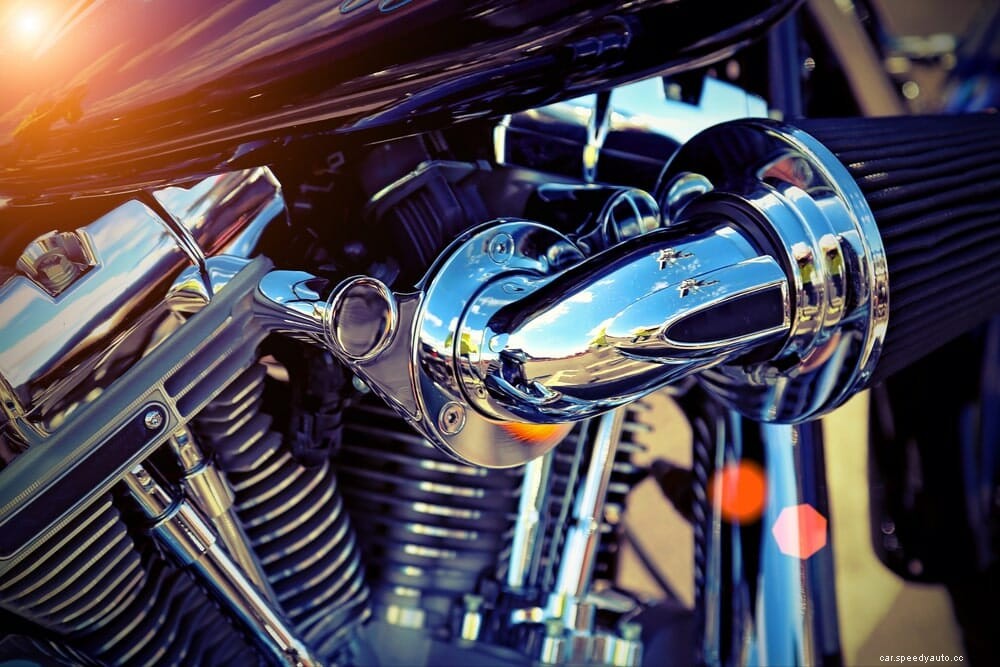
Another potential cause of power loss is a clogged air filter. If your air filter is dirty, it can restrict airflow to the engine and prevent it from getting the oxygen it needs to combust properly. This will result in a loss of power, as well as decreased fuel economy and acceleration.
Fortunately, this is another easy problem to fix – simply clean or replace your air filter and you should see an improvement in performance.
If your motorcycle is running poorly or has a low top speed, it is likely that the air filter is clogged and needs to be cleaned. By following these steps you should be able to clean the air filter on your own.
If your motorcycle isn’t getting enough fuel, it will also lose power while accelerating. This can be caused by a number of things, such as a faulty fuel pump, clogged fuel filter, or leaky fuel injectors. If you suspect that your fuel delivery system is the issue, then it’s best to take it to a mechanic for further diagnosis.
When a motorcycle’s fuel delivery is not working correctly, it can cause a number of problems. The most common symptoms are:
If you experience any of these symptoms, it is likely that your motorcycle’s fuel delivery is not working correctly and needs to be fixed. There are several things that can go wrong with a motorcycle’s fuel delivery system.
The most common are:
To fix a motorcycle’s fuel delivery system, you will need to remove the entire system from the bike and clean or replace all of the parts that are not working correctly. This can be a difficult task, so it is best to take it to a professional mechanic.
Another potential cause of power loss is carburetor problems. If your carburetor is dirty or out of adjustment, it can prevent the engine from getting the correct mixture of air and fuel. This will result in a loss of power and decreased performance.
This is a minor issue that may be resolved without a problem- simply clean or adjust your carburetor and you should see an improvement in performance.
There are many different types and designs of carburetors, but they all work on the same basic principle. Air enters the carburetor through an air filter and is then mixed with fuel in the carburetor body.
The mixture is then drawn into the engine through the intake manifold where it is combusted to power the engine.
The carburetor has several adjustable components that allow you to tune it to your specific motorcycle and riding conditions. These include the main jet, pilot jet, air screw, and fuel screw. By adjusting these screws you can change the mixture of air and fuel that is delivered to the engine, which will affect how the engine runs.
To adjust the mixture of air and fuel, you will need to turn the screws in or out until you find the correct setting. It is best to start with small adjustments and then build up to larger ones until you find the perfect setting.
Keep in mind that too much air or too little fuel can cause engine damage, so be careful not to go too far in either direction.
If your motorcycle has been running poorly, it is likely that the carburetor needs to be adjusted. By following these steps you should be able to get your motorcycle running at its best.
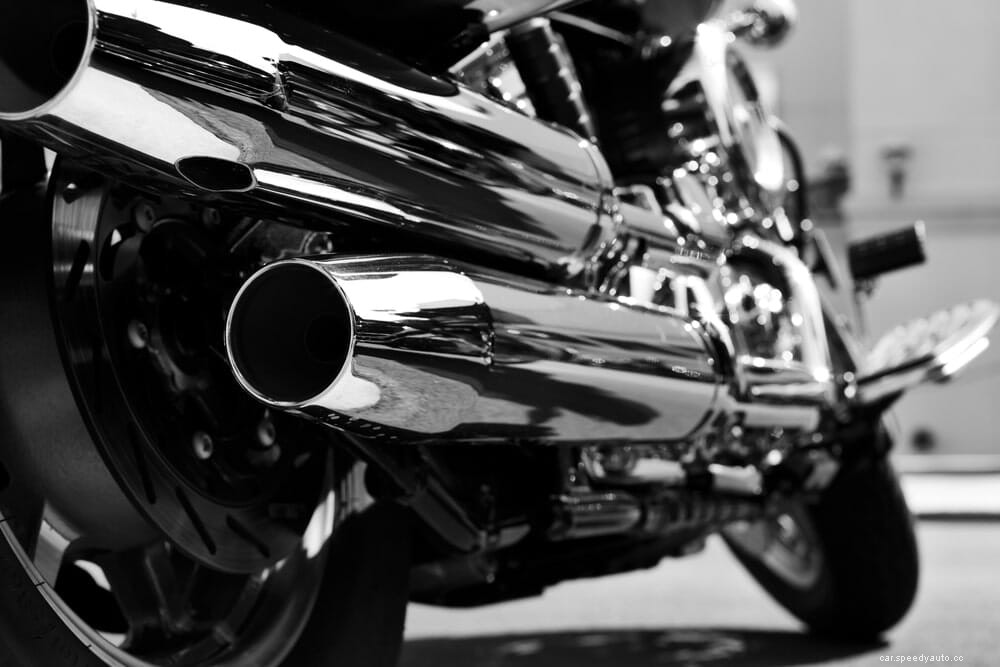
If your exhaust system is restricted, it can also cause power loss while accelerating. This is because the exhaust gases can’t flow freely, and as a result, they build up in the cylinders and prevent the engine from breathing properly.
If you suspect that your exhaust system is the issue, then it’s best to take it to a mechanic for further diagnosis.
When a motorcycle’s exhaust system is restricted, it can cause a number of problems. The most common symptoms are:
If you experience any of these symptoms, it is likely that your exhaust system is restricted and needs to be cleaned or replaced.
There are several things that can cause a motorcycle’s exhaust system to become restricted. The most common are:
To clean or replace a motorcycle’s exhaust system, you will need to remove the entire system from the bike. This can be a difficult task, so it is best to take it to a professional mechanic.
If your motorcycle is running poorly or has a low top speed, it is likely that the exhaust system is restricted. By following these steps you should be able to get your motorcycle running at its best.

Another potential cause of power loss is bad timing advance. This refers to the timing of the spark plugs firing in relation to the piston position. If the timing is too far advanced, it can cause “knocking” or “pinging” sounds, as well as decreased performance and fuel economy.
It’s not a problem to repair a bad timing advance – simply adjust the timing and you should see an improvement in performance.
The timing advance on a motorcycle is the mechanism that controls when the spark plugs ignite the fuel/air mixture in the engine. It is important to adjust the timing advance correctly so that the engine runs smoothly and efficiently.
There are two main ways to adjust the timing advance on a motorcycle- mechanical and electronic. Mechanical adjustment is done by changing the position of the camshaft, while the electronic adjustment is done by altering the signals that are sent to the ECU (which most modern motorcycles have).
To adjust the timing in advance, you will need to find the correct settings for your motorcycle. There is no one-size-fits-all setting, so you will need to experiment until you find the best configuration for your bike. Be careful not to adjust it too far in either direction, as this can cause engine damage.
If your motorcycle is running poorly or has a low top speed, it is likely that the timing advance needs to be adjusted. By following these steps you should be able to get your motorcycle running at its best.
Most motorcycle air filters should be replaced every 12,000 miles. However, this can vary depending on the type of filter and the make and model of your bike. You should check the manufacturer’s recommendations to find out how often your air filter should be replaced.
Carburetors should be cleaned every 12,000 miles or as needed. This will depend on the type of carburetor and the make and model of your motorcycle. You should check the manufacturer’s recommendations to find out how often your carburetor should be cleaned.
Spark plugs should be replaced every 12,000 miles or as needed. This will depend on the type of spark plugs and the make and model of your motorcycle. You should check the manufacturer’s recommendations to find out how often your spark plugs should be replaced.
Yes, you can adjust the timing advance yourself on most motorcycles. However, you will need to find the correct settings for your bike. There is no one-size-fits-all setting, so you will need to experiment until you find the best configuration for your bike.
Be careful not to adjust it too far in either direction, as this can cause engine damage.
The timing advance on a motorcycle is usually located near the camshaft. It may also be located near the crankshaft or on the side of the engine. You should consult your motorcycle’s owners manual to find out where it is located on your bike.
There are several potential causes of power loss while accelerating. Some of the most common ones include dirty or old spark plugs, clogged air filter, fuel delivery issues, carburetor problems, exhaust system restrictions, and bad timing advance.
If you are experiencing any of these problems, it is best to take your motorcycle to a mechanic for a diagnosis. By following the steps in this article, you should be able to troubleshoot and fix the problem yourself. Thanks for reading!
