
Clutch not doing what it should? There are a number of signs your car’s clutch may need attention from an auto technician. The earlier you catch a clutch repair or failing clutch, the more likely it is you can potentially avoid more major car repairs. Symptoms of a bad clutch you may notice can range from a nuisance to more serious mechanical and drivability problems, but it’s important not to ignore any of them once they pop up.
Most people think clutch problems are only a possibility with manual transmissions. However, if you’re an automatic transmission driver, you may still experience similar problems. Every car requires a mechanism to get and keep your car in gear, whether you’re in control of that or your car detects and communicates the necessary gear.

While there are many different transmission builds, the most common type of automatic transmission is hydraulic, using a torque converter and gearsets to control the car’s gears. The torque converter transmits power from the engine to transmission, using fluid to power any change of gears or to keep your transmission in the necessary gear.
Symptoms of a bad clutch can come from any of your senses and range from subtle to obvious. It’s a good idea to know what to look out for and not to ignore any of these few signs that you do notice. The sooner you get your car to a transmission expert after noticing any of these signs, the more likely it is you can keep clutch failure at bay.
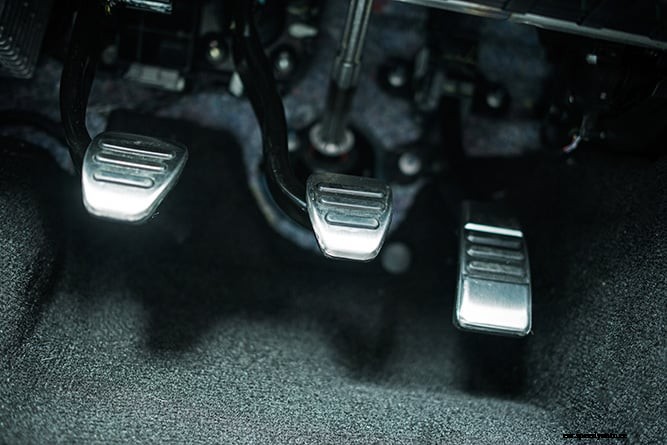
The feel of your clutch pedal will gradually change over time in between clutch services. However, you should take note if your clutch pedal feels spongy, soft, or has to be depressed very far down to engage it. These are some of the earliest signs of clutch problems, so don’t disregard them. Catching a clutch problem at this stage can save you a lot of money and stress in the long run.
One of the most common symptoms of clutch trouble is slipping gears. Simply put, this is when your car’s transmission cannot always stay in gear. If your gear slips, you may notice sudden revving or hesitation while driving as your transmission comes out of the proper gear. Because this symptom also causes some drivability and safety issues, it’s important to have a technician diagnose what repairs are necessary as soon as possible.
A burning smell while driving can signal a number of necessary car repairs. Pay attention to when the burning smell occurs and any other symptoms you may experience alongside the smell. Most commonly, you’ll notice slipping gears alongside the burning smell. However, any time you smell burning while driving, it’s cause for concern and should be checked out by a trusted technician.
When you get the timing wrong with your clutch pedal and shifting gears, you may notice a grinding sound. If you hear that sound more frequently when changing gears, it’s a sign you may need to schedule a clutch repair. Over time, the metal mechanical parts of your transmission responsible for keeping your car in gear will wear out, causing them to become misaligned. Once you hear grinding, it’s time to get your car to a technician for a clutch repair.
Forget about spongy clutch pedals and grinding gears – is your clutch pedal stuck to the floor? That’s a sure sign that you need to get your car to an auto repair shop for a clutch repair as soon as possible. Not only is this a serious symptom, but it also makes your car undrivable. Call your nearest Colorado AAMCO location to set up a towing service to have a technician diagnose any necessary clutch repairs.
