In the summer months and even on hot non-summer days, your car’s air conditioning suddenly becomes one of the most important parts of your car. As temperatures heat up into the 80s, 90s, and even triple digits, the only thing that makes driving bearable is the ability to cool your car to a pleasant interior temperature.
There’s no doubt you probably appreciate your air conditioning, but how much do you know about how it works? How exactly does that sweet, cool air come blowing out of the vents, where does it come from, and how is it produced? The interesting short answer is that the air conditioning system is actually removing the hotter air from your vehicle’s interior, not piping in cool air from elsewhere.
The full answer is quite a bit more complicated, and worth understanding if you want a better grasp on how certain systems in your vehicle function. The following will cover a little bit of history of the automotive air conditioner, how the modern AC system works, and what you need to know to make sure yours is running smoothly and at peak performance through the summer heat.
History of Vehicle Air Conditioning Systems
The earliest automobiles were without most of the amenities and luxury features we take for granted today, and that goes for air conditioning too. The first mass produced car, the Ford Model T, was first produced in 1908, but it wasn’t until the late 1930s when an automobile marketed to the public at large was offered with an air conditioning system.
Early Days of Vehicle Air Conditioning The very first instance of vehicles featuring air conditioning was from a company in New York City, which in 1933 began offering installation of AC for cars. However, this service was used almost exclusively for limousines and cars for the extremely wealthy.
The first car marketed toward the general public featuring air conditioning was produced by Packard, in 1939. The 1940 Packard models came with the option for both air conditioning and heat. While Packard aggressively marketed its air conditioning option, the feature was unpopular with consumers, for a handful of reasons.
The problem with early air conditioning was two-fold. First, the systems were bulky, unreliable, and prone to failure. Second, the cost of the air conditioning feature was around $274, which comes to nearly $5,000 in today’s money. Especially in a country just emerging from the Great Depression, it was a price out of the range of the majority of Americans.
Packard discontinued the feature in 1941, and air conditioning wouldn’t be seen as a widespread mainstream feature in automobiles for at least another decade.
The 1950s and Refinements in Air Conditioning The first car model to offer air conditioning somewhat on par with modern air conditioning systems was the 1953 Chrysler Imperial, using the Chrysler Airtemp technology, which was overseen by Chrysler founder Walter Chrysler. The Airtemp system made a number of improvements on previous air conditioning systems, and represented a step forward in automotive air conditioner technology.
Another major leap forward was the Nash Integrated System, debuting in the Nash Ambassador in 1954. This was the first integrated heating and cooling system all located under the hood and cowl, controlled by switches on the dash.
By the late 1950s, most major US auto manufacturers were offering air conditioning systems that are recognizably similar to our modern air conditioning. While auto manufacturers have continued to make innovations and tweaks, the features, components, and functionality of the Nash Integrated System model is recognizable to this day in the modern AC system.
Changes in Air Conditioning Refrigerant In order for a vehicle’s air conditioning (or almost any air conditioning, period) to work, a substance known as refrigerant is necessary. Air conditioning refrigerant is a substance, usually a liquid, which undergoes transition from liquid to gas, then from gas back to liquid as part of the air conditioning process.
For many years, the refrigerant known as Freon 12 or R-12 was the refrigerant of choice for vehicle AC systems. It was developed in the 1930s and was seen as a perfect refrigerant. It had no odor, taste or color, and was both nonflammable and nontoxic. From the earliest vehicle AC units into the 1980s, R-12 was the refrigerant of choice.
However, researchers and scientists began to be concerned with the impact of R-12 use on the earth’s ozone layer. R-12 is a CFC (chlorofluorocarbon), and compounds in that class have a strong negative impact on the ozone layer. In 1987, a majority of nations ratified the Montreal Protocol, a global treaty aimed at reducing the use of chemicals that deplete or harm the ozone layer.
As per the treaty, in 1994, developed nations like the U.S. were required to phase out the use of Freon R-12 in automotive air conditioning systems. The refrigerant replacing R-12 in U.S. automotive AC systems was R-134a. R-134a has many of the same positive traits as R-12, but doesn’t have the same ozone-depleting effect as R-12.
R-134a was used without major controversy well into the 2000s, but as more attention has shifted toward global warning, concerns have been raised about R-134a too. While not damaging to the ozone layer, R-134a was shown to contribute to global warming by its presence in the atmosphere. The European Union mandated discontinuing the use of R-134a in 2011, and the U.S. and other auto-manufacturing nations have been following suit since.
The currently favorable AC refrigerant is R-1234yf. R-1234yf, also known as CFO-1234yf, is considerably less significant in contributing to global warming, but its properties and how it functions is different than an automotive air conditioning system that uses R-134a. Car manufacturers are creating new vehicles using R-1234yf, but it’s not possible to convert an existing R-134a system to R-1234yf. As a result, R-134a will likely be around for a while, as any vehicles made before the mid 2010s will still be using R-134a.
How the Air Conditioning System Works
Now that you know a little bit about the history of automotive air conditioning, it’s time to get into how a modern vehicle AC system works. The overall concept is fairly simple, and understanding the basic components of the system isn’t all that difficult to grasp.
In simplest form, an automotive air conditioning system uses a refrigerant (the stuff we were just talking about) to pull heat from the car’s interior and then dissipate the heat out through your car’s exterior, releasing the heat into the air. Refrigerant is cycled through a closed loop, starting under the hood and passing around the vehicle’s interior before returning back for another round of expansion and compression.
Examining the process with a little more detail, a vehicle air conditioning uses pressure to start this heat transfer. The AC refrigerant is compressed, which adds pressure and causes it to heat up. That heating process goes into effect by drawing heat from its surroundings, which in this case drawing heat from your vehicle’s interior.
The refrigerant passes from liquid to gas form as it is pressurized and heated, and eventually is passed through tubes to let off that heat through the vehicle’s exterior. This eventually causes the gas to drop in temperature to the point where it phase shifts back into a liquid. From there, the cooled liquid is returned to the starting point so that the cycle may play out over and over again.
It’s important to understand that a vehicle’s AC system is a sealed system. What this means is that the refrigerant is used over and over, and that ideally no refrigerant is lost during the process. Any leak within the air conditioning system will result in refrigerant levels dropping over time, as would any issue causing refrigerant to degrade or break down. Many problems AC systems experience stem from issues with the integrity of the sealed system, not the refrigerant itself.
Now that you have a rough idea of how the air conditioning system works, it’s time to take a look at the components that make up the vehicle’s AC system in detail.
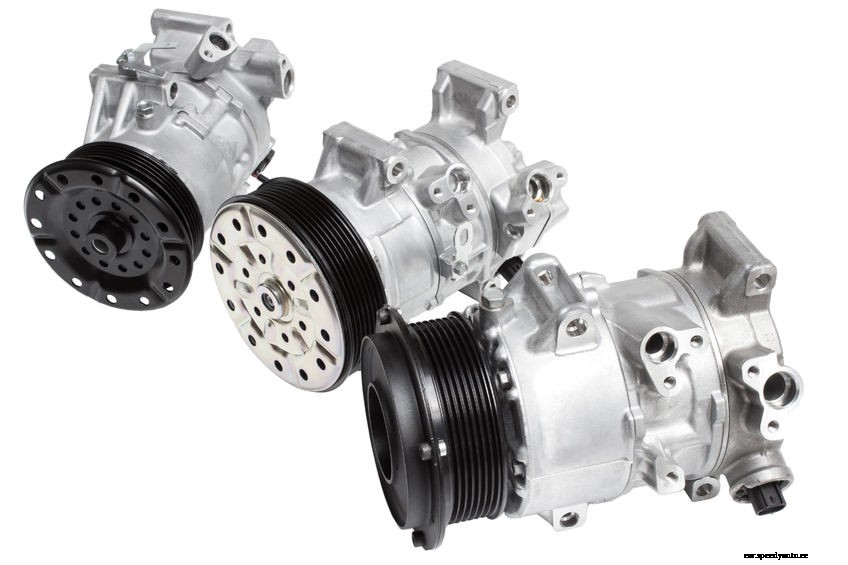
The Compressor If you’ve heard of one part of the air conditioning system, you’ve probably heard of the compressor. The compressor is at the heart of the AC process, as it’s where refrigerant is pressurized to draw in heat.
The compressor is located under the hood, near to the vehicle’s engine block, and is powered by an engine drive belt. An electronic clutch system evaluates the demand for colder air based on the vehicle’s current internal temperature and your AC settings, and communicates with the compressor to remove heat from the interior by cycling on to compress more refrigerant. The Condenser Once the refrigerant has taken in heat from the vehicle’s interior, that heat within the AC system needs to be dissipated into the surroundings through the car’s exterior. This is the job of the condenser.
The condenser is a scaled-down version of a radiator, and in fact it’s usually located near the primary engine cooling system radiator, toward the front of the car. The condenser accepts the pressurized, heated refrigerant and dissipates the heat while cooling the gas until it once again condenses into liquid. In the process, the car’s interior heat is dispersed out of the car entirely.
The Evaporator The evaporator is a sort of mirror version of the condenser, fulfilling a reverse function within the air conditioning lifecycle. While the condenser diffuses heat while cooling the refrigerant from gaseous form to liquid form, the evaporator boils refrigerant from liquid to gas. In doing so, the evaporator draws heat from the interior of the vehicle.
The refrigerant’s passing from condenser to evaporator comprises an important part of the air condition system function, as the two represent the two transformations refrigerants undergo during the process of transferring heat from the interior to the exterior.
Thermal Expansion Valve In order for the evaporator to function correctly, it’s necessary for the AC system to know how much refrigerant should be passed into the evaporator at any given time to cool the car’s interior. This is the job of the thermal expansion valve.
The thermal expansion valve uses a series of gauges and measurements to monitor the vehicle’s interior temperature. If the air condition system is engaged, the thermal expansion value regulates the flow of refrigerant into the evaporator, which ultimately controls how cold the air coming from your vehicle’s vents is.
Compressor to Condenser to Thermal Expansion Valve to Evaporator These four components cover the entire cycle of your vehicle’s air conditioning. Refrigerant begins in the compressor, where it’s compressed to high levels of pressure and heat.
From there, it passes into the condenser, where the high-pressure gas is converted into a high-pressure liquid via cooling.
The thermal expansion valve allows liquid refrigerant to pass through a small aperture, which drops it from high pressure to low pressure.
The low-pressure liquid refrigerant now passes to the evaporator. The evaporator rapidly boils the liquid, a process that absorbs heat from the evaporator, making it very cold. Air is pushed through the chilled evaporator into your car’s interior.
The Receiver/Dryer Another important component within the vehicle’s air conditioning system is the receiver/dryer, also known as the accumulator. The receiver/dryer fulfills a number of functions within the AC system.
One of the functions the receiver/dryer handles is storing refrigerant when it’s not currently needed in the AC process. Yet another function is serving as a trap for debris or any contaminants that may be accumulating within the AC system.
Finally, the accumulator (receiver/dryer) serves the function its name suggests: removing any moisture that has accumulated within the AC system. It does so by using chemicals known as desiccants, which remove moisture that may have accrued in the system via condensation or humidity. Moisture within the air conditioning system can cause damage to the compressor and other components of the system, so the receiver/dryer’s function of removing moisture is a critical operation.
Issues with the Air Conditioning System
Right off the bat, it’s important to understand something about how the air-condition system functions – there’s no set timetable for routine check ups or maintenance. Unlike many other systems and areas of your vehicle, there’s no set timetable after which it’s recommended that you bring your car in for service of the air conditioning system.
An air conditioning system is either working properly, or it’s not. If your air conditioner has a problem, that means one of two things: Either there’s a problem with the amount or condition or your refrigerant, or some component or components within the air conditioning system have malfunctioned or failed. If either of these things is true, you’ll need to have your air conditioning repaired, preferably as soon as possible – as waiting could potentially cause further problems mainly from the accumulation of moisture and other contaminants into the system.
In the summer months especially, your AC will be working overtime, and non-functioning or badly functioning air conditioning system can compound the damage if running while broken. Other components can suffer further damage or fail as a result of untreated issues, meaning that ignoring a broken AC system can lead to further problems (and costs) down the line.
Signs of a Problem with Air Conditioning There are a number of ways by which you can detect that your vehicle’s air conditioning system isn’t working. Some are subtle and hard to notice if you’re not paying close attention, while others are incredibly obvious. The following is a list of some of the signs your vehicle’s air conditioning is having problems.
The most obvious sign of all: Your air conditioner isn’t working. When you flip on the AC, nothing is coming out of the vents. This can result from a number of issues, from problems with the fan and vents to a lack of refrigerant to other issues with the HVAC system.
Another related sign of problems is that your AC is blowing air, but the air you’re receiving isn’t cool or is only slightly cool. If AC not cold, this may be a sign that your compressor is damaged or compromised.
If you observe unpleasant or strange odors while running the AC, this too may indicate a problem. Mold and fungus can build up within your air conditioning system, especially in high humidity conditions, and will need to be flushed out.
Strange noises while running the AC can indicate a variety of issues with the air conditioning system. Any kind of clattering, banging or out-of-the-ordinary noises can mean that one of the components within your AC system is either about to fail or has already become damaged. Squealing or grinding noises can point to a problem with the compressor; while other failed components may cause different sounds.
You may have observed that if your air conditioning runs for any length of time, water will pool out of the undercarriage onto the driveway or road. This is absolutely normal and is a sign that your AC is running correctly. However, sometimes water can appear on your dashboard or at the front floor section of the vehicle. If this happens, it may indicate that the evaporative drain has become clogged up or damaged, and you’ll need to fix this quickly or risk water damage to your car’s interior.
Licensing and Certification for AC Repair The air conditioning system happens to be one where you’re especially well served by seeking repair and air conditioning service from a licensed professional. While most of the systems and components of your vehicle are in best hands with a trained professional, the AC system in particular is a tricky one for several reasons. As a result, any technician working on an air condition system today must be certified.
First of all, the government mandates that anyone who works on an MVAC (Mobile Vehicle Air Conditioning) system for profit must have received certification and training under Section 609 of the Clean Air Act. The Environmental Protection Agency approves training and certification programs, and technicians need to undergo and pass these programs & certifications before they’re able to work on your vehicle’s air conditioning system.
These programs focus on the proper use of MVAC equipment, as well as standards for the handling and recovery of refrigerants in the process of servicing an air conditioning system. The EPA and US government require specific knowledge and best practices when dealing with refrigerant, and all licensed technicians are trained in the right way to handle it while servicing your air conditioning.
Further, the government heavily regulates the sale of refrigerants falling into the classes commonly used with motor vehicles’ AC systems. The sale of refrigerants classified as CFCs is prohibited to anyone not certified under Section 609, and restrictions on other types of refrigerants are also mandated.
As a result of these regulations, the technicians licensed to work on your air conditioning must be highly trained and knowledgeable when it comes to diagnosing and fixing problems with your AC while handling and disposing of refrigerant properly.
Professional Air Conditioning Service and Repair One of the very common issues with air conditioning systems is some kind of leak or crack along a point in the system that causes refrigerant or refrigerant oil to leak out. Unlike many fluid systems in your vehicle, leaking coolant is nearly impossible to detect by the naked eye. Refrigerant evaporates when exposed to air, meaning you won’t see a telltale pool of liquid like you would if your motor oil or coolant is leaking.
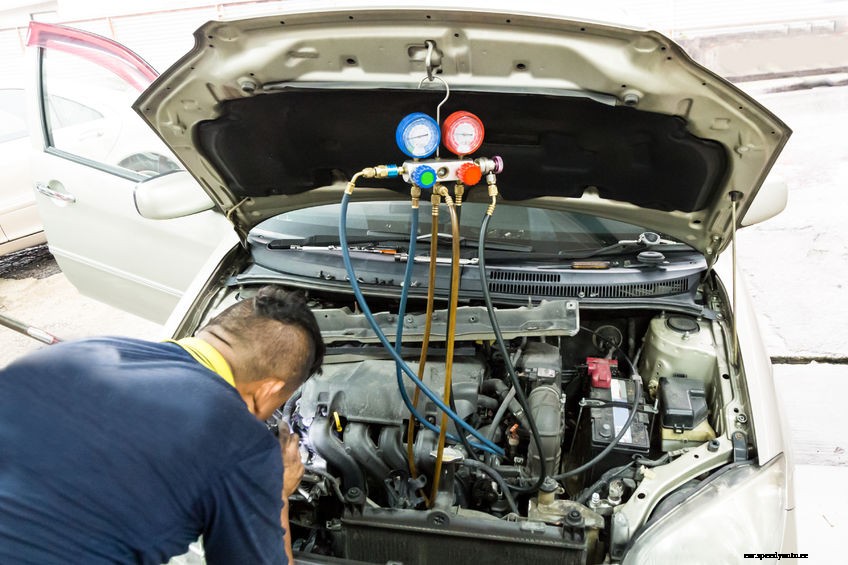
A professional is able to subject your AC system to a test involving injecting an ultraviolet dye into the coolant lines. After running the dye through the system, the technician will inspect the entirety of your air conditioning system with a special light, discovering any areas from which refrigerant may be leaking.
After diagnosing a potential leak, a technician is trained to both repair the compromised areas and recharge air conditioning, adding refrigerant back to the sealed system. Given the sensitive and restricted nature of refrigerant, often times your only option for recharging air conditioning is a licensed professional.
In addition to checking for and repairing leaks in your AC system, a trained technician will subject your AC system to a battery of tests which cover nearly all possible problems that may be affecting your air conditioning system.
Common Air Conditioning Repairs The following cover a range of some of the more common air conditioning repairs you might encounter if your air conditioning ends up encountering problems.
If your AC system has developed fungus or bacteria, resulting in unpleasant odors when running the air conditioning, you may need the entire system flushed out by a licensed technician.
Problems with the fan or vent system can reduce the effectiveness of your air conditioning or stop it from working all together. The fix for this can be as simple as replacing a fuse or small part within the fan or vent mechanisms.
Your condenser or compressor can accumulate debris, dirt and other impurities as time goes on. If enough accrues, function will deteriorate and your AC will either work poorly or not at all. In a situation where debris results in AC not cold, a flush of the component in question may solve the problem, or you may need to have the condenser or compressor replaced.
A leak at some point in the air conditioning system will eventually drop refrigerant levels to the point where your AC operation will be impacted. First of all, the leak must be identified and repaired. Then, your AC refrigerant levels must be brought back up to maximum levels.
Hopefully, your air conditioning system remains working in tip-top shape through the summer and beyond. But if you do encounter any of the above signs of trouble, you now have a better idea what you may be dealing with, and should know when it’s time to bring your vehicle in for air conditioning service.
You may also be interested in reading… Air Conditioning Repair