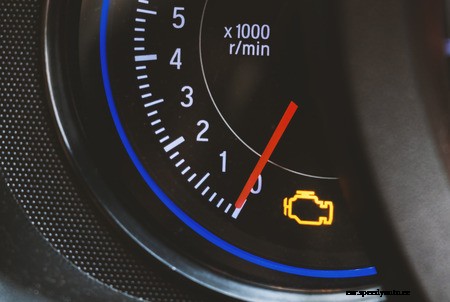
Most drivers have had this experience at least once in their time as a car owner: They’re driving along, and without warning or explanation the Check Engine Light, also called Malfunction Indicator Lamp (MIL), comes on. Usually there’s no outward change in the car’s performance or function, and it’s not clear what exactly the light is indicating is wrong with the car.
Even with no outward performance malfunction or adverse symptom, we suggest having the vehicle inspected by a professional as soon as possible when the check engine light comes on. In an article published in May 2017, Consumer Reports quotes Dave Cappert of the National Institute for Automotive Service Excellence (ASE) as saying, an illuminated check engine light “does mean you should have the car checked out as soon as possible.”
The Check Engine Light signals a number of different potential issues with your vehicle, and it’s important to understand the ins and outs of what it means when this light comes on. It covers a wide range of possible problems or causes, some extremely minor while others are more serious. Understanding the possible range of reasons for the light coming on, and how to address it, will make you a better and more informed car owner.
Most Common Reasons and Causes We See for a Check Engine Light
A check engine light (Malfunction Indicator Lamp or MIL) may mean any of a variety of issues with your car, from the trivial to the more significant. One of the worst parts of the MIL coming on is that you don’t immediately know what it means, and it’s natural to fear the worst. The good news is, most of the time, the check engine light coming on doesn’t mean a dramatically costly repair.
Being aware of the possible reasons the Malfunction Indicator Lamp MIL is lit up will allow you to better cope with and understand what might be going on with your car.
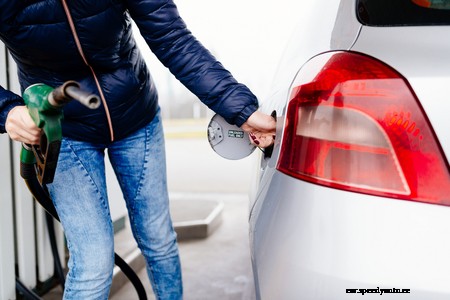
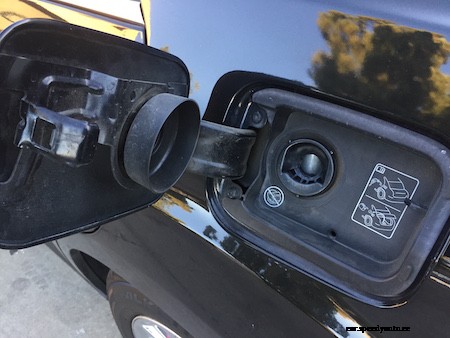
Gas Cap is Loose, Missing, or Damaged One of the simplest reasons that the MIL lights up is that the car’s gas cap is loose, missing, or damaged in some way. If this happens, the gas cap isn’t maintaining pressure within the car’s fuel tank, and fuel vapors (gasoline fumes) are being released into the atmosphere.
This is one of the easiest issues to solve. You may only need to tighten the gas cap, wait a bit, and then check to see if the light is still on. Alternately, you can purchase a new gas cap for only a few dollars and replace it yourself.
Checking to see if the gas cap is loose is your first line of defense when the check engine light comes on, and hopefully the issue is solved right there. Many times, though, the issue is a little more complicated than that.
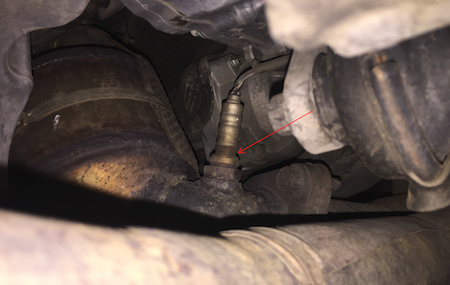
Faulty Oxygen Sensor Another possible reason for the MIL to go on is that the car’s oxygen sensor has become damaged or faulty. This can come as a result of the sensor becoming covered in oil over time, which restricts its ability to properly sense the fuel/oxygen mixture.
When oxygen sensors aren’t working correctly, your car will get worse gas mileage, and will also increase emissions while you’re driving it. Over time, not replacing a faulty oxygen sensor can lead to the demise (poisoning) of the catalytic converter, which in some instances can cost over $1,000 to replace, depending on the particular vehicle. Bringing your car to the shop to replace an oxygen sensor will cost a fraction of that, so it’s wise to address this issue proactively.
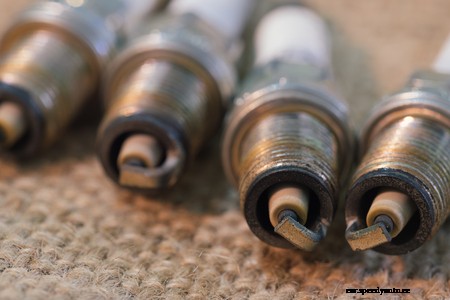
Faulty Spark Plugs and Wires Spark plugs seal the car’s combustion chamber and provide a spark that initiates combustion in the engine. Over time, spark plugs wear out, and will begin to misfire. When this happens, you’ll feel a rough-running engine, mostly at idle, and sometimes might feel a slight jolt in acceleration.
Spark plugs inevitably wear out over time, though modern spark plugs can often last for up to 100,000 miles. Not replacing faulty spark plugs can lead to further issues down the line, so it’s important to replace them when they go bad, or at the replacement interval recommended by your vehicle’s manufacturer – whichever comes first.
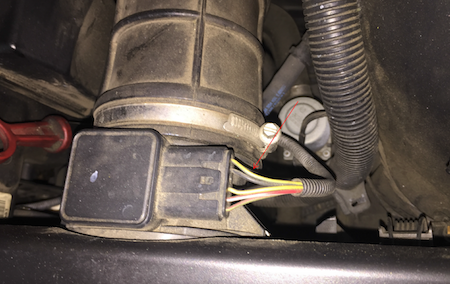
Faulty Mass Airflow Sensor The mass airflow sensor communicates with your car’s computer to regulate the amount of fuel being added to the engine based on the volume of air coming through the engine. The reason most mass airflow sensors go bad is as a result of either an improperly installed or old and dirty air filter. To keep your mass airflow sensor functioning properly, make sure to get your air filter(s) changed at least every 15,000 miles or at the interval recommended by your vehicle’s manufacturer.
When the mass airflow sensor is malfunctioning, the car will get worse gas mileage and will have increased emissions, and your engine can even stall in many circumstances. Getting a mass airflow sensor replaced in the shop typically runs around $200 to $300 dollars, far less costly than many other issues that can result from driving an improperly maintained car.
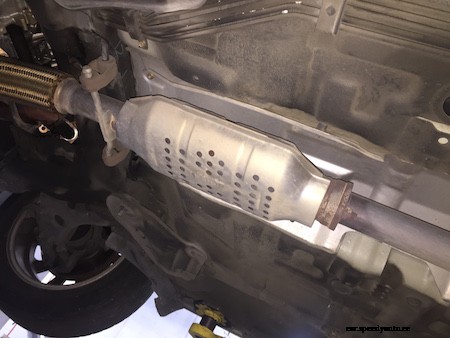
Faulty Catalytic Converter This is the big one, from a cost and vehicle function standpoint. The catalytic converter reduces exhaust gasses, converting harmful gasses like carbon monoxide into safer and cleaner compounds. If the catalytic converter goes bad, you’ll get decreased gas mileage, and your car’s acceleration and overall performance will begin to suffer. Replacing a catalytic converter typically costs at least $600 on average and can be as high as over $1,000 – representing a major repair.
It’s important to be aware that the main reason catalytic converters fail is due to car owners neglecting regular maintenance. Most of the reasons mentioned so far for the check engine light being on could eventually lead to a damaged (poisoned) catalytic converter if not addressed promptly. Faulty oxygen sensors, deteriorated spark plugs, or a faulty mass airflow sensor can all lead to a damaged catalytic converter.
Once the catalytic converter fails, your car won’t pass a smog inspection, and performance will suffer greatly. This represents a typical worst-case scenario, but if you keep up with routine maintenance, you should hopefully avoid a situation where you need to replace the catalytic converter.
Other Causes The above five reasons are the most likely culprits for a lit-up check engine light, but there are other possibilities as well. Some other possible issues include: A faulty ignition coil A faulty thermostat A faulty evaporative emissions (EVAP) purge control valve A faulty evaporative emissions (EVAP) purge solenoid
In our area of Southern California, the most common cause for a MIL to come on is a result of faulty oxygen sensors, followed by a faulty catalytic converter.
Flashing Check Engine Light vs. Solid Lit
With all of the above possible issues causing a MIL to be lit up, the light should be solid and not blinking. A solid lit MIL indicates a problem, but not necessarily a drastic one requiring immediate attention.
However, it’s possible that the check engine light will blink rather than remain steady. A blinking MIL typically represents a significant engine misfire or malfunction. A misfire means that one or more of the car’s engine cylinders aren’t providing power to the vehicle. If this is happening, it’s possible that raw fuel is running into the catalytic converter.
If the MIL is flashing, this represents an immediate and serious problem. Driving the car with a flashing check engine light can result in serious damage requiring costly repairs, or even, in some instances, a car fire.
While even a solid lit MIL is something you should address as soon as possible, a flashing MIL represents a problem you need to deal with immediately. The sooner you can get the car into the shop, the better. We advise towing your vehicle in to the shop if the check engine light is blinking.
Retrieving the Check Engine Code is Only the First Step
The first step in the diagnosis of a check engine light is to retrieve the fault code from your vehicle’s on-board computer. This code provides a road map to the rest of the diagnosis necessary to pinpoint the exact cause of the light.
A number of auto parts stores offer free services where they will read your car’s computer to find out the code associated with the check engine light, and then offer to sell you parts identified in the code. While this can sometimes result in an accurate diagnosis, it’s by no means guaranteed to be the case, and you should be wary about using this method to address your car’s MIL lighting up. Beware of the lure of “free.” Sometimes if it sounds too good to be true it is.
The problem with attempting to diagnose the issue with the car based only on the resultant check engine code is that the code doesn’t always cleanly indicate exactly what’s wrong with the car, and what’s causing the light to come on. Many systems related to the MIL are complicated, and a surface readout based on the code will misdiagnose the true issue. It’s almost like assuming you know the end of the story from the book title or cover.
For instance, the code readout might indicate an issue with a certain oxygen sensor. The auto parts store will then sell you an oxygen sensor and tools to replace it. It’s possible that this will fix the problem, but it’s also entirely possible that the MIL will go on again within only a few miles of making the ‘repair.’
At that point, you’ll need to take the car into the shop to be diagnosed by a professional, as sometimes a specific code retrieved from the on-board computer means only that there’s an issue connected with that area of the engine, but not necessarily that particular component itself. In this case, the issue might lie with the catalytic converter rather than the oxygen sensor, or maybe the electrical connector for the oxygen sensor – something we’ve seen several times before.
The auto parts store is not likely to give you a refund on the part and tools you bought, meaning you’re out both the extra time and money you spent not addressing the real problem. Free MIL code readouts seem great, but they’re not always in your best interest, unfortunately. Just remember that, in California, an auto parts store is not licensed to perform car repairs (or diagnosis).
Your safest and surest bet to finding the issue causing the check engine light to come on is to bring your car in to be diagnosed and serviced by a trained professional, who can find the true problem and address it correctly the first time.