
Tire Life:
How long your tires will last depends on many conditions. These variable factors include tire quality and design, driving habits and road conditions, the climate, and the tire maintenance performed – such as frequency of tire rotations, tire balance, and wheel alignments. Because of all these varying factors, it’s somewhat difficult to determine exactly how long your tires will last.
You can easily increase the life of your tires by keeping the tire air pressure at the recommended level, doing regular and routine tire rotations, and performing regular vehicle maintenance that includes regular tire inspections.
Tire Age:
If your tires are 10 years old, from their manufacture date, we recommend you consider replacing them as a precaution. We recommend this even if the tire tread isn’t worn down yet. This is because, after 10 years, the integrity of the rubber, especially in the tire sidewalls may be compromised due to age and cracking. Don’t forget about your spare tire, which may also be more than 10 years old. If the tires on your car are the original ones that came new with the car, we’d recommend following the vehicle manufacturer’s recommendation for replacement.
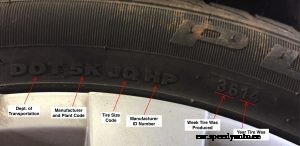
Here’s how you find the date of manufacture on your tires. First look for the DOT (Department of Transportation) symbol on the tire’s sidewall. After the DOT symbol you’ll find the identification number of the tire. This number begins with the tire manufacturer and production plant code. The final four characters of the ID tell you the two-digit week and the two-digit year the tire was produced.
Proper Tire Maintenance and Care:
Routine tire maintenance and care will save you money in the long run because tire maintenance extends tire life, which means you’ll buy tires less often. Tire maintenance consists of keeping proper air pressure, regular tire rotation, regular tire inspections and wheel alignments at the first sign of alignment-related tire wear. Additionally, routine vehicle maintenance that includes suspension inspections can help tire longevity. This is because worn out shocks, struts, and other suspension components may cause premature tire wear.
The simplest of things, like maintaining proper tire pressure can make a huge difference. Under inflated or over inflated tires will wear unevenly. Proper tire inflation will also save you money on fuel costs. Under inflated tires create additional resistance while driving, making underinflated tires one of the leading causes of poor gas mileage.
When checking and adjusting tire pressure, refer to your owner’s manual or the label in your vehicle’s door jam for the proper specifications. Do not go by the PSI (pressure per square inch) rating on the tire’s sidewall. The rating on the sidewall is the maximum inflation for the tire and not the specification for your vehicle.
You might also be interested in reading:
How do I Know I Need New Tires?
Tire Service
