
We’re going to switch things up a bit here at A-1 Custom, and start trying to answer some of your itching automotive repair questions.
This time around we’ll be answering:
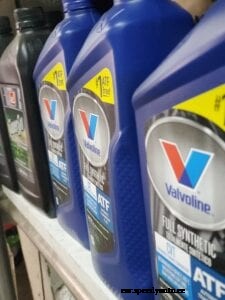
This is a very common question, and over the years it keeps getting harder and harder to answer. Because the answer keeps getting more and more complex.
The simplest answer will be to use “only manufacturer recommended engine oil weight and type in your vehicle.”
But what does that even mean?
In this post, we’ll break down what manufacturer recommended oils are, how they can change over time, and where to find information about them. We will also cover some recommended ‘aftermarket’ oil types and weights; and when to use them.
When you purchase a vehicle, that vehicle comes with all sorts of OEM (Original Equipment Manufacturer) strings attached. The manufacturer of that vehicle (think Toyota, Honda, Chevrolet, etc) built that vehicle to certain specifications, and in turn, they have certain specifications and requirements you need to follow to keep it running great.
One of the very important requirements is engine oil type.
 Oil types are rather simple, most manufacturers will specify whether a vehicle requires ‘Full-Synthetic’ or ‘Conventional/Semi-Synthetic’ oil. The difference between these is easy to understand. A fully synthetic oil is primarily made of man-made lubricant molecules – it’s mostly laboratory chemicals. A conventional, or regular, or even semi-synthetic oil (whichever term you prefer) is mostly made of oil that comes out of the ground – ancient hydrocarbons made from the flora & fauna of the dinosaur time periods!
There can be varying grades and qualities of these oils over time, and all sorts of complicated specifications to follow. But the easy rule of thumb is, an oil from the same time period or newer than the car, will probably meet the grade specifications of the car, as long as you pick the correct type. For example, a car from 1990 that requires a conventional oil, will be perfectly okay using a conventional oil from 2020. This is because oil grading improves with time. Every time a new oil grade is created, it is building on the previous technology and chemistry from years past.
Another example would be, a new Toyota from 2020, that requires full-synthetic, will NOT be perfectly okay using that leftover synthetic oil on your shelf that has been there since 2001. Because the new oil grades that are relevant to 2020, weren’t around back then.
So now we come to the more complicated part. Oil viscosity, or weight. With this, it is important to understand some ‘basic oil science’.
Simply put, oil viscosity is a measure of how well the oil flows or pours at a particular temperature. Thin oils have lower viscosity and pour easier at colder temperatures, than thick oils with higher viscosity. On the other hand, thick oils with higher viscosity are better at providing oil films for lubrication, and keeping high oil pressure, at higher temperatures. So an oil ‘weight’ is a standard of rating on how that oil performs at cold & hot temperatures, for easy reference.
Modern oils have two ratings used in their weight/viscosity classifications – like 5w30, or 5w20. The first number tells you how the oil performs in colder temperatures, and the second number tells you how well the oil performs at higher temperatures.
A great example of this would be one of the newer (within the last decade or so) oil weights – 0w20. An oil rated as 0w20 has the same flow, or p
our rate at cold temperatures, as a ZERO weight oil. The -20 for the last number, denotes that the oil performs like a TWENTY weight oil at high temperatures, in regards to oil pressure and lubrication.
For a long time, car manufacturers would offer multiple oil specifications, for a whole range of operating conditions, and temperature ranges. This practice stopped sometime around the 2010 time frame.
Most recent vehicles, will really only allow for one particular oil weight to be used, and in rare cases, may allow for a temporary use of an alternate weight. However; these manufacturers will also require that an oil change be done with the correct weight of oil ASAP – BEFORE your regular oil change mileage.
This is because most modern vehicles have much tighter internal engine machining and tolerances than older vehicles, and also, are using very specific oil pressure readings to actually control, and adjust the engine during driving. Changes in oil viscosity will falsely change engine readings, and cause the engine to run rough, or sometimes, even not run at all. Long term usage of incorrect oil viscosity can also create severe wear to engine internal components that are increasingly made out of softer & thinner metals.
There are multiple ways to discover this. The easiest two ways, often are included with the vehicle!
 First and foremost, most modern cars and trucks will have an oil fill cap on the engine that is clearly labelled with the engine viscosity or weight required. Sometimes they will also tell you what type of oil to use; synthetic, or not.
The other location to find that information would be the vehicle owners manual. There will be a section clearly marked for oil change interval information, oil type, and weight.
There is a catch however.
Vehicle manufacturers can, and will, change their requirements for oil, as they get more real world data from cars they’ve sold, and as oil grades change. A frustrating example would be in 2012, when GM retroactively required full-synthetic oil in all their Ecotec engine vehicles from 2011 onward. A year after some owners had purchased their cars, GM tells them that the conventional oil they’d been using, as directed by their owners manuals, had voided their engine warranty. At that time, GM released a new oil grade requirement, known as Dexos – that required a synthetic oil formulation, due to the Ecotec engine being cast from aluminum, instead of steel.
This means it is important to keep an eye on manufacturer information – which your mechanic or repair facility should be doing.
There are also readily available public documents on the internet, that can explain what oils to use for your car or truck. However, you need to check that the information is from a reliable, and professional source. Internet forums and private owner opinions abound on alternative oils and fluids, and will often lead you far astray from what is actually required by the vehicle.
So you have a vehicle out of warranty, or something that is modified, and you want to know what oil to use? The answer, realistically, is still probably going to be to use the manufacturer recommended oil. But if you have something modified far beyond stock hardware, or just really want to use something better then OEM; there are a few rules of thumb.
First, stick with factory recommended weight unless you have drastically changed the engine computer software (and subsequently know what you are doing with those alterations) or unless you have something old enough that the timing, and engine controls are not changed by oil pressure. Even those GM vehicles from 2011-2012, are still running the regular 5w30 viscosity they came out with, despite GM changing the oil type requirement, and despite 10 years of age. Modern engines stay ‘tighter’ much longer, and will not function well, or even at all; with higher viscosity oils.
Second, if changing oil types, ONLY go for a better grade. This means, if your vehicle required conventional oil when new, move upwards to a full synthetic. If it required full-synthetic, find a better synthetic type, or different (better) brand.
Don’t change back to something less qualified later down the road either. You will be putting extra stress and wear on already old and worn components.
Oil is important for your vehicle, and any automotive professional will tell you, it is the life-blood of your vehicle. So paying attention to detail, and keeping up with the particular oil specifications your vehicle requires, will go a long way towards keeping your vehicle running newer, longer.
