
It’s an well-known fact that car upholstery and their design play a significant role in providing the passengers with a smooth and comfortable ride. A variety of upholsteries has been car manufacturers in the past 2-3 decades. Upgraded and highly suave upholsteries require timely maintenance to keep them usable for longer duration and your ride cozier.
Here’s how you can expand the life of your car seats.
Car upholstery covers a huge portion of a car’s interiors. Riding in a car with neat and clean interiors always engulfs the passengers in a serene atmosphere. But, as much as cars are utilized in the modernised age of fast-paced lifestyles, filth, dirt, and stains don’t take long to accumulate on the car seats. And when such accumulations are left unattended for a considerable duration, they start producing awful odours and harmful bacteria. These issues could further lead to illness and fading of colours. Regular cleaning of the car seats is substantially vital to retain their good looks, keep the passengers from illness, and maintain a good resale value. Here are some easy steps you can follow in order to clean the upholstery.
Thoroughly check the car for trash, check for coins, clean the handy pieces with hands like wafer packets and disposables. Use a brush to clean the crumbs, debris, and dirt. Remember to brush lightly so that you don’t plunge the dirt through the fabric and into the seams of seats.
To clean much finer dirt and filth, the upholstery needs to be vacuumed. If a vacuum cleaner is available, start vacuuming with a brush head attachment. Vacuum all the debris, loose crumbs, and dirt. Use a nozzle attachment in the vacuum cleaner to clean the seams of seats. If the vacuum cleaner is unavailable, you could approach any car detailer.
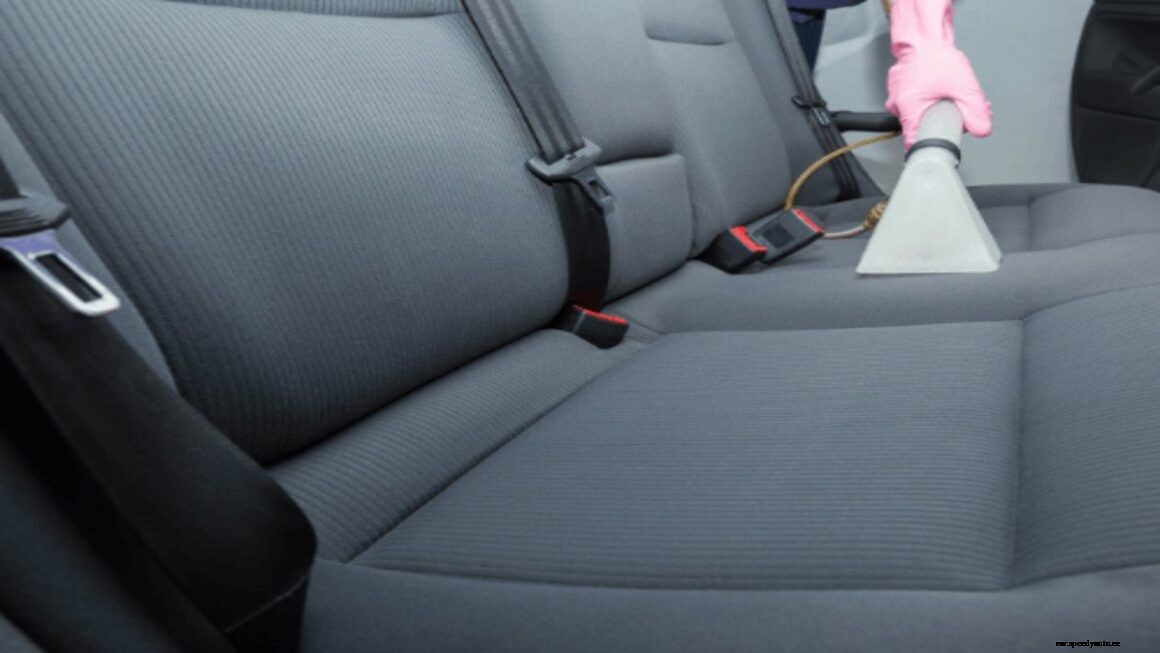
After the upholstery is vacuumed, it needs to be cleaned with a specific upholstery protector product to restore its shine and dress it with a protective coat. Before using the product, test it on some inconspicuous areas on the upholstery and check if it leaves any stain or damage. Spray the upholstery protector on the car seats and then allow it some time to dry. Two consecutive light sprays of upholstery protector product will be enough to prevent your car from future smears and stains.
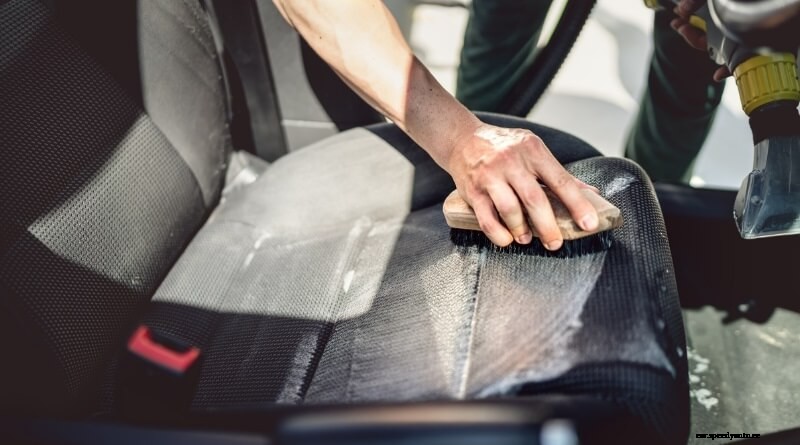
Start by vacuuming the upholstery to clean debris and dirt. Use a brush head attachment as it helps to scratch the smears and stuck dirt particles. Use a nozzle head attachment to clean up the dirt from the seams of seats.
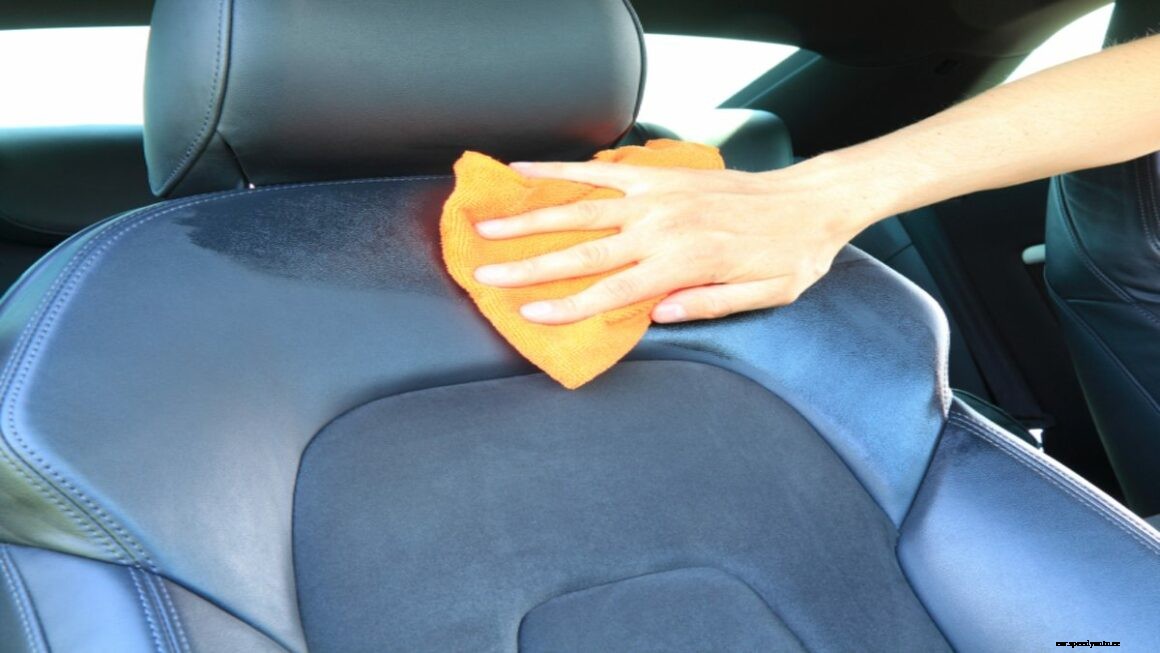
Now, the leather cleaner needs to be applied to the upholstery as it restores its elasticity and shine. Use a microfiber cloth as it attracts and holds dirt effectively and doesn’t leave any abrasion and raisins behind after cleaning. Take a clean piece of microfiber cloth and apply some leather cleaner to it. With slow and gentle circular motions clean every part of the seat to help penetrate the cleaner inside the leather. Start the cleaning from the headrest so that if the cleaner flows down it gets evenly applied to the rest of the upholstery, and then gradually work the cleaner down to the rest of the area of upholstery.
Let the seat soak the leather cleaner for around 5 minutes, it will hydrate the leather to prevent it from cracks. Buff the seats a second time with the cleaner. Don’t leave any traces of the cleaning product. Applying the leather cleaner will ensure an excellent finish.
Many upholstery cleaners are available in the market. However, if you intend to make cleaner at home, you can mix one cup of vinegar and one scoop of laundry detergent in half a bucket of hot water.
The process of cleaning the car seats takes approximately 30 to 60 minutes. But the time taken in drying the seats depends on the relative temperature outside. If the weather is slightly warm, it takes around 2.5 hours for the seats to dry. If the weather is cold, the seats will take around 3 to 5 hours to dry.
Car upholstery could be easily cleaned at home. The following steps can help you through the process.
