
🛠️ About to spend $25–$900 on a scanner? Our $7 Buyer's Shortcut breaks down 18 scanners across 3 budget tiers, names the ones to avoid (FIXD subscription trap, fake bidirectional claims, ELM327 clones), and settles 3 of the biggest head-to-heads. No affiliate fluff. Get the Shortcut ($7) →
Disclosure: Some links in this article are affiliate links. This does not affect our review process or product rankings.
Don't waste money on the wrong tool. See which scanner features you actually need for your specific car.
🔍 What are you trying to figure out?
• Which system does my car have? Jump to How to Tell Which TPMS System You Have
• What’s the difference between the two systems? Jump to How Each System Works
• Which one is better? Jump to Direct vs Indirect: Full Comparison
• My TPMS light is on and I need to fix it. See our How to Reset TPMS Light guide instead
• I need to replace or diagnose a TPMS sensor. See our Best TPMS Reset Tools guide
🔧 Before You Start
• A tire pressure gauge ($5–$15) is the single most important tool regardless of which TPMS system you have.
• Know your recommended cold tire PSI — it’s on the driver’s door placard, not the tire sidewall.
• If you have direct TPMS and need to diagnose or relearn sensors, a TPMS activation/relearn tool ($30–$80) will save you hundreds in shop visits over time.
• Don’t forget the spare: Some vehicles have a TPMS sensor in the spare tire. If your TPMS light is on and all four road tires check out, check tire number five.
See Our Top TPMS Tool Picks →
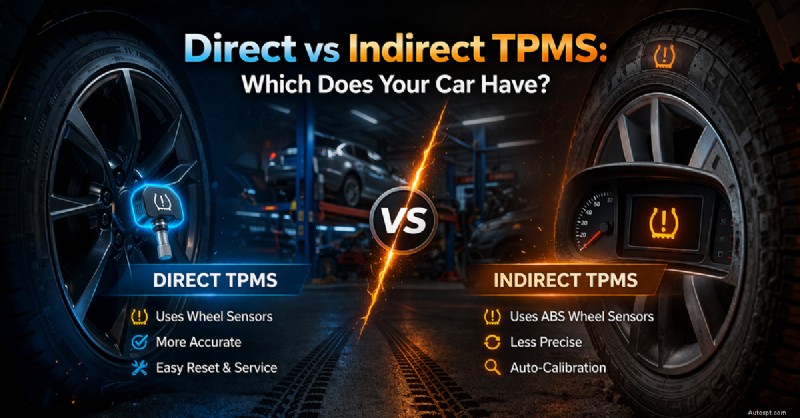
Every car sold in the United States since 2008 is required to have a tire pressure monitoring system. That’s federal law — the TREAD Act, passed after the Firestone tire failures in the early 2000s that killed over 100 people. But the law doesn’t specify which type of TPMS a manufacturer has to use, so automakers split into two camps: direct systems with physical sensors inside the tires, and indirect systems that repurpose the ABS wheel speed sensors to estimate pressure.
The difference matters more than you’d think. It affects how much you pay at the tire shop, whether your dash shows individual tire pressures, how you reset the TPMS light, and what happens when you rotate your tires or swap to winter wheels. If you’ve ever been confused by a TPMS warning — or been quoted $400 to replace four sensors you might not even have — this guide explains exactly what’s going on.
Most vehicles on the road today use a direct system with sensors inside the tires. James Neff, ASE Master Technician with 42 years of experience and owner of All Seasons Automotive, has reviewed this guide for technical accuracy. James works with both TPMS systems daily and validated every claim below.
Before you compare the two systems, you need to know which one is in your car. Here are three ways to find out, from fastest to most definitive.
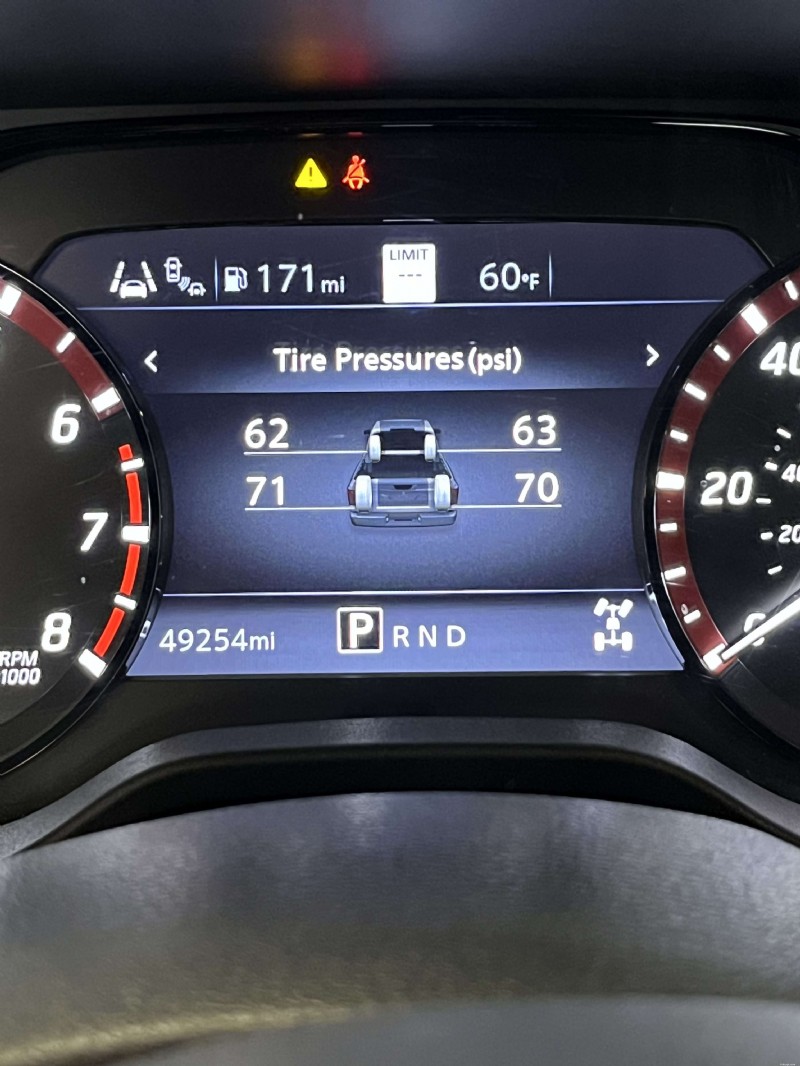
Start the car and look at the instrument cluster or infotainment screen.
If you see individual PSI readings for each tire (e.g., LF: 34, RF: 35, LR: 33, RR: 34), you have direct TPMS. The car is reading actual pressure data from sensors inside the tires.
If you only see a generic warning light or message (“Low Tire Pressure” or just the yellow horseshoe icon) with no specific PSI values, you likely have indirect TPMS. Some direct systems also only show a warning without individual readings, so this method isn’t 100% definitive.
Walk around the car and look at the tire valve stems.
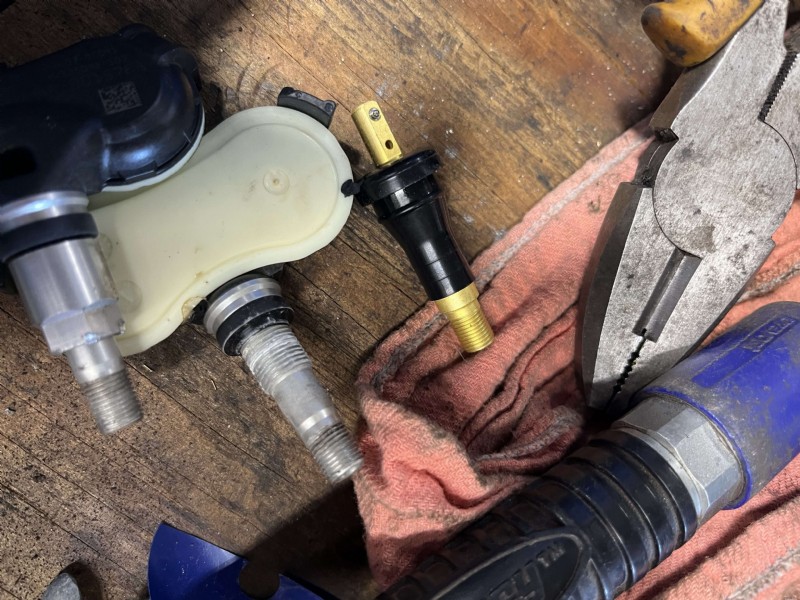
Metal valve stems or rubber stems with a visible metal base/nut: Direct TPMS. The sensor is mounted inside the tire on the valve stem assembly.
Plain rubber valve stems with no metal components: Usually indirect TPMS. There’s no sensor inside the tire.
Pro Tip: Not 100% Reliable
Some direct TPMS sensors use band-mount designs that attach to the inside of the wheel barrel instead of the valve stem. In these cases, the valve stem looks like a plain rubber stem even though there IS a sensor inside. Honda and some Toyota models use this design. When in doubt, use Method 3.
The owner’s manual will specify the TPMS type in the tire section. If you don’t have it handy, search your year/make/model online. Here’s a general guide by manufacturer:
This table covers the most common configurations. Specific model years and trim levels may differ. Your owner’s manual is the definitive source.
Expert Insight
“The single biggest confusion I see in the shop is BMW owners. BMW quietly switched many models from direct to indirect TPMS around 2014. The owner comes in expecting sensor replacement and gets confused when I tell them there are no sensors to replace. If you own a 2014+ BMW, check your specific model before paying for sensor work.”
— James Neff, ASE Master Technician
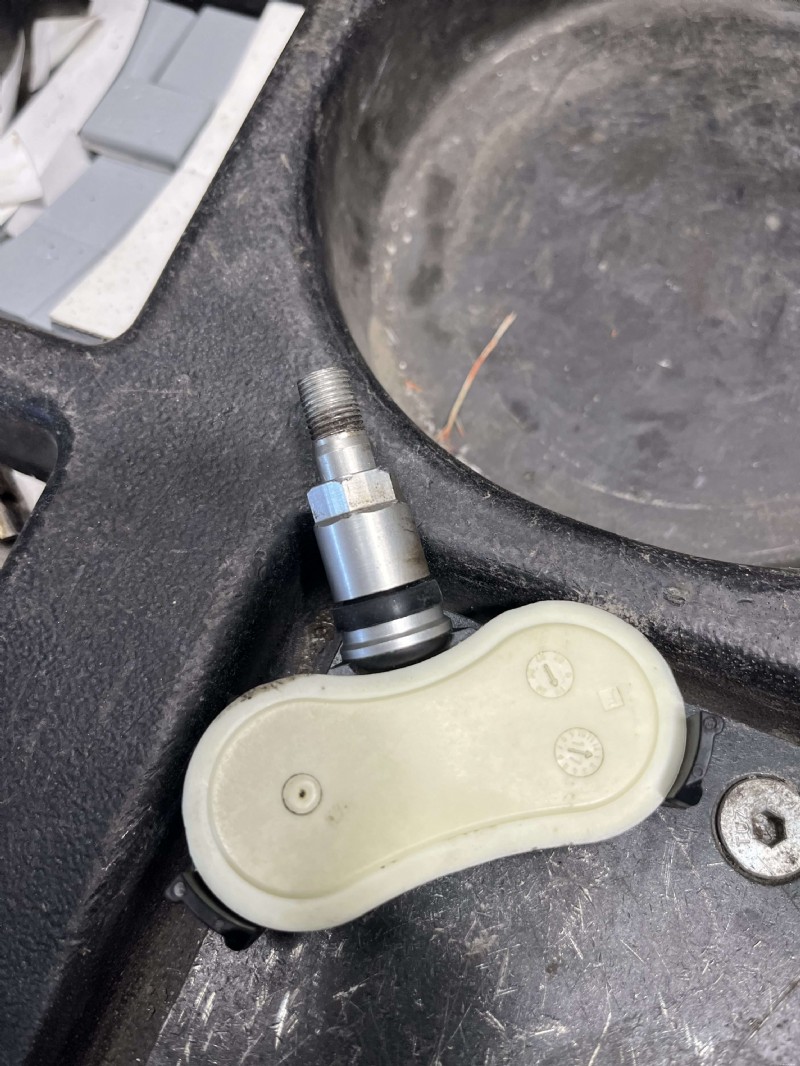
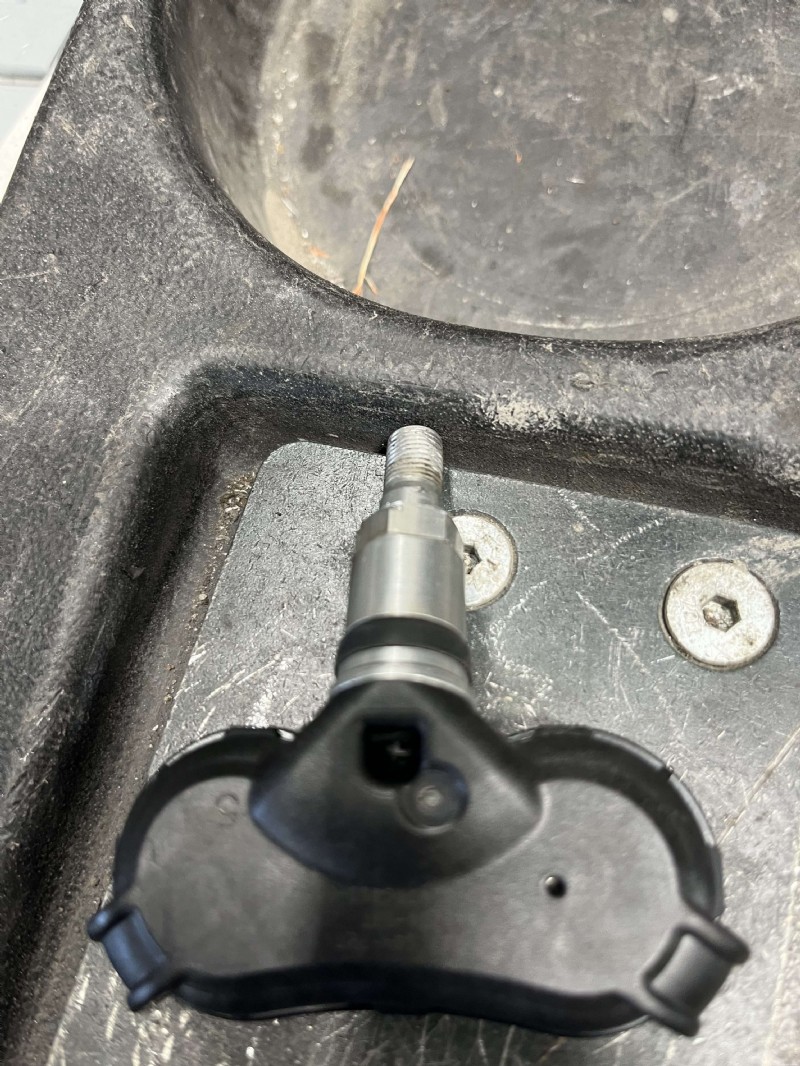
A direct TPMS system places a physical sensor inside each tire, typically mounted on the valve stem or banded to the inside of the wheel barrel. Each sensor contains four components: a pressure transducer that measures actual air pressure, a temperature sensor, a battery (non-replaceable, typically lasting 8–13 years in practice), and a radio transmitter that broadcasts data on either 315 MHz or 433 MHz depending on the vehicle.
The sensor takes a pressure reading at regular intervals — typically every 30–60 seconds while driving, less frequently when parked to conserve battery. It transmits the reading wirelessly to a TPMS receiver module in the vehicle, which compares the pressure to a threshold (usually 25% below the recommended cold PSI on the door placard). If pressure drops below that threshold, the TPMS warning light illuminates.
Each sensor has a unique ID. When you replace a sensor or rotate tires, the vehicle’s TPMS module needs to learn the new IDs and their positions. This is why direct TPMS systems require a relearn procedure after tire rotation, new sensor installation, or wheel swaps. The relearn method varies by manufacturer — GM uses a horn-chirp stationary procedure, Ford uses a brake pedal training sequence, and some vehicles require an OBD-II tool to write sensor IDs directly to the ECU.
Accurate pressure readings — Measures actual PSI in each tire individually. Most systems are accurate to within ±1 PSI.
Individual tire identification — Tells you exactly which tire is low, not just that “a tire” is low.
Real-time monitoring — Detects both slow leaks and rapid pressure drops while driving.
Temperature compensation — Adjusts readings based on tire temperature, reducing false alerts from cold mornings or highway heat buildup.
Works while parked — Can detect overnight pressure loss before you start driving.
Sensor replacement cost — ~$50–$150 per sensor installed. Replacing all four costs $200–$600.
Battery dies — Sensor batteries are not replaceable. When originally introduced, expected battery life was about 8 years. In practice, many sensors last 10–13 years before needing replacement.
Damage during tire service — Tire technicians can crack or break valve-stem-mounted sensors during tire mounting/dismounting if they’re not careful.
Relearn procedure required — After tire rotation, sensor replacement, or wheel swaps, you (or the shop) must perform a relearn so the car knows which sensor is on which wheel.
Winter wheel hassle — If you swap to winter wheels, you either need a second set of sensors ($200–$600) or must relearn the system every swap.
Pro Tip: Best Time to Replace Sensors
The best time to replace TPMS sensors is when you’re already having new tires installed — the tire is already off the rim, so there’s no extra labor cost. If you’ve ever had a sensor fail, or your car is 9+ years old and you’re replacing tires, consider replacing all four sensors at the same time. It’s far cheaper than paying for separate dismount/mount labor later.
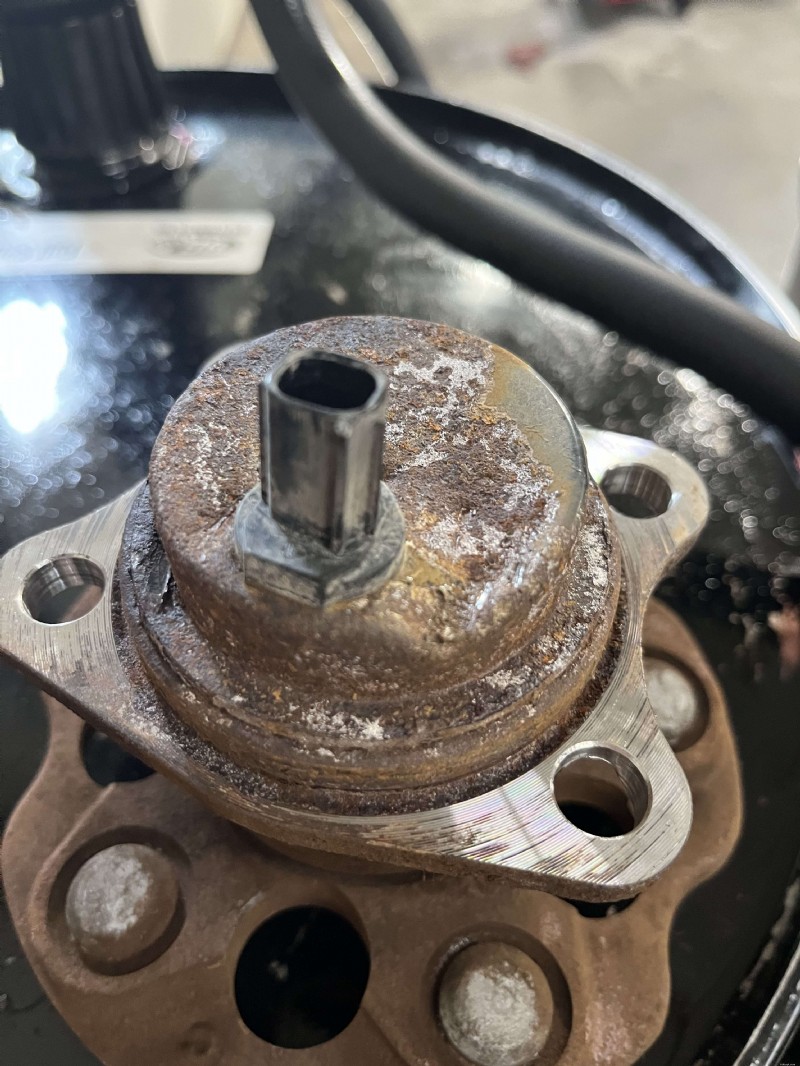
An indirect TPMS system has no sensors inside the tires. Instead, it repurposes the ABS (Anti-lock Braking System) wheel speed sensors that are already on every wheel of the car. These sensors measure how fast each wheel is rotating.
The principle is simple physics: a tire with lower pressure has a slightly smaller rolling circumference than a properly inflated tire. A smaller circumference means the wheel has to spin faster to cover the same distance. The TPMS software in the ABS module or ECU continuously compares the rotational speeds of all four wheels. If one wheel is consistently spinning faster than the others by a threshold amount, the system concludes that tire has lost pressure and triggers the TPMS warning.
Some advanced indirect systems (used by BMW’s RDCi and some Volkswagen/Audi models) go further. They use vibration analysis and spectrum analysis of the wheel speed signal to detect changes in tire stiffness that correlate with pressure changes. This allows them to detect simultaneous pressure loss in multiple tires — something basic indirect systems cannot do.
No sensors to replace — $0 in sensor costs, ever. The ABS wheel speed sensors are built to last the life of the vehicle.
No battery to die — ABS sensors are powered by the vehicle’s electrical system, not internal batteries.
No damage risk during tire service — Nothing inside the tire to crack or break during mounting.
No winter wheel hassle — Swap to winter wheels freely. No second set of sensors needed. Just recalibrate.
Simpler relearn — Most indirect systems just need a recalibration button press or menu selection after tire service. No tool needed.
No actual PSI readings — Can’t tell you the specific pressure in each tire. Only warns that “a tire” is low.
Can’t detect uniform pressure loss — If all four tires lose pressure equally (e.g., cold snap drops all tires 5 PSI overnight), basic indirect systems won’t detect it because all four wheels still spin at the same rate.
Slower detection — Requires driving at sustained speeds for the system to compare wheel speeds. Doesn’t work while parked.
False alerts from tire wear and road conditions — Uneven tire wear, mismatched tires, or sustained cornering can trigger false warnings.
Must recalibrate after any tire work — After inflation adjustment, rotation, or new tires, you must reset the system or it will use the old baseline and trigger false warnings.
⛔ Safety Note: The Uniform Pressure Loss Problem
This is the most significant safety gap with basic indirect TPMS. If all four tires are underinflated by the same amount — which commonly happens during seasonal temperature drops — a basic indirect system will NOT warn you. All four wheels are spinning at the same rate, so the system sees nothing unusual. This is one reason NHTSA allows but does not prefer indirect systems. Advanced indirect systems (BMW RDCi, some VW/Audi) partially address this with vibration analysis, but basic indirect systems used by most manufacturers cannot detect it.
Expert Insight
“I’ve had customers come in with all four tires at 22 PSI on a 35 PSI car — dangerously low — and no TPMS warning on their indirect system. The car felt sluggish and the tires were visibly soft, but the system never triggered because all four were equally low. That’s the biggest real-world limitation of indirect TPMS. Direct systems would have caught that immediately.”
— James Neff, ASE Master Technician
The long-term cost difference between the two systems is significant. Here’s what a typical owner pays over 10 years of driving, assuming one set of sensor replacements and regular tire service.
💰 10-Year Cost of Ownership
DIRECT TPMS
Sensor replacement (4 sensors, once): $200–$600
Relearn after each tire rotation (~20 rotations): $0–$400 (free if DIY with tool, ~$20/visit at some shops)
Second sensor set for winter wheels: $200–$600 (one-time, if applicable)
Estimated 10-year total: $200–$1,600
INDIRECT TPMS
Sensor replacement: $0 (no sensors)
Relearn after tire rotation: $0 (button press / menu selection)
Winter wheel sensors: $0
Estimated 10-year total: $0
Potential savings with indirect TPMS: $200–$1,600 over 10 years. Trade-off: You give up individual tire pressure readings and uniform-loss detection.
Pro Tip: Save on Direct TPMS With a Relearn Tool
If you have direct TPMS, the biggest recurring cost is paying the shop $15–$30 per visit to relearn your sensors after tire rotation. A TPMS activation tool ($30–$80) lets you do this yourself in 2 minutes. Over 20 tire rotations in 10 years, that’s $300–$600 saved. See our Best TPMS Reset Tools guide for our reviewed recommendations.
Neither system is objectively “better” — they make different trade-offs. Here’s how to decide which matters more to you.
• Want to see the exact PSI in each tire on your dashboard
• Live in a climate with extreme temperature swings (where uniform pressure loss from cold snaps is common)
• Drive long highway distances where early leak detection matters for safety
• Want the system to detect pressure loss while parked (e.g., overnight slow leak)
• Are willing to pay $200–$600 every 8–13 years for sensor replacement
• Want the lowest possible maintenance cost (“set it and forget it”)
• Swap between summer and winter wheels regularly (no sensor cost on second set)
• Don’t care about individual tire PSI on the dashboard
• Are comfortable checking tire pressure manually with a gauge
• Own a vehicle where sensor replacement is expensive due to sensor design or labor
Expert Insight
“If I’m being honest, I prefer direct TPMS from a safety standpoint. The ability to see actual pressures and catch a slow leak before it becomes a flat is worth the sensor cost. But I also understand why someone swapping winter wheels every season would prefer indirect — buying eight sensors instead of four just to use two sets of wheels gets expensive fast.”
— James Neff, ASE Master Technician
One of the most practical differences between the two systems is what happens after you add air, rotate tires, or install new tires. The reset procedure is completely different.
After tire rotation, sensor replacement, or wheel swap, the vehicle needs to learn which sensor ID is on which wheel position. The methods vary by manufacturer:
GM: Stationary relearn — enter learn mode with key fob (lock + unlock), then trigger each sensor in order (LF → RF → RR → LR) using a TPMS activation tool or by deflating/inflating. Horn chirps confirm each sensor.
Ford: Training mode — enter via brake pedal + ignition sequence, then trigger sensors in order. Dash shows “TRAIN LF TIRE.”
Toyota: Some models auto-learn after driving. Others require a dealership or OBD relearn tool.
Honda: Calibration-based — uses a TPMS button or menu. After calibration, drive 30 minutes at 30–65 mph.
OBD Relearn (universal): For vehicles that don’t support stationary or auto relearn after sensor replacement, a TPMS tool writes the new sensor IDs directly to the ECU through the OBD-II port.
For step-by-step procedures for each method, see our full How to Reset TPMS Light guide.
Indirect systems don’t have sensor IDs to learn. They just need to recalibrate the baseline wheel speed comparison. This is almost always a simple process:
• Inflate all tires to the correct placard PSI
• Press the TPMS reset button (usually near the steering column) or navigate to Settings → Vehicle → TPMS Calibration on the infotainment screen
• Drive for 10–30 minutes at normal road speeds to complete recalibration
No tools needed. No sensor triggering. No horn chirps.
Pro Tip: Always Reset After Inflation Changes
Whether you have direct or indirect TPMS, always reset/recalibrate the system after adding air, rotating tires, or installing new tires. For indirect systems, this is especially important — if you don’t recalibrate, the system is comparing current wheel speeds to an old baseline and will throw false warnings.
Not necessarily. The most common reason the TPMS light comes on is simply low tire pressure — not a faulty sensor. Before paying for diagnostics, check all four tires (and the spare, if your vehicle monitors it) with a manual gauge and inflate to the door placard PSI. Some vehicles have a TPMS sensor in the spare tire, so if all four road tires check out fine, tire number five may be the culprit. In most cases, the light goes out after driving for 10–20 minutes.
Technically, they do — they use ABS wheel speed sensors. The difference is that these sensors are already on the car for the anti-lock braking system and don’t need replacement for TPMS purposes. When people say indirect TPMS has “no sensors,” they mean no dedicated tire pressure sensors inside the wheels.
Tires can lose 25% of their pressure and still look visually normal. At highway speeds, an underinflated tire generates significantly more heat, which accelerates wear, increases fuel consumption, and in extreme cases can cause a blowout. The TPMS warning exists for a reason — don’t ignore it.
They will — with the right setup. For direct TPMS, you either transfer your existing sensors to the new wheels (if they’re compatible) or buy a new set of sensors programmed for your vehicle. For indirect TPMS, aftermarket wheels work with no additional hardware — just recalibrate after installation. The only exception is if the new wheels are a significantly different diameter, which changes the rolling circumference baseline.
When Professional Help Makes Sense
Most TPMS issues are solved by inflating tires and resetting the system. But here are situations that warrant a shop visit:
TPMS light flashes for 60–90 seconds then stays solid: This indicates a system fault (dead sensor, wrong frequency, communication failure) — not just low pressure.
You replaced sensors and the car won’t learn them: You may need an OBD relearn, or the sensors may be the wrong frequency (315 MHz vs 433 MHz).
Sensor battery is dead: Direct TPMS sensor batteries are not replaceable — the entire sensor must be replaced. A shop with a TPMS diagnostic tool can confirm which sensor has failed.
Persistent false alerts on indirect TPMS after recalibration: This could indicate an ABS wheel speed sensor issue, mismatched tires, or a software glitch requiring dealer attention.
You’re unsure which system you have: Any tire shop can tell you instantly.
• Understanding the TPMS Light: What It Means and What to Do
• Best TPMS Scan Tools (2026): Top TPMS Reset & Programming Tools Reviewed
• Low Tire Pressure Light Is ON But Tires Are Fine: Why? How To Fix It?
• Tire Pressure Monitoring System (TPMS): A Close Look
• Best OBD2 Scanners 2026 (All Brands)
No. The TPMS system is integrated into the vehicle’s electronics at the factory level. Direct systems require a TPMS receiver module and software designed to read sensor signals. Indirect systems use the ABS module’s existing software. You cannot swap between them without major electronic modifications that would likely fail state inspection.
If your car has direct TPMS, yes — either transfer your existing sensors or buy a compatible new set (~$50–$150 per sensor). If your car has indirect TPMS, no — aftermarket wheels work without any additional hardware. Just recalibrate after installation.
When these systems were first introduced, expected battery life was about 8 years. In practice, many sensors last 10–13 years depending on driving habits and climate. Frequent short trips and extreme temperatures can shorten battery life. Once the battery dies, the entire sensor must be replaced — the batteries are sealed and non-replaceable.
Cost reduction and winter wheel convenience. Germany and Northern Europe have large winter tire markets, and BMW owners frequently complained about needing a second set of sensors ($400–$600) for winter wheels. BMW’s advanced indirect system (RDCi) uses vibration analysis to partially compensate for indirect TPMS’s accuracy limitations.
Use it as a last resort only. Many tire sealants can clog the sensor’s pressure port, causing inaccurate readings or permanent sensor failure. GM has issued service bulletins warning that commercial sealants can damage TPMS sensors. If you must use sealant, have the sensor inspected and cleaned (or replaced) at the next tire service. Indirect TPMS systems are not affected by tire sealant.
Probably not. Tire pressure drops approximately 1 PSI for every 10°F decrease in temperature. A 30°F overnight drop can reduce tire pressure by 3 PSI, which may be enough to trigger the TPMS warning. Inflate all tires to the door placard PSI (not the pressure embossed on the tire sidewall) and the light should reset after 10–20 minutes of driving. This is normal behavior for both direct and indirect systems.
Yes, but check tire pressure first. A TPMS warning means at least one tire is 25% or more below recommended pressure. Driving on significantly underinflated tires increases stopping distance, accelerates tire wear, and in extreme cases can cause a blowout. Check pressures, inflate to spec, and if the light persists after resetting, have the system checked.
Yes, but at different speeds. Direct TPMS detects rapid pressure loss almost immediately. Indirect TPMS detects it within a few minutes of driving because it takes time for the wheel speed differential to become measurable. Neither system is a substitute for paying attention to vehicle handling changes.
A TPMS relearn tool ($30–$300) activates the sensors inside direct TPMS tires so the vehicle can learn their IDs. The tool sends a low-frequency signal that wakes up the sensor and triggers it to transmit its ID. For indirect TPMS, you don’t need a relearn tool — a button press or menu selection handles recalibration. See our Best TPMS Reset Tools guide for reviewed recommendations.
All Tesla models use direct TPMS. You can see individual tire pressures on the touchscreen in real time. Tesla uses Bluetooth Low Energy (BLE) TPMS sensors in newer models, which is a different communication protocol than the traditional 315/433 MHz RF sensors. If replacing Tesla TPMS sensors, make sure you get BLE-compatible units.
Check the spare tire. Some vehicles monitor the spare tire’s pressure with a fifth TPMS sensor. If all four road tires are at the correct PSI but the spare is low, that’s enough to trigger the TPMS warning. If the spare checks out too, the issue is likely a dead sensor battery or a system fault — a shop with a TPMS diagnostic tool can pinpoint which sensor has failed.
🛠️ Before You Spend $25–$900 on a Scanner
No affiliate fluff. No "top 10" lists copied from Amazon. Just the honest breakdown of what to buy — and what to walk past.
28 pages · Technically reviewed by ASE-certified master technicians · Updated March 2026 · 30-day money back
