
Digital Vehicle Inspections (DVIs) utilize high-resolution imagery and technician notes to identify emerging mechanical issues before they cause road failures. By documenting real-time wear on components like belts, brakes, and fluids, these reports provide a transparent health baseline, allowing Allen drivers to prioritize safety-critical repairs and avoid the high costs of reactive emergency maintenance.
In the past, car repair relied heavily on a “trust me” system. A technician would disappear into a bay, emerge twenty minutes later, and tell you that a hidden component was failing. For many drivers in Allen, this created a disconnect. You couldn’t see what they saw, making it difficult to justify a repair for a car that felt like it was driving “just fine.”
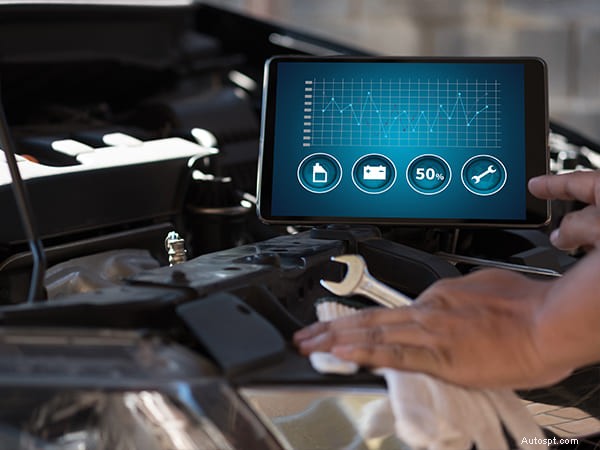
Digital inspections have fundamentally changed this dynamic. By using tablets to capture photos and video of your actual vehicle, we move from verbal descriptions to visual proof. This transparency isn’t just about building trust; it is a technical tool that prevents the sudden mechanical collapses that leave drivers stranded on US-75 or the Sam Rayburn Tollway.
A digital inspection is a systematic, point-by-point evaluation of your vehicle’s health. Unlike a cursory glance, this process is standardized to ensure no system is overlooked.
One of the greatest risks to vehicle longevity is the “silent failure.” Many automotive components do not show symptoms—like noise, vibration, or smells—until they are within hours or days of a total breakdown.
For example, a serpentine belt might have small cracks in the ribs that are invisible while the engine is running. You won’t hear a squeak until the belt is stretched beyond its limit. Once it snaps, you lose power steering, your alternator stops charging, and your water pump ceases to circulate coolant, leading to immediate engine overheating.
A digital inspection identifies these “silent” cracks months before the belt fails. By seeing the high-definition photo of the ribbing, you can address a $150 maintenance item before it turns into a $1,500 roadside emergency and engine repair.
In our experience serving the Allen and North Dallas area, certain components are frequent victims of our local driving conditions.
Texas heat is brutal on rubber and lead-acid batteries. During a digital inspection, we look for “blooming” corrosion on battery terminals and heat-glazing on belts. These are often precursors to a car that won’t start during a July heatwave.
Fluids are the lifeblood of your vehicle. We don’t just check levels; we document the clarity and color. Dark, burnt transmission fluid or contaminated brake fluid are early warning signs of internal component wear.
The construction and varying road surfaces in North Texas can take a toll on bushings and struts. We often find torn CV boots or leaking struts during digital inspections that the driver hadn’t noticed yet because the car hadn’t started “clunking” quite yet.
The logic of “if it isn’t broken, don’t fix it” is a recipe for high-cost ownership. Automotive failures are rarely isolated events; one failing part often creates a “domino effect” on others.
Ignoring a documented “Yellow” or “Red” item on a digital report doesn’t just risk a breakdown; it compromises the safety of everyone in the vehicle. Beyond safety, there is the issue of diminishing returns. A car that is poorly maintained loses its resale value rapidly and becomes increasingly expensive to “catch up” on maintenance as the years pass.
Modern vehicles are complex ecosystems of sensors and mechanical parts. When one part operates out of spec, it forces the onboard computer to compensate, often leading to poor fuel economy and premature wear on the engine and transmission.
If you are uncertain about the current health of your vehicle or want to establish a baseline for your maintenance records, a professional assessment is the most reliable path forward. You can reach out to the team at Craig’s Car Care to discuss a comprehensive digital inspection for your vehicle.
A thorough digital inspection typically adds about 30 to 45 minutes to a standard service. This ensures the technician has time to properly document all systems and upload the imagery for your review.
Yes. Most mechanical failures—such as worn tires, leaking shocks, or frayed belts—do not trigger a dashboard warning light. The computer primarily monitors emissions and electronic sensor data, not physical hardware wear.
While the goal is similar, the “digital” aspect provides accountability. A standard paper checklist can be marked off quickly; a digital inspection requires photographic evidence, ensuring the technician actually inspected the components listed.
We generally recommend a full digital inspection with every oil change or at least twice a year. This allows us to track the rate of wear on components like brakes and tires over time.
Digital inspections are the bridge between technical expertise and owner empowerment. By providing a visual record of your vehicle’s condition, these reports remove the guesswork from auto maintenance. Staying proactive doesn’t just save money—it ensures that your vehicle remains a reliable tool for your daily life rather than a source of unexpected stress.

Craig Zale is the President and founder of Craig’s Car Care in Allen, Texas, where he’s been leading the way since 1996. As an ASE Master Technician certified in all major areas (A1–A9 with G1), Craig doesn’t just run the shop—he lives and breathes the work. Before opening his doors, he built a strong foundation as both a technician and manager at service centers across Texas, gaining hands-on experience in diagnostics, complex repairs, and shop operations. Today, he uses that experience to guide a team committed to doing things right the first time and helping drivers feel confident every mile of the way.
