
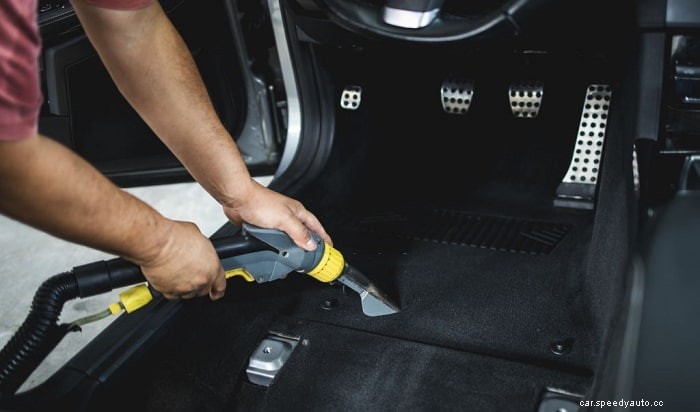
“How to dry wet carpet in the car?” is a common question among car owners, especially during the rainy and flooding season. You might forget and leave your car out in the rain.
It is often rumored to be very difficult. Hence, seeking a professional service provider for drying out flooded car carpets is the best way to go. However, not everyone can afford or have the same access to said services.
Understanding this, here, we have put together an in-depth article on how to dry car carpets on your own properly. It features all the materials you need and the steps you have to take. Briefly, these are:
But there are other important details that you should not miss. So, continue to read. By the end, you might even be excited and look forward to drying car carpets!
As mentioned earlier, you do necessarily need to go to a professional service to dry wet carpets in your vehicle. It is relatively straightforward to do on your own at home. Read the following sections carefully to do so!
Gather all of the following materials:
When you have all of the above-mentioned materials ready, set them at a reasonable distance for easy accessibility and proceed to the next section to learn to dry car carpet.
Are you excited? We are about to take you through all the steps in the best way to dry car carpets. Rest assured that it is easy to understand and follow along. Your car carpets will appreciate you spending time reading this carefully to take care of it.
To start, get yourself ready by putting on protective gears: a pair of goggles, hand gloves, and a face mask. Then, park your car in a safe area to work. Ideally, it should be a place with a strong airflow and low humidity; a garage may work. Open all the car’s doors, the back trunk, and the windows to let the moisture evaporate.
Get rid of as much pooling water as possible with a wet vacuum. Run it over the soaked surfaces thoroughly. For this step, it is best to get a handheld, cordless, light-weighted, and small vacuum. It is not too difficult to find it online or offline. Otherwise, look for renting options at local hardware and appliance stores.
Then, take the microfiber towel that you have prepared to press against any area that is still damp to touch. Use it to absorb and draw out excess moisture. Every now and then, wring the towel so it is not dripping wet.
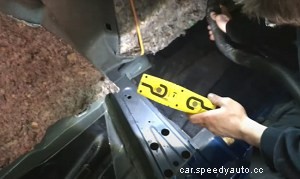
Set up electric fans at every car door to direct airflow in and through the car. This will help evaporate moisture and dry any wet surfaces. Let the fans run for at least one day. If you are not in a hurry, it is even better to wait for two to three days.
Also, place a dehumidifier in the car to speed up the process. During this step, make sure you check in on the surfaces regularly and just the positions of the fan as needed.
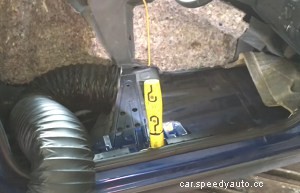
If you have plastic floor mats, remove them from the car first. Shake off any water in the crevices and set them upright against a wall. This will drain out any excess water. They should dry easily with the wind. However, if you want to speed up the process, you can rely on the help of a fan.
Next, lift the carpets to check if it is still wet underneath. Depending on your car, you may have to remove a plate on the bottom of the car door first, or the seats to get to the carpet. Most carpets have a back foaming, which can collect water.
Use a block or a hand tool to leverage the carpet upright. This will ensure that there is a passageway for air to enter. If there are pools of water, soak them up with a dry microfiber towel or cloth, and place a dehumidifier or fan right next to them.
Now, return to the plastic floor mats that you have set aside earlier. Use a fresh microfiber towel to wipe them down. Check that they are dried completely before putting them back in their original positions. Double-check the floors thoroughly as well.
Use the damp rid bags that you have prepared and hang them inside the car. These will suck in any remaining moisture. The best places for them are by the handles, rearview mirror, armrests, and headrests.
Top Tip: There is a wide range of damp rid bags and other moisture-absorbing materials like baking soda that you can buy in-person or virtually. They are reasonably priced, so do not even worry about draining your wallet!
Alternatively, you can put in boxes of baking soda, which will complete the same job. If you cannot get either, use cat litter or uncooked rice; they are both good moisture-absorbing materials.
To complete, check that everything is dried entirely. If you are sure that no surfaces are still wet, return the carpets to their original setup and close the doors. Now, you can enjoy a dried and fresh car!
Congrats on reading through all the steps of how to dry wet car carpet.
If there is already mold and mildew growing out of the car carpets, then take the time to read through these steps and follow them closely. Getting rid of them is incredibly important. These steps will go in between the above steps 5 and 6.
Mix vinegar and lukewarm water in a container. If you do not have vinegar, substitute with dishwashing soap or a mild detergent. Regardless of the material you choose, be sure that it blends well with the water. Then, transfer it to a spray bottle.
Top Tip: If you have a funnel, it will make the transferring process much easier.
Cap the spray bottle and give it another round of shaking to ensure that everything is mixed well.
If you do not want to make your own solution, you can also look for commercial solutions at local stores or on e-commerce sites. Many named brands offer specially designed products to deal with mold and mildew in cars. When choosing, be sure to weigh in all the factors: the formula, ease of use, brand, and price.
If you are clueless on where to start, consider looking through these options: RMR-86 Instant Mold and Mildew Stain Remover Spray, Concrobium Mold Control Mold Inhibitor, and ZORBX Extra Strength M&M Cleaner and Odor Remover.
Next, test it on a small, inconspicuous patch of the car carpet to make sure that it does not stain.
Apply the solution directly onto the area needing treatment on your car carpet and let it settle for at least 20 minutes. It should not foam up. This is when it works its magic. So, be patient!
Now, scrub the area with a soft-bristle brush. Use circular buffing motions with moderate force. If you press too hard, you may accidentally deepen the mold and mildew. Repeat this as many times as needed until all the mold and mildew are gone and there is no lingering smell.
If there are any stubborn stains left, sprinkle some borax over it and let it seep into the stain for about 10 minutes.
Then, vacuum the borax away. Just like the step above, you can repeat this as many times as needed until the stain is gone. Make sure that you are extra careful with the vacuuming step. You do not want any borax to stay for a prolonged time on the carpet.
Now, you have the full answer to “How to dry car carpet?” It was not too challenging, right? You should no longer have any problems with drying out car carpets or be afraid of rain. To give you a brief reminder, there are six steps you need to take to dry car carpet after a flood.
Aside from that, there are additional steps that you should take to prevent mold and mildew growing in your car’s carpet:
If you still have questions or thoughts about this topic, make sure you leave a comment. We are all about open discussions. Therefore, do not feel reluctant. We will be glad to hear from you. Also, feel free to share this article with others, especially anyone you know who is dealing with wet car carpets.
