
The oxygen sensor plays a crucial role in regulating the air/fuel mixture in a combustion engine. These sensors usually need to be replaced every 60,000 to 90,000 miles, so most people will need to replace them at least once in their Jeep.
Are you wondering how to spot failing Jeep XJ O2 sensor systems? Read on to learn more about what oxygen sensors do and how to know when you need a new one.
Table of Contents
An O2 sensor is also called an oxygen sensor or a lambda sensor. These electronic devices were developed in the 1960s to measure the amount of oxygen present in a gas or liquid. In a vehicle, they’re used to determine the air to fuel ratio at various points of your engine.
All cars made after 1980 have an oxygen sensor. The first modern O2 sensor was developed in the 1990s for use in Hondas and comprised layers of high-temperature cofired ceramic green tapes.
The O2 sensor is part of the emissions system of your vehicle. How many sensors are in your vehicle depends on the type of engine you have. Most V6 and V8 engines have three oxygen sensors, one upstream on the left and right banks and one downstream.
Most four-cylinder engines have 2 O2 sensors, one each upstream and downstream of the catalytic converter. Transverse V6 and V8 engines, on the other hand, have 4 O2 sensors, as do some select models, such as the 2004 Jeep Wrangler. Your vehicle’s manual is the best place to find out how many sensors are in your engine if you’re not sure.
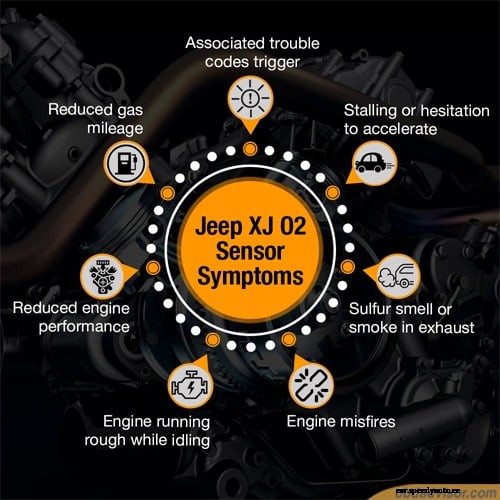
If you have an OBD2 code reader, one sure sign that you have an issue with your oxygen sensor is that the associated trouble codes trigger. This will turn on your check engine light, so check there first. The codes specific to the O2 sensors include P0150-P0167. A bad oxygen sensor can also trigger codes related to the fuel trim and air/fuel ratio (P0170-P0175).
There are other symptoms that point to a bad oxygen sensor, including:
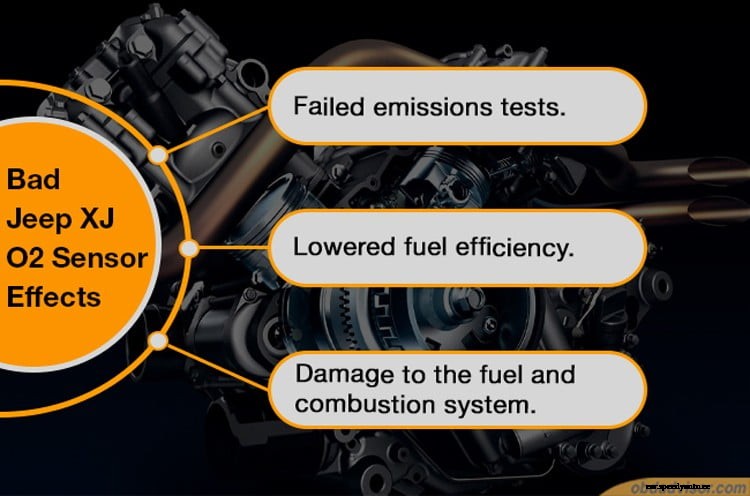
When your oxygen sensor malfunctions or fails, it impairs your engine’s ability to regulate the air to fuel mixture. This can lead to a host of problems, including:
Yes, in the short term. A bad oxygen sensor could reduce your engine’s performance, making your vehicle more difficult to drive, but it usually doesn’t cause significant drivability issues. The exception to this is if the bad oxygen sensor is causing misfires. If that’s the case, you should stop driving the vehicle until you can make repairs.
The average cost to get a Jeep oxygen sensor replaced at the mechanic is between $160 and $200. Most of this cost is the sensor itself, which typically costs around $130-$150. Since you won’t save much making the repair yourself at home, even an experienced DIY mechanic may find it more convenient to have the work done by a mechanic.
Repairing an oxygen sensor is a relatively cheap and easy repair to make, and one that can save you a lot of hassle and repair costs in the future. Keeping your emissions system in top shape will ultimately help your engine run more efficiently, translating to less spent at the gas pump.
The bottom line is that, while it is safe to drive your vehicle with a malfunctioning oxygen sensor, it’s in your best interest to get it repaired as soon as possible, even if you don’t have an emission test coming up. We hope this article has helped you better understand the important role oxygen sensors play in your Jeep’s engine!
Read More:
