
Winter is coming! Well, it is already here for some of us; except for those who live in Florida since the last time they saw snow was back when cassette players were the norm. For the rest of us who are fond of driving during winter, our survival depends on what we pack.
If you don’t have a shovel to remove all that snow holding up your tires, you will probably get stuck. You also need gloves to prevent frostbite. Is that it? Not so fast, we’re just getting started. If you don’t want to become Mr. Freeze in your car during winter, here are a few things you must have in your Winter Car Emergency Kit Checklist.
Truth be told, it’s not a matter of ‘if’ but ‘when’ – everybody gets stuck in snow at some point. So you would be damned if you don’t prepare!
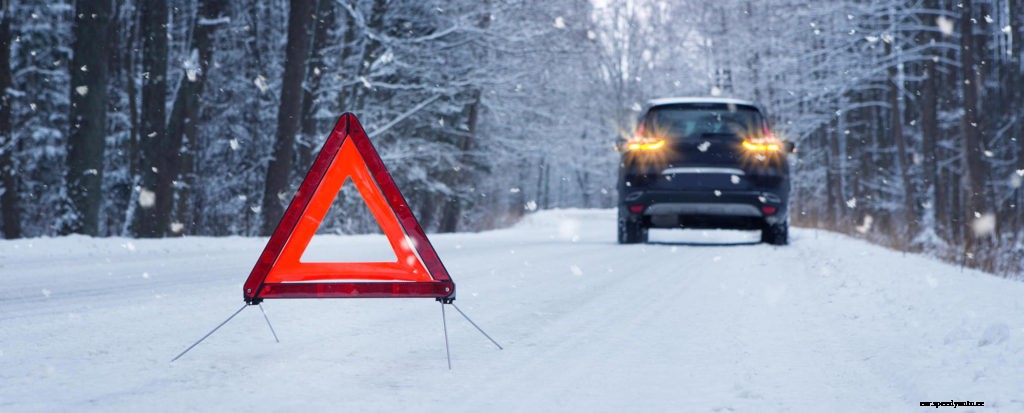
Jumper Cables

During winter, the car is exposed to very low temperatures that weaken the battery. Next thing you know, you can’t start your engine on a cold morning. Now that is when you bring jumper cables to shock your batteries back to life – sort of how electrical cardioversion cables work in emergency rooms to resuscitate dying patients.
However, don’t assume all drivers have jumper cables that you can borrow. It’s wiser to pack your own. Better yet, a more convenient option would be to carry rechargeable mini jump starters that can work on your battery without connecting to another vehicle.
Tow Strap
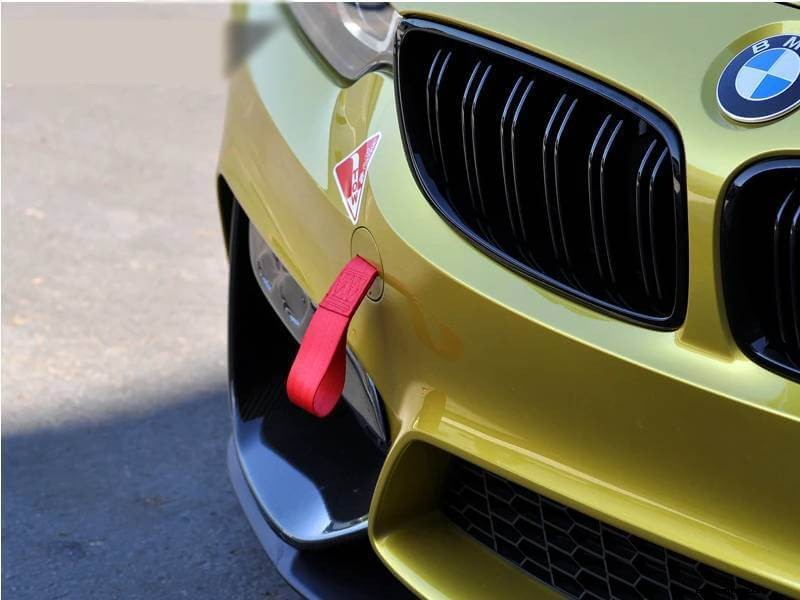
A tow strap is something you should carry in all seasons, just like a jumper cable. But it is during winter when the roads are slippery and there is a high probability of sliding into a ditch.
Know why you should carry your strap? Because different vehicles have different weight capacity, and if the tow strap of whoever stopped to help you doesn’t support your vehicle’s weight, it can be dangerous. Don’t risk it!
Ice Scraper & De-Icer
A driver going into winter without an ice scraper and a de-icer is like a farmer going to till the soil without plow equipment. In some places, you’re obligated by the law to remove all snow and ice on your windows. Even if it isn’t illegal in your state, it’s dangerous since that chunk of ice can fly off the window at high speed and injure somebody. Not to mention, it is a cause of concern for distracted driving.
If you’re shopping for an ice scraper, it would be better to choose a 2 in 1 snow brush/ice scraper combination tool.
Snow Shovel
Like you’ve guessed it – after the ice scraper comes the shovel. Of course, it’s not to bury somebody deep in the woods, but you will need it when push comes to shove. In other words, you will require a shovel to remove snow under your car or around the wheels.
If you have limited space in your car, you should opt for a compact foldable shovel.
Traction Mats
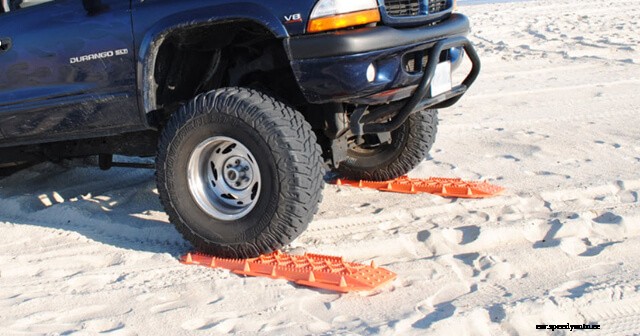
Instead of using a floor mat, investing in traction mats is a better option. Sure, floor mats flipped upside down can work on soft snow but they won’t work on ice or hard snow. What you will get is a floor mat flying behind your tires after you press the gas pedal.
On the other hand, traction mats are the real deal since they won’t just work on ice and heavy snow, but they can also be used to get out of deep sand and mud terrains. Better yet, traction mats can be recycled, unlike sand or kitty litter.
Reflective Warning Signs
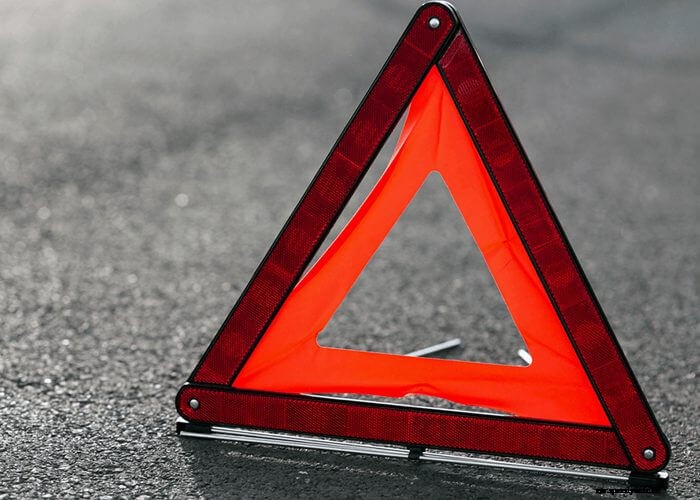
Everybody dreads an accident or a breakdown in the midst of winter, but you will need reflective warning signs to alert other motorists to slow down. The last thing you want is a clueless driver hitting your car.
Don’t forget, you should have at least two hazard triangles; one triangle should be positioned in front of the vehicle and another at the rear. You can also throw in a reflective jacket.
Tire Chains
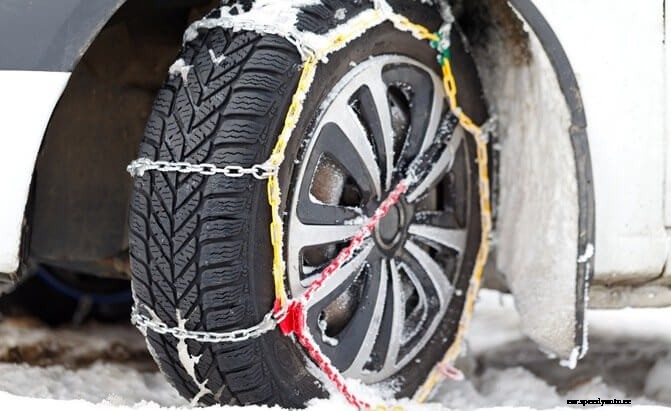
Just like traction mats, tire chains can improve the grip of your tires during winter. However, tire chains are often mandatory in steep mountainous conditions to prevent vehicles from sliding downhill due to the snow or ice.
In case you’re wondering, tire chains can also be used with winter tires and all-wheel drive vehicles. Even so, you must confirm with the vehicle’s handbook before purchase since not any type of tire chains will fit on your car’s tires.
Small Tarp
A small tarp will prevent the wind from robbing the heat off your body when you go outside to fix something. It can also be used to keep your feet and hands dry if you want to kneel or squat, like say when you’re replacing a tire.
Anyway, go for a waterproof tarp that can survive extremely cold temperatures especially those made using vinyl and PVC materials.
Portable Air Compressor
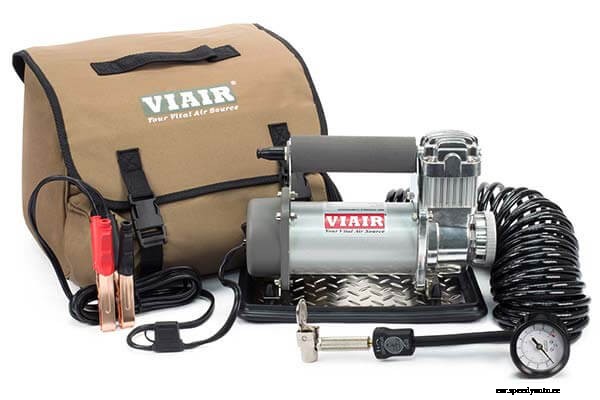
Due to the low temperatures experienced in winter, the tires lose pressure and the rubber becomes stiff. That means you will probably experience a flat tire or a puncture. A portable air compressor can restore your air pressure to normal in just a minute.
Don’t worry, a portable air compressor won’t take a lot of space and it can fit in almost any small car.
Empty Fuel Can
There are two reasons why you need an empty fuel can for winter. First, you could run out of fuel and a fuel can in your car is a lifesaver if there is a petrol station nearby. Better yet, you can keep some backup fuel in your jerrycan just in case there is no nearby petrol station to top up your gas tank within your radius.
If you’re worried, the freezing point of petrol is about -60 degrees Celsius and unless you’re living in places that are colder than that, the backup fuel in your can won’t freeze. Actually, the second reason why you need a fuel jerry can in your car is because it’s a bad idea to leave your gas tank empty during winter.
LED Tactical Flashlight
After getting stuck on the roadside, you will need a flashlight to work out in the dark. Typically, the best types of flashlights are LEDs since they last longer. Keep the flashlight in the glove box or trunk and take out the batteries off the flashlight since they can corrode if they’re not used.
Tire Puncture Sealant
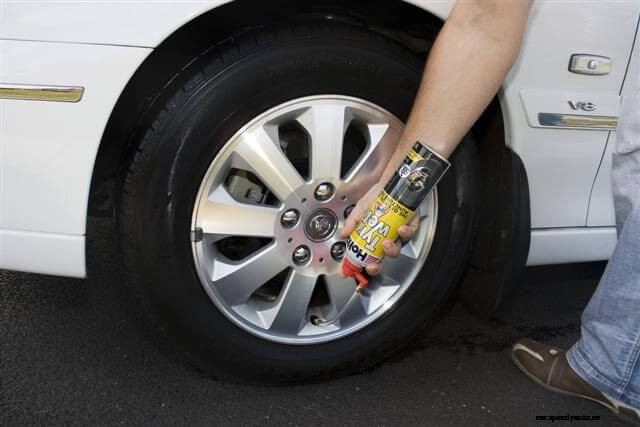
Speaking of punctures, it could happen that the nearest repair shop is closed or far away. Of course, the longer you stay on the side of the road when it is snowing, the worse it can get. A tire puncture sealant or fix-a-flat can be a quick fix but remember it should be temporary until you find the nearest tire shop.
Simple Tool Kit
A fully packed tool kit that includes a pocket knife, screwdrivers, pliers, duct tape, super glue, and adjustable wrench can help you fix a broken item. It could be a taillight, windshield wipers or even the radio. Whatever it is, you will figure it out.
Fire Extinguisher
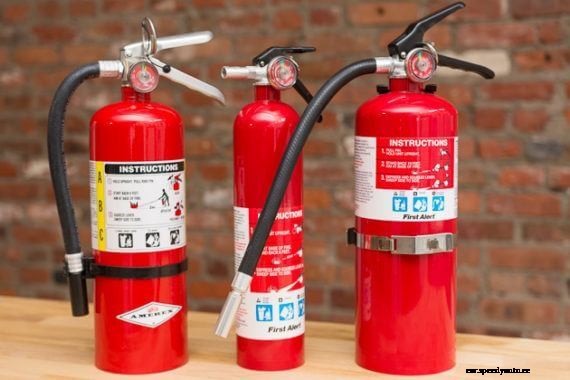
Nobody thinks their car will catch fire until it does. A fire extinguisher is one of those things you can’t leave behind even though it’s difficult to have a fire incident in winter. Apparently, most vehicle manufacturers are legally mandated to pack a fire extinguisher when selling a car. If you do have one, just make sure it is filled up.
Map and Compass
If you find yourself in unfamiliar territory with a car that won’t move, a portable handheld GPS could be your way out. However, instead of just bringing a rechargeable electric GPS device, you can go old school and add a paper road atlas and a compass. You know, a back up of a backup plan?
Extra Windshield Washer Fluid
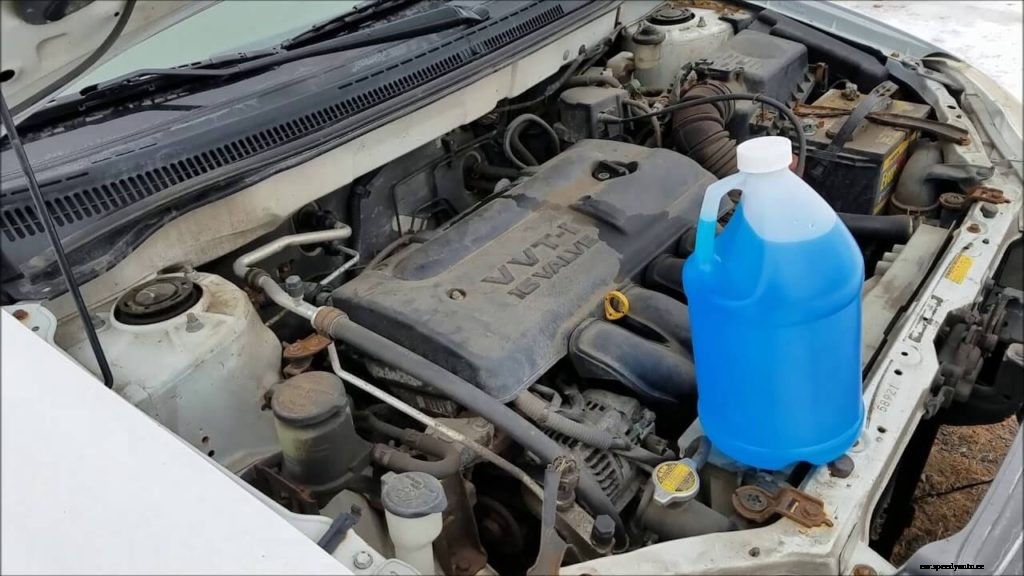
The windshield washer fluid in the reservoir can freeze during winter and become solid as a rock. If it happens, you need to warm the engine or add warm water, wait for it to thaw and replace it with extra windshield washer fluid.
However, make sure you purchase extra winter windshield wiper fluid that can survive below zero temperatures up to -40 degrees Celsius or below without freezing.
First Aid Kit
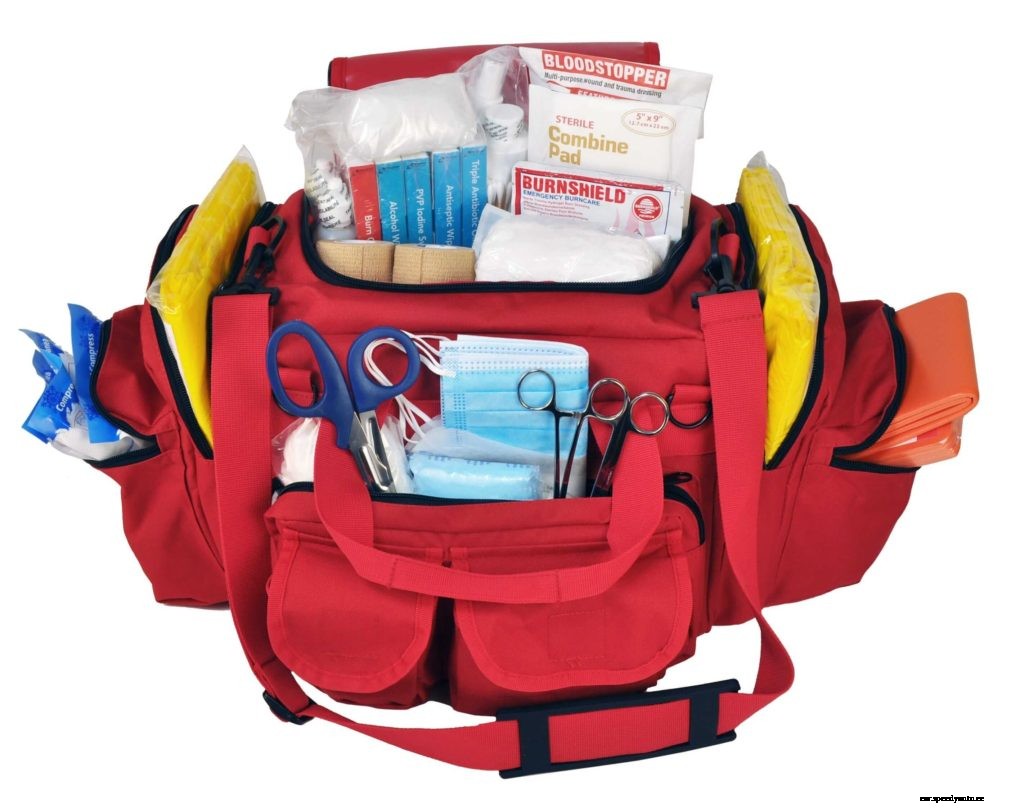
A first aid kit is one of those things that you should always keep in your car. In that regard, you should ensure your first aid kit is fully packed.
That means you should include a kit with items like sterile wipes, dressings, scissors, plasters and anything that can fix traumatic bleeding until you get to a hospital. Hopefully, you won’t have to use it but just in case.
Next to your first aid kit, write down a list of medical emergency information and carry an adequate supply of special medication.
For instance, if you’re diabetic, you ought to carry some insulin shots. On the glove compartment, you can include emergency contacts, insurance cards and any illness you may have.
Warm Hat, Gloves, Scarf, and Face Mask
Nobody wants to step out of the car and come back with a cold face. It’s even worse when you try to change a tire without wearing winter gloves.
Mind you, frostbite can cause permanent tissue damage and it mostly happens on the chin, fingers, toes, cheeks, ears, and nose.
Warm Blanket and Sleeping Bag
If you get stranded and you have no option but to wait for rescue, it could take a while before help arrives. In some places up north, the temperatures can go as low as – 25 degrees Celsius.
A warm winter blanket and a sleeping bag could prevent hypothermia. Of course, you also have to use a portable propane heater to keep you warm.
Extra Winter Clothes
As much as you’ve packed a blanket, sleeping bag, gloves, scarf, and a warm hat, there could be times where you may need to change when you get wet. If you have children, there is more reason for you to carry extra winter clothes.
Winter Boots
We’re not done yet – you will need winter boots with a good grip to avoid slipping over the ice. However, you don’t have to wear the boots when driving the car but you can switch it up when you step outside.
In-car phone charger – and a portable battery charger
You probably have seen it in the news before. They’ve even made movies about it. The story goes something like this; a driver is stranded for a few days in a snowstorm in the middle of nowhere, and through some miracle, the driver survives with no rescue on sight. Unfortunately, not everybody is that lucky.
In such a situation, a backup cell phone and power bank could be the difference between life and death. It doesn’t have to be anything fancy, but just a fully charged cell phone you keep close to your seat to be used in case of an emergency.
On top of that, you should make sure your primary cellphone is fully charged before you head out. Add a spare battery and portable charger too.
Torch (windup), light sticks
Light sticks and windup torches can be seen from miles away during winter – this would be helpful if you’re stranded.
Besides that, glow sticks last longer during winter due to the slow chemical reaction that causes the stick to glow.
Nevertheless, it’s possible for light sticks and wind up torches to stop working at -10 or -15 degrees Celsius.
So how do you counter it? Simple, just go for LED wind up torches or LED light sticks that can last longer and stay active in lower negative temperatures.
Non-Perishable Food and Water
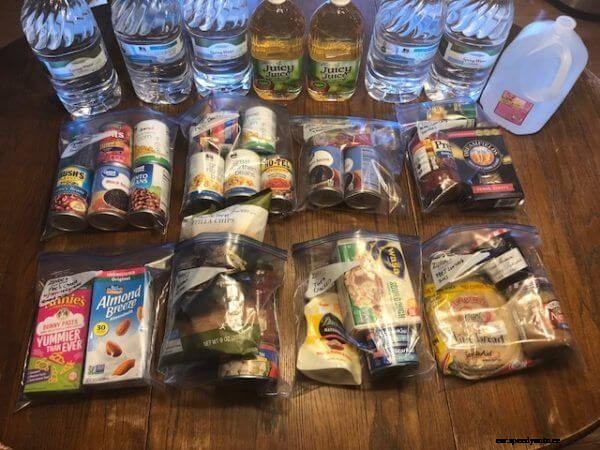
Nothing is worse than getting stuck in your vehicle for days without food or water during a blizzard or a snowstorm.
Make sure you pack non-perishable food and snacks mostly with high fat, high carb, and fast digestion rate. Anything dried and canned food will do, but you can also bring energy bars, coffee, tea, and biscuits.
Beyond that, don’t forget to carry water, although you have to store it in a special flask to prevent it from freezing.
Portable Propane Heater
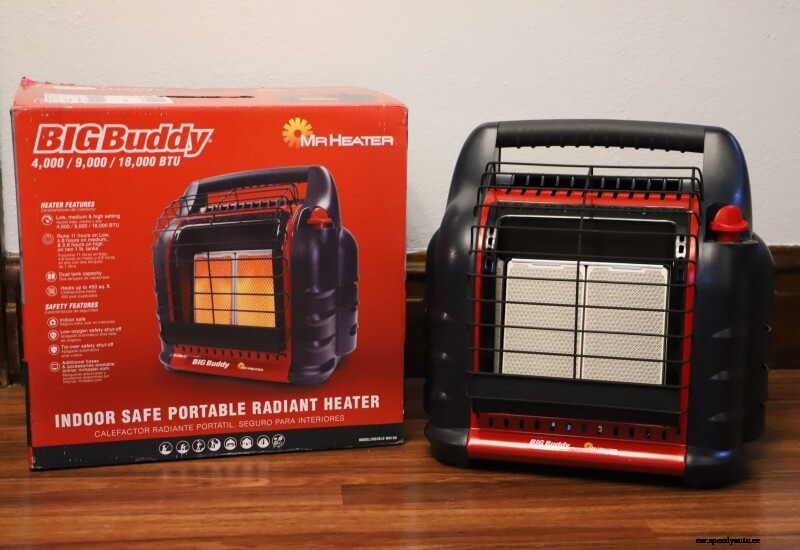
For those living in some of the coldest regions where a packet of candles isn’t enough to keep you warm, a portable propane heater can do better. Most propane heaters are cheap and include at least 3 temperature settings to regulate the heat.
Entertainment
Sometimes there is nothing you can do but wait for a tow truck or the traffic to open up. Whatever it is, you don’t have to get bored if you pack entertainment items like a deck of cards, a tablet or a book. Nowadays, a smartphone comes with all the entertainment you need, but be careful not to drain the battery if you’re in an emergency situation.
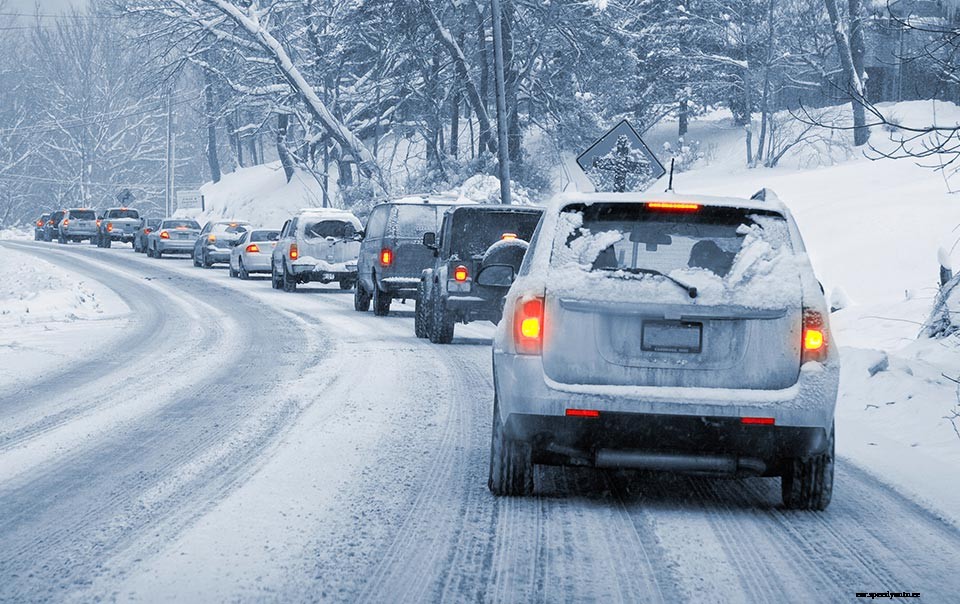
Driving during winter is not difficult if you’ve prepared your supplies and know what you’re doing. However, if you’re short on supplies and you don’t have a clue how to react when your car starts sliding on an icy road, it could be your worst nightmare.
To be frank, it’s a matter of life and death. It could be that extra blanket or backup cell phone that you packed that makes all the difference. Then again, it could be that you know you shouldn’t hit the brakes when you’re sliding that stops you from hitting that tree.
Whatever it is, every detail that we’ve covered in this guide is very important. It would be in your best interest to memorize all the essentials and perhaps revisit this guide during winter for a few reminders.
If you have any questions, we would like to hear from you.
