
For people that are conscious of the cost of tire replacement, it is a pretty straightforward process: when there are leaks that can’t be patched or the tread wears down, then it’s time to replace the tires. But that is not how it always happens. Even in the most mundane of drives, the components that make up a tire are under a great deal of stress that causes it to degrade, a process known as dry rot. You are probably wondering what is tire dry rot and how to fix dry rotted tires?
Dry rotted tires are a real headache to fix not because they cannot be fixed, but no mechanic will attempt to salvage the tire, they’ll just advise you to change them. And for most people, their mechanic’s word is the last word, and they’ll simply get brand new tires to replace the rotted tires that might still have over a hundred miles of tread left.
While it is true that dry rot can have a negative impact on the health and lifespan of tires, it is not necessarily a death sentence for automobile tires like mechanics will have you believe. In fact, with the right set of instructions and some easy to source materials and tools you can fix dry rotted tires at home.
That’s why we put together this how-to guide to walk you through fixing dry rotted tires to increase their lifespan and save you some money.
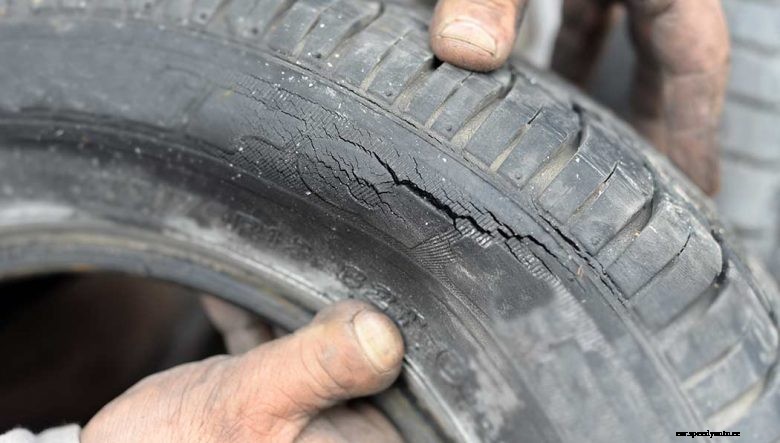
Let’s get something out of the way. The name ‘dry rot’ is not a typical rot that you’d see on a tree trunk exposed to the elements. It’s simply a name for the drying and cracks that occur on rubber that is degrading. It can spread from one tire to another, but if two tires are stored under similar conditions that induce dry rot, then it is likely that both will get damaged.
While it might seem like the automobile tire is one of the feats of engineering – which I think they are – and as such should age gracefully, they are essentially made from a natural product. Dry rot occurs when automobile tires become dry and brittle due to exposure to ultraviolet rays, low air pressure, inactivity, and the accumulation of road debris and grime that gradually breaks down the protective layers.
When this happens the rubber starts losing flexibility, structural integrity, and becomes brittle to the touch – think of a really old plastic chair or rubber band. If it is allowed to degrade so badly that the sidewall becomes damaged, then you really have no choice but to change the tire because at this point it has completely lost its functionality.
You don’t necessarily have to wait until you see treads start to separate before changing your tires. The tire industry recommended standard is to replace old tires before they hit 10 years old, but, depending on the tire brand and your driving habit, some tires may become bald in less than 6 years.
Dry rot usually shows up as dry, cracked, and brittle patches on the wall of your tire. As the oil and chemicals in the rubber used to produce the automobile tire dries, the integrity of the tire weakens and will eventually end in a failure, which can be very dangerous if it blows out while the vehicle is on the road – especially at high speed.
It is a good idea to inspect the tire for signs of decay as often as you possibly can, especially when washing.
Take time to inspect the sidewalls of the tire. Cracks are usually the first telltale signs of dry rot. If you notice discolored rubber around the crack, then it means that the dry rot is advancing quickly.
Though the sidewalls are the most susceptible to dry rot, it can affect the tire treads too. Dry rot on the tread typically runs perpendicular to the direction of the tread. Keep in mind that a healthy-looking tread does not mean an absence of dry rot, it might just be in the early stage.
Feel the tire surface. If the rubber is rigid, dry, or brittle, then this is a warning sign.
In cases where the dry rot is very severe, the tire tread begins to split from the tire. If this occurs in the front tires, you will experience wobbling in the steering wheel even at low speed, but if the rot is in the rear tires then the whole car will wobble or vibrate as you drive.
While it is true that scheduled maintenance increases the lifespan of a car, a car tire will still age regardless of how much it is cared for, the only difference will be how long it takes for the car to break down. Besides that, an old tire will likely have been used for several thousand miles, and such extensive use can induce dry rot.
However, it isn’t unusual to find tires that have been on the shelf for too long showing signs of dry rot, but this is not entirely due to exposure to the elements. In the case of a shelf or unused tires showing signs of dry rot, it is usually because the tires have not been put to stress for a long time. The mere act of driving a tire stretches and compresses the rubber which helps move the chemicals in rubber towards the surface of the tire to protect it from dry rot.
As important as sunlight is to our planet, it sends some harmful rays our way. Some of these rays, known as ultraviolet or UV rays have the potential to degrade rubber, fade paint and clothes, etc. in a process called photodegradation.
Tires are made of natural and synthetic rubber, both of which are susceptible to UV damage. This doesn’t mean driving your car in the sun is bad for the tire, they were made to withstand normal sun exposure. What causes the most damage to tires – and your paintwork – is parking your vehicle for extended periods without any form of shade. You’re most likely to have brittle tires from overexposure to the sun in places that are really sunny, such as Florida.
Tires are designed to withstand and distribute pressure equally to all parts of the tire, which is what happens when a tire is properly inflated to the recommended PSI. Tires that are not filled to the correct PSI distribute pressure from the weight of the car and the driving condition poorly, and this can cause the creasing, collapse of their sidewall, or a tire failure.
Some chemicals commonly found in tire-dressing products such as silicone and petrochemicals are notorious for dissolving the waxes on the tire surface that protects it from the elements. Without this protective wax to reduce the effect of acid rain, UV rays, and chemicals in puddles, road surfaces, and grime, the tire is at the mercy of dry rot.
Tire manufacturers add special waxes and additives to the rubber tires are made of. When the tires undergo stress from regular use, the wax and chemicals are forced out to the rubber surface where they form a protective layer that protects from UV rays, chemicals, and Ozone damage. Tire experts call the process ‘blooming’ since it protects the tire from dry rot. When a tire is stored for too long, either on a vehicle sitting in the garage or some ‘cold and dry’ place, blooming doesn’t occur and the tire surface starts to rot.
You need to inspect your dry-rotted tire before you attempt any fix on the dry rot. This way, you get to find out the areas that are most affected so you can direct most of your attention to that part. From your inspection, you should be able to tell if the tire is worth trying to save or not.
If your inspection revealed the telltale signs of dry rot on your tire, what is the next step you need to take?
Unless you want to buy new tires, your mechanic cannot help you fix a dry-rotted tire, so what you need to do is assemble the tools you will need to finish the repair.
You’ll agree with me the list is pretty simple, right?
The third and fifth on the list are items that you probably have at home already, and if you don’t have them, they are pretty easy to source for.
The tire protector and degreaser might be a little tough to find as they are more specialized products. You might have to source them online.
It’s advisable to purchase water-based products for the purpose of repairing your tires. Though they have pros and cons over other items made of different solvents (i.e. not water-based), the consensus is that they are kinder to the compound in tire rubber, which is fantastic since we’re trying to repair damage.
Using a jack and tire wrench, remove the tire from the vehicle before treating the dry rot. This is because dry rot can affect both sides of the tire wall, and without removing the wheel from the vehicle it will be harder to tell if the dry rot is on the other side.
If the tires are not on the car i.e. they were in storage, then all you need do now is move the tire to a place where water runoff will not be an issue like your lawn or driveway instead of the workshop or garage.
Now you need to prepare the surface of the tire for the protector product you purchased. Start by wetting the tire with water, then introduce the degreaser in the process and wash off the dirt and grime. Though most degreasing products come with instructions on the container, basically you’ll just have to pour an adequate amount of the product on a sponge and give the tire a thorough scrub, making sure to concentrate on the areas that are most affected.
Rinse off the degreaser with clean water and a sponge to ensure you completely rub the degreaser from the tire surface. When you’re done with this step you’ll need to let the tire air dry for a couple of minutes in a standing position before moving on to the next step.
When the tire is completely water-free, you can now apply the water-based tire protection product on the clean wheel. Like the degreaser, it’ll have custom instruction for the user. It is recommended to take a few minutes to go through these instructions so you know how much and how often you need to apply the product on your tires to prevent dry rot. Make sure you apply the product on all parts of the tire, even on those parts that were unaffected by dry rot.
We already explained how stress helps the tire to ‘bloom’ and release protective waxes onto the tire surface. If your vehicle isn’t used for six months or more, you can either move the car around every now and then in the garage to keep the blooming process on.
If moving the vehicle in the garage sounds like much work or you are in a very hot city you can simply apply a tire protection product to the surface of the tire. These products contain chemicals that create a barrier between the environment and the tire surface.
When washing your car tire, make sure to use products that do not dissolve the protective wax that coats the tire since this can hasten dry rot.
When storing a tire or vehicle for extended periods, ensure that the tires are placed on a wooden board or wrapped in waterproof material to prevent the chemicals in the tire from seeping out onto the concrete.
While used tires usually come with a pretty decent price tag, you need to check the age of such tires before handing over your hard-earned money. You can do this by reading the last digit of the DOT code engrave on the sidewall. The first two digits of the DOT code represent the week and the last two stand for the year of manufacture. So if, for instance, the DOT reads “DOT 438J K2Y5 1317,” then it means that the tire was manufactured in the 13th week of the year 2017. Since tire deterioration hastens from the 6th year after manufacture, even if they’ve been sitting on the shelf, the tire in the example has roughly 3 more years.
It is worth mentioning that these steps are not meant to be a permanent fix for dry rot. When done correctly they have the potential to slow down rotting of tires, but if new crack keeps appearing and old ones continually widen, then you’ll have no other option than to replace the tires to prevent unexpected failure.
