
Have you ever touched an old rubber hose and felt it crumble in your hands? Or maybe noticed that the tire on your wheelbarrow is full of splits and cracks, no longer able to hold air? Over time, the compounds in rubber tend to break down and compromise its integrity.
The rubber in your tires is no different.
Most drivers understand that tires wear out. Miles and miles of friction from contact with the road causes your tire tread to wear down. In time, the tread depth becomes insufficient to channel water from underneath your tires. Without proper maintenance, including regular tire rotations (roughly with every oil and filter change), your tires wear out faster. Same goes if your vehicle is in need of a wheel alignment. While some tires last longer than others – and your driving habits certainly play a role – your tires will eventually wear down. That’s when they need to be replaced.
But treadwear is not the only reason that tires need replacement. If your tires are looking weathered or cracked – signs of dry rot – you need new tires.
Unlike dry rot in a wall or window sill, where a fungus causes deterioration in the wood, dry rot in tires happens naturally over time and with exposure to the elements. Although advances in modern rubber compounds have made for tires that are more resistant to dry rot than those of old, all tires are susceptible to the condition. And once it occurs, there is no turning back the clock.
Dry rot allows air to escape your tires, which makes it difficult to maintain proper tire pressure. Tires that are underinflated will not only wear faster than normal (and unevenly at that) but they also make for poor vehicle handling – steering and braking. A tire that is dry-rotted can also break apart, causing a tire blowout on the road. In extreme – and extremely dangerous – cases, the tread on a tire with dry rot can separate entirely while you are driving.
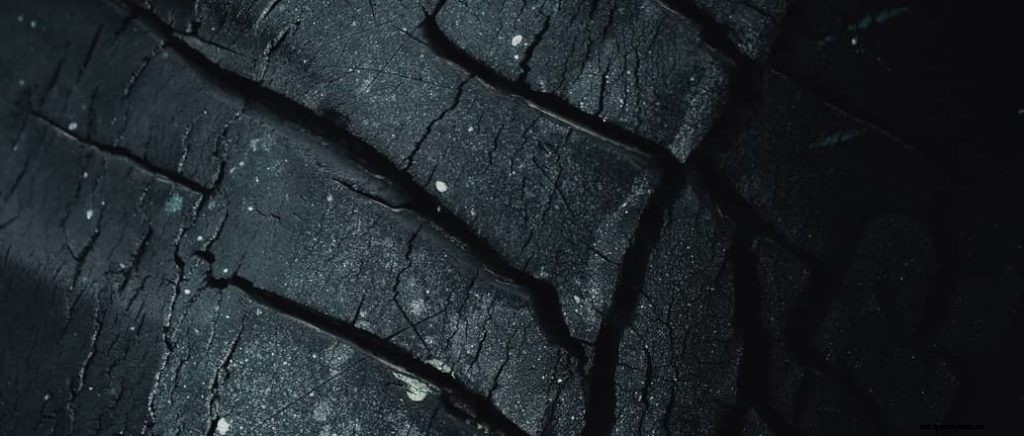
One of the first and most obvious signs that a tire has dry rot is the presence of cracks or splits in the sidewall. Excessive heat, harsh chemicals, severe temperature swings, lack of use, and just plain old age all conspire to cause the rubber compounds in a tire to come apart. If the condition is advanced, you might also notice cracking in the tread pattern. A dry rotted tire might appear or feel harder, more brittle than normal and pieces could even break or flake off. And you might see that the color takes on a more faded or grey tone.
Dry rot is not uncommon with trailer tires, especially if a trailer sits unused and in the sun for long periods of time. Trailers often see less preventative maintenance than cars do. Still, dry rot is not uncommon in automobile tires. Regular inspections can reveal early signs of decay in the tires on your car, truck, or SUV. If you inspect them yourself, look for cracks, discoloration, bulges, wear, or any other unnatural blemishes.
Dry rot may be a natural occurrence over time, but you can take steps to delay its onset. In fact, you only need to stave it off until it is time for a new set of tires once the tread wears out. The more you can avoid exposure to harsh conditions, the longer you can expect your tires to last – at least when it comes to dry rot.
Prevention comes largely from understanding the risk factors of dry rot. Consider these tips for preventing the condition:
Unfortunately, dry rot is not reversible. If you notice signs of dry rot – especially if it is advanced –
you need to replace your tires. After all, they are the only thing between your three- or four-thousand pound metal machine and the road. Your tires are responsible for keeping traction with the ground in all sorts of conditions in order to get you going and, more importantly, to stop. The state of your tires is critical to vehicle safety! For you and for your passengers.
That is one reason that tire manufacturers recommend replacing your tires once they are ten years old, regardless of the condition of the tread. Just because you still have some tread life left in your tires does not mean they are safe. If they are beyond the ten year mark – or if they show signs of dry rot – avoid a catastrophic failure and schedule an appointment with your local and reputable auto mechanic to have your tires replaced as soon as possible.
