
Micky65 from the German forum goingelectric.de took the shot we see above and was able to retrieve some details about the new generation Nissan Leaf.
First, the Nissan Leaf in the photo above has a CHAdeMO socket, this means that Nissan should keep pushing the Japanese fast charging standard, even in Europe and the USA. I have hoped that Nissan would finally adopt CCS and type 2 in Europe, especially since the Leaf is also made here, maybe someday…
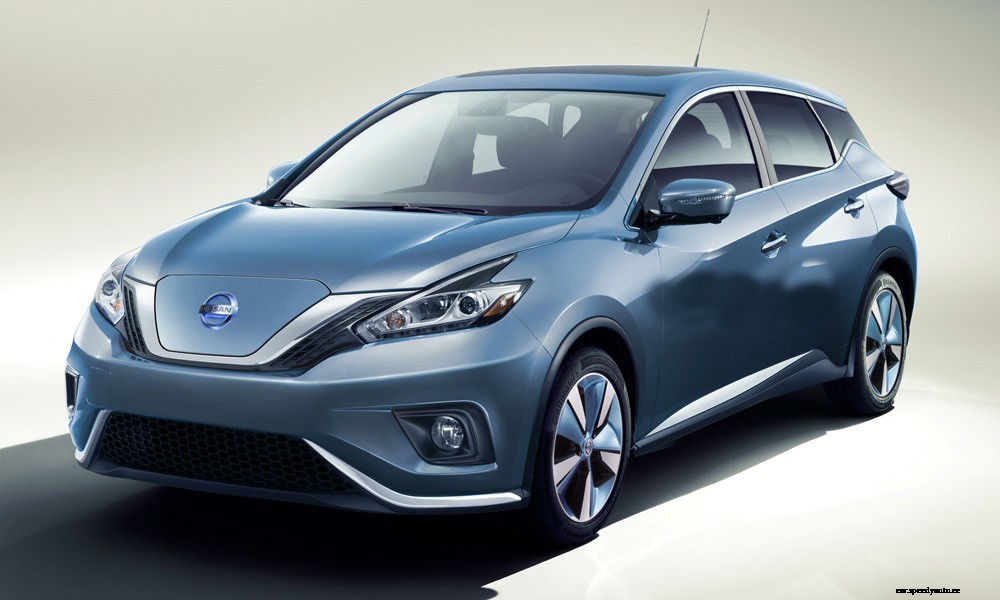
Rendering of possible facelifted 2018 Nissan Leaf
Second, the battery capacity is around 40 kWh, as it was initially planned and I reported last year. However, since Nissan delayed the introduction of the new generation Nissan Leaf, I questioned myself if it meant that Nissan decided at the last minute that 40 kWh wouldn’t be enough, and was going to 60 kWh. I do foresee the introduction of a 60 kWh battery option in 2018, this way the Nissan Micra EV can get the 41 kWh battery from Renault Zoe and not cannibalize Leaf’s sales.
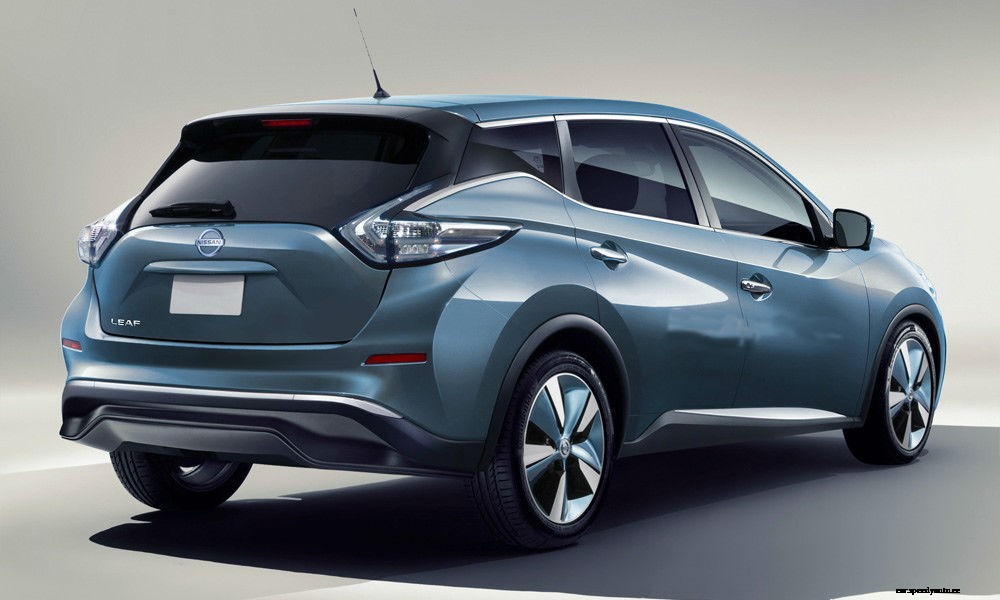
Rendering of possible facelifted 2018 Nissan Leaf
I do suspect that the delayed introduction means that the improved Nissan Leaf will no longer use AESC battery cells and will come with a LG Chem battery – that has a Thermal Management System (TMS). The TMS is not only important to keep the battery healthy in everyday life, it’s also important to allow higher DC charge rates. Anything below 65-70 kW will be disappointing…
The main questions that are still unanswered are the price and range.
While the price shouldn’t differ a lot from the current Leaf – since the battery capacity increase isn’t huge -, the range heavily depends on the efficiency, which is yet to be known. How close to the efficiency champion – Hyundai IONIQ Electric – has Nissan managed to improve the Leaf?! I’m really curious about this one.
If I had to guess the range, I would say 160 EPA miles (257 km) range. Ultimately it’s the price that will tell us how much Nissan wants the Leaf to succeed.
What do you think? Is Nissan ready to put the Leaf back on top?
