
The Renault-Nissan-Mitsubishi Alliance is set to regain the electric mobility leadership. In the official twitter account of Nissan Electric we can see the following tweet:
Amazing things are worth waiting for. The new #Nissan #LEAF. Coming soon. pic.twitter.com/f35hp0hLAM
— Nissan Electric (@NissanElectric) May 18, 2017
In December last year the Alliance started delivering the improved ZE 40 battery for the Renault Zoe, now it’s time to focus in improving the Nissan Leaf. However, unlike the Renault Zoe that – apart from the increased battery capacity and improved range – basically stayed the same, the new Nissan Leaf will be improved in many ways (design, efficiency, range, faster charging and safety features for example).
The range evolution of the two Renault-Nissan-Mitsubishi Alliance most sold electric cars can be seen in the chart below.
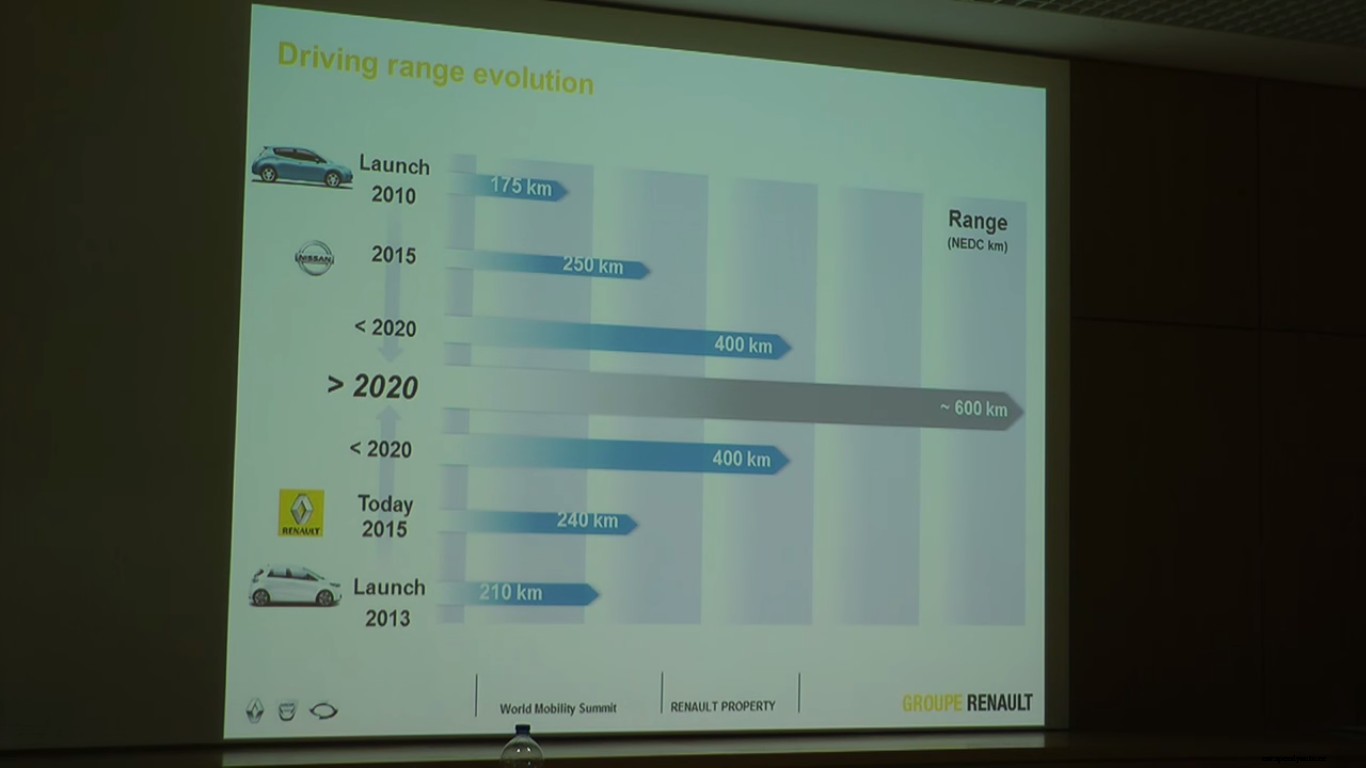
Lecture about Renault Zoe and its future by Masato Origuchi
This chart was shown in 2015, in a lecture by Masato Origuchi, EV Battery Development Group Leader at Renault. Until today it has proven to be very accurate 😉
While most of the electric car enthusiasts are raving about a 60 kWh battery option for the highest trim, I think that it’s much more important to deliver a new entry-level Leaf with a 40 kWh battery and roughly 400 km range (NEDC) that doesn’t cost more than the current generation, which only gets 250 km range in the same optimistic test cycle. If we want to see the massification of electric cars we have to reduce prices. Doesn’t matter how excellent is an electric car if it’s much more expensive than the cars that the majority of the population buys.
Truth to be said the new entry-level Leaf battery capacity might be sightly smaller than 40 kWh if we consider the latest two pieces of the puzzle…
First, the new Eaton Nissan xStorage reveals that if Nissan use the same battery cells in the new Leaf that they use for the xStorage, the Leaf battery capacity will be 37,44 kWh, or 38,4 kWh by Nissan standards…
Remember that the Nissan Leaf battery has 48 battery cell modules, while the Eaton Nissan xStorage has only 12, which is 4 times less. The math here is very simple: 9,6 kWh x 4 = 38,4 kWh
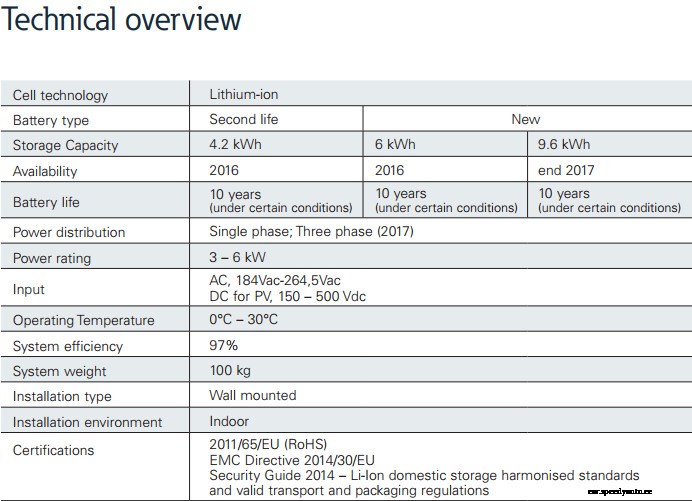
Eaton Nissan xStorage technical overview
The second piece of the puzzle is the Alliance Global Director of EV and HEV Engineering Division of Nissan, Kazuo Yajima’s recent interview.
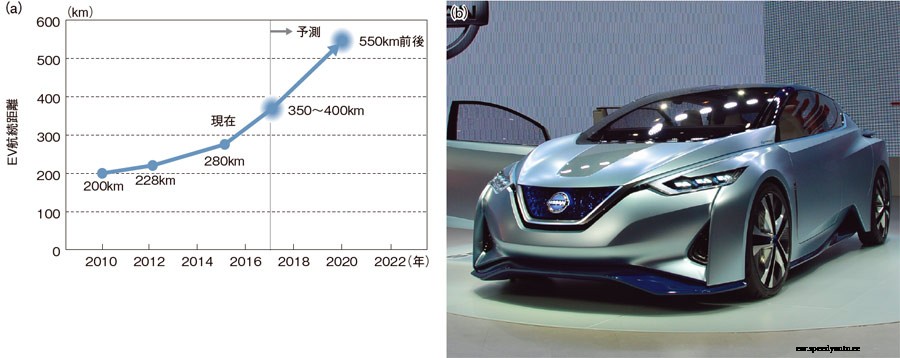
Nissan Leaf range evolution in Japanese JC08 Cycle
In my opinion a 38,4 kWh battery in the entry-level trim would be quite acceptable, but only if Nissan improves the Leaf’s efficiency to levels close to the Hyundai IONIQ Electric. It’s difficult but not impossible, we’ll see…
All in all, I’m very optimistic that Nissan will deliver with the new generation Leaf, an electric car with the best price/quality ratio available in 2017 and will set the standards for affordable electric cars. What do you think?
