
Graphene flakes have been extensively tested to make anodes in LIBs, but now Samsung SDI comes up with something better. Graphene balls (GB) can be used, not only to make the anode, but also to coat the NCM cathode making it more stable and resistant.
You can read the full article in Nature, but here is what matters the most:
“Taking the unique advantages of GB, the full-cell consisting of the GB-coated cathode and GB anode demonstrates the possibility of high volumetric energy density near 800 Wh L−1 in a commercial cell condition, together with 78.6% capacity retention after 500 cycles at 5C and 60 °C.”
What’s interesting is that this new battery has a better energy density at 60 ºC (444 Wh/kg) than at 25 ºC (370 Wh/kg), making the use of a TMS (Thermal Management System) dispensable.
Charging at 5 C, means that a battery can be charged from 0 to 80 % in slightly less than 10 minutes. Furthermore, a volumetric energy density of 800 Wh/L means that an electric car like the Renault Zoe could have a 75 kWh battery and a realistic range of 500 km.
Given that the battery capacity retention is 78,6 % after 500 cycles at 5 C and 60 °C, a 500 km range becomes 400 km after 250.000 km (500 cycles).
Now the real question is: how long will it take to see this battery technology in electric cars?
Considering that SK innovation and LG Chem are coming with high energy density and low cost NCM 811 EV battery cells already next year, is this a real effort from Samsung SDI to catch up or just something to get some media attention?
Notice that Samsung SDI is BMW’s battery cell supplier, and BMW doesn’t expect to start using NCM 811 battery cells in its electric cars before 2021, which makes me think that Samsung SDI is lagging behind and really needs to step up its game.
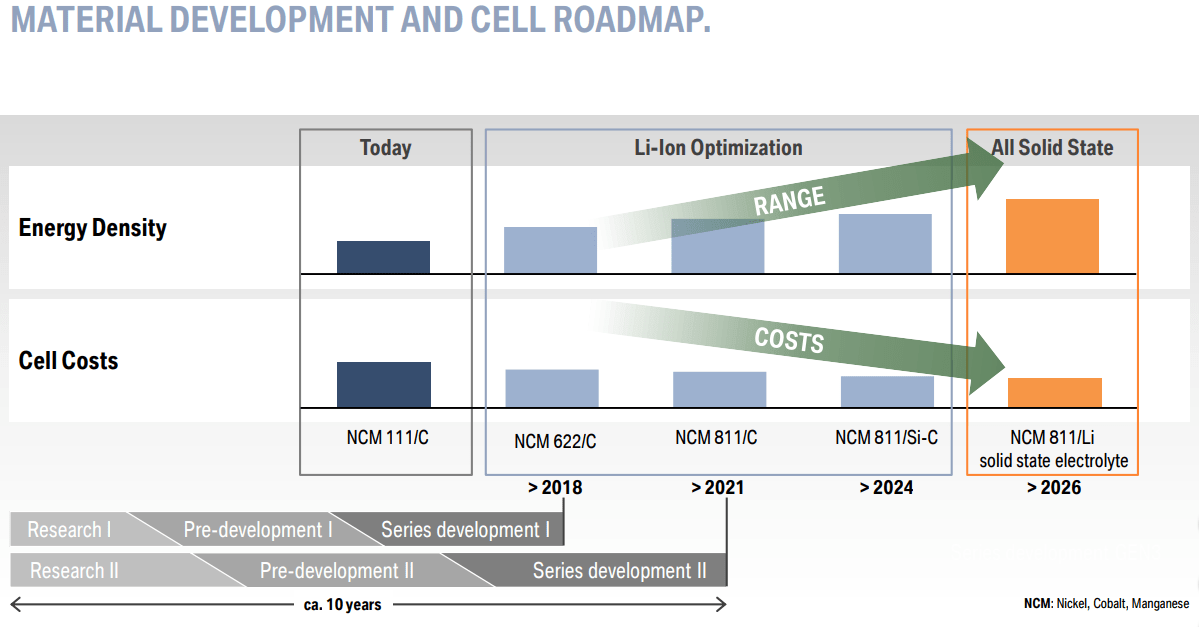
BMW Group Technology Workshops –E-Mobility in December 2016
Anyway, after reading the Nature’s article I’m convinced that this battery technology is mature and ready for production.
What do you think?
