
In the new enhanced Hyundai IONIQ Electric the battery capacity is increased by 36,8 percent from 28 to 38,3 kWh and the WLTP range is 311 km (193 miles). In June, Hyundai expected the WLTP range to be 294 km (183 miles), so this new figure is a nice surprise.
I should mention that I think that Hyundai underestimated the WLTP on the previous model, because the Volkswagen e-Golf had a similar EPA range (125 instead of 124 miles) but got a WLTP range of 231 km, while the Hyundai IONIQ Electric only got 204 km.
As for the EPA rating of the new model, it’s not known yet, but it should be around 168 miles (270 km).
Let’s see some highlights of the press release.
The new IONIQ Electric’s battery has been upgraded from 28 kWh to 38.3 kWh, meaning drivers can go even further between charges. It boasts 36% additional energy storage capacity, offering a total of 311 kms of range. Its e-motor delivers a maximum power of 136 PS and 295 Nm of torque and is fitted standard with a 7.2-kW on-board charger – an upgrade from current 6.6-kW – for Type 2 AC charging. Using a 100-kW fast-charging station, the battery can reach 80% charge in as little as 54 minutes.
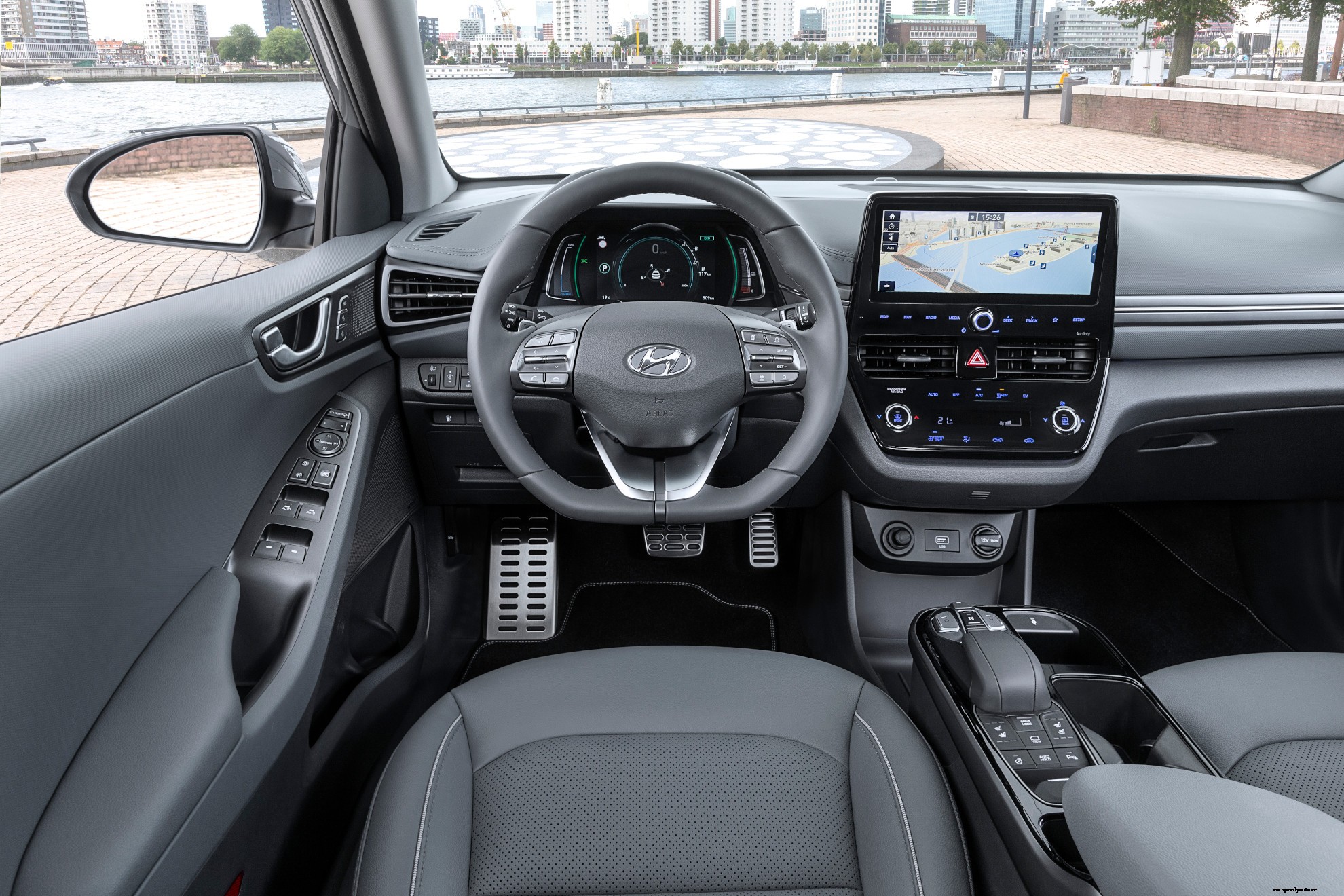
New Hyundai IONIQ Electric interior
An updated interior design
As well as the new convenience features, the new IONIQ’s reimagined interior incorporates new design factors to enhance its sophisticated image. In addition to standard Fossil Grey cloth seat trim, customers have the option of four leather seat colours: Fossil Grey, Shale Grey, Red Umber (exclusive for hybrid and plug-in) and Electric Shadow (exclusive to electric version). Meanwhile, the dashboard garnish arrives in Dark Chrome Accent.
Below the new wide screen 10.25-inch AVN screen, the control panel for heating and climate control has been redesigned and sports a sleek, glossy finish. New touch-type control buttons allow for intuitive operation of heating, ventilation and air conditioning. The IONIQ Electric standard high-resolution 7-inch LCD console display (optional for hybrid and plug-in hybrid versions) has been improved with mood lighting to visualise the different drive mode themes. To round off the improved modern interior design, blue ambient lighting has been applied across the passenger-side lower dashboard and the centre console.
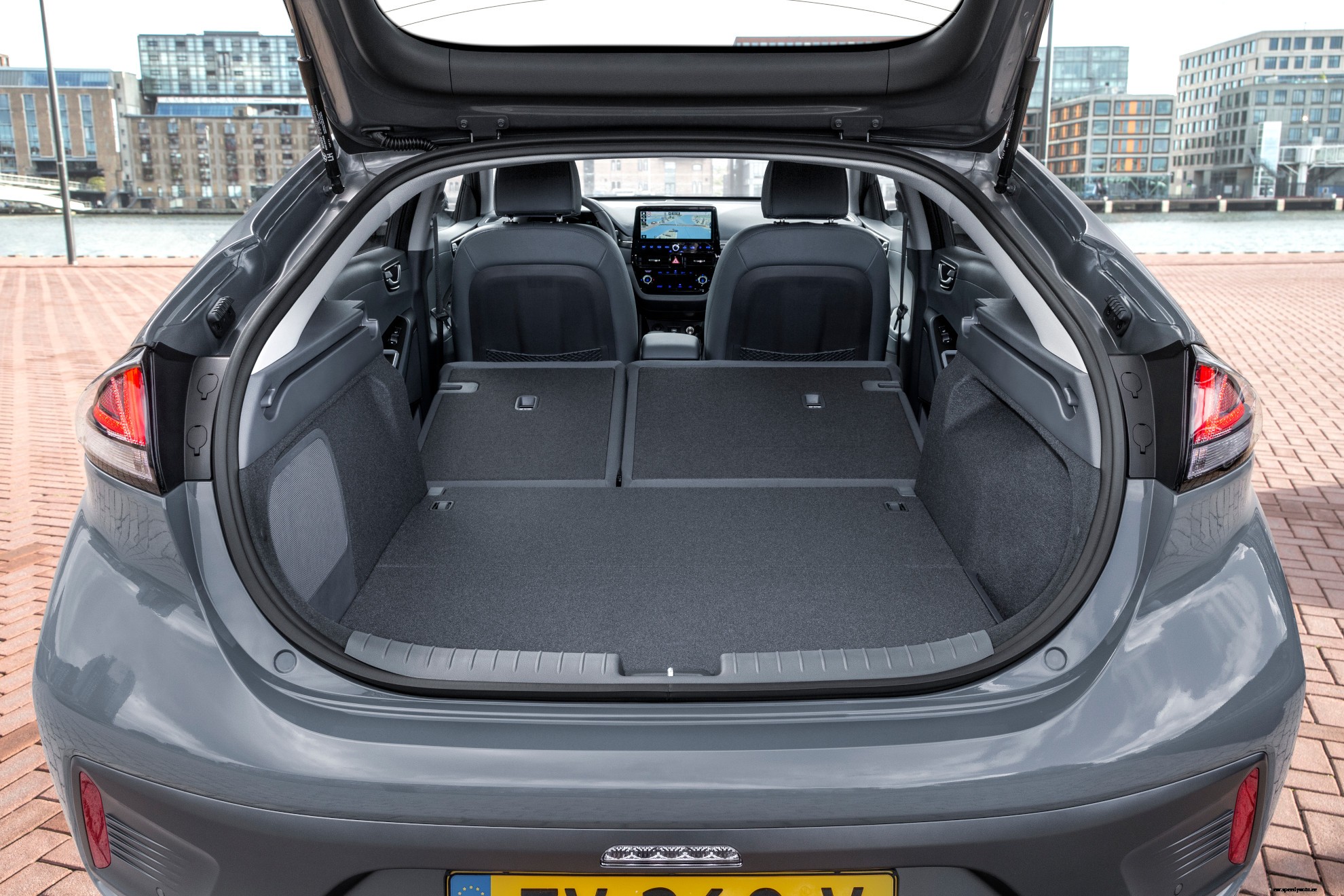
New Hyundai IONIQ Electric with seats folded down
Enhanced driving features
Taking a cue from its similarly innovative Kona Electric sibling, as a maximum use of regenerative braking technology, the new IONIQ Electric adopts 1-paddle driving capability, which allows drivers to stop the car by simply holding onto the left paddle shift lever with often no need to engage the braking pedal. Working thus via Smart Regenerative Braking, the level of energy recuperation is automatically adjusted depending on the road incline and traffic situation in front when coasting.
The new IONIQ Electric also features Eco+, which supplements the standard Eco, Comfort and Sport driving modes. By selecting the Eco+ mode, drivers reduce their energy consumption and the car’s remaining energy can be extended during unforeseeable emergency situations.
The new IONIQ Hybrid and Plug-in will be available to customers from July 2019. The electric version will follow in September 2019.
The new improved Hyundai IONIQ Electric is a very complete electric car with amazing efficiency, decent range and packed with safety features. The only down side when compared to the previous model is the lower charging rates at DC fast chargers – due to its battery now having lower nominal voltage (less battery cells in series).
Nonetheless, as always, it’s availability and price that will determine its success. Unfortunately regarding availability I’m not very optimistic. Kia and Hyundai build great electric cars but don’t seem motivated enough to sell them.
