
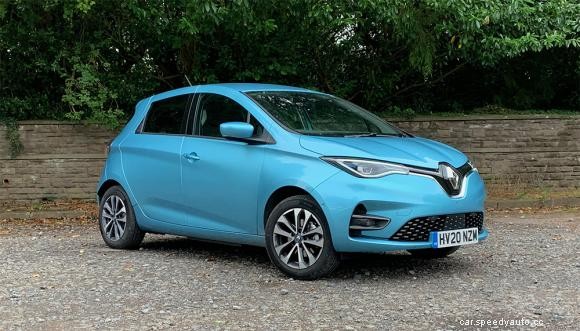
Renault’s Zoe is one of the few second-generation EVs available, and as such it benefits from many years’ experience in refining and improving the package. Improvements come in range, power, charging, and styling.
There are two core configurations available:
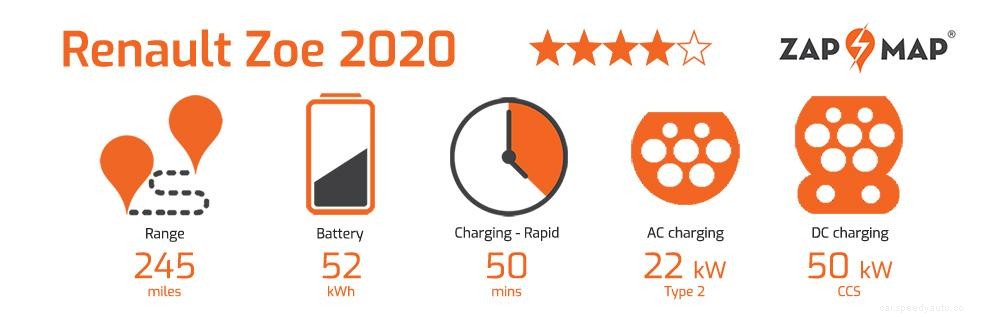
The official WLTP driving range for the Renault Zoe Z.E. 50 is as good as 245 miles on a charge, though this can vary depending on specification. The GT Line model tested sees that drop to 235 miles on a charge. It’s one of the best driving ranges available for an electric supermini regardless of specification.
In real-world driving in the model tested, the calculated average range on a charge came in at 221 miles on a charge, over a variety of roads. Urban driving saw that shoot up to around 270 miles on a charge, and motorway driving sees that figure drop to around 180 miles.
Renault has revised its brake energy recuperation for this generation Zoe, and it’s the better for it. There are D and B settings to prioritise casting or stronger regen, plus an Eco button for each setting. The B option doesn’t allow for full ‘one-pedal’ driving, can get close with careful anticipation. You’d struggle in town driving though. It quickly became apparent that it’s an effective system when used, rather than just leaving the Zoe in D or B.
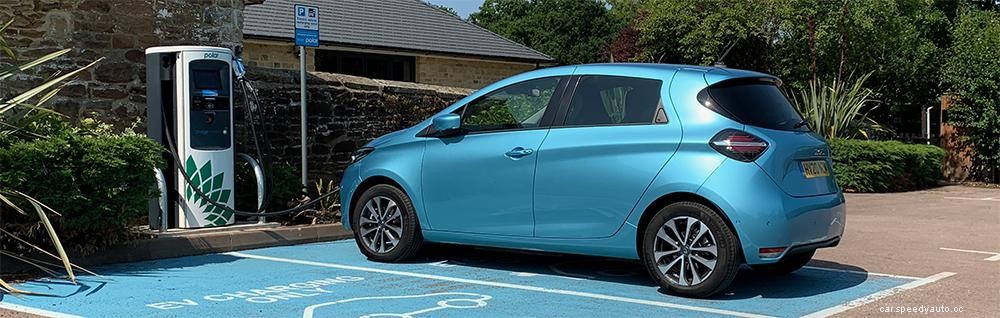
A key improvement over the older Zoe is the addition of 50 kW DC CCS rapid charging as an option. It will open up the Zoe to more buyers, reducing charging times to around 45 minutes when fitted. Buyers can keep costs lower by not having rapid charging available. All Zoe models will charge at up to 22 kW AC, with the inlet – Type 2 or Type 2 CCS – behind the Renault badge at the front of the car.
