
The deliveries of the Renault Zoe with the new ZE 40 battery have been delayed because of a “brake problem” or more specifically, a defective part in the reducer. The Renault Zoe has a gearbox with single-speed reduction gear bar.
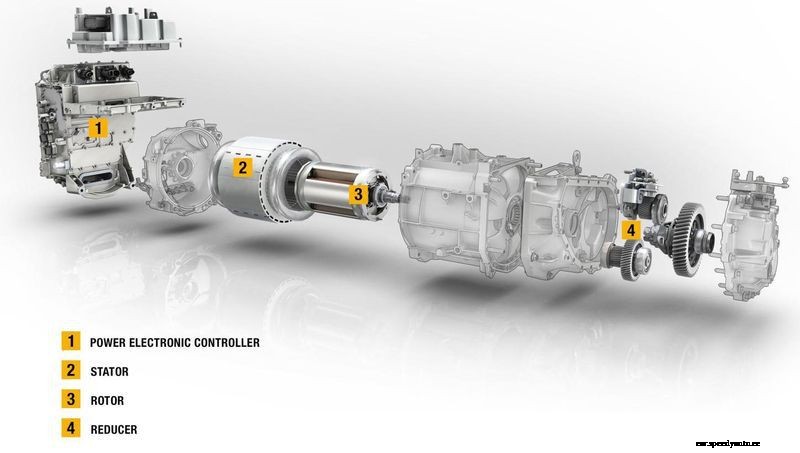
Renault Zoe R240-R90 motor
Fortunately the problems are past and with deliveries happening at higher pace, Renault Zoe sales surged in June.
In Norway 438 were sold, in Germany 680 were registered, while in its home country, France 1.983 were registered.
Considering that in May, with only 2.095 sold Renault Zoe was the best selling electric car in Europe, in June Zoe repeats the feat, since it surpassed the 3.000 mark by a comfortable margin. This cool looking electric supermini is Europeans favorite, by a large margin.
Anyways, I think that the introduction of electric cars without major range problems such as the Renault Zoe – with the new battery -, marks the beginning of a new era. We can stop comparing electric cars only between themselves and start comparing them with their real adversaries, the ICE (Internal Combustion Engine) cars.
In my opinion, Renault Zoe’s biggest rival is the Toyota Yaris Hybrid, which Toyota managed to sell 47.544 units in Europe in the first half of the year. Renault Zoe and Toyota Yaris Hybrid are two similar superminis that represent two different strategies that try to appeal to the same potential buyers.
While the Renault Zoe represents the ultimate goal of a zero emission mobility, the Toyota Yaris Hybrid represents a bridge technology destined to fade away, but which in the present has its appeals.
The new Toyota Yaris Hybrid comes standard with safety features that help to avoid accidents, which are now required to get 5-stars Euro NCAP safety rating and are missing in the Zoe. Price wise they are very similar in buying and running costs if we consider the Zoe with the leased battery.
At the moment Toyota has the upper hand, however with just a small facelift the Renault Zoe could take the lead. It just needs DC fast charging capability via a CCS connector, modern safety features such as AEB and LKAS, and a more practical interior – 60/40 flat-folding rear seats and a decent glove compartment.
While there is no official date on when will the Zoe get its facelift, early 2018 seems the most logical date to introduce it and increase production. By then, LG Chem will be producing its battery cells in Europe (Poland) and Renault can increase the Zoe’s production without major supply problems.
To sum up, what I think Renault is waiting for before pushing the Zoe to another level is the LG Chem battery cell plant in Poland to start production. When it happens Renault can finally improve the Zoe, increase production and decrease the price, to prove that going full electric and not investing in a bridge technology such as hybrids, was the right decision.
Let’s see how long will it take for the best selling electric cars to surpass the sales of the best selling hybrid cars in Europe. Toyota could make it even more interesting by introducing a Toyota Yaris EV… and I think they’ll when the Zoe start catching up.
What do you think? What does the best selling electric car in Europe needs to start competing with ICE cars?
