
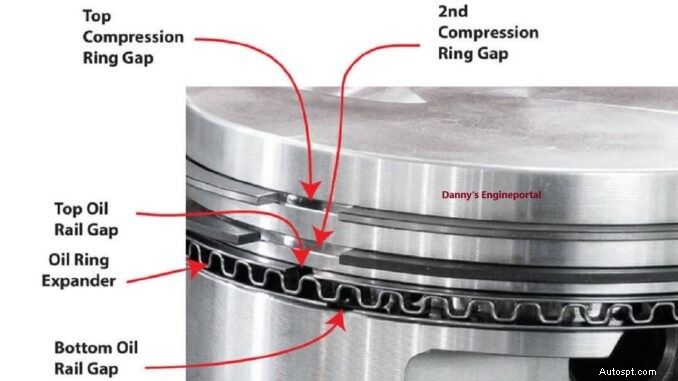
 Piston Rings on Piston
As the engine warms up, worn piston rings expand and begin to seal against the cylinder walls. This reduces the amount of oil blowing past the rings; however, as wear progresses, the blue smoke will become constant.
When piston rings wear out, they lose their ability to seal the combustion chamber. Blow-by causes oil to enter the combustion chamber. Meanwhile, exhaust gases escape into the crankcase.
 Classic blue smoke often disappears as the engine warms up, but persistent smoke indicates severe ring wear.
In addition to smoke, you may notice you are constantly topping off your oil between changes. Worn rings allow oil to blow past and burn in the combustion chamber. This doesn’t just lower your oil level; it creates carbon buildup on your valves and cylinder heads.
Keep in mind blow-by doesn’t just move oil up; it moves combustion gases down into your oil pan (crankcase).
When compression escapes into the crankcase instead of pushing the piston down, your engine loses its “punch.” This often leads to:
Before tearing the engine down, perform these two tests:
Most modern engines utilize a three-ring design to maintain performance and reduce emissions.
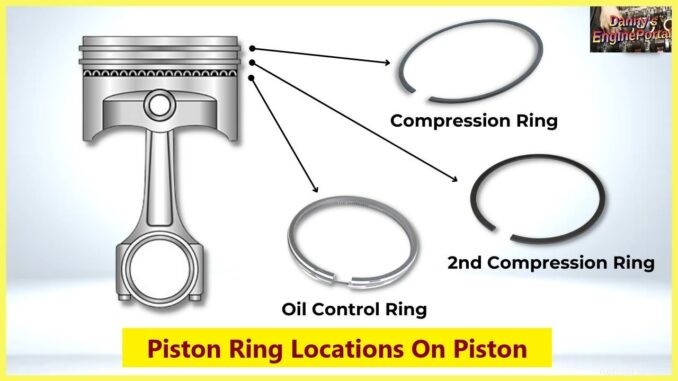 Piston Ring Locations
Located in the top grooves, these rings seal combustion pressure. They also transfer heat to the cylinder walls.
These help the top ring seal gases while “shearing” the oil layer left on the cylinder wall. This keeps it out of the combustion chamber.
These rings regulate the amount of lubricating oil on the cylinder walls. They spread it evenly, preventing it from passing into the combustion zone.
Pro Tip: Modern engines have incredibly tight clearances (.001 in. or less). Using anti-scuff moly-based coatings on piston skirts helps maintain these tolerances and reduces “piston rock.”
Follow these critical steps to ensure a perfect seal.
To begin, you must check for orientation marks before fitting the rings. In fact, installing a ring upside down can actually double your engine’s oil consumption. And resemble worn piston rings.
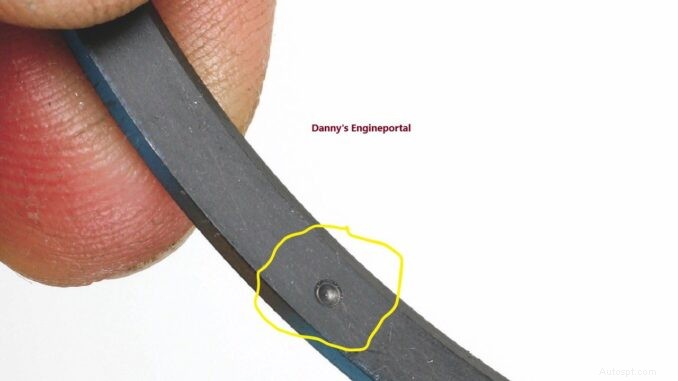 Always verify the ‘TOP’ mark; installing these upside down can double your oil consumption.
Keep in mind never assume that new rings are “drop-in” ready. Instead, you must verify the end gap within the cylinder bore itself.
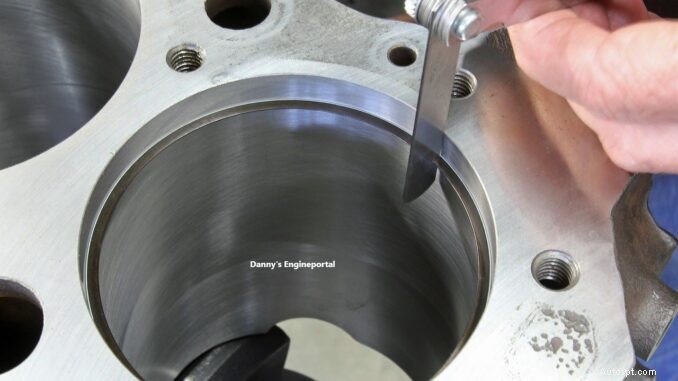 Measuring Piston Ring Gap In Cylinder
Once your measurements are confirmed, it is time to fit the rings. Never “spiral” rings onto a piston by hand. Doing so can permanently deform the metal and ruin the seal.
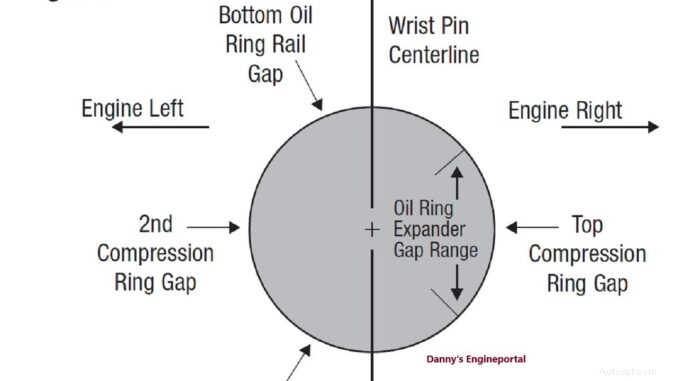 Staggering the gaps creates a ‘labyrinth’ seal that keeps combustion pressure where it belongs.
Finally, double-check the fitment. For instance, never install shallow-groove rings on deep-groove pistons, otherwise, they will likely pop off. Conversely, deep-groove rings on shallow pistons will bottom out and jam.
Piston rings are small components that do a massive job. From sealing combustion gases to cooling the piston, their health dictates the lifespan of your engine. Whether you are diagnosing blue exhaust smoke or preparing for a high-performance rebuild, precision is key.
Remember:
If you’ve confirmed a loss of compression through a Wet Compression Test, it’s time to pull the pistons. Taking the time to install your rings correctly today will save you from a “thirst for oil”. And expensive bearing damage tomorrow.
Q: Can you just replace piston rings without boring the cylinders?
A: Yes, but only if the cylinder taper remains within spec (usually under .003 to .005 inches) and the walls are properly honed. If the cylinder is too “out-of-round,” new rings will never seat correctly.
Q: How long does it take for new piston rings to seat?
A: Most modern rings seat within the first 20 to 50 miles of driving. Using a high-quality break-in oil and varying your engine RPM during this period is essential for a long-lasting seal. (avoiding steady highway speeds)
Q: What happens if I install a piston ring upside down?
A: An upside-down ring acts like a pump, pulling oil into the combustion chamber instead of scraping it away. This can result in massive oil consumption, fouled spark plugs, and blue exhaust “smoke” immediately after a rebuild.
Q: Why do I need to wash cylinders with soapy water after honing?
A: Honing leaves microscopic grit and metal debris within the cylinder crosshatch. Solvents and parts washers often fail to remove this material. Therefore, hot soapy water is essential to prevent premature ring wear.
