
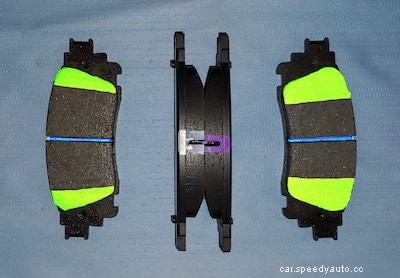
Looking at disc brakes, have you ever wondered about brake pad size, shape and form? Most brake pads are shaped as a sector of a circle since brake rotors are circular, but what about slots, grooves or angles that are cut into them? Considering the function of the brakes, a solid surface might seem logical, maximizing contact with the brake rotor, but there’s a surprising amount of engineering that goes into their design and manufacture.
In the 18th century, horse-drawn wagons had hand-operated brake levers, braking depended entirely on the strength of the driver. In the 19th century, steam locomotives used various means of braking, hand-operated screws, rotating rods or chains to apply the brakes. Braking friction was provided by wood blocks, which didn’t wear the steel facings of wagon or coach wheels, but the invention of rubber tires rendered wooden brake blocks obsolete.
In 1866, Bertha Benz invented brake linings out of necessity on her first drive in the Benz Patent Motorwagen. Made of shoe leather, these new brake pads were heat-resistant and lasted longer.
In the 20th century, drum brakes and disc brakes would provide braking force to the hub or axle of the vehicle. As the brake pad is designed to convert the kinetic energy of a moving vehicle to heat energy, brake lining materials need to withstand extreme heat. As vehicles got faster, copper, asbestos, cellulose, Kevlar, glass, soft metals, clay and other materials would be used, but what about brake pad shape?
Because the braking system in a vehicle is a dynamic system, various forces act on each brake pad, depending on whether the brake caliper is fixed or floating, caliper piston arrangement, whether the brake pad is inboard or outboard, and the overall solidity of the braking components.
Brake pads are indeed more complicated than making them the right shape, but trust that there’s a good reason for those extra manufacturing steps. The next time you’re installing brakes on your car, look for instructions on correct orientation to help your car brake and keep sound at bay.
