
Your vehicle’s braking system plays a critical role in helping you maintain control while driving. When operating as designed, this system brings your vehicle to a full stop. As with any automotive system, regular maintenance is required to ensure it’s working correctly. Using a brake parts cleaner is recommended for regular maintenance, and you can easily handle it yourself.
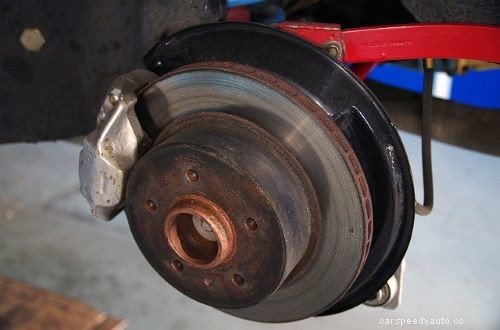
Your vehicle’s brakes are generally dirty, but that “dirt” is comprised of brake dust and deposits naturally produced by certain parts and deposited on the wheels. This happens when your brake pads heat up, causing metal debris to break off. Although this is normal, if left unchecked, the dust buildup can adversely impact brake function and vibration and shorten the life span of the brake pad. The same wearing process applies to the brake rotors, adding more dust that clings to the wheels.
As a result of these issues, your vehicle won’t brake as safely as before. Without regular cleaning, you’ll have to replace the brake pads and rotors more frequently.
Shop for a brake parts cleaner that comes in an aerosol can and includes an extender to reach those hard-to-get areas. Tackle all four wheels at once, not just the ones where dust buildup is apparent. Wear a mask, safety glasses, and gloves to protect yourself, and follow these steps:
You could try to clean the brake parts without lifting the vehicle and removing each wheel, but the job wouldn’t be as thorough. Instead, take the more measured approach to leave nothing to chance.
Besides cleaning your brake system parts, you will be doing everyone a favor by removing a source of highway air pollution. As reported by Science Daily, researchers at the Georgia Institute of Technology found that even a cloud of tiny metal particles is harmful to respiratory health. You can make a difference by adding brake parts cleaning to your regular maintenance schedule.
Extend the life of your brakes and benefit the environment by taking brake dust buildup seriously. It’s a job you can accomplish in less than an hour on its own, or add it to your other brake care initiatives.
