
Dan Ferrell writes about do-it-yourself car maintenance and repair. He has certifications in automation and control technology.
A P0401 code may come from EGR system problems like:
It depends on the type and configuration of your vehicle's EGR system and the nature of the fault.
With a bit of information and troubleshooting, though, you may be able to get to the source of the problem and, probably, solve it on your own. That's because generally, a P0401 trouble is mostly caused by a few common issues.
Also, check the Resources at the bottom of this post. You'll find links to other posts that may help you troubleshoot and fix P0401 code.
| Index |
|---|
1. What Does a P0401 Code Mean? |
2. What Causes a P0401 Code? |
3. Common P0401 Code Symptoms |
4. How Does an EGR Valve Work? |
5. How to Repair a P0401 Code |
6. Is a P0401 Code Bad? |
7. How to Clear a P0401 Code |
8. Resources |
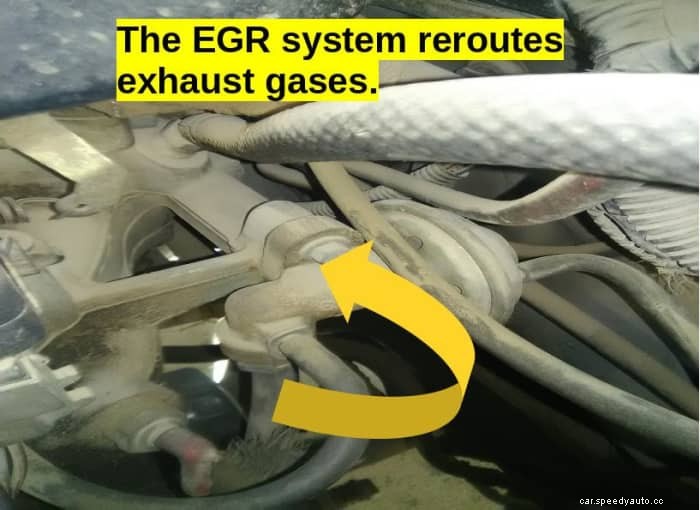
Basically, a P0401 code means the car's computer has detected insufficient exhaust gas flowing back into the combustion chambers. In other words, the computer knows there's a problem in the EGR system or passages but doesn't know why.
The EGR (exhaust gas recirculation) system is in charge of recycling a controlled amount of exhaust gases back into the cylinders to reduce combustion temperatures and thus, reduce highly toxic oxides of nitrogen (NOx).
Just like any other system, the EGR may fail in many different ways. One of them is failing to reroute enough exhaust gases back into the intake manifold, which triggers the P0401 trouble code.
What makes P0401 code tricky to diagnose, or any EGR system code for that matter, is the different system configurations in used today.
For this reason, you want to have the vehicle repair manual for your particular vehicle on hand. The manual explains the configuration of the EGR system in your car, how it works, and possible strategies to troubleshoot the system when problems arise.
If you don't have this manual yet, you can find a relatively inexpensive copy through Amazon. Haynes manuals include descriptions for the different vehicle systems, parts identification, step-by-step troubleshooting procedures, and how to replace components. You'll also find photos and images to make your project easier. Besides, you can look up the service interval for the different systems, so you keep your vehicle running and in good shape for longer periods of time.
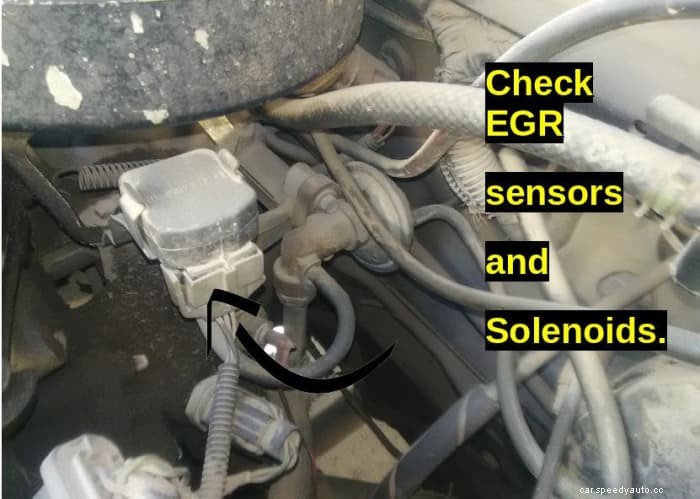
An EGR system may fail in various ways, depending on the particular system configuration installed on your vehicle and type of failure.
The two most common faults include:
But you may also be dealing with a:
If necessary, consult your vehicle repair manual.
There are symptoms that my point to a restricted or blocked EGR valve or passage.
The two most common symptoms are:
Other symptoms may include:
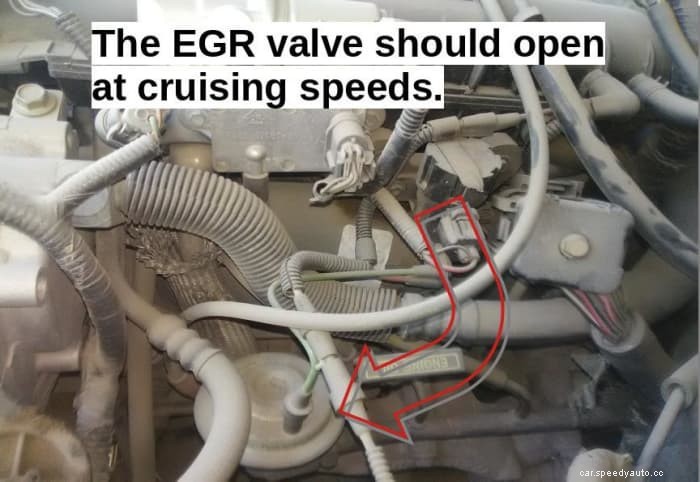
The EGR valve remains closed when:
Other than that, the EGR valve will open gradually to allow exhaust gases back into the combustion chambers as commanded by the car's computer or increased intake pressure, depending on engine model.
Using a Digital Multimeter
When checking electrical circuits in your vehicle with a multimeter, always use a digital meter with at least 10 Megohms of impedance to prevent damage to the car's computer.
In general, repairing a P0401 problem may not be as complicated as it may seem at first. However, some models make it easier than others.
For a successful diagnostic and repair, you need to know the configuration of the particular EGR system installed in your vehicle, how it operates, and how it is monitored.
You'll find this information, and most likely some suggested tests, in your vehicle repair manual.
Broadly speaking, you'll find two types of EGR systems in used today.
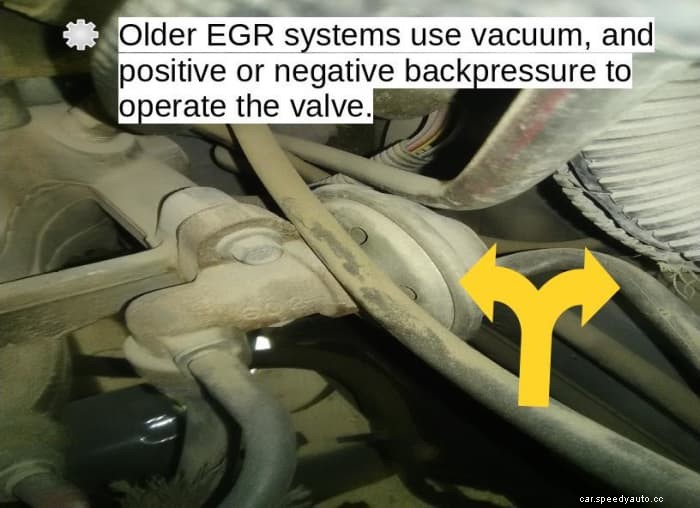
a. The old type uses vacuum to operate the EGR valve for the introduction of exhaust gases into the intake manifold.
Within these older system, you'll find ported EGR valves, and valves operated through positive or negative back pressure.
b. Modern vehicles use the car's computer to control the EGR valve through the use of solenoids, vacuum, and/or sensors. Different models vary in their approach.
General Motors, for example, introduced a digital, electronic EGR valve using three solenoids to control valve operation. Also, some models, including some from GM, use a linear EGR valve with a pulse-width modulated solenoid.
Because of theses two general configurations, diagnosing a P0401 code may require some diagnostic tools:
Sometimes you'll need one, two or three of these tools to diagnose your EGR system.
If you don't have the tool you require for the job, check with your local auto parts store. Many of them will loan you one.
Different systems make use of different sensors to determine EGR valve operation. Sometimes, it is necessary to test this sensors as well. On relatively modern and modern vehicles, the car's computer may use a:
Any of these sensors may help the car's computer confirm exhaust flow. And a faulty sensor may trigger a P0401 code.
Knowing how your car's computer monitors the EGR valve or system will help you make a better and more accurate diagnostic.
Operating your vehicle with a driveability issue is never a good idea. However, there are some car problems that can produce more damage than others when not fixed on time.
A P0401 code is no different. If you were only dealing with an increase in emissions, probably you'll have a bit more time to work on the problem. Although, driving around and polluting the environment because of an engine fault is not a good idea either.
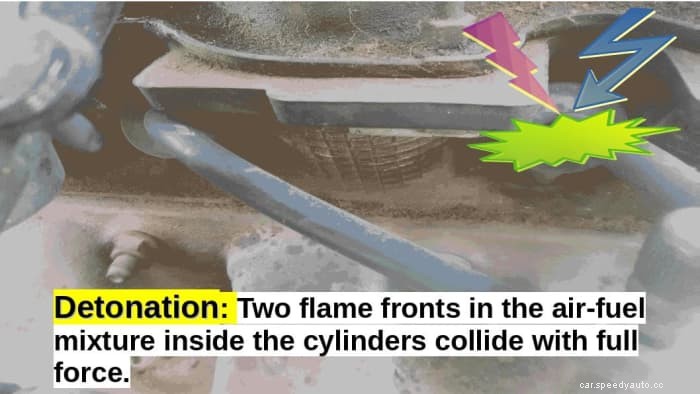
Still, depriving the engine of recirculated exhaust gases means higher engine temperatures and the risk of detonations, depending how your car's computer is programmed to handle the problem. However, you only need one detonation with enough power to destroy your engine.
So not dealing with a P0401 code on time can leave you with a very expensive repair.
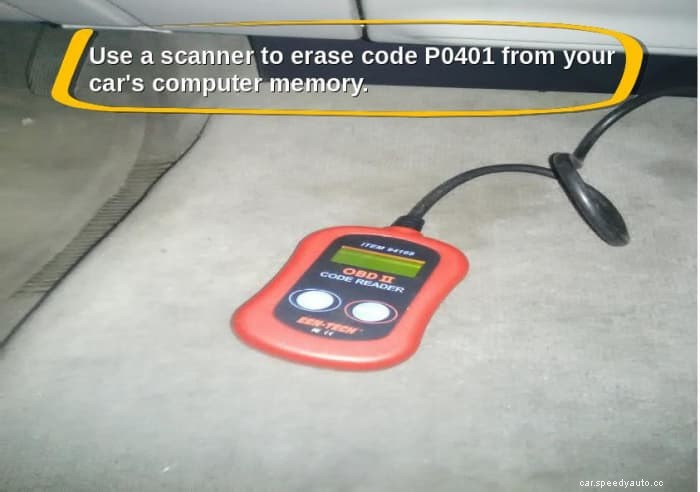
On monitored EGR systems, you can use a scan tool to clear the P0401 code from the computer's memory after making the repair. This will help you verify that you actually have found the problem and fixed it.
The computer will keep monitoring the system as well as the rest of the emission systems. If the computer finds that a signal from the EGR system is out of range, it will set a diagnostic trouble code (DTC).
If the EGR system were to fail in a consecutive trip, the CEL will turn on to let you know there's a problem.
In this case, just download the codes from the computer's memory to see what triggered the CEL.
