
Dan Ferrell writes about do-it-yourself car maintenance and repair. He has certifications in automation and control technology.
The EGR (exhaust gas recirculation) system is part of the emission control system of your vehicle. When something goes wrong, one or more symptoms may warn you about the potential problem in the system:
Learn what the EGR system does, what can go wrong with it, and some strategies that will help you diagnose potential problems with specific parts of the system.
| Index |
|---|
1. The Function of the EGR System |
2. VIDEO: How the EGR System Works |
3. So What Can Go Wrong With the EGR System? |
4. Common EGR System Faults |
5. Common EGR Symptoms |
6. VIDEO: EGR System Potential Problems |
7. EGR System Diagnostic Strategies |
8. Is It Better to Clean or Replace the EGR Valve? |
9. Resources |
...the EGR system helps protect your engine and the environment.
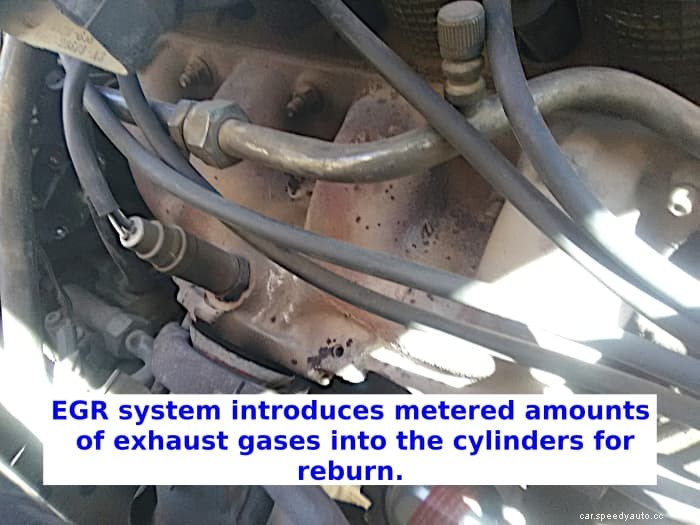
The job of the EGR system is to reintroduce a certain amount of exhaust gases back into the intake manifold to be reburn with the air-fuel mixture entering the cylinders.
Broadly, this only happens during cruising speeds to reduce engine temperature and control the formation of oxides of nitrogen (NOx), which is very harmful to the environment.
Since the 1970s, car manufacturers have fitted vehicles with an EGR valve to accomplish this. Early versions of this system operate with a vacuum controlled valve. During the 1980s and 1990s, electronic controls were introduced with the use of different types of sensors. Modern vehicles may use fully electronic (digital) type EGR valves or use a different technology, like a variable valve timing (VVT) system, in charge of controlling NOx emissions.
Ultimately, the EGR system has a positive effect on the engine:
So the EGR system helps protect your engine and the environment.
In the next silent video, you can see graphically how the EGR system recirculates exhaust gases to reduce NOx emissions. It shows an Audi system model, but it can be applied to most emission systems.
The EGR system can fail in many different ways.
Depending on your particular EGR system configuration, a system fault may show up in one or more ways:
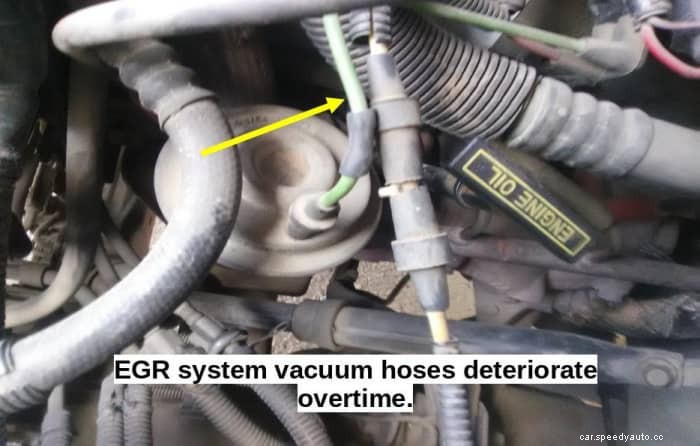
Older, vacuum operated valves are fitted with rubber diaphragms. Over time, this diaphragm can rupture and cause the valve to remain closed.
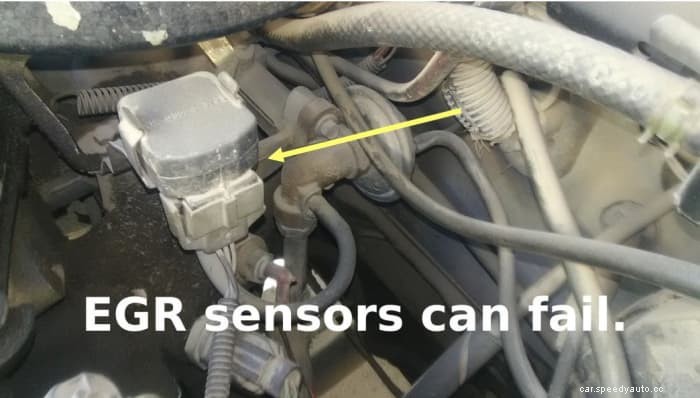
Modern, electronic operated valves can suffer from short or open electrical circuits. Circuit sensors can also fail, including the DPFE (differential pressure feedback EGR) sensor, depending on your particular model. In most cases, this is enough to trigger the Check Engine Light (CEL).
Whether your engine uses a vacuum or electronically controlled EGR valve, both types can suffer from carbon buildup after years of service. Exhaust gas recirculation will deteriorate until flow is completely stopped.
In the same way, engine performance issues will appear gradually. You'll begin to notice:
EGR systems suffer more often from two common faults:
Carbon buildup: This is perhaps the most common issue. System passages, and the valve itself, clog up eventually.
Soot from exhaust fumes accumulate around these passages over time until gasses can no longer flow, obstructing EGR valve operation. Many times, the valve gets stuck closed or open.
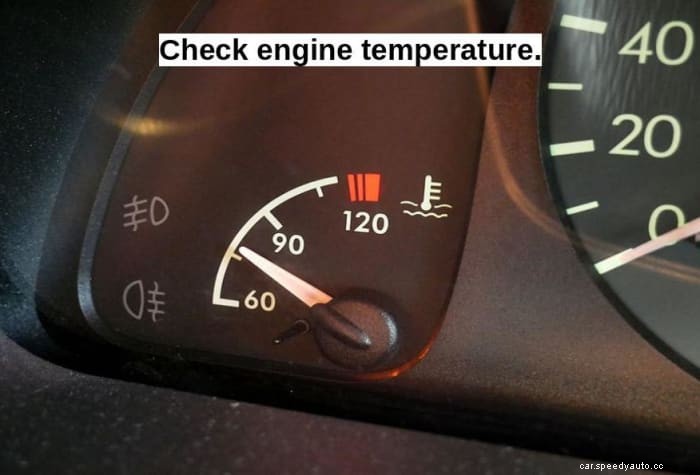
If the EGR valve sticks close, you'll notice one or more of the following symptoms:
If the EGR valve sticks open, you'll notice one or more of the following symptoms:
One or more of these symptoms can also happen when a EGR system sensor goes bad or there's a malfunction in the electrical circuit or vacuum hose related to the system.
However, keep in mind that these symptoms are not exclusive of EGR system trouble. Intake gasket failure, MAF sensor problems, oxygen sensor issues and many other faults can also lead to one or more of these symptoms.
That's why it's important to properly diagnose the problem before replacing components.
The following video gives you a quick summary of potential problems that can result from a faulty EGR valve.
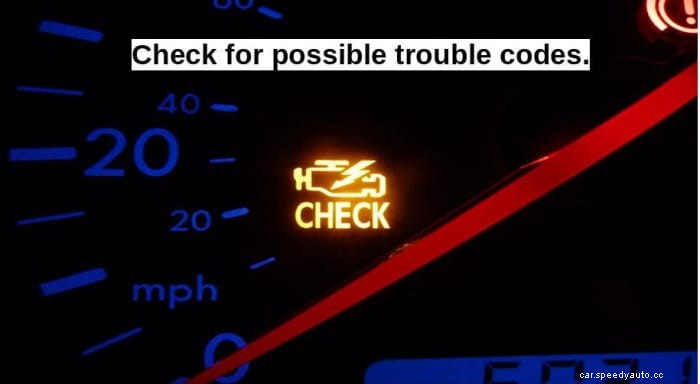
Tackling a problem with the EGR system with a few strategies will save you time and money.
On most modern vehicle models, a problem in the EGR system will trigger the check engine light. Scan your car's computer memory for potential codes, even if you don't see the CEL light on. A pending code, or another code related to the EGR system, may give you the clue to the problem.
Common EGR related codes range from P1403 through P1406 along with a P0400 series.
Depending on model, a manufacturer or car shop may recommend decarbonizing EGR system passages, and sometimes the EGR valve, every 15 thousand or 50 thousand miles. This is because carbon buildup gradually clogs system passages, preventing the system from working properly.
Remove the EGR valve and decarbonize passages, if you haven't perform any maintenance on the system within the last two to three years. You can use a EGR valve cleaner.
If you don't have your car repair manual yet, you can buy one through Amazon. Haynes manuals include step-by-step procedures, including photographs and images, for many maintenance, troubleshooting, and parts replacement projects you can do at home.
Also, make sure to check the posts listed in the Resources section at the bottom of this post. One or more of these articles will help in your diagnostic and troubleshooting procedures.
The important thing is to diagnose the problem sooner rather than later to prevent a faulty component or failing system from playing havoc with your engine and emptying your wallet.
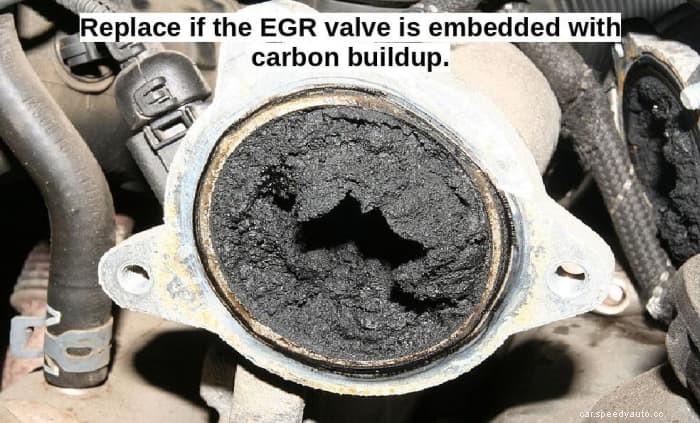
It's hard to establish a common lifespan for all EGR valves in use today. It all depends on the particular valve configuration, engine maintenance, and driven miles.
However, a typical EGR valve has a lifespan of around 10 years. If your valve is below this mark and doesn't seem to have a problem with carbon buildup, you may decide to clear passages and reuse the same valve. Unless the valve itself has failed.
Cleaning an EGR valve may not remove all the carbon buildup to guarantee proper operation after reinstalling the valve. Besides, using a valve cleaner freely to get rid of all soot particles from inside a valve may cause damage to the valve.
And performance problems may come back soon after. So it's better to install a new valve.
