
Dan Ferrell writes about do-it-yourself car maintenance and repair. He has certifications in automation and control technology.

Intake manifold leak symptoms may include:
The intake manifold holds and directs outside airflow and injected fuel (on port injection models) into each cylinder as needed for the combustion process.
On modern, fuel-injected engines, the electronic control unit (ECU or car's computer) adds the correct amount of fuel to the combustion chamber, according to engine operating conditions.
Using sensors, the ECU knows the amount of air entering the engine to keep a proper balance of approximately 14 parts of air by 1 part of fuel.
An intake manifold leak would disturb this necessary balance and create a performance issue.
A leak may occur for more than one reason:
Some of these are harder to diagnose than others.
The following sections can help you diagnose a potential leak so you can take the necessary steps to fix the problem.
It's a good idea to have the repair manual for your specific vehicle on hand to help you identify and locate components, if necessary. If you don't have this manual yet, you can find a relatively inexpensive copy on Amazon.
Haynes manuals come with step-by-step procedures for many maintenance, parts replacement, and repair procedures. So, you'll recoup your small investment in a short period of time.
| Index |
|---|
1. Intake Manifold Vacuum Hose Leaks |
2. Intake Manifold Gasket Leaks |
3. Damaged Intake Manifold Leaks |
Video: Using a Smoke Machine to Find Intake Manifold Leaks |
4. Diagnosing Leaks With a Vacuum Gauge |
5. Pay Attention to the Check Engine Light |
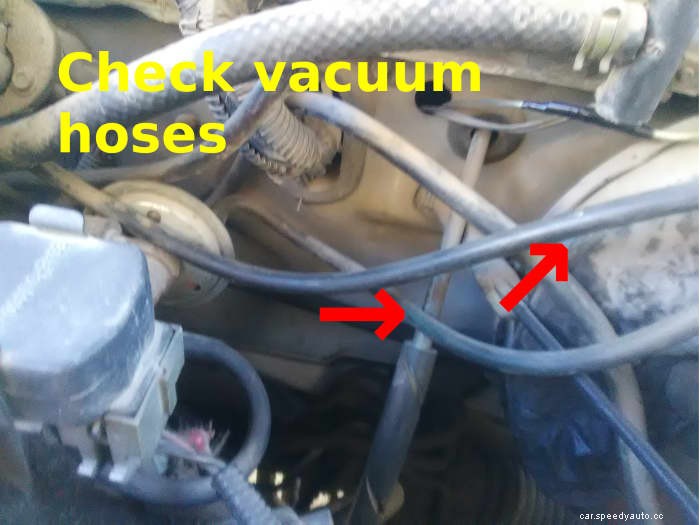
Perhaps, vacuum hose leaks are the most common leaks affecting an intake manifold.
To check for a leaking hose:
Also, you can spray a suspect area on a hose with soapy water. If you see bubbles forming around the spot, you have found the leak.
You can also use starting fluid. When you spray the fluid on a leaking area, you'll notice the rough idle smoothing out as the engine burns the fluid in the combustion chamber.
An internal coolant leak into a cylinder, due to a failed gasket or manifold, can destroy an engine.
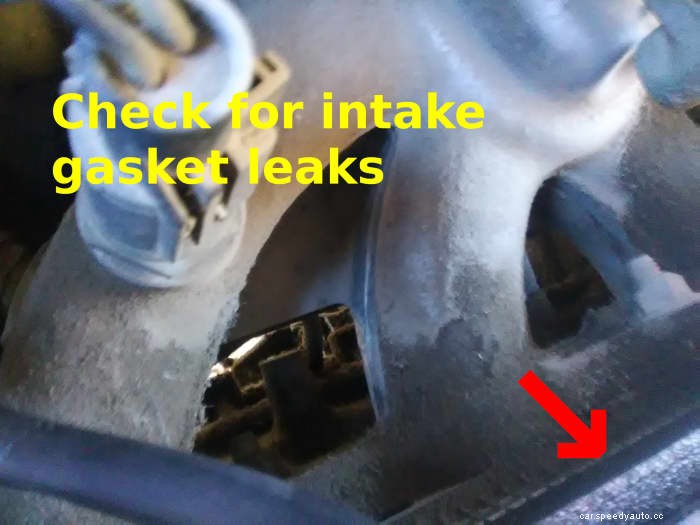
On one end, the intake manifold provides a mounting base to hold the throttle body in place with a gasket in between. On the other end, the manifold attaches to the cylinder head with a gasket in between to create a seal.
This prevents unmetered, outside air to enter the engine, and, on some models, prevents coolant or oil form leaking out the cylinder head or to enter the combustion chambers.
To check for an Intake Manifold External Leak:
Checking for a leaking gasket that sucks in air or expels coolant outside the intake manifold is sometimes easier than diagnosing an internal leak.
To check for an Intake Manifold Internal Leak:
Although any type of leak is cause for concern, internal leaks caused by a damaged gasket, cracked intake manifold or cylinder head is something serious and you need to diagnose and fix the problem as soon as possible.
If you seem to be loosing coolant but can't seem to find a leak around the intake manifold, cylinder head, block or cooling system, take in your car for a diagnostic before the problem turns into a very expensive repair. An internal coolant leak into a cylinder, due to a failed gasket or manifold, can destroy an engine.
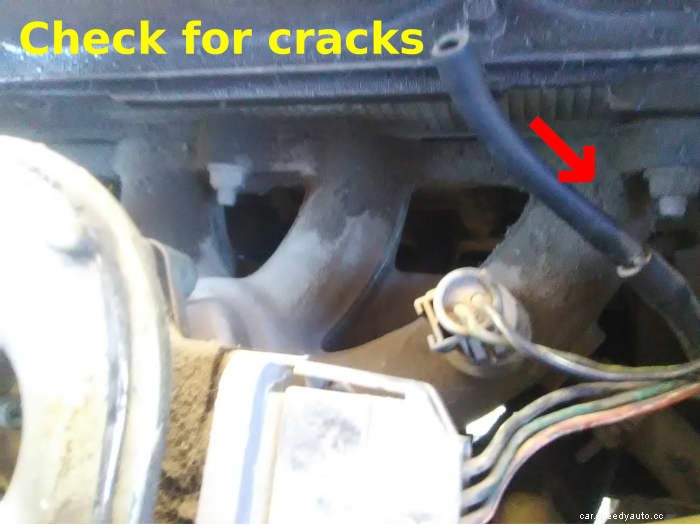
Vehicle models fitted with aluminum cylinder heads and plastic intake manifolds are prone to develop leaks around coolant ports. Corrosion can easily eat the plastic around intake ports.
Even more, plastic intake manifolds are more likely to develop cracks than those made from aluminum.
Still, a crack on an aluminum or plastic intake manifold is hard to diagnose through a visual inspection. Car shops use smoke machines, dyes and other special techniques for this purpose.
You still can try using a piece of rubber hose as a diagnostic tool:
1. Put one end of the hose against your ear.
2. Use the other end of the hose to trace around the intake surface, cylinder head or block areas.
If necessary, take your vehicle to a garage for a proper diagnostic. This may become a serious issue if coolant begins to leak into the cylinders.
Watch the following video so you can see how a car technician uses a smoke machine for hard to find intake manifold leaks.
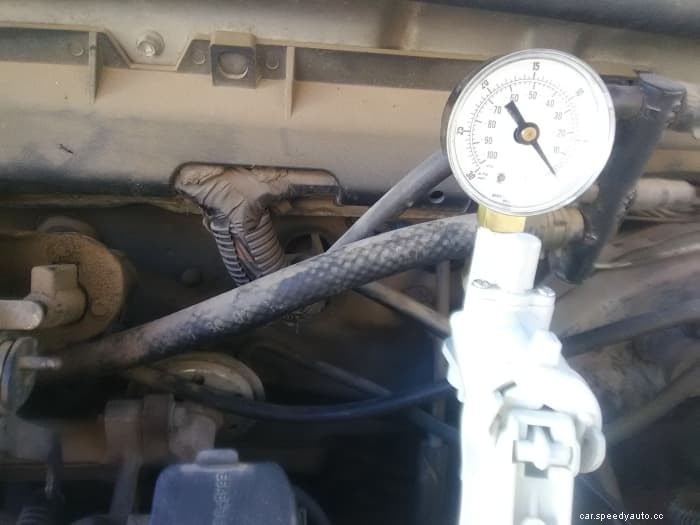
Often, you can troubleshoot for a vacuum leak using a vacuum gauge, if the leak seems hard to find.
If you don't have a vacuum gauge, your local auto parts store may loan you one.
If you suspect a vacuum leak, make sure to check every vacuum hose. Vacuum hoses should be in good shape and properly connected. Another possibility is a cracked intake manifold. This can be a problem specially on plastic intake manifolds.
If your vehicle comes with a two-parts intake manifold, upper and lower, a leak can manifest in different ways:
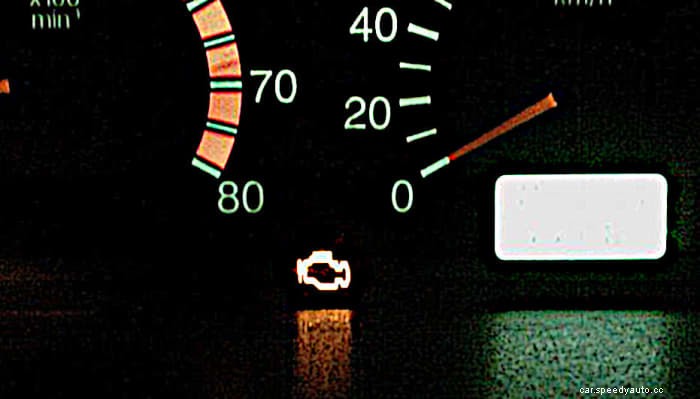
An intake manifold leak can be tricky to diagnose sometimes, and a check engine light can be of great help in this situation.
If the check engine light comes on, troubleshoot any system, component or circuit indicated by the trouble code. This may lead you to the source of the problem sooner than you expected.
Following a systematic approach, using the steps outlined in the previous sections can help you save time and repair the problem sooner.
This content is accurate and true to the best of the author’s knowledge and is not meant to substitute for formal and individualized advice from a qualified professional.
