The Chrysler Hemi motor is a 90-degree pushrod V8, ranging in capacity from 3.9L to 6.4L, and with either natural aspiration or supercharging. The name “Hemi” has been applied to this family of Chrysler V8s, as well as the Hemi-6 used in Australian Chryslers, and the Mitsubishi Astron that Chrysler installed in some American-market vehicles, so what is a Hemi, and what does “Hemi” mean, exactly? It refers to the hemispherical shape of the combustion chamber that all three of these otherwise unrelated engines have in common.
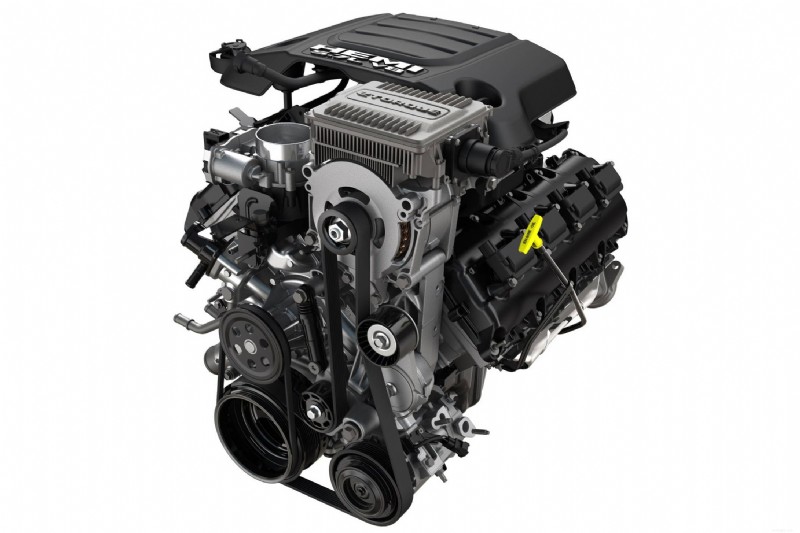
The dome-shaped combustion chamber had a valve on each side of the head, necessitating a cross-flow head design. The Hemi head design is considered to be one of the most efficient designs for engines with only 2 valves per cylinder, and has an excellent surface-to-volume ratio and potentially high power outputs. Its main disadvantages are the fact that no more than 2 valves per cylinder are possible, and they have a rather complex valve train.
Chrysler first built a hemispherical OHV V8 for use in the P-47 Thunderbolt war plane, but World War II was coming to an end, and it was never used. The first Hemi went into production in 1950 in MY1951 Chryslers, but was initially called the FirePower V8, despite its hemispherical combustion chambers, so this first-generation engine was only retrospectively called a Hemi. This generation lasted until 1958, when Chrysler launched the B engine with a wedge-shaped combustion chamber. After temporarily abandoning the Hemi design, Chrysler would return to the format in 1964, with the second generation built until 1971.
Only 32 years later, in 2003, the 3rd Hemi engine arrived, updating the format for the 21st century, now with a slightly flatter combustion chamber that was no longer a true hemisphere. While the cylinder block was still made from cast iron, it was a far more sophisticated engine, with coil-on-plug ignition with 2 spark plugs per cylinder. In this article, we are only going to look at the third generation of the V8 Chrysler Hemi engine, made from 2003.
5.7L6.1L ESF6.2L Hellcat6.4L ApacheIntroduced2003200420152010AspirationNaturalNaturalSuperchargedNaturalDisplacement5,664 cc6,059 cc6,166 cc6,424 ccValve GearOHV pushrodOHV pushrodOHV pushrodOHV pushrodHorsepower345-395 hp425 hp707-1,025 hp405-485 hpTorque390-410 lb-ft420 lb-ft650-945 lb-ft429-475 lb-ftBlock MaterialCast ironCast ironCast ironCast ironHead MaterialAluminumAluminumAluminumAluminumThe 5.7L Hemi V8 was updated with variable cam timing, a multi-displacement or MDS system (essentially cylinder-deactivation technology to save fuel), a variable-length intake manifold, and hybridization in the late 2000s as part of the Eagle update. Not all cars equipped with the engine received all of these features. The 6.1L arrived in 2004 for MY2005 vehicles with various revisions, better cooling, a lighter rotating assembly, and stronger internals.
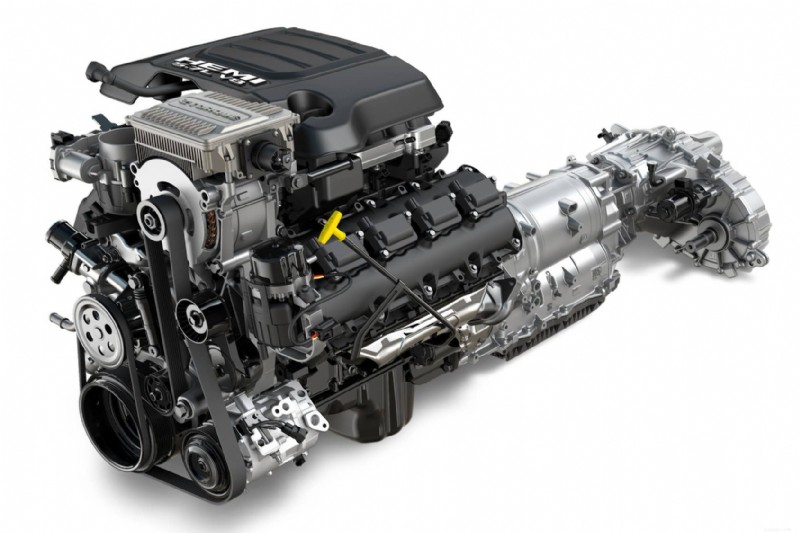
Neither of the 5.7L’s variable-length intake nor MDS systems featured on the 6.1L. The 6.4L Apache was available as a crate engine from 2005, but it shares few parts with the 2010 production version, which remains available on the Ram HD trucks to this day. The heavily revamped and strengthened 6.2L Hellcat featured supercharging and over 1,000 hp in its top form on 170-proof ethanol.
The Hemi V8 is a tough engine, and in its simplest versions, there is little that typically goes wrong if it’s properly maintained. However, as the years went on and more tech was added, some problems arose. Among them are:
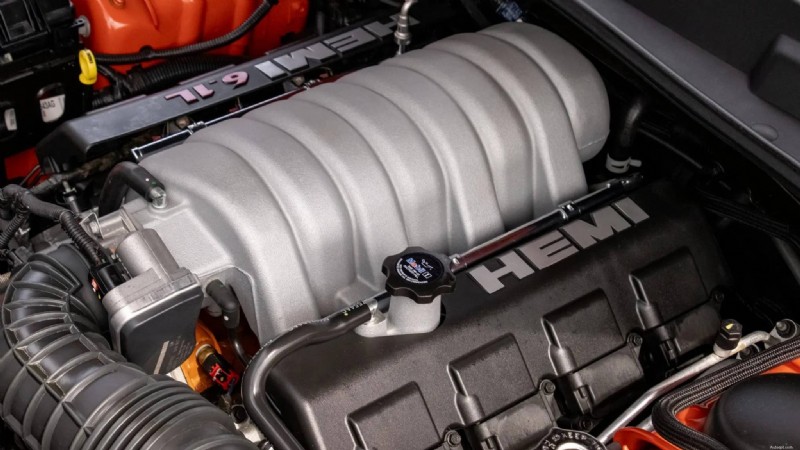
Most problems afflict the 5.7L Hemi because it’s the only one commonly found with the VVT and MDS systems. The early 6.1L and 6.4L engines are generally simpler, but the latest 6.4L engines still in use have all of these systems now, so make sure it gets fresh oil frequently. Frequent servicing and proper care can avoid most costly Hemi issues. The most problematic years seem to be 2005, 2006, 2011, and 2012.
The 3rd-gen Hemi V8 has only been used in Stellantis products:
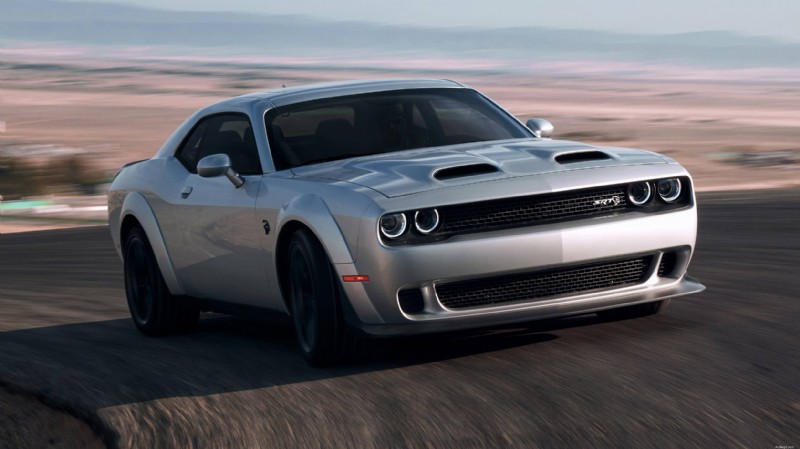
A: A Hemi engine is an engine with a hemispherical combustion chamber, and today, most people understand “Hemi” to refer to the V8 engine Chrysler has been manufacturing since 2003. However, other engines with a similar combustion chamber design have also been called Hemis.
A: The Hemi is a durable and extremely versatile V8 engine that does duty in work trucks as well as 1,000-hp performance cars when supercharged. It has become very popular, loved, and widely used since 2003.
A: It’s called a Hemi due to its dome-shaped, hemispherical combustion chamber design.
A: The 3rd-gen Hemi engine is exclusively a 90-degree V8 gas engine. The V6 Chrysler engine is called the Pentastar and has a 60-degree angle and overhead-cam valve gear. It’s not related to the Hemi at all.