
Fuel injectors are an important part of your car. They help to distribute fuel evenly and efficiently to the engine. But do fuel injectors have a positive and negative side?
Fuel injectors do not have a positive and negative polarity and operate as solenoid valves. The “Solenoid” is a catchall term for a coil of wire that creates a magnetic field when current flows through it and is activated by the presence of electricity.
Fuel injectors are devices that introduce fuel into an engine. The main function of a fuel injector is to meter and deliver the right amount of fuel to the engine cylinders based on the engine’s operating conditions.
Fuel injectors are located in the intake manifold, and they spray fuel directly into the intake ports or onto the backs of the intake valves. Fuel injectors are triggered by either electronic or mechanical means.
Electronic fuel injectors are triggered by an electronic control unit (ECU), which is a computer that constantly monitors and adjusts the engine’s operating conditions.
The ECU sends signals to the fuel injector to open and close based on the information it receives from various sensors located throughout the engine.
Mechanical fuel injectors are opened and closed by a camshaft-driven plunger. The plunger is connected to a pushrod, which is in turn connected to the intake valve. The plunger is pushed down when the intake valve opens, opening the fuel injector.
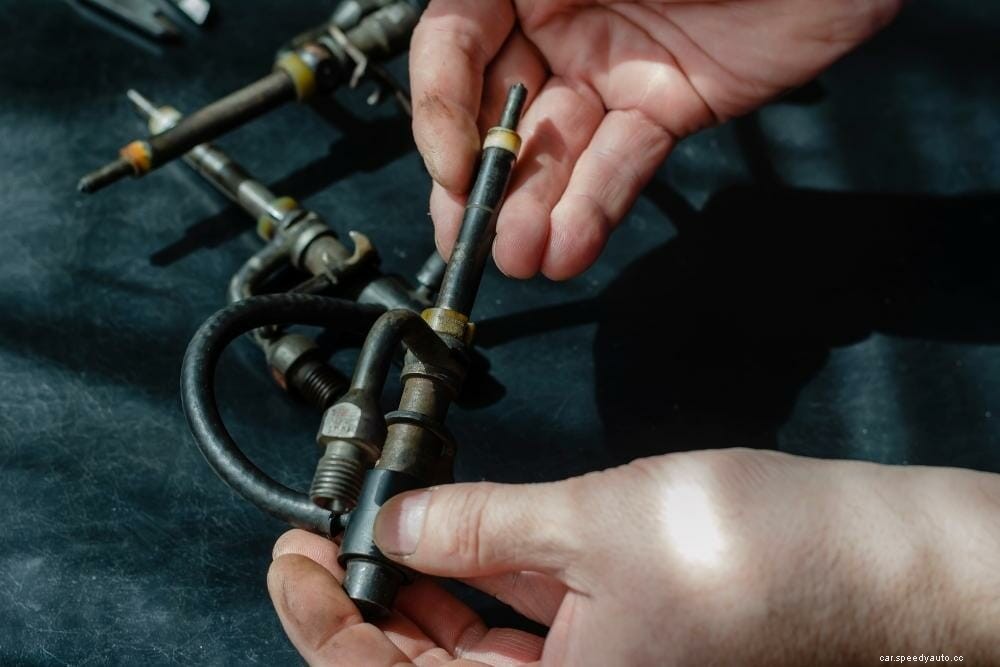
Fuel injectors are designed to spray fuel in a fine mist. This allows the fuel to mix evenly with the air and helps prevent engine knock (detonation).
Detonation is caused by dense air/fuel mixture pockets that ignite too early. This can cause severe engine damage. To prevent detonation, the fuel must be atomized (turned into a fine mist) so that it mixes evenly with the air.
If one or more of your fuel injectors are not working properly, it can cause a number of problems. The most common symptom of a bad fuel injector is a loss of power. Your engine may run lean (too much air and not enough fuel) or rich (too much fuel and not enough air).
Other symptoms of a bad fuel injector include:
If you notice any of these symptoms, it’s important to have your vehicle checked by a qualified technician as soon as possible. Ignoring these symptoms can lead to serious engine damage.
A bad fuel injector can damage your car in a number of ways. First, if the fuel injector is not working properly, it can cause the engine to run lean or rich. This can lead to engine knock, which can cause serious engine damage.
Second, a bad fuel injector can cause the engine to misfire. Misfiring can cause severe engine damage and should be fixed as soon as possible.
Third, a bad fuel injector can cause poor fuel economy. If your car is not getting the proper amount of fuel, it will have to work harder to run, which will use more gasoline.
Finally, a bad fuel injector can cause black smoke to come from the exhaust. This is caused by unburned fuel that is entering the exhaust system. Black smoke can damage the catalytic converter, which is an important part of the exhaust system.
All of these problems can be expensive to fix, so it’s important to take care of your fuel injectors and make sure they are working properly.
The best way to fix fuel injector problems is to have them professionally cleaned. This process removes all the deposits that can build up on the injectors and cause them to work improperly.
If your fuel injectors are particularly dirty, you may need to have them replaced. This is a more expensive repair, but it’s often necessary if severely damaged injectors.
You can also try using a fuel additive to clean your fuel injectors. These products are designed to remove deposits and help keep your injectors clean. However, they are not always effective, so it’s important to read the instructions carefully and follow them exactly.
If you suspect that one or more of your fuel injectors is not working properly, the first step is to have your vehicle checked by a qualified technician. They will be able to diagnose the problem and recommend the best course of action.
In most cases, the only way to repair a bad fuel injector is to replace it. Fuel injector replacement is not a difficult task, but it does require some special tools and knowledge.
The following is a general guide on how to replace a fuel injector. Note that this guide is for informational purposes only and should not be used as a substitute for professional automotive advice.
If you are not confident in your ability to replace a fuel injector, it’s best to leave this job to a professional. Attempting to do it yourself could result in serious engine damage.
In a nutshell, fuel injectors have no polarity. They’re solenoid valves that aren’t influenced by polarity. “Solenoid” is a generic term for a coil of wire that generates a magnetic field as electricity flows through it.
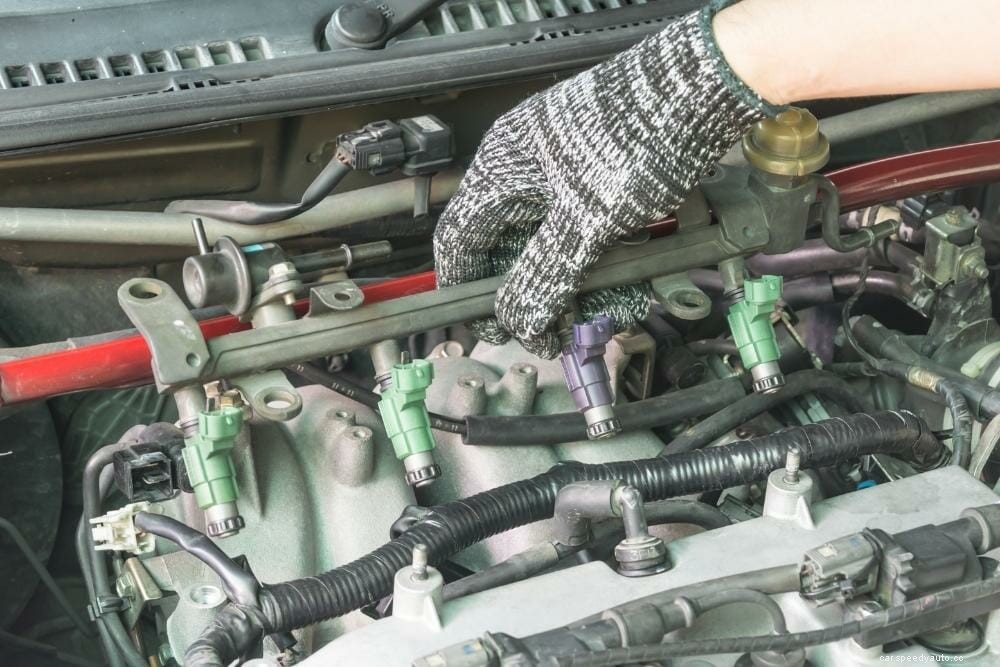
This magnetic energy is converted to linear motion: for example, it causes a piston to move or a valve to open or close.
The force is generated by the number of turns in the coil, not by polarity. If you put +12 volts on one terminal and ground the other, it will create the same magnetic field as if you reversed the voltage.
However, most injectors have an internal coil resistor that limits current. Reversing polarity might cause too much current to flow and burn out the coil.
In certain cases, the wiring harness is marked with a “+” and “-” to indicate positive and negative polarity. The fuel injectors are not polarized.
Electrical current will reach the magnetic coil as long as one prong on the injector’s plug is connected to the harness’s positive terminal and the other to the harness’s negatively charged (ground) wire.
The most common cause of fuel injector failure is simply age and wear. Over time, the constant exposure to heat and chemicals will take its toll on the seals and O-rings that keep the fuel in and the air out.
These components can harden, crack, or break down completely, allowing fuel to leak into the engine.
External factors like dirt, water, and debris can also cause problems. If these contaminants get into the injector body or nozzle, they can clog or damage the delicate internals. This can lead to a loss of performance or complete failure.
It may be possible to clean or repair a damaged injector in some cases. However, in most cases, it will need to be replaced.
Fuel injectors are an essential component of any engine, and as such, they are built to last. However, over time, they can become clogged or damaged and will need to be replaced. On average, fuel injectors will last for around 100,000 miles.
However, this can vary depending on the make and model of your vehicle and your driving habits. If you regularly drive in stop-and-go traffic or in dusty or dirty conditions, your fuel injectors may need to be replaced sooner than 100,000 miles.
Conversely, if you take good care of your car and avoid extended idling periods or prolonged high-rpm operation, your fuel injectors may last even longer than 100,000 miles.
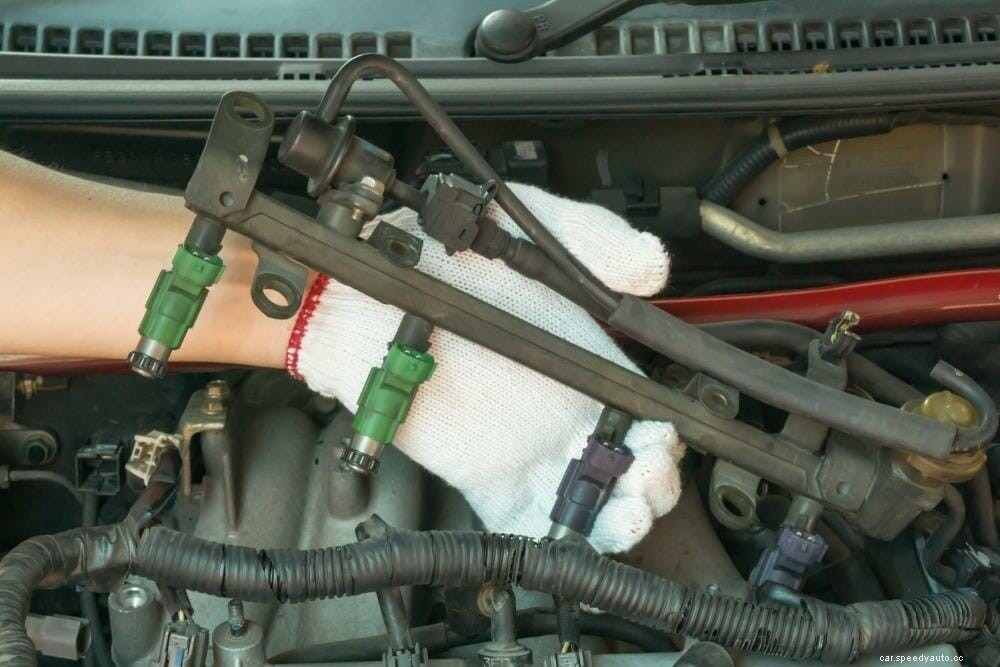
No matter how well you take care of your car, though, eventually, your fuel injectors will need to be replaced. When they do, be sure to have them serviced by a qualified mechanic. Trying to replace fuel injectors yourself is a complex task that is best left to professionals.
The cost of replacing a fuel injector can vary depending on the make and model of your vehicle. In general, though, you can expect to pay between $200 and $400 for each injector, plus labor costs.
This means that the total cost of replacing all four injectors in your car can range from $800 to $1600.
Of course, the best way to avoid the high cost of replacing fuel injectors is to take good care of them in the first place.
If one of your fuel injectors is not working, it is safe to drive your car for a short distance. However, you should not drive for more than a few miles without having the problem fixed, like driving without a fuel injector can damage your engine.
When an injector is not working properly, the fuel in your tank will not be injected into the engine correctly. This can lead to poor engine performance and decreased fuel economy. In worst-case scenarios, driving without a fuel injector can cause engine failure.
If you think one of your fuel injectors is not working properly, take your car to a qualified mechanic as soon as possible to have it checked out. Do not try to drive long distances with a faulty injector, as this could cause serious damage to your engine.
If you put bad fuel in your car, it can damage your fuel injector. Bad fuel is typically lower quality than standard gasoline, and it can contain water, debris, or other contaminants that can clog up your injector.
If you accidentally put bad fuel in your car, flush the tank as soon as possible to get rid of the contaminated gas. Once you’ve done this, have your injectors serviced by a qualified mechanic to make sure they are not damaged.
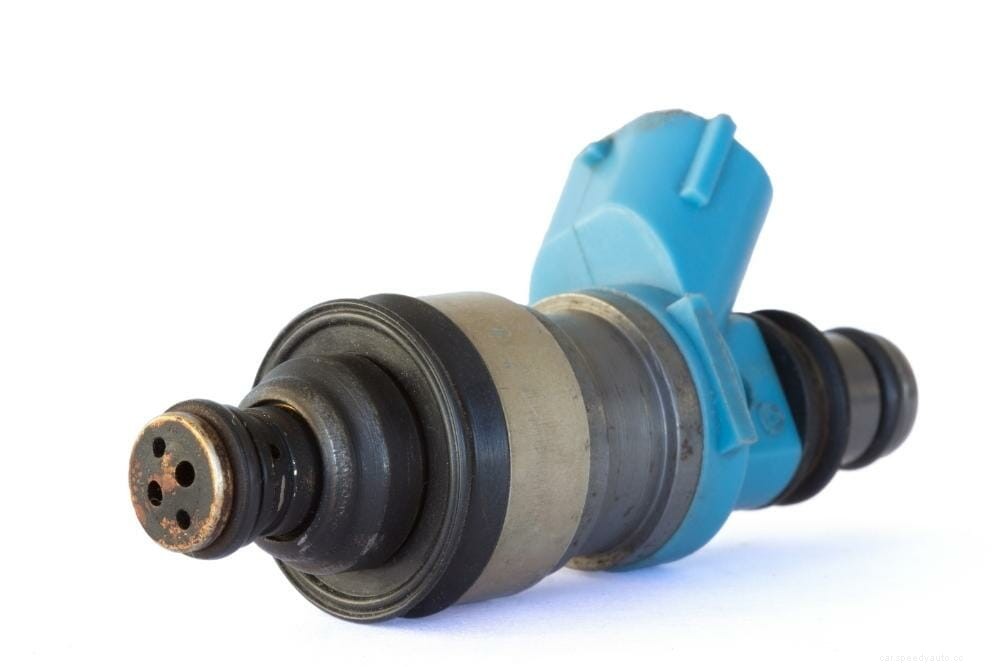
If your car’s wiring is damaged, it can cause your fuel injector to malfunction. Damaged wiring can cause the injector to receive too much or too little power, which can make it work improperly.
If you suspect that your car’s wiring is damaged, take it to a qualified mechanic to have it checked out. Do not try to repair the wiring yourself, as this is a complex task that is best left to the professionals.
You should clean your fuel injectors every 30,000 miles or so to prevent them from becoming clogged. However, if you regularly drive in dusty or dirty conditions, you may need to clean them more often.
Cleaning your fuel injectors is a complex task that is best left to professionals. However, if you’re familiar with car maintenance and you’re comfortable working on your car, you can clean them yourself.
To clean your fuel injectors, you’ll need to remove them from your car and disassemble them. Once they are disassembled, you can clean the individual parts with a special cleaning solution. After the parts are clean, reassemble the injectors and install them back into your car.
Fuel injectors do not have a positive and negative. They are solenoid valves that aren’t influenced by polarity. Most injectors have an internal coil resistor that limits current. Reversing polarity might cause too much current to flow and burn out the coil.
In certain cases, the wiring harness is marked with a “+” and “-” to indicate positive and negative polarity.
The fuel injectors are not polarized. Electrical current will reach the magnetic coil as long as one prong on the injector’s plug is connected to the harness’s positive terminal and the other to the harness’s negatively charged (ground) wire.
