
No driver ever wants their car to break down. Whether you are just running a quick errand or are off on a long road trip, having your car battery die is a major inconvenience. If your car battery is flat or running low on power, you will need to charge it up again as soon as possible.
How long does it take to charge a car battery while driving? We have the answer to this question in this article, and we also provide information on the different car battery chargers available.
There are many factors that will influence how long it takes for a car battery to charge such as:
When choosing a car battery charger, it is recommended that the amps of your charger are 10% (minimum) of your car battery’s Ah (Amp-hour) rating. For example, if your car battery has a 100Ah rating, your battery charger will need to be at least 10 amps. You can use higher amperage chargers to charge your battery quicker, but you may be putting the long-term health of your car’s battery at risk.
Here is a list of car battery chargers and the approximate time they take to charge the battery:
40 amp car battery charger – Provides fast and effective car battery charging. A 40 amp battery charger can get your car running again in just a matter of minutes.
10 amp car battery charger – This battery charger can take several hours to recharge a car battery. If the battery is fully depleted, a 10 amp battery charger can charge a large battery in 8-14hours, a medium battery in 6-8hours and for a drained small car battery it will take approximately 4-6 hours.
4 and 2 amp car battery chargers – These chargers take a long time to charge a depleted car battery and only work well on smaller batteries. A 4 amp charger will take approximately 12 hours to charge a 48amp battery and a 2 amp charger can take up to 24hours.
There are three different types of car battery chargers: linear chargers, multi-stage chargers, and trickle chargers. Car battery chargers are a great solution when you find yourself in an emergency or you want to maintain the health of the battery in a car you rarely use. However, the best way to charge your car battery safely and effectively is to drive your vehicle.
A car’s alternator is responsible for charging and maintaining the power in the car’s battery. While you are driving, the alternator will spin faster and generate more power. It will usually take a car battery between thirty minutes and one hour to completely charge while driving.
The charging time is determined by the number of RPM (revolutions per minute) of the car’s engine. To charge the battery, your engine will need at least an additional 1000 RPM. The faster you drive the more RPM.
You can charge your car battery faster by driving above 55 mph for approximately one hour. Driving on the highway or a long open road will enable the engine to generate enough RPM to charge the battery fully.
It is possible to charge your car battery when driving in cities and towns, it will just take longer. If you want to charge your car quickly while driving, try to drive at higher speeds on roads with little to no traffic.
Charging your car battery by driving is the safest and most convenient charging method. Some external chargers can damage the car battery if used too frequently or incorrectly; for example, linear battery chargers can explode if left running for too long. With that said, car battery chargers can be very useful, especially if you break down and need to quickly charge your car battery and get moving again.
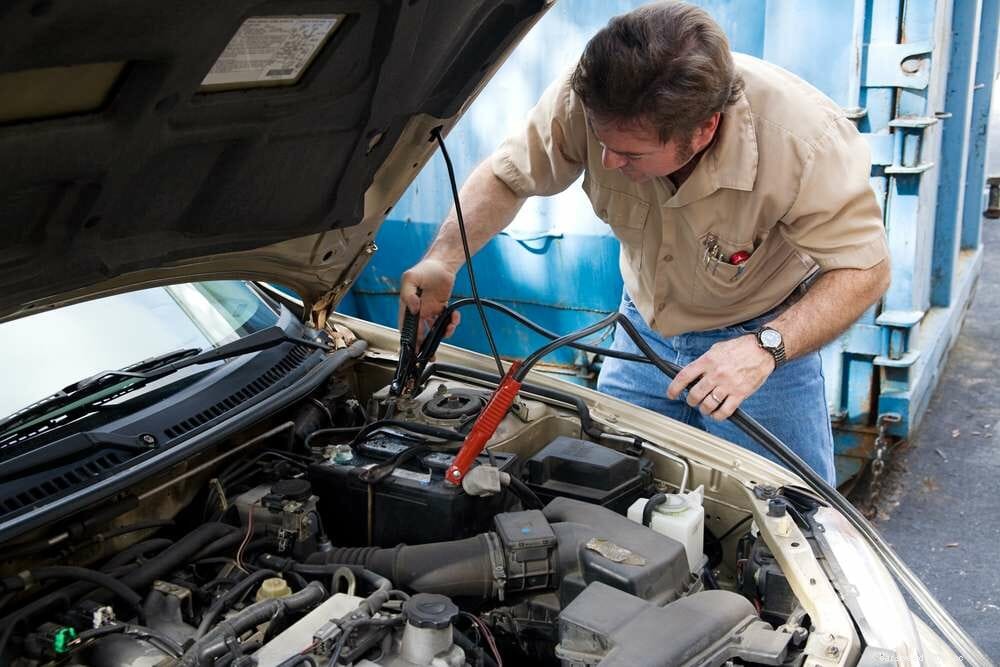
Some drivers may choose to jump-start their cars in an emergency situation. A jump start will have your engine running again immediately. However, jump starting is just a short-term fix, cars can usually only be driven for 10 – 15 minutes following a jump start.
Using jump cables, you can have your car running again straight away. Jump starts should not be considered as a quick and easy solution to problems with your car battery. A jump start puts a lot of stress on the car’s alternator, which can cause it to require expensive repair work or replacement. An occasional jump-start is ok, but regularly using jump cables to charge your car battery can cause severe damage.
If you can not charge your car battery in an emergency situation, pull over, put the car’s hazard warning lights on and get yourself and your passengers to a place of safety. Call for roadside assistance, they will have professional knowledge and the necessary equipment to charge a flat car battery.
Revving your car engine will charge your car battery faster. The car alternator increases the amperage to the battery and when you rev the engine, the alternator runs faster. However, revving the engine will only charge the car battery faster if the battery is significantly discharged and running very low on power.
It is recommended that drivers start their car at least once a week to keep the battery charged. Idling the engine will help to maintain power in the battery, but is often not enough to fully charge the battery. The best way to keep your car battery charged is to drive it. Driving your car is a quick way to recharge the battery and you should try taking the car for a drive at least once a week for approximately ten minutes – just a few spins around the block.
Sometimes you may need to jump-start your car to get it going again. Jump starting is not a long-term solution to problems with your car battery, but a jump start can get your car running again quickly. It takes approximately 30 minutes for a car battery to charge following a jump start. You will need to keep driving for around half an hour after jump-starting your car to ensure the battery has recharged.
Your car does not need to be moving to charge the battery. When your car engine is running but the car is idle, the alternator will still be running and it is the alternator spinning that charges the battery. However, when the car is idle the alternator only has a small amount of voltage to power the battery. It will spin faster and provide more voltage output to the car battery when the car is moving.
During periods where you are unable to drive your car regularly to keep the battery charged, there are several methods you can try to prevent the battery from going flat. Try unplugging unnecessary items in your car that run off the battery: dashcams and satellite navigation devices, for example. Avoid switching your car on briefly and turning the ignition straight off again.
Turning the car on and off without driving or leaving the engine running for a prolonged period can do your car battery more harm than good. Using a trickle charger or battery condition can also help to maintain your car battery’s charge when the car is not in use.
Car batteries do not require much time and attention. Compared to changing the tires and filling the gas tank, car batteries are extremely low maintenance. To keep your car battery charged and working correctly, all you need to do is drive your car regularly and above 55 mph, if possible.
There are external car battery chargers that can be used to charge a car battery more quickly. However, a car battery charger is not necessary if you are regularly starting the engine and driving your car. In emergency situations, a jump start can power up the car battery enough for you to drive to a mechanic for assistance.
If you have wondered how long does it take to charge a car battery while driving, we hope this article has provided you with the information you needed.
You can find more tips about car batteries in these posts:
What Happens If You Put The Wrong Size Battery In Your Car?
Can A Car Battery Die While Driving?
What Happens If A Battery Runs Out Of Water?
