
The question of how many spark plugs are in a diesel comes up more often than people think. While there is a simple answer, there’s an underlying question that I’ll answer through this article.
Diesel engines operate on a compression-based ignition, so there’s no need for a spark plug to ignite the fuel-air mix. In short, diesel engines have no spark plugs. However, you may be thinking of glow plugs – diesel engines have 1 glow plug per cylinder.
As you can see, a simple misunderstanding of terminology can easily mislead you, so keep reading to get a definitive answer and learn how diesel engines operate!
Diesel fuel was invented and later patented in 1892 by a German engineer called Rudolf Diesel. Just like gasoline, diesel fuel is refined from crude oil or from biomass materials, but through a slightly different chemical process.
The key difference between petrol and diesel is the way they’re used in the combustion process. A petrol engine creates an air-fuel aerosol that is ignited at the right compression by the spark plug to output maximum power. A diesel engine does not use a spark plug, and instead, compresses the air-fuel mixture to pressurize and heat it to the ignition point.
The compression ratios of a diesel engine range between 15:1 and 23:1, while petrol engines have a ratio between 11:1 and 13.5:1. Diesel engines have the highest thermal efficiency out of any internal combustion system due to the very high expansion ratio and inherent lean burn.
The effectiveness of the best diesel engines is 55%, with average cars reaching up to 43%. The best petrol engines can reach up to 38%, while the average car engine achieves only 20% thermal effectiveness. The result is up to 40% greater fuel efficiency in favor of diesel.
The biggest problem with diesel engines is the level of pollution they create, which is why the emissions regulations are becoming increasingly more strict on diesel-powered engines.
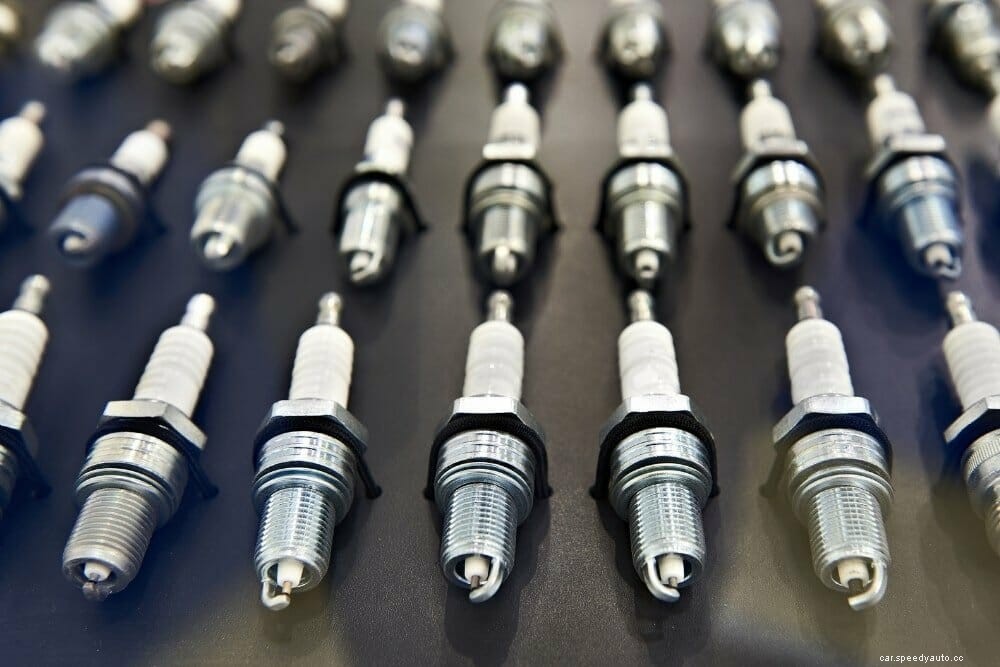
Diesels don’t have spark plugs because they ignite the air-fuel mixture through compression. To make it more clear how this happens, I’ll take you through the basics of how a four-stroke direct-injection diesel engine operates.
Imagine a longitudinally-mounted inline engine with cylinders lined up from the front mask towards the passenger cabin. A cross-section would reveal walls of the cylinder block, with the crankshaft at the bottom, connect to the piston by the connecting rod. At the top, there’s a fuel injector, with cam-operated valves on both sides – one side for air intake, the other for exhaust outtake.
Modern diesel engines have an ERG (exhaust gas recirculation) valve that will take some of the exhaust gas and mix it with fresh air to be cycled again. This has no effect on how the engine cycles operate.
As you can see, the compression stroke creates pressure and temperature so great that the fuel will ignite on its own. If you’re still not 100% sure you understand how a diesel engine works, that’s quite alright! Without the knowledge of the terminology, it’s kinda hard to follow, so take a look at the following video for an illustrated explanation.
I remember the rule my dad taught me about starting a diesel in the winter – always wait for the “heaters” to turn off. While I didn’t know what these heaters were, I always followed his instruction and waited for the buzzing sound to stop with a distinctive click of the relay.
Because diesel engines rely on compression to ignite the fuel, but when all of the components and the air are very cold, the generated temperature won’t be high enough for diesel to ignite.
Glow plugs a rod-shaped heating device that can reach temperatures of 1300°C and cause it to glow from heat, hence the name. The fuel injector sprays diesel over the tip of the glow plug, causing it to heat rapidly and combust at the right time.
Glow plugs are important for the three stages of a cold engine start:
Just like spark plugs, glow plugs are made using different materials and operating principles to adapt to a wider variety of engines. The following represent the three main types:
There are also type GF, type GH, and type GD glow plugs made for all kinds of commercial vehicles and climate conditions. Compared to spark plugs, glow plugs last longer and can function for over 100,000 miles.
Any search for a glow plug replacement guide will tell you not to do it because you risk snapping them, which will then require you to open the engine block to get them out. In reality, changing glow plugs is like working on any other part – impatience and lack of preparation will lead to failures while working carefully will result in a successful repair.
Changing glow plugs is actually a lot like changing the spark plugs – there’s a wire with a connector cap going to as many glow plugs as there are cylinders in the engine. To get the job done, you’ll need the following tools:
| Image | Title | Price | Buy |
|---|---|---|---|
 Top
Top | CTA Tools 1700 5 Piece Deep Metric Socket Set | Buy Now | |
 Top
Top | DEWALT Mechanics Tools Kit and Socket Set, 108-Piece | Buy Now | |
 | EPAuto 3/8-Inch Drive Click Torque Wrench (10-80 ft.-lb. / 13.6-108.5 Nm) | Buy Now | |
 Top
Top | WD-40 - Multi-Use Product with SMART STRAW SPRAYS 2 WAYS, 14.4 OZ [2-Pack] | Buy Now | |
 Top
Top | GM Genuine Parts 60G Glow Plug (Pack of 1) | Buy Now |
You can choose between a Dewalt socket set, or specialized tall sockets. If you have a high-quality set at home, it’ll do just fine. As for the glow plugs, make sure they’re compatible with your vehicle. You’ll likely need a torque wrench to get the right tightness.
Some manufacturers have clear specifications as to how much force should be placed on the glow plugs to properly tighten them. This is done with a torque wrench, which you can set up to the right amount of force and use until it clicks.
Diesel V8 has no spark plugs because it doesn’t need any. Diesel engines use a compression-based ignition to operate, where the generated pressure and heat are enough to ignite the fuel-air mixture. The answer to the question: How many spark plugs does a V6 diesel have? – is the same, it has 0 spark plugs.
Diesel is an oily fuel that not only burns more efficiently than gasoline, it also lubricates the engine as it’s sprayed in, so it keeps the components in better shape. Diesel engines can cross 350,000 miles without issues and generally last at least 3 decades.
Diesel engines use glow plugs instead of spark plugs to achieve optimal combustion in cold temperatures. Because these plugs can heat up to 1300°C the tip starts to glow – hence the name glow plugs.
Spark plugs are an integral part of the operation of a petrol-powered engine, and it can’t function without them. Glow plugs serve to rapidly heat up diesel so that the combustion can happen at the right time. Spark plugs ignite the fuel-air mixture, while glow plugs help the air-fuel mixture ignite more quickly.
If the computer doesn’t automatically disable the engine, diesel will run without glow plugs. In warm weather (spring to fall) glow plugs don’t do anything, but in the winter they’re an important component in preventing rapid engine wear. Even so, you could run diesel in the winter without glow plugs, but I strongly recommend not doing it.
Glow plug warning light indicates they’re currently warming up. When you set the ignition the On position and the glow plug warning light comes on, simply wait for it to turn off before cranking the engine.
Diesel engines need 30 to 60 seconds to properly warm up. However, this doesn’t mean that you need to stay idle for the entire duration – wait a few seconds, then drive slowly, without raising the RPM too much. Once the engine has lubricated properly, you can drive normally, but don’t push the engine into high RPM until the temperature gauge reaches optimal position.
While the answer to the original question is quite short and simple, as you can see, there’s a lot to cover in regards to diesel engines and the type of plugs they use. The number of spark plugs is zero, but the number of glow plugs is equal to the number of cylinders inside the engine, just like in a petrol engine.
I hope this article has helped you not only find the answer to your question but learn something most people don’t know about. We cover a wide range of topics that include product reviews, how-to guides, and informative topics such as this one.
Find more insights in these Diesel-related posts:
How To Remove Water From Diesel Fuel
Does Duramax Have Glow Plugs?
How To Get 30+ Mpg With A Duramax
