
Catalytic converters are a crucial component in reducing the emissions output of internal combustion engines. A clogged catalytic converter will cause performance issues, while a broken converter significantly increases emission output and has to be replaced immediately.
Whether you’re changing or just cleaning the catalytic converters, knowing how many converters your Lincoln Navigator has is very important.
The Lincoln Navigator has 2 catalytic converters, one for each exhaust bank.
This guide will teach you how to identify the locations and number of catalytic converters not only on the Navigator but on any vehicle you encounter, so if you’re looking for more details, keep reading!
The number of catalytic converters is determined by the number of exhaust manifolds and pipes leading towards the back of the vehicle. An inline four-cylinder engine only needs one exhaust pipe and therefore only one catalytic converter.
Inline-6, V6, and V8 engines need two exhaust manifolds to get all of the exhaust gases out of the system. All of the gases have to be cleansed, so each of the exhaust pipes is fitted with a catalytic converter.
It’s not uncommon for vehicles to have two, or even three inline catalytic converters, and if it has two exhaust manifolds, that means there are 4 or 6 cats in total. However, the single-cat per exhaust pipe is still the norm and installed in the majority of vehicles.
A bank is a term used to divide the engine into two halves. Bank 1 always starts with the first cylinder – the one closest to the front of the engine.
On a V-shaped engine block, the cylinders behind the first belong to bank 1, while the opposite half makes bank 2. An inline engine is divided front-to-back, with the first three cylinders forming bank 1, and the remaining 3 making the second bank.
Knowing the locations of the engine banks will be helpful if you have an error code related to O2 sensors or a catalytic converter. Additionally, if the engine has multiple converters, they are identified by the bank and are not interchangeable.
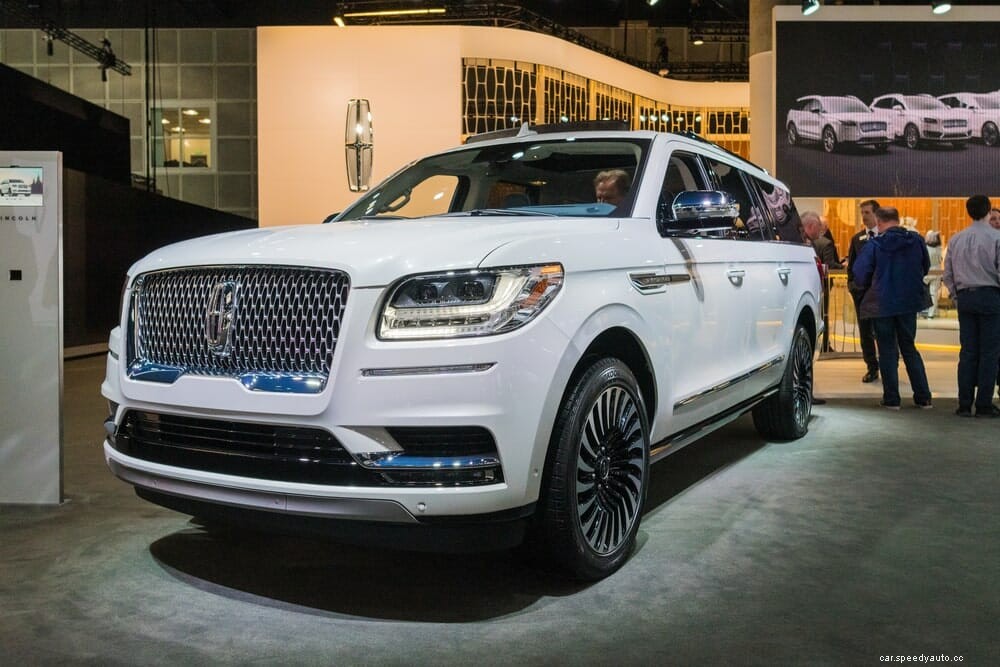
Since its release, the Lincoln Navigator has been equipped with only three engines options:
Based on the information I gathered from the user forums, aftermarket cat manufacturers, and OEM parts sellers the engines fitted in the Lincoln Navigator have only one catalytic converter per bank, which means there’s a total of 2 converters.
Replacing catalytic converters on a Lincoln Navigator isn’t going to be cheap if you’re using OEM parts. The price of both converters starts at $1,300 and can go as high as $2,000 and are usually sold as a whole assembly.
Aftermarket converters are priced much more reasonably and include only the pieces you really need to replace. Most of the no-name manufacturers offer catalytic converters for just $50, but they still include a reasonable warranty period. As for something more high-quality, you’ll have to spend at least $200 per converter.
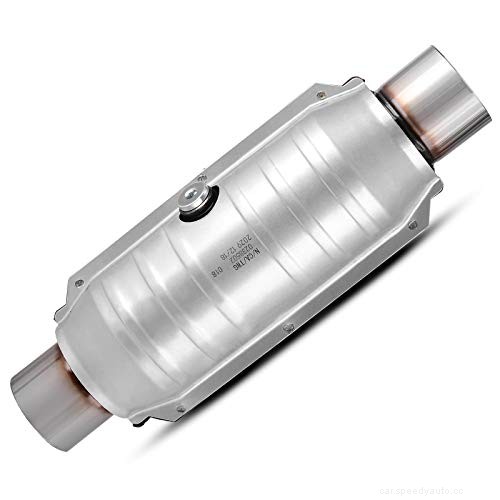
AUTOSAVER88 universal 2.5″ catalytic converter costs a fraction of what you’d have to spend on OEM parts. EPA certified, this converter is backed by a 5-year or a 50,000-mile warranty, however, it’s not legal in California.
Stainless steel construction and high-flow are a must for Lincoln’s V8, and MAYASAF delivers. The design includes an O2 sensor plug which is important for optimal engine operation while the ceramic honeycomb filter will do a great job of reducing the level of emissions.
Check Price
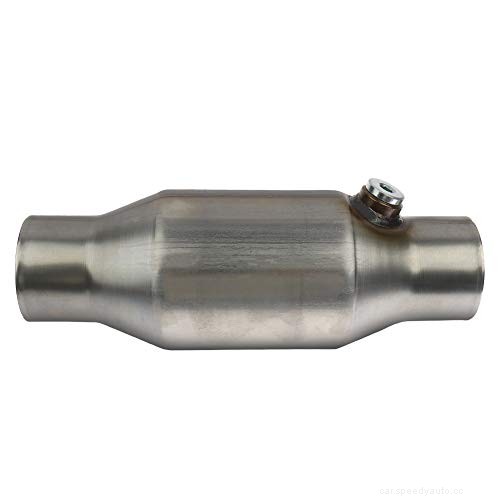
MAYASAF offers another incredibly affordable high-flow catalytic converter that should fit on a Lincoln Navigator. It doesn’t pass California’s vehicle emission standards, but because it’s EPA certified, it can be used in other states.
You’ll get a 2 year or 50,000-mile warranty against manufacturing defects, which is a big plus. The design has a dedicated O2 sensor port which is necessary for the SUV in question. The shell is made out of steel, but it’s most likely not the 304 stainless grade, but this is somewhat expected for the cost.
Check Price
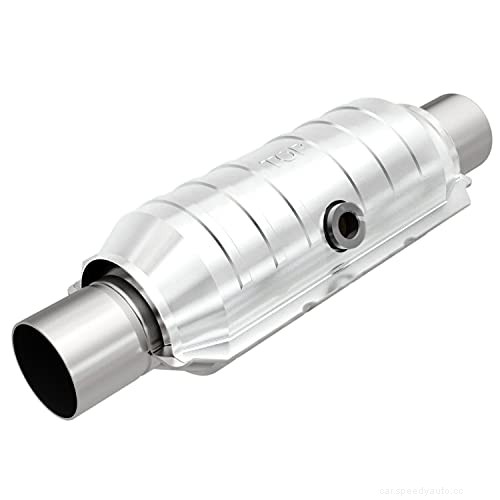
MagnaFlow is well-known as one of the best aftermarket exhaust manufacturers, so it’s not surprising that one of their products makes it on this list. The catalytic converter in question is EPA compliant and has an O2 sensor mid-bed slot, but it’s not legal in California or Colorado.
Despite being a universal-fit option, it offers excellent results and comes with a 25,000-mile emissions warranty on top of the 5-year/50k mile standard defect warranty.
There is some conflicting information regarding the construction, so I am not sure whether it’s made out of stainless steel or aluminized mild steel. Regardless, it should have enough rust resistance to last for several years.
Check Price
The easiest answer to this question is to get an OEM replacement, but considering the extremely high cost and rampant cat theft, it’s more than reasonable to go with a cheaper alternative.
Most aftermarket options are universal, which makes a lot of sense. If the manufacturer only has to adjust the intake and outtake pipe diameter, the core of the converter can remain the same.
Not only does this get rid of the extra exhaust assembly, but it also decreases the manufacturing costs and allows them to mass-produce these converters.
This doesn’t mean that all of the options are legit – there is a lot of sub-par converters out there that will be more trouble than they’re worth. It’s important that the converter has EPA compliance, some sort of a warranty, and a large number of positive user reviews.
The Navigator should have a 2.5″ pipe diameter, but it doesn’t hurt to double-check before ordering.
The last thing to consider is the installation process. The catalytic converters in the Lincoln Navigator come in a two-piece assembly that includes some exhaust piping. To install just the aftermarket converter, you’ll have to cut out the old cats and use clamps to attach the new one in place.
For the first-time replacement, I suggest letting a professional welder or exhaust shop handle the job, and you can handle subsequent changes as the process will be much easier with the clamp-on installation.
The three engine options used by the Lincoln Navigator are made by Ford, which is why we can determine the number of catalytic converters for a lot of Ford’s models as well. All of the following models should have 2 catalytic converters by default.
| Triton V8 | InTech V8 | EcoBoost Gen I | EcoBoost Gen II |
| Ford F-Series | Lincoln Blackwood | Lincoln MKS & MKT | Ford F-150 |
| Ford E-Series | Ford Mustang SVT Cobra R | Ford F-150 | Ford Expedition |
| Ford SVT Lightning | Ford Shelby GT500 | Ford Police Interceptor | Ford GT |
| Ford Falcon | Ford Transit | ||
| Brabham BT62 | Ford Flex | ||
| Ford Expedition | Ford Explorer | ||
| Ford Expedition |

Yes, a Lincoln Navigator has not one but two catalytic converters, one for each exhaust manifold.
The cost of OEM Navigator catalytic converters is around $1,500 and comes with a complete assembly. Aftermarket options are significantly cheaper – $50 – $200 per converter, but they do not include the assembly pieces, which means you’ll have to cut the original converter out and create a makeshift fitment.
This depends entirely on the desired emissions level and the number of banks the engine has. In general, vehicles with six or more cylinders have double the amount of catalytic converters – two or four. However, it’s also not uncommon for a car with 4 cylinders or less to have two inline converters.
Considering that vehicles with 6 or more cylinders need two exhaust pipes, placing two inline catalytic converters on each pipe isn’t unusual.
Honestly, I haven’t heard of a car with three catalytic converters, but the concept doesn’t surprise me. Subsequent converters can catch missed particles, and although there are diminishing returns, the overall emissions output is significantly lower.
The 3-way catalytic converter is often confused for a three-piece system, when in fact it looks like any other converter.
The 2004 Lincoln Navigator has a total of 2 catalytic converters.
The converters found inside the Lincoln Navigator’s exhaust system are only worth $50 – $100 each.
From a mechanical standpoint, driving without a catalytic converter is possible. However, it’s illegal to do so and may lead to high fines and you’ll have to re-install the converter anyway.
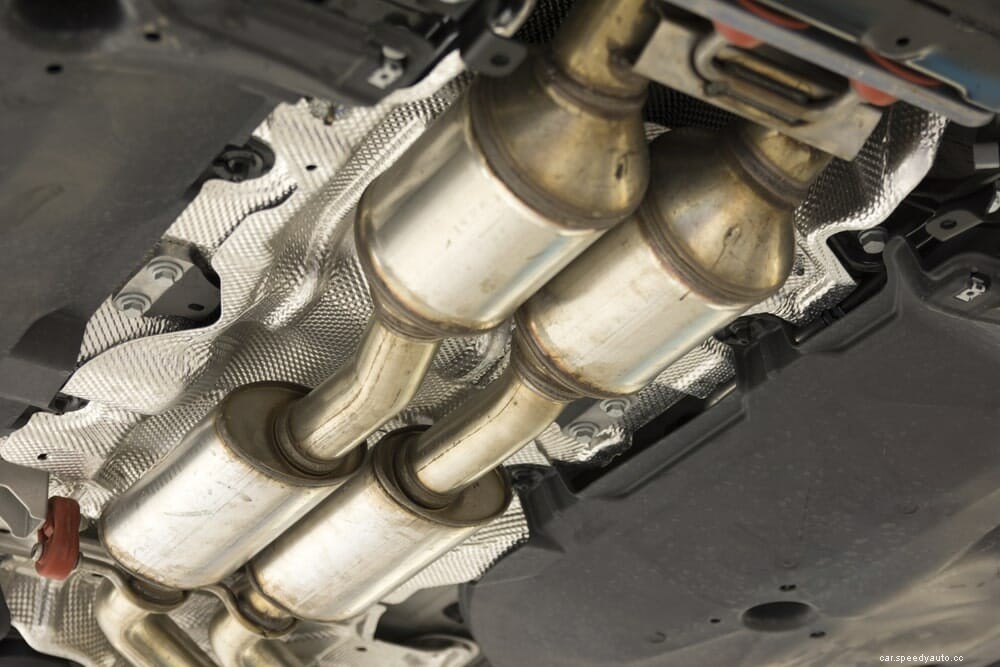
Catalytic converter contains precious metals and has a scrap value, which is why it’s often a target of theft. Large foreign converters go for $200-300, with domestic converters worth less than $200, and aftermarket converters being next to worthless.
It’s not a bad way to get some money out of a failing converter, but it’s still just a fraction of what a new OEM converter will cost.
The converters found in foreign cars have a greater value than those found in domestic vehicles, which is why Toyota, Honda, and Lexus are the prime targets for theft. The most targeted models are the Toyota Tacoma and the Prius, the Honda Accord, and any Lexus SUV.
The Lincoln Navigator is powered by either a V8 or a V6 engine, which means that it has two catalytic converters – one for each exhaust manifold. Before you purchase an aftermarket catalytic converter, make sure to check the compatibility and installation cost with a local shop, as installing it yourself is going to require metal cutting and possibly welding.
