
Wanting more power out of the engine is a situation we’ve all been in. No matter the displacement or power it already delivers, squeezing out a bit more is always a good thing.
You’ve likely come to a conclusion that you should replace the camshaft through forum discussions and youtube videos. It’s a sound strategy, as installing a performance camshaft is proven to increase horsepower, but the real question is, just how much power does it add?
While it’s true that camshaft adds horsepower, it’s only 10-20 horsepower and generally less than a 10% increase. The often-quoted 50-100 horsepower gain is only possible with a series of accompanying modifications through Stage 1 and Stage 2 mods.
In this article, we’ll discuss how camshaft works and why swapping to a high-performance option increases power, but also ways to further boost the horsepower output. Keep reading if you want to find out more!
The camshaft is a rod that can be located at the bottom, or more commonly the top of the engine. It has a set of precisely machined cams that are timed perfectly to open and close the valves.
Camshaft located towards the bottom of the engine block is a part of a pushrod cam system. As the name implies, the camshaft pushes a set of rods that extend towards the valves and operate them.
If the camshaft is located at the top, we call it an overhead camshaft. You’ve heard of a dual overhead camshaft – it’s a system with two camshafts, one handling the exhaust valve, while the other controls the intake valve.
When you hear the term 16-valve four-cylinder engine, it means that the camshaft has four sets of four cams, each responsible for operating the two exhaust and two intake valves. Alternatively, a dual-cam design will have two camshafts with eight cams on each.
The engine generates power by igniting an air-fuel mixture once it has been properly mixed and pressurized. Because the camshaft opens and closes the intake valve, modifying it can create a mixture richer in oxygen and more powerful ignition.
The stock camshaft has been precisely engineered to ensure longevity, optimal power, and fuel economy. The reason why a high-performance camshaft results in an increase of only 10 to 20 horsepower is that it doesn’t affect the amount of fuel sprayed into the cylinder.
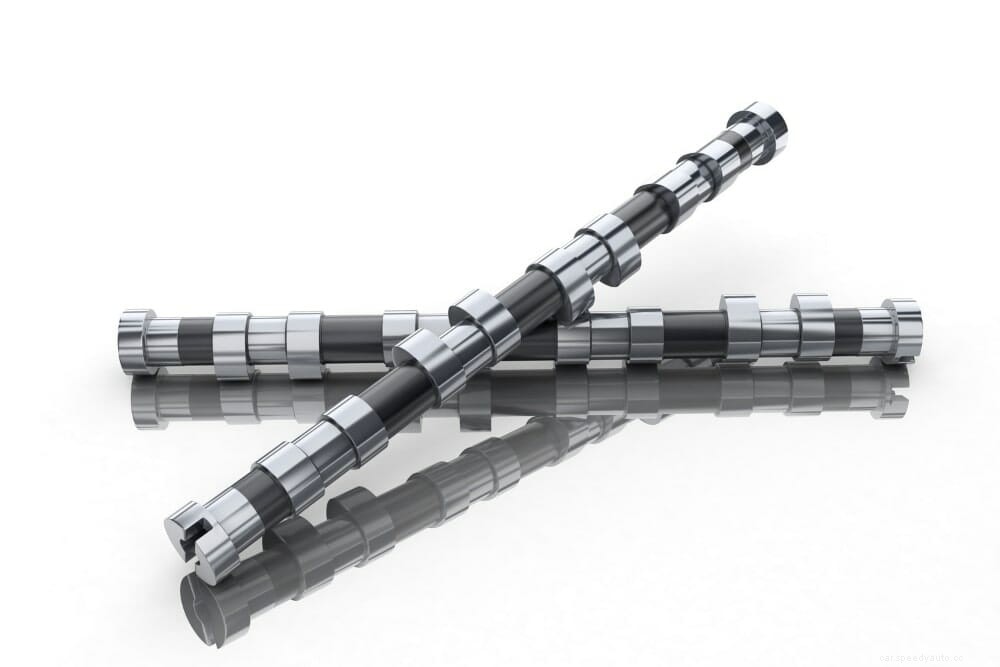
Getting more power out of the engine is a never-ending cycle of improvements. The new camshaft will get bottlenecked by the fuel injectors. Add better fuel injectors, and you’ll need better valves. Swap those out, and you need a better intake and exhaust manifold to deliver and expel all the air. Once you’ve done all of that, you can get the 50-100 horsepower boost, but at that point, the question becomes if the whole upgrade is even worth the money.
If you’ve been reading the guides I’ve written, you’ve likely learned a lot about DIY maintenance and repairs. However, you’ve also picked up that I don’t teach what I don’t know, or at the very least know how to convey properly.
Replacing the camshaft is certainly one of those jobs, doubly so when a custom camshaft is involved. If you want to upgrade the camshaft, find a trustworthy mechanic and ask them if the camshaft you’ve found would work well. This guide will show you just how much work and skill it takes to replace the camshaft.
The cost of an aftermarket camshaft depends on the brand and type of vehicle – $200 to $600 dollars is the general range, but it can easily go into thousands with the best options. You can also get kits that include all the parts you can exchange along with the camshaft. In terms of labor costs, mechanics can charge $1000-2000 because the task is very time-consuming and complicated.
Replacing the camshaft purely for an increase in performance is a very expensive and inefficient way of getting more horsepower, especially if you’re driving an older vehicle.
Over time, the powertrain loses power through wear and the accumulation of dirt and carbon deposits. Cleaning out the system manually where you can, and adding fuel additives will restore more power to the engine than what a new camshaft adds.
That being said, if you have to replace the camshaft anyway, choosing a high-performance aftermarket option over expensive stock camshafts is not a bad idea.
If you’ve set your sights on getting more power from the engine, then consider going all in and replacing several components, from intake to the exhaust. Depending on what’s legal in your state, you can start by deleting the exhaust catalytic converter and installing a new exhaust manifold.
Modern cars are hindered by emission regulations, so deleting as much as you legally can will let the engine breathe better and output more power. It’s a topic we’ve covered in-depth in this article, so make sure to check it out.
Stage 2 involves upgrading the camshaft, but it also requires you to upgrade the intake and exhaust system as well as remap the ECU to complete Stage 1. When both stages are completed, you can get 20-25% more power out of the engine.
Stage 3 will have up to 40% more power compared to the stock setup, but to get there, you’ll have to complete the Stage 1 & 2 modifications, and mild big bore of the engine.
Yes, a camshaft adds 10 to 20 horsepower depending on the setup. To get the full potential of the high-performance camshaft, you’ll have to swap out additional components like the air intake, exhaust manifold, injectors, and valve heads.
Replacing the camshaft is very expensive as it can’t be easily done at home, and the power gains are minimal. For that reason, I recommend not upgrading your camshaft until you need to replace the stock one, and while you’re there, you can upgrade a few other parts and get the power boost you’re looking for. On its own, a high-performance camshaft will not give you a power increase greater than 10%.
Find other related topics here:
How Much Horsepower Does a Turbo Add?
How Much HP Does a Cold Air Intake Add?
Oil In Intake Manifold: What Causes It And How Do You Fix It?
