
The importance of windshield wipers is often neglected and taken for granted. Just like you cannot drive without headlights during the night, you cannot drive without functioning windshield wipers when it’s raining or snowing.
Wipers need to have the right tension to properly wipe the moisture off the windshield, otherwise, they’ll either smear it or jitter as they move. When you turn off the wiper switch, the final movement of the wiper blades should park them flat at the bottom of the windscreen. Over time, the wiper arm may lose some of its tension and the parking position might change randomly, so you’ll have to readjust them to regain usability.
In this guide, we’ll discuss how to easily adjust wiper arm tension and reset the park position of the blades. If you’re facing other problems relating to windshield wipers, take a look at this article on 6 common wiper problems and how to fix them.
You don’t necessarily need to know how windshield wipers work if you only need to adjust the arm tension, but it’s still useful information and may come in handy in the future.
The system consists of the following parts:
The heart of the wiper system is the electronic DC motor that converts electricity into the rotational movement of the cam. The basic windshield motor has wires for low and high speeds, but also for parking. When the wiper switch is set off position, the additional park wire will channel enough electricity for the cam to reach its parking position.
The linkage assembly is a push-pull rod that converts the rotational movement of the cam to translational movement. The wiper joints move with the linkage assembly and force the wiper blades to go in one direction, then get pulled back.
Wiper arms create pressure to keep the wiper blade in contact with the glass. Older wiper blade design featured linkage arms that created multiple pressure points to create even contact. In the case of modern, frameless wiper blades, the contact is kept through the spring properties of the material.
The fluid reservoir contains cleaning liquid. When the wiper switch is pulled towards the driver, a DC motor pushes the cleaning liquid through the sprinkler nozzles and sprays over the windshield. The wiper blades typically turn on automatically to make use of the liquid and clean the windshield. Modern wiper systems feature multiple speed settings and adjustable speed, and even rain sensors that allow them to turn on automatically.
The wiper arm tension can be adjusted in a couple of ways, so there’s no reason to replace the entire assembly. I have prepared two methods for you – the first adjusts the wiper arm itself, and the second corrects the spring tension.
To test spring tension, simply lift the wiper blade away from the windshield and get a feeling for how much resistance the spring is making. If there’s no resistance, you’ll have to tighten the string. Checking the wiper arm tension is done in the same manner, but you’ll be able to tell the difference because the spring applies pressure at the bottom, while the wiper arm applies pressure at the top.
To adjust the wiper arm, all you need is some insulation tape and a piece of plastic, PVC, or carton tube – something cylindrical that isn’t hard enough to scratch the windshield.
The process is very quick and will fix the tension issue, but the problem may appear again somewhere down the road. I’d still recommend using this method whenever the tension needs to be readjusted because the alternative is to replace the entire arm.
Poor spring tension will make it difficult for the wiper arm to stay in contact with the windshield, even if the blade itself has good coverage.
To adjust the tension, you’ll need the following:
| Image | Title | Price | Buy |
|---|---|---|---|
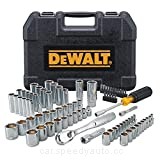 | DEWALT Mechanics Tool Set, 84-Piece (DWMT81531) | Buy Now | |
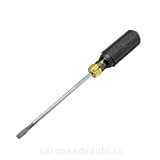 | Klein Tools 605-6 1/4-Inch Cabinet Tip Screwdriver, Heavy Duty, 6-Inch, Black/Yellow | Buy Now | |
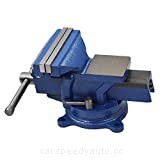 | 5" Bench Vise with Anvil 360° Swivel Locking Base Table top Clamp Heavy Duty Vice | Buy Now |
Steps to adjust the spring tension:
The C-clip is made out of spring steel, but it can still break under too much pressure, so do not compress it over 1/10th of an inch at a time. Once you reassemble the wiper, if there’s still a lack of tension, check if it’s caused by the wiper arm and use the steps from the previous method to adjust it.
Wiper arms normally return to their park position after the wiper switch has been turned off, but in some cases, the motor may not receive enough power to finish the cycle, which can cause it to glitch out. The most common cause is a battery failure while wipers are engaged. Luckily, the problem can be fixed easily. The only tools you’ll need are a flathead screwdriver and a socket set.
Issues with wiper arms can be inconvenient, but with how easy they are to fix, I’d strongly recommend a DIY repair overdriving the vehicle to a mechanic. Basic tools, some patience, and finesse are all you’ll need to adjust wiper arm tension and even reset the park position.
These topics might also help you:
Why Is My Windshield Wiper Fluid Not Coming Out?
6 Best Windshield Water Repellents in 2022
What is a Ford F150 Courtesy Wipe (and How Do You Disable it?)
