
Replacing the license plate takes five minutes and can be done by anyone – the only challenge is figuring the type of screw that fits. License plate screws are far from universal, and differ even among vehicles built by the same manufacturer.
The good news is that even if get the wrong type the first time, they’re so cheap that buying another set won’t be a problem. However, there’s no reason to buy several sets, as in this article, we’ll go through the most common screw types and sizes used by car manufacturers.
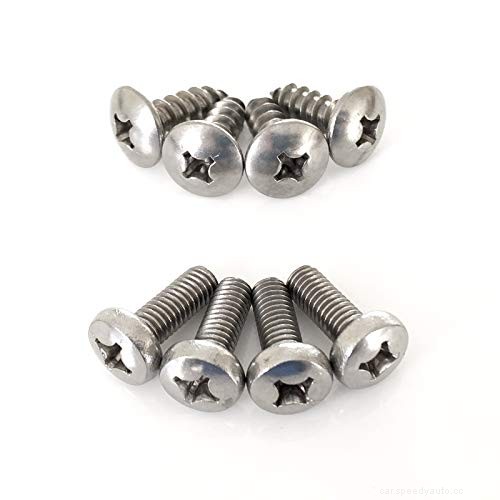
For Audi, you need stainless steel screws with a pan head style. This option comes in two lengths: standard for direct installation, and extended length to screw both the license plate and plate frame. The screw measures 0.50″ x 0.35″ x 0.50″, with extended screws having extra 0.15″ thread length. They can be screwed in by a medium-sized Philips head screwdriver.
Check Price
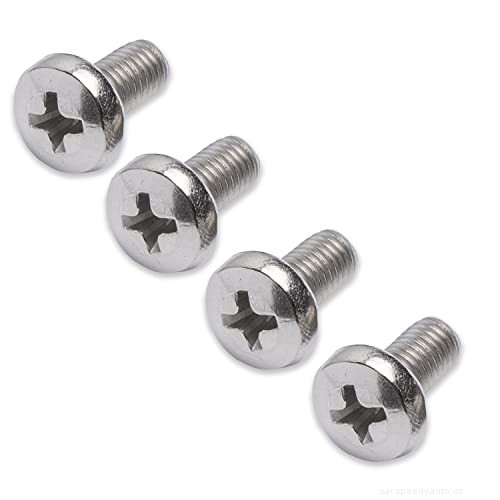
As another German manufacturer, BMW uses screws that are very similar to Audi’s. These 316 stainless steel screws measure 0.39″ x 0.39″ x 0.19″, and come in standard and extended lengths to accommodate a plate frame. The thread length in metric is 10mm for normal, 16mm for the extended screw.
Check Price
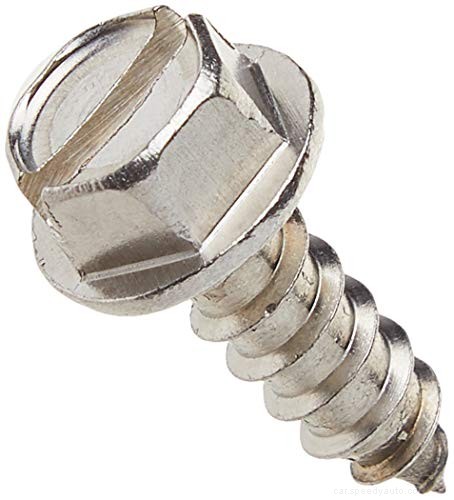
Chevrolet uses the standard 1/4″ x 14 x 3/4″ slotted hex washer head screws made out of stainless steel. The hex head allows you to use a flathead screwdriver or a small 3/8″ drive socket. As these screws fit most domestic vehicles, they’ll great fit for Chevrolet cars, trucks and SUVs. However, keep in mind that these crews are intended for nylon/plastic retainer, not metal threaded holes.
Check Price
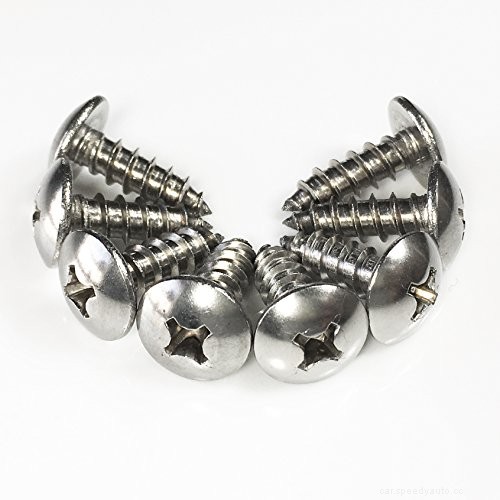
These Chrysler license plate screws are made out of stainless steel and measure 13.8mm x 22mm x 6.3mm. Converted to imperial units, the screw has a 0.54″ head, 0.25″ screw diameter, and 0.86″ length of thread. The manufacturer offers three different variants of the screws – the C2 size is the correct choice for the Chrysler application.
Check Price
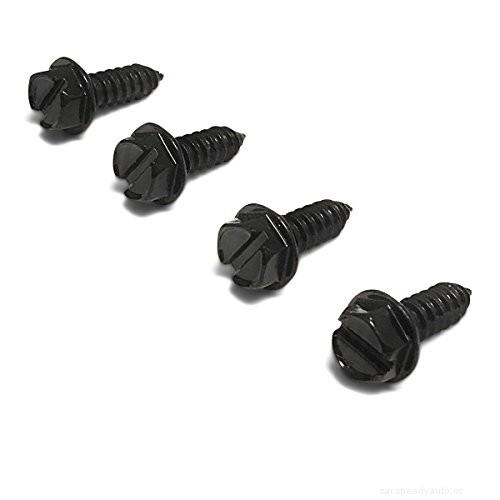
If you’re driving a Ford, you’ll need 1/4″ x 3/4″ screws with a 3/8″ hex slotted head that accepts a flathead screwdriver or a 3/8″ drive socket. Compatible with plastic and nylon retainers, these screws are available in stainless steel, black zinc or chrome color.
Check Price
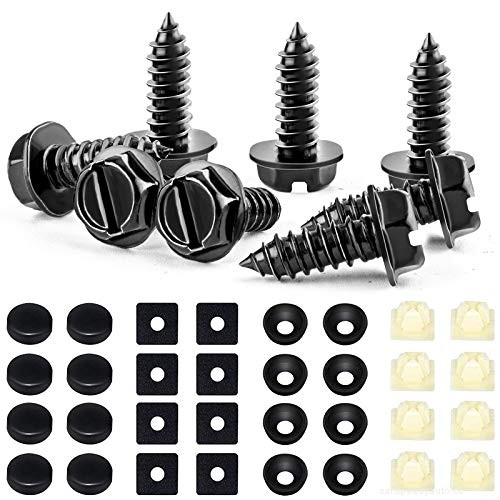
I’ve found a great kit for Dodge vehicles that includes zinc-plated, stainless steel screws, foam pads, washers, screw inserts, and screw covers. The screws are classic 1/4″ diameter x 3/4″ length with a 3/8″ slotted hex head you tighten with a socket or a flathead screwdriver.
Check Price
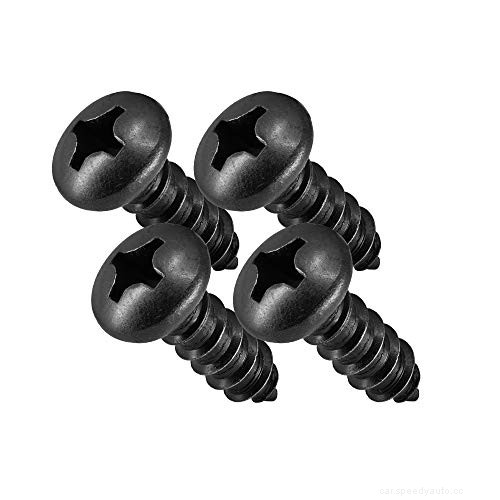
GMC vehicles can accept the classic hex head screws, but I think this black oxidized kit looks much better and fits perfectly on most vehicles thanks to the universal 0.75″ x 0.25″ dimensions. Made out of 18-8 stainless steel, these screws should not rust or deteriorate in any way, which is very important for a metal piece exposed to the elements.
Check Price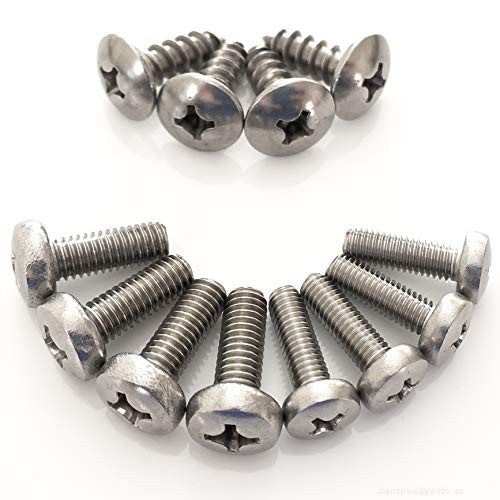
Honda uses M6 metric-sized screws so this set of 12 screws should do the trick. The front license plate screws are self-tapping, while the rear comes in two diameter sizes. The stainless steel construction comes with a lifetime warranty against rusting, which is a huge plus.
Check Price
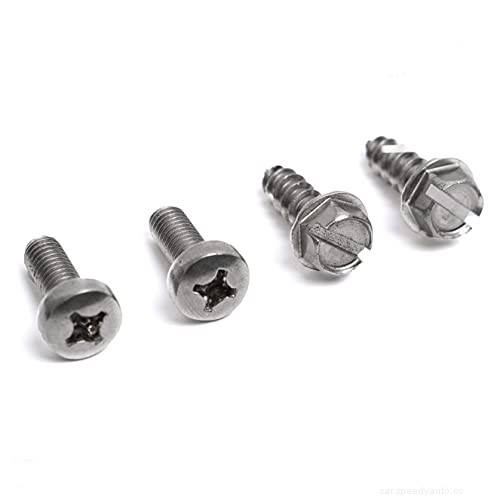
Hyundai uses slightly smaller screws than other manufacturers. The rear plate screws are 0.23″ in diameter, have a 0.46″ head and a 0.64″ long thread. They’re made out of standard 316 stainless steel and will fit most of the Hyundai vehicles. Front screws require a socket or a flathead screwdriver, while the rear screws are tightened with a Phillips head.
Check Price
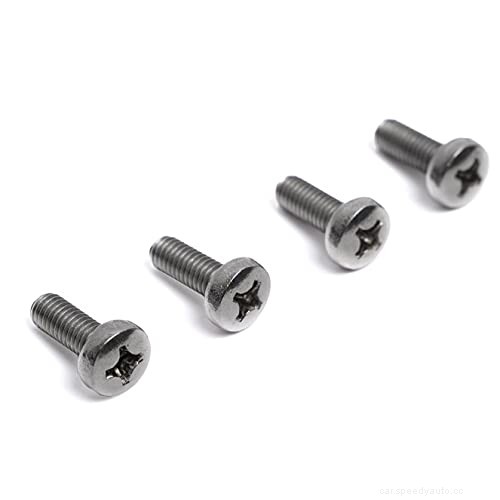
Lexus does things a bit differently and uses 0.50″ x 0.55″ x 0.50″ screws with a fine thread. Other than that, they’re standard 316 stainless steel screws that can be screwed in by a small-medium size Phillips head screwdriver.
Check Price
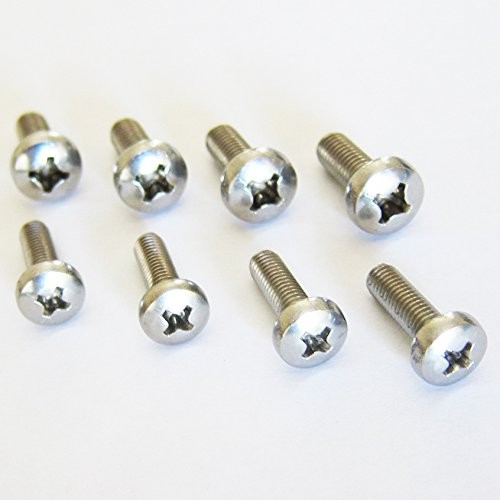
Mercedes-Benz utilizes pan-head stainless steel screws with a Phillips head screwdriver cutout. The package comes with four 5mm screws and four 6mm screws to maximize the number of Mercedes-Benz vehicles it can be used with. The length of the thread is 16mm, or 0.63″, which is the extended length that can fit a license plate holder.
Check Price
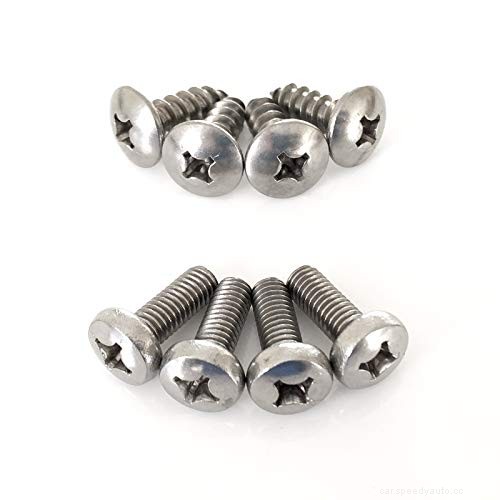
This kit is great for front and rear Mazda plates. The self-tapping screws are for the front plate, while the four screws with finer thread fit in the back. The screws are compatible with the license plate frames and almost every Mazda model. The manufacturer hasn’t specified the exact dimensions of the screws, but I would assume they’re 5mm in diameter with 12-16mm thread length.
Check Price
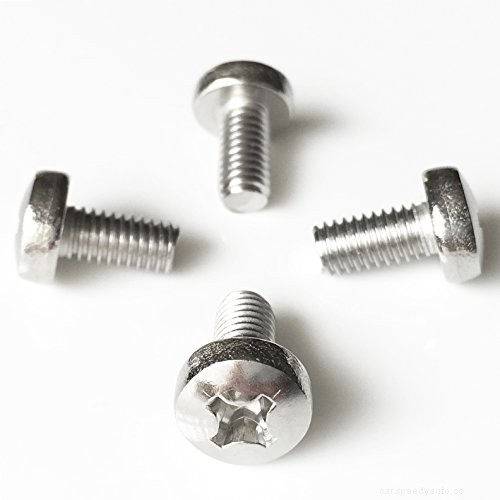
These screws for Nissan vehicles come in two variants – 1/4″ standard & extended, so you can either attach the plate directly or use a license plate holder. They’re made out of stainless steel and shouldn’t rust under harsh weather conditions.
Check Price
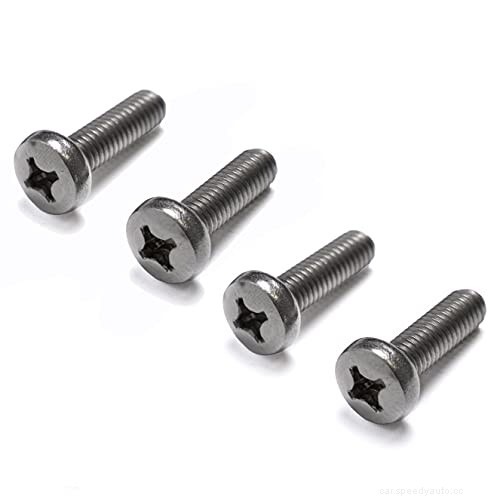
If you’re driving a Toyota, you’ll need 0.50″ x 0.75″ x 0.50″ screws to get the license plate secured. These 316 stainless steel screws will do the job, and can be installed with a Phillips head screwdriver. Keep in mind that these are extended screws, meaning they’re supposed to be installed with the license plate holder. If you’re installing the plate directly, consider getting the 0.65″ long variant.
Check Price
There are a few standard screw sizes used by car manufacturers. The first is the 1/4″ – 14 – 3/4″ self-tapping screw with a head that accepts a flathead screwdriver or a small-size socket. It’s typically used for the front plate, but most domestic car manufacturers also use them for the rear.
The other is the metric screws – M5 and M6, with a thread of 5mm or 6mm respectively. The length of the thread varies depending on the manufacturer and application – 10mm to 16mm seems to be the standard. The length of thread you’ll need depends on whether or not you’re using a license plate holder. If the screw has to go through the plate and the holder, it generally has to be 16mm long.
Most vehicles built in the United States use self-tapping 1/4 – 14 – 3/4 inch screws. The rear plate can accept the same screws, but also the metric M5 or M6 variant.
The problem with using any odd screws you happen to have around the home is that they might not work without the nut and washer to keep it secure from the back. The second issue is the formation of rust, which stainless steel screws used for license plates are highly resistant against.
There is no universal option, as different manufacturers use different threads and screw sizes. The option that will most likely fit your vehicle is the 1/4″ – 14″ – 3/4″ imperial screw, or the 5-6mm x 16mm metric screw.
The plate bracket will hold the plate in place, so you just need to tighten the bracket to the bumper. Usually, this involves screwing in the bottom two screws and placing the license plate in. Then you can install the top cover of the bracket and screw it in place, encapsulating the plate.
Yes, if you want to install the plates directly on your vehicle, you can measure the distance between the plate holes and translate them to the plate. Use a power drill to tap small holes in it, then thread the screw through and attach it to the vehicle.
This depends on the state you’re living in, but generally, it’s possible to transfer the license plate (tags) to the new vehicle. The process is rather simple and you’ll get to keep the same license number.
Buying new license plate screws doesn’t have to be difficult. In this article, we’ve listed options for the most popular brands to help you get the right dimension. To install the license plate, you’ll just need a screwdriver and a plate bracket, or you can drill through the plate to install it directly.
Check out some other related articles below:
Do All Cars Have License Plate Lights?
Torx Bits vs Star Bits – What Are The Differences and Which Is Better?
Where Can I Hide My Key On My Car?
