
The smell of gas from the oil dipstick is a serious cause for concern and you should worry about the state of your car. If the oil and gas are mixing, that’s a problem that needs to be addressed immediately, or the improper viscosity of the oil will cause serious wear or even engine knock.
The reason why you’re smelling gasoline in engine oil is that the piston seals have failed. Coolant, gasoline, and oil are the three fluids through the engine that should not mix. Any leaks in the seals should be addressed immediately.
Other causes relate to the improper air-fuel mixture, where the engine is running rich for extensive periods and causes too much gasoline seepage into the oil. This can be caused by faulty fuel injectors, spark plugs, frequent short trips, and a variety of sensors.
Piston rings are mounted in three slots towards the top of the piston head. The first ring keeps the air-fuel mixture and exhaust gases from passing down to the crankcase, the third ring scrapes the oil back down into the crankcase, while the middle ring does both functions.
The seal piston rings form isn’t perfect. Rings are cut in one point and made out of spring steel to allow them to expand and contract with the changes in the engine. This results in constant contact with cylinder walls, but a small gap will form where the ring ends don’t meet. This is why engines burn oil, and why gasoline passes into the crankcase in the process called blowby.
Blowby allows for some of the combustion fumes and exhaust fumes to pass into the crankcase, but this happens at a microscopic level. The crankcase pressurizes from all the gasses coming in, but the positive crankcase ventilation (PCV) system expels them back to the intake to be reused.
While a bad PCV can cause the smell of gasoline in the oil, it’s also going to cause oil leaks and the smell of burning oil as the pressure pushes the oil out through the seals and pistons rings. Bad piston rings will also cause the smell of burning oil, the smell of gasoline in the oil, and like a bad PCV, significant loss of power as the compression drops.
The piston rings and the positive crankcase ventilation valve are the real reasons why oil and gasoline mix, while the rest of the causes just exacerbate the problem. Changing the piston rings requires a complete engine disassembly, but changing the PCV valve is not difficult.
Replacing the PCV valve is very easy, as it’s a simple plug-in part. Find the exact location of the PCV valve on your vehicle, disconnect the rubber hose from one end, and pull the valve off. Install the new valve and reattach the hose to complete the swap.
Because changing piston rings can cost thousands of dollars, it’s completely understandable that you’d want to look for the cause elsewhere. While the following problems can be the cause of gasoline smell in oil, they’re very unlikely to happen if the piston rings aren’t already bad.
It’s also possible that the smell of gasoline may not be coming from the oil, but instead from the engine bay. This is good news because every other problem is cheaper to repair than piston ring replacement.
Fuel injectors spray gasoline into the cylinders in a fine mist that quickly binds with the oxygen and ignites as the pressure reaches the ideal point. Failing fuel injectors will spray too much fuel, enriching the air-fuel mixture to the point where it can’t be burned completely. The unburnt fuel will be expelled with exhaust fumes, causing smoke and smell.
To Replace The Fuel Injectors, You’ll Need The Following:
| Title | Price | Buy | |
|---|---|---|---|
 Top
Top
Top
Top
Top
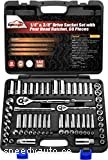
Top | 69 Pieces - EPAuto 1/4” & 3/8” Drive Socket Set with Pear Head Ratchet, Chrome (92-824) | Buy Now | |
 Top
Top
Top
Top
Top
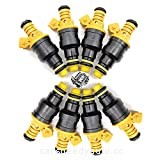
Top | Fuel Injectors 0280150943 4 Holes Fits For For:-Ford, For:-Lincoln, For:-Mercury Vehicles - E250, F150, F250, F350, E350, Mustang - 4.6L, 5.0L, 5.4L, 5.8L, (8 Pcs) | Buy Now |
Steps To Replace Fuel Injectors:
To test the system, set the ignition to the On position and wait 10-20 seconds for the pump to resupply the injectors with fuel. Start the engine and see if it runs smoothly. If everything seems okay, turn it off, and check the injector area for any gasoline leaks. With that, you’ve successfully completed a fuel injector change!
The mass air flow sensor monitors the amount of air passing through the intake system and sends the information back to the ECU. Incorrect readings can mislead the computer so it thinks there’s more air going into the cylinders, when in fact the engine is running rich.
To Replace The MAF Sensor, You’ll Need The Following:
| Title | Price | Buy | |
|---|---|---|---|
 Top
Top
Top
Top | CRC Mass Air Flow Sensor Cleaner, 4.5 Wt Oz, 05610 | Buy Now | |
 Top
Top
Top
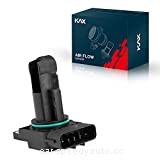
Top | KAX Mass Air Flow Sensor Original Equipment Replacement Mass Air Flow Sensor Compatible with GS300 4Runner Camry Corolla Echo Highlander MR2 Spyder | Buy Now |
Steps To Replace MAF Sensor:
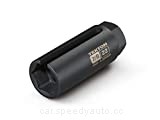
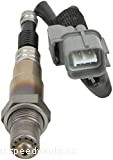
O2 sensors monitor the exhaust fumes and report back to the ECU if the air-fuel mixture is running too rich by registering fuel particles before and after the catalytic converter. Just like the MAF sensor, when the O2 sensor goes bad, the information received by the ECU will not be accurate and the engine will continue to run rich, causing a number of problems.
To Replace The O2 Sensor, You’ll Need The Following:
| Title | Price | Buy | |
|---|---|---|---|
 Top
Top
Top
Top
Top
Top | TEKTON 3/8 Inch Drive x 7/8 Inch 6-Point Oxygen Sensor Socket | 4929 | Buy Now | |
 Top
Top
Top
Top
Top
Top | Crescent 3/8" Drive 72 Tooth Quick Release Teardrop Ratchet 8.5" - CR38 | Buy Now | |
 Top
Top
Top
Top
Top
Top | Bosch 13539 Oxygen Sensor, OE Fitment (Acura, Honda, Isuzu) | Buy Now | |
 Top
Top
Top
Top
Top
Top | Permatex 80078 Anti-Seize Lubricant with Brush Top Bottle, 8 oz. | Buy Now |
Steps To Replace MAF Sensor:
Short-distance driving has been quoted by many as the cause of the smell of gas in the oil. I do not necessarily agree with this assessment, but I am not going to rule it out as a possibility. As none of the claims were backed by any reasoning, I’ve had to think about it myself and come up with the reason.
When you’re driving for very short distances, the pressure buildup inside the crankcase doesn’t reach the point where the PCV valve would flush it out. A very small amount of fuel will condensate back into a liquid state and mix with the oil, forming sludge and the smell of gas. Changing the oil in more frequent intervals will be enough to solve this problem, should it occur.
An oil-gas mixture is not a good thing because gasoline changes the viscosity of oil and turns it into a thick sludge. Oil will stop lubricating the oil as well as it should, and this can lead to serious and very expensive engine damage.
If your oil smells like gas, check the most common suspects and use an OBD2 scanner to look for errors. Also, you should change the oil and oil filter immediately. If the problem persists and you’re not able to figure out what’s causing the problem, take it to a mechanic as piston rings have likely gone bad.
The only way to eliminate traces of gasoline from engine oil is to change the filter and engine oil completely. You cannot separate the two, nor should you try, as new engine oil and filter are relatively cheap and are the most important maintenance step.
If you’re smelling gas while you’re driving, you should identify the problem as soon as possible. A rich air-fuel mixture should be addressed but is not as urgent as a gas leak from the fuel pump or the fuel rail. Leaking gasoline can catch fire and ignite components of the already hot engine bay.
It does, and the best way to learn what healthy engine oil smells like is to smell the new batch you’ve bought for an oil change. The reason why you should know what healthy oil smells like is so that you can identify the smell of burning oil or gasoline mixed with the oil.
When the PCV valve goes bad, you should try to reach your home as soon as you can, and replace the PCV valve. I’ve explained how to do so in the section above, so you can save a lot of cash that would otherwise be spent on the mechanic.
You can find the PCV valve in the valve cover, near the intake manifold, or close to the engine oil cap. There’s a thick hose connecting the PCV valve to the rest of the system, making it a bit easier to identify.
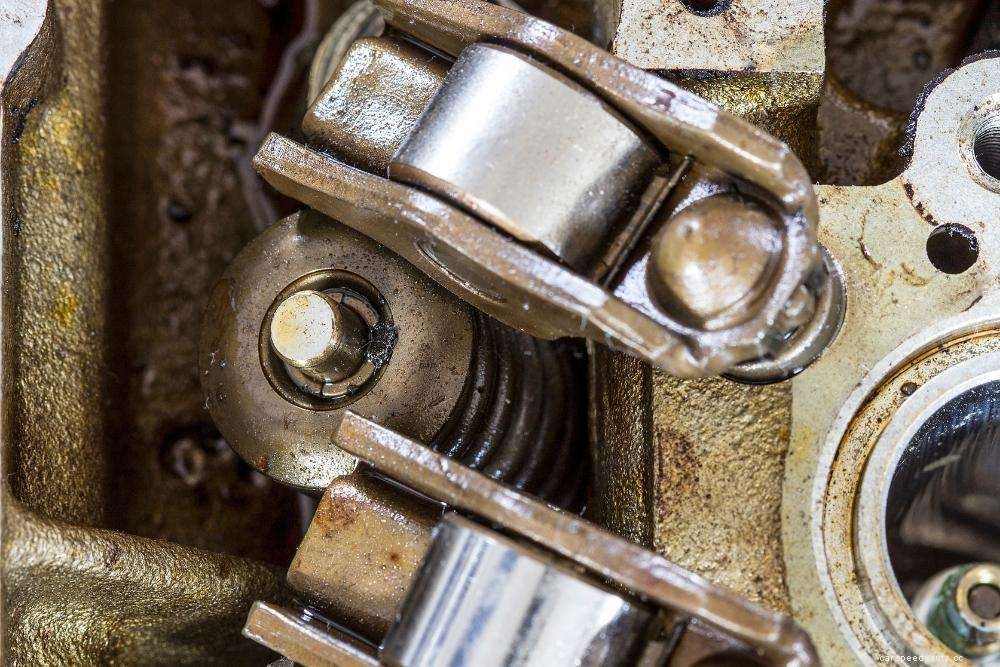
Car manufacturers generally recommend a PCV valve change interval of 20,000 to 50,000 miles.
Piston rings cost only $40-200 but the labor cost is what really drives the price up. To replace the piston rings, the engine has to be disassembled and that can cost $1000 to $5000 depending on the complexity and amount of work.
If you’re smelling gas in oil, the first thing you should I take an OBD2 scanner and check for error codes pointing to one of the minor causes. Change the faulty part, oil and oil filter, and see if the problem appears again. Should that happen, take your vehicle to a mechanic for a professional diagnosis.
Read some other related articles here:
Is Engine or Motor Oil Flammable?
No Oil On Dipstick: Causes and What To Do
Can You Mix Different Weights of Oil?
