
Some engines are cramped, like the inside of a clown car. Many times, the battery is a tight fit. So much so, that various car manufacturers put the battery in the trunk or wedge it into a small corner.
But when it comes to replacing a battery, what happens if you put the wrong size in your car? It can lead to a whole host of issues from an improper drain on the voltage that could leave you stranded somewhere to physical damage to the car’s body.
Let’s break down the different battery issues:
If you use the wrong voltage battery, trouble could be brewing. The vehicle’s electrical system will not operate properly and there’s a risk to your car’s electronics as well as the battery.
The type of battery terminal, its location, and its orientation can vary widely. Some terminals are quite common, some are proprietary to certain models, and some are downright weird. The right fit is all about connectivity.
If it doesn’t fit the space designed to contain the battery, you may find it difficult to cover the battery, strap it in, or even close the car’s hood. And then there’s the strain of extra vibrations.
Not enough electrical current (amps) will make it quite difficult to even start the car’s engine. It’s going to get heavier and more expensive to make it do its job properly.
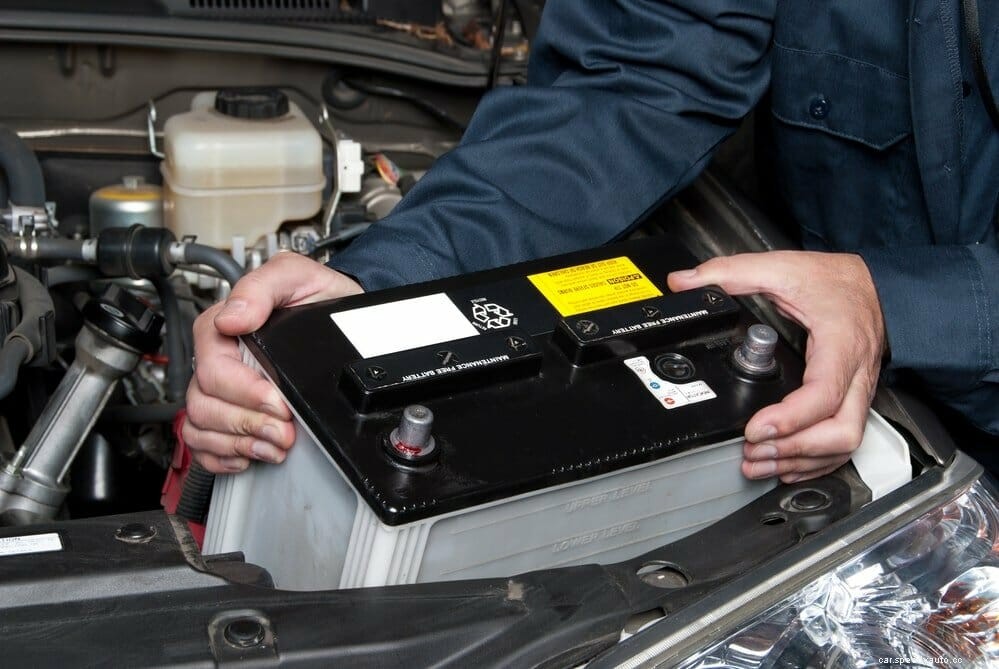
Usually, when you put a smaller battery in your car, it doesn’t start. If it does, most of the car’s electronics won’t power up, including some of the more vital electrical systems.
With a smaller battery, accessories will cause it to drain rapidly. Just listening to the radio is a demanding task. A lot of starts and stops will tax the smaller battery as well, not allowing for any kind of recharge.
Batteries are rated for their life expectancy, as well as their cold-cranking amps (which defines their ability to start an engine in cold temperatures). Say you’re trying to start a V-8 engine with a battery made for a four-cylinder car, and it’s frosty outside.
An undersized battery just can’t deliver the power to your car’s engine, or the accessories (especially while the car is off).
If you’re out running errands all day, constantly starting and stopping the car, the battery doesn’t get the chance to fully recharge. This, in turn, could cause the alternator to overheat and there’s a risk of long-term damage.
And physically speaking, one major concern with a smaller battery is how it doesn’t seat properly in the compartment it was designed for, and that extra vibration takes a toll on the battery and its cell connectors and separators. Again, the risk for long-term damage.
Similar, long-term effects can happen to your car from using a battery larger than what the manufacturer recommends.
Buying a battery right off the shelf, once home you might find it doesn’t fit your vehicle’s battery compartment. That’s because along with power and cold cranking amp ratings, car batteries also come in a variety of sizes and configurations, such as top-mount versus side-mount.
Along with where the battery sits, one must be acutely aware that manufacturers precisely match their alternators and batteries to the vehicle’s power requirements. A mismatched battery/alternator combination could lead to alternator overheating, and long-term damage.
If the battery is too large, it may not even fit in the battery compartment due to the difference in size, terminals, and mounting configurations. Even if you were able to squeeze it in a spot, and get it strapped in, there’s still the issue of cold cranking amps.
Not enough cold-cranking amps and your car will see issues come winter. And that will shorten the battery’s life.

Before heading out to buy a new car battery, you should first check the owner’s manual for the battery specifications recommended by your car’s manufacturer. Just to note, not using the original brand of battery that came with the car is just fine as long as it has the same size and output recommended by the manufacturer.
If you don’t have the owner’s manual, you can always check the info on the current battery (if it’s the original) or just hit up the online search engine for the exact specifications of your car.
Some important battery terminology:
On modern cars, a 12-volt battery has become the standard and it’s what you’d most likely find at the local auto parts store. Vintage cars might still use a 6-volt system.
There is marine (deep cycle) batteries, which are usually 12 volts and can fit in many cars. They are not known for being compatible with alternators and they won’t be as efficient or long-lasting.
Batteries generally have two amp ratings, cold cranking amps (CCA) and cranking amps (CA). Amps are the amount of actual power your battery can send to your starter.
Cold-cranking amps are the number of amps that a 12-volt battery can produce for 30 seconds at roughly 0°F (-18°C) while maintaining at least 1.2 volts per cell (7.2 volts for a 12-volt battery).
Cranking amps is the number of amps that a 12-volt battery can produce for 30 seconds at 32° F (0°C) while maintaining at least 1.2 volts per cell (7.2 volts for a 12-volt battery).
It’s good to note that you can’t have too many cold-cranking amps. The more CCA, the less the battery will suffer in cold temperatures, and the better it will be at sustained cranking if the car is hard to start or you’re taking a lot of short trips.
Having too few cranking amps, on the other hand, can shorten the lifespan of both your starter and your battery.

Batteries come in different sizes, but on most modern cars, the battery compartment doesn’t have much room to spare, so it’s important to get the right size group. In general, the size group is represented by a number … and that can be a confusing situation to understand. For instance:
The size group represents the overall dimensions of a battery. If it’s too tall, too wide, or too long to fit in the battery compartment, it will probably be difficult to close the car’s hood or battery cover. Certainly double-check the correct specifications.
If the batter is smaller than the compartment, you will introduce a different set of issues to the car, such as battery vibration. Vibrations can destroy a battery by causing cracks in the cell connectors and separators. One exception would be the AGM style battery, which is designed to resist vibration.
Another thing about size group numbers is that sometimes they have a letter added to them which dictates the position of the terminal on the battery. For instance:
There are different terminal orientations and types. One of the most common is a top post. But you will see that a growing number of manufacturers have gone the proprietary route with their battery terminals, which may wrap around or otherwise encase part of the battery.
This requires very specific placement of the terminals because the placement of the positive and negative terminals doesn’t have an extra centimeter of battery cable. If they’re on the wrong side, you won’t be able to attach the cables.
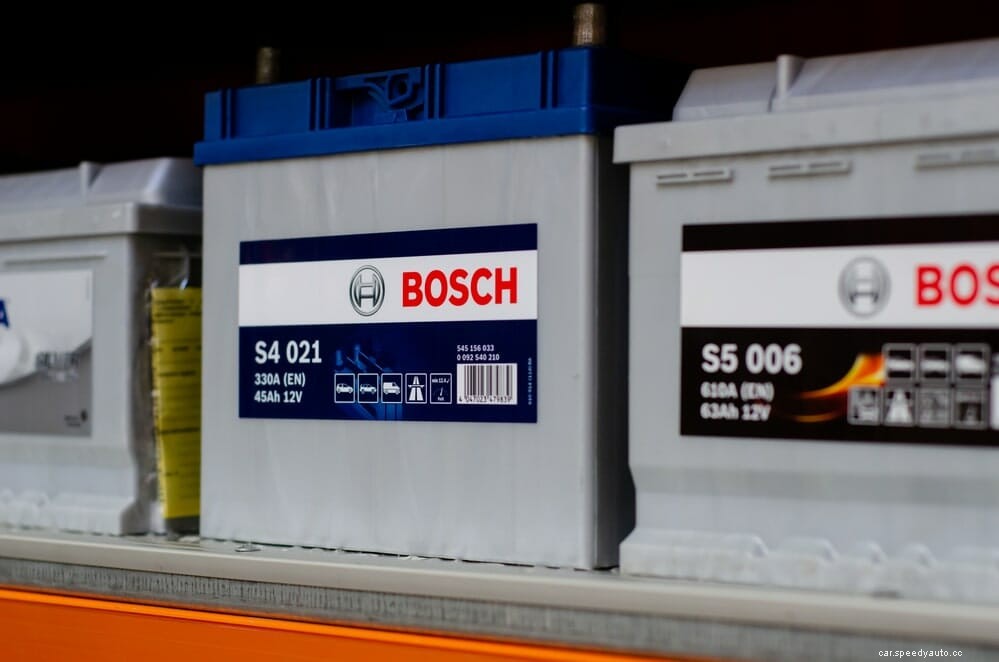
This type of battery is “spill-proof” if it’s ever exposed. The tight packing of an AGM battery is also the most impact-resistant and boasts the least internal resistance. Usually, premium AGM batteries are maintenance-free with no acid leaks or corrosion on surrounding parts. AGM batteries can do anything that is flooded and GEL batteries can do but are a notch more reliable.
Most cars have a lead-acid battery, usually called a “flooded battery.” They are generally suitable for nearly every car, yet not without issues.
These batteries use lead plates, a sulfuric acid electrolyte, and plate separators. Generally, flooded batteries aren’t sealed, and don’t recombine the gasses to liquids internally. Instead, these gasses are vented externally.
Internal gasses produced are released directly to the environment. Through these same vents can flow acid, steam, and condensation, leading to maintenance.
Flooded batteries do require maintenance, in the form of water, to routinely replenish lost electrolytes through the vents. Lead plates start to deteriorate when they touch the atmosphere, so if you fail to maintain your batteries, they will corrode and fail. Flooded batteries hold very good rates of charge for the price but require more work.
GEL cell batteries are sealed, like an AGM battery. However, care must be taken with GEL batteries not to expose them to high amperage situations. High amperage situations can scar the inside of a GEL battery, creating a pocket. These pockets allow the plates to begin corroding, leading to premature failure.
GEL batteries should not be used for fast charging/discharging, or high amperage charging/discharging situations. GEL Batteries are slightly stronger in regards to internal construction than a flooded battery but do not have the physical strength of an AGM battery.
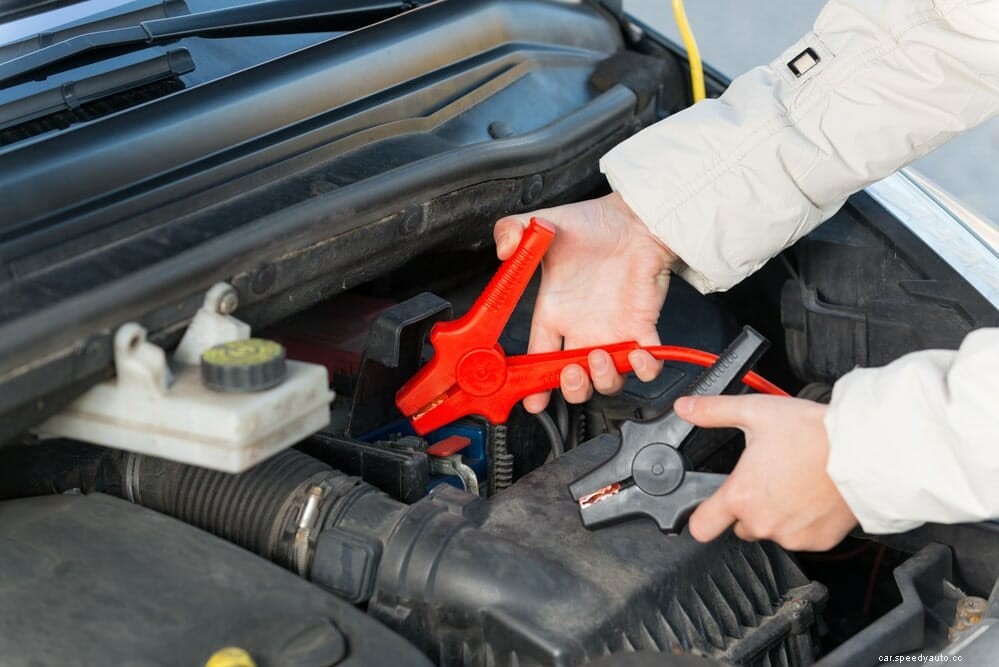
There are a growing number of vehicles with “Start-Stop” functionality. This turns off the engine when sitting in traffic and restarts when the foot is let off the brake ready to go. This flexibility does stress a battery and the average flooded batteries won’t hold up. Usually, Start-Stop vehicles contain AGM batteries.
Then there are electric cars, which most likely have lithium-ion batteries. These weigh much less than regular car batteries and are much more efficient. They do tend to have a shorter lifespan than conventional batteries and are far more expensive.
Modern cars have a plethora of electronics that need the right battery to function properly. As a result, the battery isn’t only for starting the car, it’s quite vital for all the gadgets and accessories. As an example, one of those vital electronics could be your anti-theft system. That’s something for which you want to power on hand all the time.
And you may have other questions:
In your modern car, you will have an entire computer system built-in, not counting the computing and electrical power needed for the GPS, audio system, etc. And the battery’s power is needed for:
Using the right battery reduces the risks of having any of your electronics malfunction and leaving you with costly repairs.
It’s very important to note that batteries are also responsible for providing power to the electronic fuel injection system and to the alternator, along with a host of other engine parts. When it’s an undersized battery, it could put a lot of extra pressure on those parts, reducing the car’s performance.
In fact, if you have a smaller battery than your car requires, it could refuse to start at all, due to the lack of amps. And even if you can get it to start, most of the electronics are going to be off or barely working. And you will experience faster battery drains.
There are a lot of different options out there when it comes to batteries and it can get really confusing if you’re not familiar. When in doubt, get your battery inspected and/or replaced by a professional. You can drive through an oil changing business like oil can henrys or you can take it to an autobody shop.
Matching the volts, amps, and size of the battery is no easy task. It’s always best to remove doubt and have a professional take care of it. You don’t want to buy a battery that is too large and not have it fit, or have it fit and then cause long term damage that isn’t immediately obvious. Do yourself a favor and get help if you’re not familiar with replacing components like a battery.
Find more car battery-related posts here:
Can A Car Battery Die While Driving?
10 Best Batteries For The Toyota Corolla in 2022
How Many Batteries Does A Chrysler Pacifica Have? Replacement Instructions
