
Jumper cables are essential tools for starting vehicles that have weak batteries. A weak battery lacks the power needed to make the starter motor turn over the engine. A good pair of jumper cables will help you to get your motor running so that you can head out on the highway while looking for adventure.
Unfortunately, many motorists do not carry jumper cables. And lots to those who do have no idea how to safely jump-start a weak battery. When jump starts are not done correctly, bad things could happen. Those bad things could include overly hot jumper cables that melt their plastic and rubber insulators.
If you are inexperienced at jump-starting car batteries, the following information could help you to avoid hot and melting jumper cables – or worse. Here are five common problems that cause jumper cables to get too hot or melt.
Jumper cables are reasonably durable, but they can go bad over time. If you leave them in the trunk and occasionally load items on top of the jumper cables, they might become damaged over time.
A spill could cause the metal to corrode and weaken. The plastic and rubber insulators might become brittle and start to fall apart. And the clamping mechanisms might become brittle and break when you try to use them,
Proper storage makes all the difference with jumper cables. If you buy a set that comes with a protective plastic case, that could help to prevent damage to the cables.
A pristine pair of jumper cables can help to jump-start your vehicle quickly without causing the cables to heat up or melt. If you do not have a case in which to store the cables, you could place them in a thick plastic bag to protect against moisture and other corroding elements.
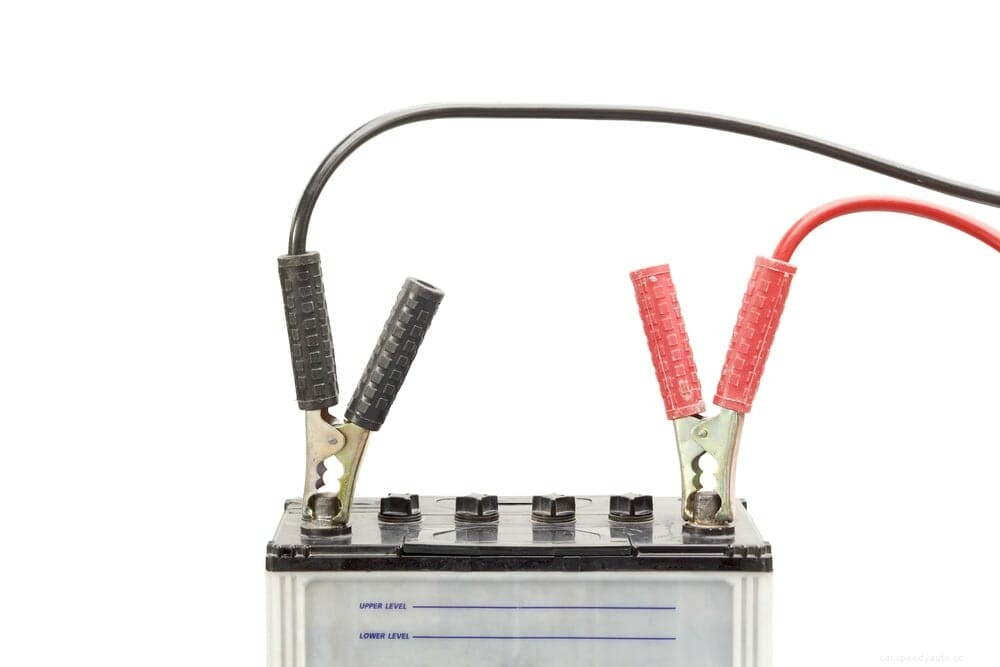
A jumper cable has to transfer electricity from the charging system of a donor vehicle to the weak battery on the stalled vehicle. The electricity is produced by the charging system, which is why you need the donor car to idle while you charge the weak battery.
If the jumper cable is a cheap version, it could overheat quickly and melt the plastic and rubber insulators that keep the wires dry and stop you from getting an electrical shock. Jumper cables are rated based on the amount of electricity that they can handle.
Most repair shops use jumper cables rated a 0 gauge, which is the strongest and handles the most power. They also are very expensive and more than you would need to safely jump-start a vehicle.
Jumper cables with about a 4-gauge rating will do the job fine without overheating or cooking the plastic and rubber insulation surrounding the wires. The gauge of jumper cables can go as high as a 15, which is the weakest of the bunch.
Anything less than a 6 gauge generally is too weak to properly jump-start a battery. You should look for jumper cables with between a 4 or 6 rating of the wire gauge.
The cables will look fine in the package but work poorly if you try to jump-start a vehicle. It always helps to pay a little extra to ensure you are buying a quality pair of jumper cables. When you are dealing with a dead battery, you do not need the additional headache of fried jumper cables that do not work.
You need to hook up the jumper cables properly to do the job right. The biggest mistake people make when jump-starting a vehicle is crossing up the cables and attaching them to the wrong posts.
If you attach one end to a positive post on the donor vehicle and attach the other end to the negative post on the weak battery, the wires are crossed. Crossed wires will cause damage and potentially melt the jumper cables.
Jumper cables all have the same color coordination. One cable is red while the other is black. The red cable is the positive cable and should only connect to the positive posts on the donor battery and the weak battery.
The other cable is black and is the ground cable. You would connect that to the negative post on the donor battery and a clean piece of metal on the engine or frame of the stalled vehicle. That will help the power to flow properly and charge the weak battery.
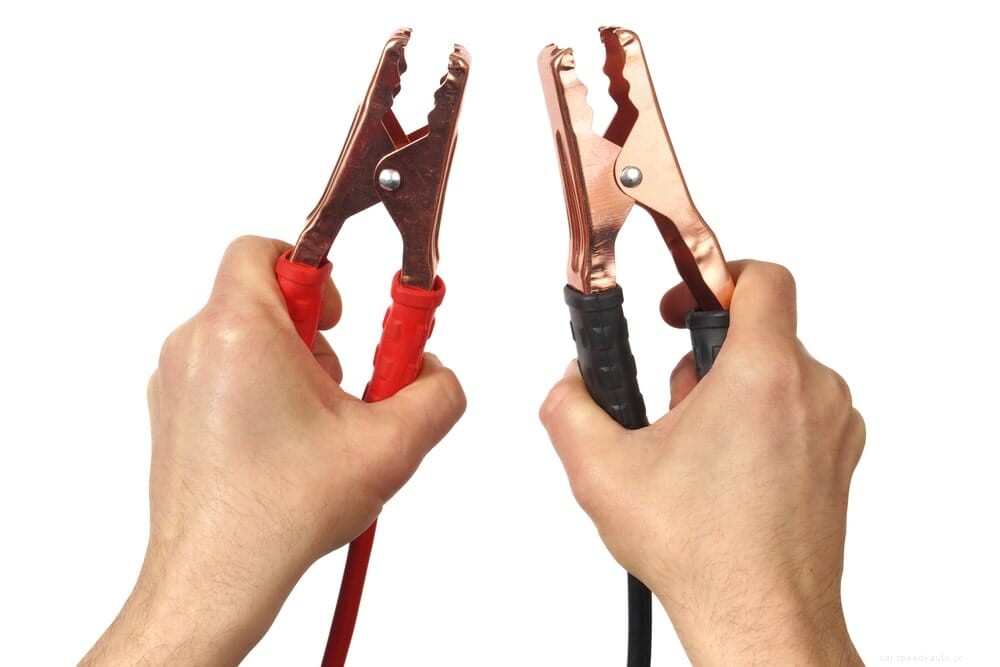
A quality pair of jumper cables is capable of safely conducting electricity from a good battery to a bad one. But the cable must have a strong connection to do its job properly. Any kind of bad connection will cause the connection to lose electricity and could heat up the wires.
Battery posts can become corroded due to loose cable connections, moisture, and other factors that cause metal parts to corrode. The ends of jumper cables also could become corroded.
You should carry a wire brush with you to clean off battery posts and the ends of jumper cables. A good, clean connection will help to ensure the best transfer of electricity while preventing the cables from heating up or melting.
The wire in jumper cables is made from metal. And different types of metals react differently when electricity flows through them. That is why many electrical systems use copper to conduct electricity.
Copper does a great job of conducting electricity without overheating. Unfortunately, copper is very expensive. Many manufacturers of jumper cables have resorted to using aluminum instead of copper to keep production costs low. Aluminum wires also help to keep selling prices low.
When it comes to jumper cables, you generally get what you pay for. If you pay for cheap jumper cables, you will get cheap jumper cables that do not properly conduct electricity to jump-start a vehicle. The aluminum allows too much power to escape instead of conducting it from one battery to the other. The more electricity that the aluminum loses, the hotter the wires get.
You do not want to buy cheap jumper cables that cannot do the job – especially on a cold and windy winter night. But you also do not want to spend hundreds of dollars on jumper cables that you might not need for years.
You just need a quality set that will last many years while in storage inside your vehicle. When it is time to jump a vehicle, they are readily available and fully capable of doing the job without overheating, melting, or otherwise failing to do the job.
You want to find a good pair that has thick insulation that protects the copper wires that make up each cable. You do not want aluminum or cheap and thin plastic coatings that will dry rot and crack over time.
The wires should have a thick and pliable coat of rubber protecting them and excellent clamps at either end. The clamps will help to bite into the battery posts and produce a solid connection.
You need to check the gauge on the jumper cables, too. You want something in the range of about 4 gauge to 6 gauge that can conduct a good amount of power without heating up. The price is always a factor, which is why you do not want to buy 0-gauge jumper cables that are bulky and harder to keep stored in your vehicle.
But you do not want to go overly cheap and buy the lowest-priced set, either. Always look for the gauge, type of wire, insulation, and well-made clamps that will do the job well.
Jumper cables vary greatly in materials, construction, insulation, and gauge. Thicker cables that are made of copper and have rubber insulation with good clamps can do a much better job of jump-starting vehicles than cables that are narrow and have thin plastic insulation over aluminum wires.
Aluminum does not conduct electricity like copper. And plastic insulation is prone to cracking and melting.
Jump starting a vehicle is mostly safe, but it is possible to cause a rare battery explosion. If you cross the wires and cause a spark within the battery cell that you are trying to charge, that spark could cause the battery to explode. Battery makers have addressed that issue, so it is much harder to cause modern car batteries to blow.
But that is why you only connect the positive cables on both batteries and affix the negative cable to a metal part instead of the negative post on the battery that needs charging. It is impossible to cause a spark inside the battery cell when only one cable is attached directly to the battery posts.
No, you cannot get electrocuted while charging the battery. But you could get a good shock. If you have a pacemaker, that might be dangerous.
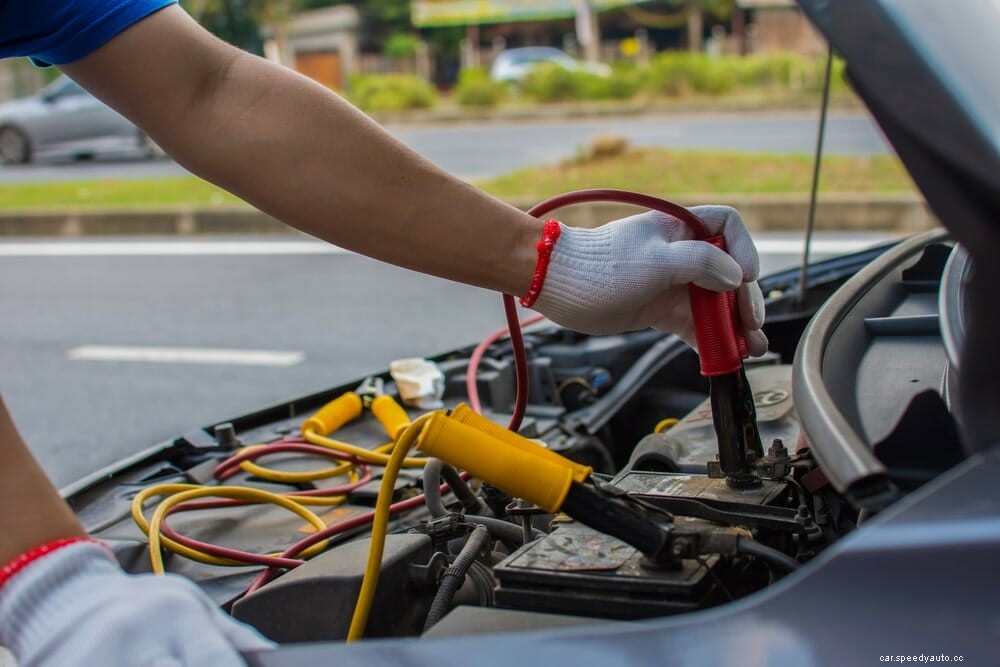
Crossing wires is the biggest mistake that people make when jump-starting a vehicle. If you have a cable attached to one battery and the other end starts to spark violently when you touch the other end to it, you might have the wires crossed.
You need to ensure the positive cable connects the positive posts on both batteries. And the negative cable should be attached to the negative post on the donor car and a piece of metal on the stalled vehicle.
If it can take a full charge, the weak battery should take a full charge from the charging system after several minutes of driving or idling. If the battery is only slightly weak, the stalled vehicle should start almost immediately when attached to the vehicle with a good battery.
You are using the charging system on the running vehicle to produce the power needed to start your car. But the battery still needs to charge – if possible. Driving it for a few minutes should do the job. Otherwise, you need to buy a new battery.
Human error is the most common cause of jumper cables smoking, heating up, or melting while trying to jump-start a vehicle. Anyone attempting to jump-start a vehicle first needs to learn how to do it correctly and safely. That will eliminate most causes of smoke, heat, or melting jumper cables.
The error also could be choosing substandard cables. If you learn how to carefully select your jumper cables and store them in a manner that will not cause them to deteriorate, then you should have no problems jump-starting your vehicle or another one.
Find related articles from VehicleFreak here:
Can A Car Run With A Bad Alternator?
How Long Can I Leave My Car In Accessory Mode
My Car Won’t Start But The Radio And Lights Work: Causes and Fixes
