
If you are someone who drives a manual car, you probably know what the tachometer is and what RPMs are. If you are used to driving automatic vehicles, the tachometer keeps track of the revolution that happens inside the engine shaft.
Thus, it assists in shifting at the right time. So when this component malfunctions, shifting with accuracy becomes a hurdle. There could be plenty for RPMs Fluctuating while driving. Let us break down the most probable causes and how to deal with them.
A tachometer is simply an object that measures rotational speed. Such a device is fitted in the engine bay of your car and measures the number of rotations per minute of your crankshaft.
In a manual vehicle, RPMs or the tachometer which indicates the RPMs are just as important as the speedometer beside it. The sensor provides data on the revolutions that are happening inside the engine shaft. It is calculated to the thousands.
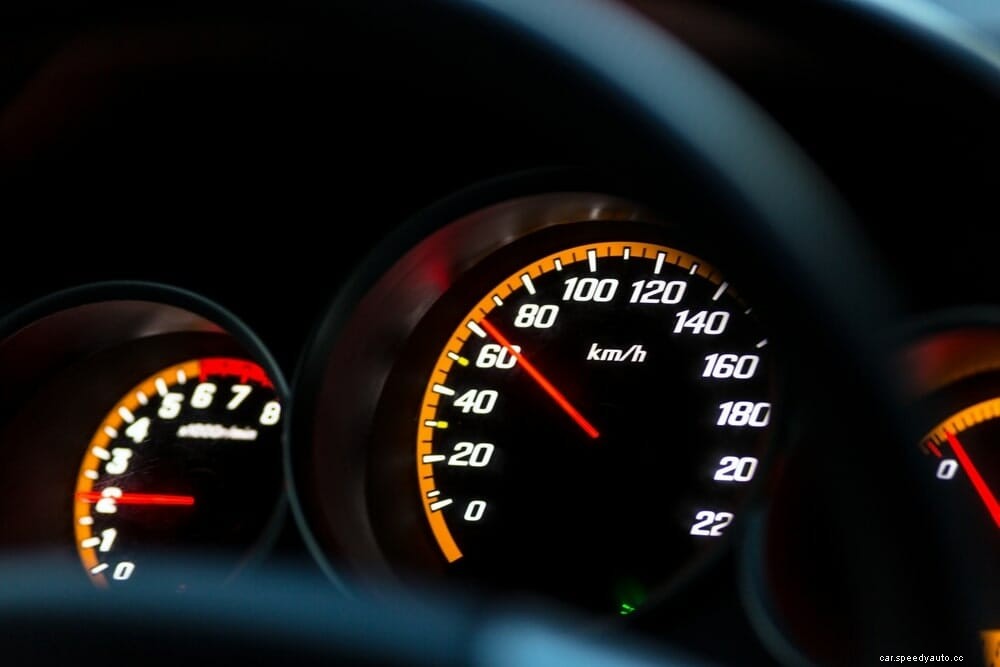
While shifting the driver uses the information he gets from the tachometer. At the end of the tachometer, you might notice a section marked in red. The red line indicates that it is time to shift. The perfect shift lies slightly before the indicator reaches the red zone.
When you stomp on the accelerator, the engine starts to rotate faster, this increases the RPMs. When the driver shifts to a higher gear, the engine rotates a larger cogwheel. This increases the speed of the car and reduces the number of RPMs. With the help of the tachometer, you know when to shift to make the drive as smooth as possible.
Many car owners undervalue the tachometer thinking that it is another way of measuring the speed. On the contrary, the RPM value shown has more uses than you think. Here are some reasons why accurate RPM readings are important.

Whether you are driving a manual car or a car with an automatic transmission, the tachometer plays an important role in shifting.
In a manual car, it indicates when to shift. If you drive a manual vehicle regularly, you would automatically know when to shift. Drivers adapt to this with experience. They can shift by sensing the vibrations of the car and the sound the engine emits.
But it is a visual indicator and it will reassure you on proper shifting. If you are a rookie, you might rely on the RPMs indicated until you get a feel for the car.
In an automatic car, you might not have to worry about RPMs, but a tachometer is still present. This provides information so the onboard computer knows when to shift. The data that is gathered by the tachometer is sent to the ECU (Electronic Control Unit) or the TCM (Transmission Control Module).
A functioning tachometer can improve the fuel efficiency of your car. In the owner’s manual, the optimal time for shifting would be mentioned. This is when the shifting would cause the least drag. It will guarantee the most efficient engine transfer from the engine to the wheels. When the load on the engine is less, it burns less fuel.
In an automatic car, the shifting is tuned to offer maximum efficiency.
An engine is composed of dozens of moving parts all made of metal. When metal rubs against metal it creates friction. Even though engine oil reduces the friction between moving components, it cannot completely eradicate the friction produced. The faster the engine components are moving the more friction it generates.
Once again the tachometer proves to be useful. It shows the information on how fast the engine is spinning. By keeping it at optimal range, you can reduce the friction inside the engine and reduce wear.
Excess friction could also overheat the engine. This would further reduce the lifespan of the engine. If you are a manual driver make sure to keep the RPMs at an optimal level to have a long-lasting engine. In an automatic, as long as your tachometer is functional, you wouldn’t face any trouble regarding RPMs.
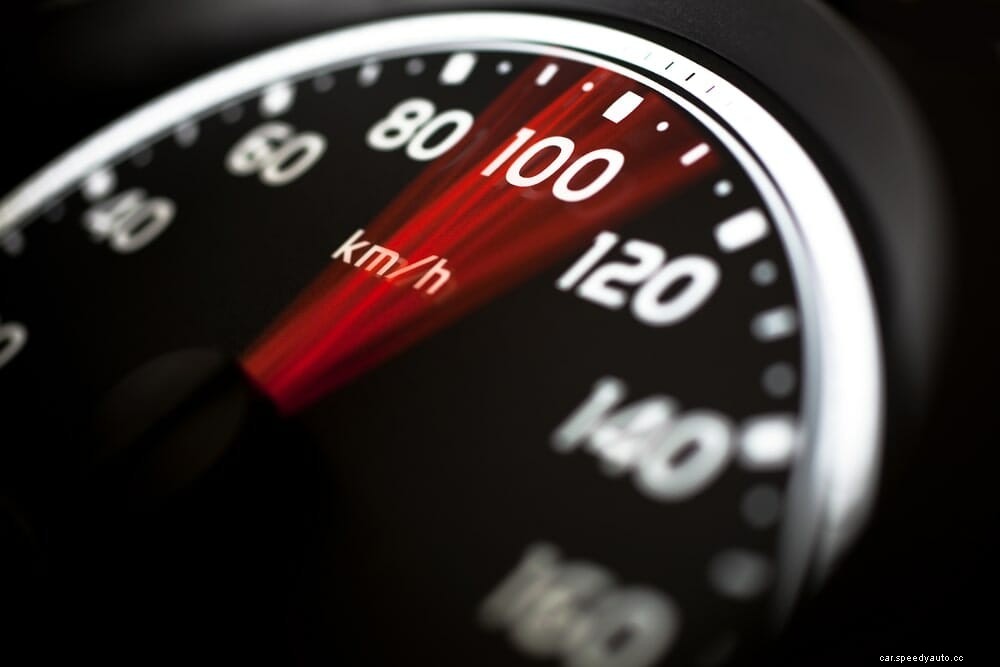
If everything is fine with your RPMs, you will be able to cruise at around 1500 to 2000 RPMs. The optimal range will differ according to the model of the car, but generally, it sits within this range. Assuming you are facing an issue with the RPMs, the indicator will not be stationary. You will see that it fluctuates even if you are maintaining a steady speed.
There are plenty of reasons why your RPMs could be fluctuating while driving. Let us look at some of the most common reasons.
As the name suggests spark plugs create a spark to ignite the fuel. A dirty or faulty spark plug will not be able to do its job.
Like everything else in your car, a spark plug also has a lifespan. Most people fail to notice that eventually, sparkplugs can wear. A worn-out or dirty sparkplug could cause RPMs to fluctuate.
If there is something wrong with your spark plug it will lead to a series of problems. Some common issues related to spark plugs are engine misfires, hesitant acceleration, bad fuel economy, and thick black exhaust gases. So pinpointing the issue with the spark plugs will not be hard.
Spark plugs usually last around 100,000 miles. So if you have a newer car, you do not have to worry a lot about the spark plugs. But once you jump that 100,000-mile mark and your RPMs start to fluctuate, the spark plugs should be the prime suspect.
The good news is that replacing the spark plugs is not that hard. You do not need to consult a mechanic and pay labor costs. You can easily do it yourself.
First, you have to locate the spark plugs. The sparkplugs should be directly above the combustion chamber.
Disassemble the cables or coils connected. Make sure to click a few pictures so that you can put them back together. Now simply remove the spark plugs and replace them with new ones.
The number of spark plugs differs depending on the engine. Spark plugs usually cost less than $10. So replacing them will not cost you a fortune.
This is another common reason why your RPMs might be fluctuating. Idle Air Control Valve also known as an IACV is an electromechanical component. It is in charge of maintaining idling speeds when the vehicle is cold and when it is at normal temperatures. It controls the amount of air that passes through the throttle valve when the throttle plate is closed.
In most cars, the IACV is controlled by the onboard computer. A clogged or faulty air control valve will disrupt the airflow. The check engine light will illuminate. Along with this, you’d experience rough idling and engine stalling. You will see the RPMs fluctuating even when you are idling.
Fixing an idle air control valve is a bit harder than replacing spark plugs. But if you have experience working with cars, you should be able to manage.
If you are unsure about the exact reason why your RPMs are fluctuating, you can confirm it by using an OBD2 scanner. You do not need a mechanic to use a scanner. As long as you know how to use the internet you should be able to manage. This way you will be able to confirm that the IACV is faulty.
Switch off the engine before starting the repair. First, you need to locate the air control valve. It should be beside the throttle body. If you cannot locate it, use the owner’s manual. Once you have located the valve, disconnect the cables.
If the air control valve is clogged with dirt and debris, clean it thoroughly and put it back in. It should work fine. But if the module is damaged you are going to have to replace it.
Unless you hire a mechanic, the cost won’t be overwhelming. If the air control valve is dirty, cleaning it won’t cost a lot. If you need to replace the component it cost around $40. For newer high-tech cars, this could cost up to $400.
The crankshaft sensor is a component that is connected to the engine block. It is connected in a way that is facing the timing rotor. It controls the speed of the rotations inside the engine by controlling the airflow. It is the component that calculates the RPMs.
Thus a damaged crankshaft sensor will cause the RPMs to fluctuate. A faulty crankshaft position sensor will lead to a series of problems. You’d easily be able to observe the fluctuating RPMs. You will also be able to observe that your engine vibrates more than usual, it might stall and it will have trouble starting.
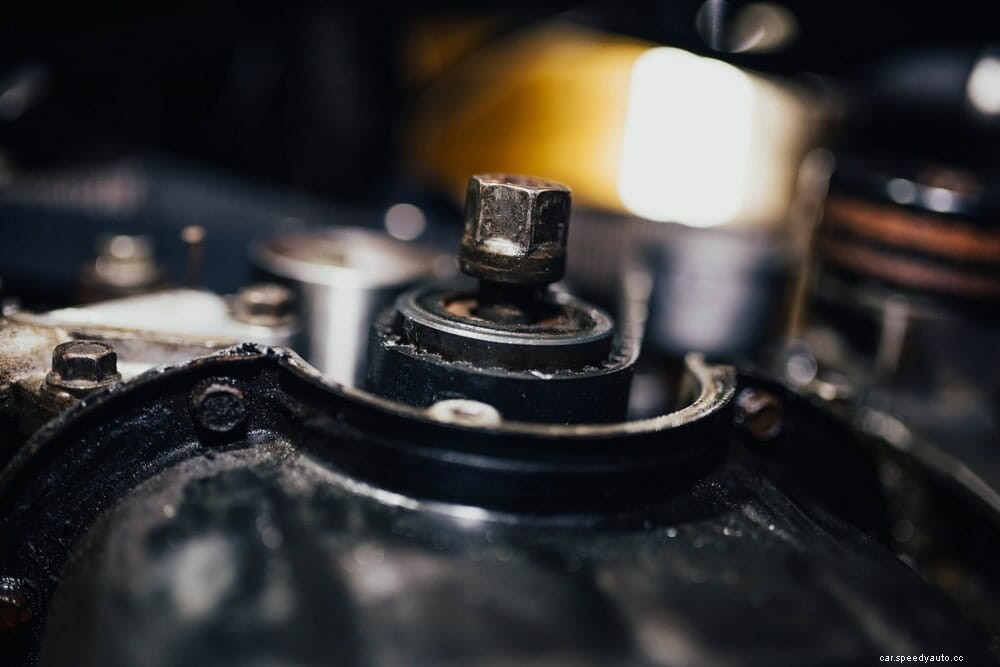
This is not the simplest procedure. If you do not have experience working with cars, you might have to take this to a mechanic.
First, you need to diagnose the car and pinpoint the issue. And once you confirmed that the crankshaft position sensor is faulty, you can proceed.
Start with disconnecting your battery. This would protect you as well as the electrical panel in your car. Now locate the sensor. The position varies a lot depending on the car and the model so you would have to go through the manual. Now disconnect the wire and remove the sensor. Now you would have to replace this with a working position sensor.
Now reconnect the battery and you are good to go.
The cost to replace a crankshaft sensor is usually less than $150. It could go as high as $250. This is only for the parts, if you are paying for labor, the price could get much higher.
The engine vacuum acts as a fundamental unit in bringing air inside the combustion chamber. When the vacuum is malfunctioning, the engine will not get the proper fuel-air mixture.
A vacuum leak will cause a high engine idle. The excess oxygen that comes in will cause a problem with the reading on the onboard computer. This will result in excess fuel being sent to the combustion chamber. This will cause an abnormally high idle.
If the engine vacuum is not sealed properly during installation, loosened, worn-out, or cracked you will face problems with the fuel-air ratio.
Symptoms of vacuum leaks include loss of power, rough idling, unusual noises, low fuel efficiency, and fluctuating RPMs.
In this case, a DIY fix is not recommended. Fixing this is not easy and should be done with precision. Even if you do have experience working on your car this is not an easy task to handle.
It is important to fix vacuum leaks as soon as possible. You are at risk of an accident if you are driving around with a vacuum leak.
The cost varies drastically depending on the extent of the damage and the components that need to be replaced. The cost could be between $150 and $1000.
Fuel injectors are more common in modern vehicles and performance cars. Dirt and debris in fuel can get clogged when moving through the fuel injectors. When the fuel injector gets clogged, the fuel delivery to the combustion chamber is obstructed.
This will cause a lot of trouble including fluctuating RPMs. The car will be hesitant to accelerate or a bit jerky.
The symptoms of a clogged fuel injection kit mimic the problems of many other issues. Vacuum leaks or worn spark plugs also show the same symptoms.
If you cannot distinguish the problem with the fuel injection kit, the best option is to take it to a mechanic. Replacing the fuel injectors is not an easy task either.
The fuel injectors are located near the engine’s intake side, often on the intake manifold. Once you locate it you would need to remove it and either clear the debris from it or replace the injectors.
Cleaning the fuel injectors is not going to cost a lot. But if you are planning to replace it, you might end up with a hefty bill. Top-of-the-line fuel injectors cost over $5000.
The timing belt keeps the crankshaft and the camshaft of the engine in sync. When the teeth of the timing belt aren’t connected properly to the engine, or if the belt is worn off, you might have an issue with the RPMs. When the valves are out of time, the intake valves stay open when they should be closed.
You’d commonly see rough idling with a faulty timing belt. This is another reason for fluctuating RPMs while driving. To be more precise, you will notice the RPMs fluctuating while accelerating.
Timing belt replacement is not something that can be done at home. So the best way to solve this problem is to seek professional help.
While the component is relatively cheap, with labor costs the price could get higher. On average it costs $500 to $2000 to replace the timing belt.
If you are facing fluctuating RPMs while driving, one of the above-mentioned problems is the most likely cost. If you can locate the issue to any of the above components, you should consider yourself lucky. If not things could be much more complicated.
A series of issues can cause fluctuating RPMs while driving. You might be facing issues with the combustion of the engine or your engine might not be able to provide enough power to the rest of the car. You might be encountering a catastrophic engine issue.
Even transmission issues could be the reason for RPM fluctuations while driving.
Either way, you will be facing a major problem and might have to pay a hefty sum for repairs.
If you find your RPMs fluctuating constantly, obviously there is something wrong with your car. But should you immediately stop driving?
Actually, you can drive around without much of an issue. Yes, there are going to be some risks associated with it, but there are no immediate hazards.
But you should consider getting your car diagnosed as soon as possible. Not only that, but you should also consider fixing it. Rarely do you fluctuate RPMs caused by major issues? Switching the spark plugs, or cleaning the air control valve is not time-consuming or costly. So try not to let these issues sit.
You should definitely be concerned, but you do need to stop at the side of the road and call a tow truck.
Here are some of the most common questions that arise about fluctuating RPMs.
When you are idle, the optimal RPM level should be between 500 and 900. In a tachometer, the indicator should be below 1000. If you notice RPM levels above 1000 then it is an indicator that your car is rough idling.
This could directly be linked to a faulty spark plug. If it is broken or not functioning properly, it would leave excess fuel in the combustion chamber. Thus causing misfires at low RPMs.
If your car is idling at low RPM the cause could be a faulty or clogged idle air intake valve, vacuum leak, or a faulty ignition switch.
The most probable cause is faulty spark plugs. But it could be bad ignition coils, dirty fuel injectors, or vacuum leaks.
In manual cars, the driver is in charge of shifting. In the tachometer above 7000 or 8000 RPMs would be marked red. Pushing your crankshaft to go into this red zone is called redlining.
It is okay to redline your car occasionally as long as you are conservative. Try not to keep the tachometer in the red zone for too long and try to let the engine heat up before you redline it. Frequent redlining could cause the engine to wear easily. Continued redlining can overheat your engine. It is best to keep the RPMs at an optimal range.
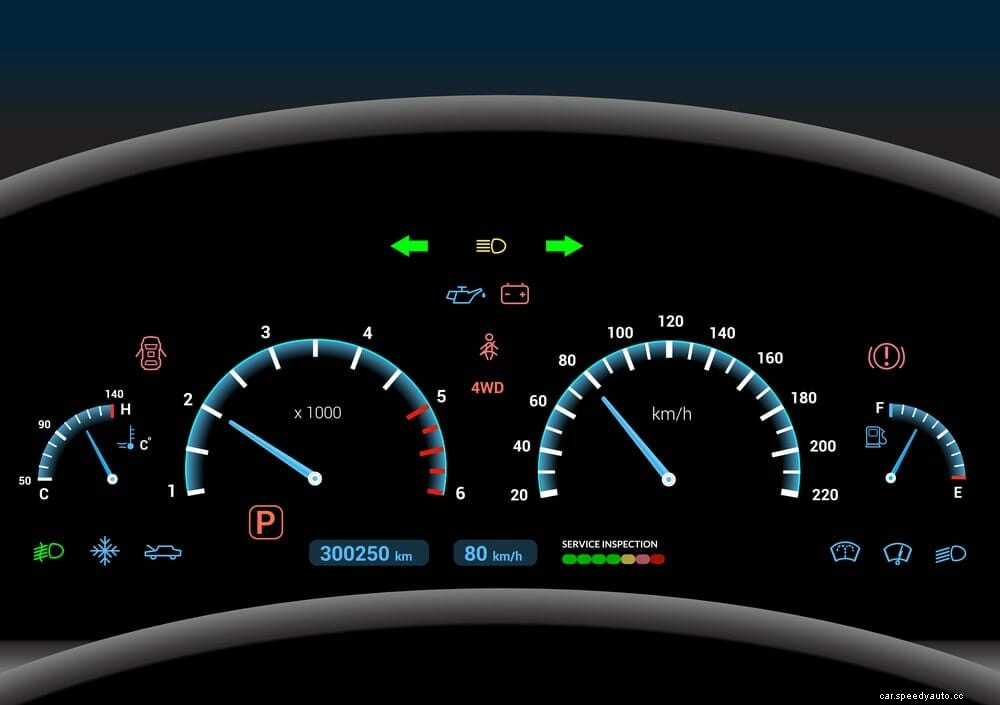
The tachometer which indicates RPMs is important to make your drive safe, smooth, and efficient. It keeps track of the rotational speeds of the crankshaft and sends the required data to the onboard computer.
If you are experiencing fluctuating RPMs while driving it could be the cause of a number of issues. Each is independent of the other but all cause the same problem.
It can be faulty spark plugs, malfunctioning idle air control valves, faulty crankshaft position sensors, vacuum leaks, clogged fuel injectors, or a bad timing belt. Each of these consists of unique symptoms and by assessing these symptoms you could distinguish which component is faulty.
But if the problem is not caused by any of these, you might have a serious issue on your hands and would have to seek professional help immediately.
The problems range from minor issues to major repairs, so you should definitely keep an eye out for fluctuating RPMs. Remember the longer a problem lingers in your car, the more damage it does. And as a result, you would have to pay much more to get the repairs done.
If you encounter a problem regarding RPMs, it is best to make an effort to solve it immediately. Not only for the safety of the car but for your safety and the safety of everyone else on the road.
Check out some of these topics for more useful car tips:
How To Rev a Car Engine Without Moving – Automatic and Manual
What Are the Different Gauges In a Car For?
Why Is My Car Revving On Its Own?
