
The Subaru brand has been synonymous with reliability and off-road capability, but just how long can these vehicles last?
Based on numerous tests and a large number of user reports, Subarus can cross 150,000 – 200,000 miles and last for more than 15 years without a problem. In fact, Subaru claims that 98% of their vehicles sold in the last 10 years are still on the road today.
Subaru has made several best-selling vehicles so besides talking about the general durability of the brand, we’ll also go into detail relating to the individual models.
Even though there’s a considerable number of Subaru vehicles with more than 200,000 miles on the clock, almost every vehicle has had significant maintenance work after 150,000 miles.
The mileage limit depends largely on what you find a reasonable price to spend on repairs. Higher mileage raises the risk of major failure that will require a serious investment and sometimes outweighs the value of the vehicle. We’ll discuss the most common Subaru problems in another section.
In short, most Subarus hit their first mileage limit between 150 and 200 thousand miles. With major maintenance, the limit can be increased up to 300,000 miles.
Subaru boastfully claims that 97-98% of the vehicles sold in the last 10 years are still on the road today. Considering that every decent car should run for at least 10 years, this figure isn’t all that impressive.
The real testament to Subaru’s reliability is all the decades-old models still on the road today. It’s not uncommon to see a 90’s Subaru Legacy or an early 2000s Impreza in decent condition going down the highway or snowy roads.
Design choices may be up for debate, but a lot of people agree that Subarus don’t go out of style and quickly turn into classics in their own right.
Generally speaking, Subaru is one of the more reliable car manufacturers on the market, but it isn’t without its faults. A certain metric puts Subaru at the 11th spot of the least expensive brands to maintain, behind other Japanese manufacturers: Toyota, Mitsubishi, Honda, and Nissan.

Their first attempt at a diesel boxer engine resulted in crankshaft failures that put these engines out of commission after only 100,000 miles.
Subarus have built a bad reputation for having head gasket problems, which are not completely substantiated. Some reports state that the gaskets have to be replaced after 150 to 200 thousand miles which are well within reason. Others claim that the gasket fails before the car even reaches 100,000 miles.
Based on the data provided by CarEdge, we can take a look at a table of average annual Subaru maintenance and repair costs.
| Vehicle Age | Probability of Major Failure | Annual Maintenance Cost |
| 1 | 2.08% | $300 |
| 2 | 3.45% | $351 |
| 3 | 3.87% | $433 |
| 4 | 6.83% | $564 |
| 5 | 9.78% | $673 |
| 6 | 11% | $845 |
| 7 | 11.87% | $1,192 |
| 8 | 15.35% | $1,331 |
| 9 | 16.96% | $1,459 |
| 10 | 20.15% | $1,650 |
| 11 | 31.21% | $1,675 |
| 12 | 38.82% | $1,879 |
Normally, I would say that these figures are out of proportion and include a lot of potentially unnecessary maintenance. However, Subaru is notorious for its need for regular maintenance – skipping maintenance lead to serious problems later on.
The two Japanese car manufacturers are not in direct competition, offering different experiences to their customers, but we can still draw a comparison in terms of reliability.
Based on an iSeeCars study, Toyota Land Cruiser is the most durable vehicle in the US, followed by Toyota Sequoia. In fact, on their top 16 list, Toyota takes half the spots with Toyota Prius taking the last place among an SUV-filled list.
Naturally, Toyota is also the longest-lasting brand overall, but Subaru doesn’t make it on the list at all.
My assumption is that Subaru’s dependency on regular maintenance makes it expensive to operate, especially as it crosses 150,000 miles. Meanwhile, even though maintenance is always recommended, Toyota is known for running on minimal and scarce maintenance cycles.
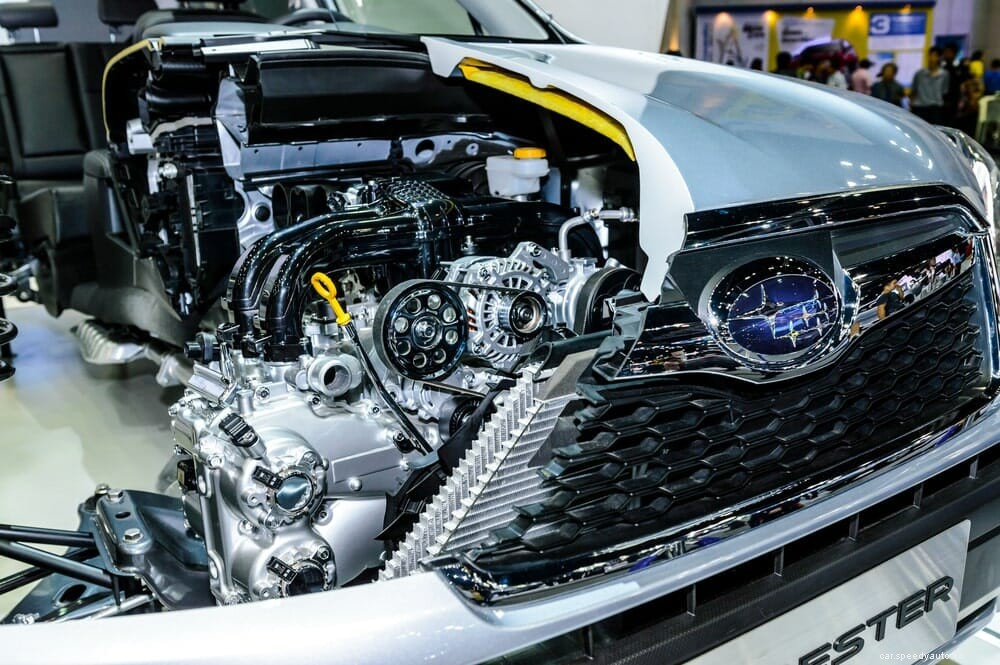
Subaru Foresters perform great in the first five years, but the risk of serious failure drastically increases towards its 12th year on the road. It’s ranked 93rd on CarEdge’s list of least expensive cars to maintain with a 10-year cost of $7,931.
Subaru Outback is comparable in maintenance costs to the Forester, with a 10-year maintenance cost of $8,037, making it the 97th cheapest vehicle to maintain. The chance of a failure that costs more than $500 to repair is 23.97% during the first 10 years.
Forester and Outback are crossovers, so it’s understandable that their maintenance isn’t the cheapest. Impreza on the other hand takes 41st place with the 10-year service cost of $5,900. Impreza retains its reliability and a 17.73% chance of a major failure during the first 10 years, almost 4% less than the segment’s average.
The flagship model, Legacy is one of the most popular Subaru vehicles and despite being an up-class from Impreza, its 10-year maintenance cost is $6,073, making it the 47th cheapest car to maintain. Like the Impreza, it beats the industry’s average in terms of reliability over the years.
Subaru vehicles hold their value extremely well because of their reliability and capabilities that other brands cannot beat in the segment. If you’re buying a used Subaru, one to three-year-old Subaru gives you the best value for money, with 4 and 5-year-old models also being solid options.
Beyond the 5th year, pay attention to the mileage and service, as you want to buy a car that has had the major work already done to it, like the head gaskets or the timing belt/chain replacement.
| Year | Value Lost | Remaining Value |
| 0 | 0% | 100% |
| 1 | 16.56% | 83.44% |
| 2 | 21.92% | 78.08% |
| 3 | 28.50% | 71.50% |
| 4 | 34.08% | 65.92% |
| 5 | 40.18% | 59.82% |
| 6 | 47.45% | 52.55% |
| 7 | 54.23% | 45.77% |
| 8 | 59.22% | 40.78% |
| 9 | 65.95% | 34.05% |
| 10 | 70.55% | 29.45% |
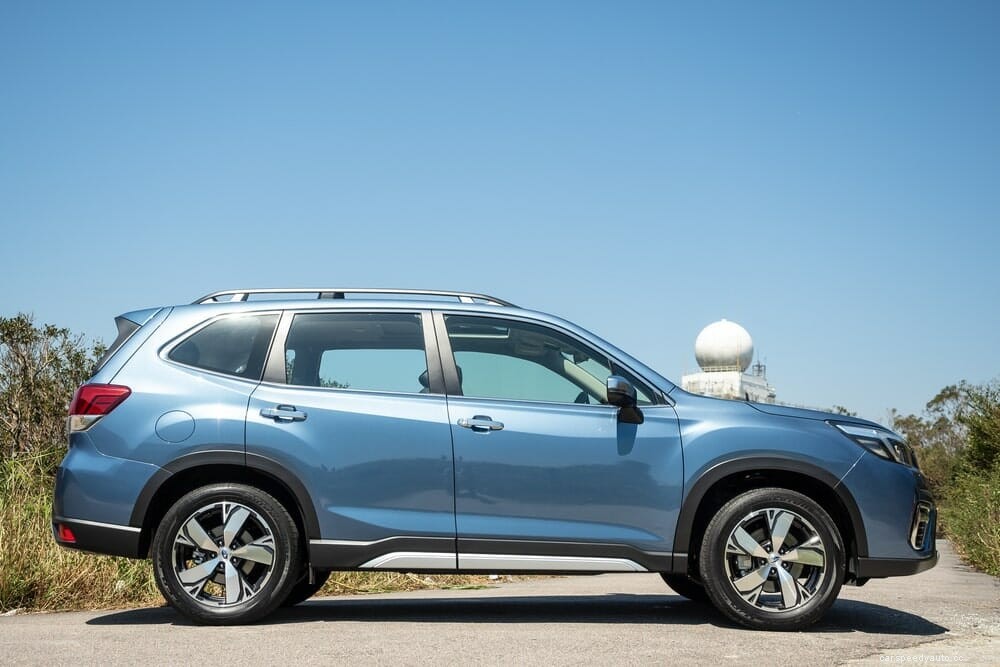
The average cost of Subaru insurance is $1,550 annually, which is roughly $350 better than the industry’s average. The figure is based on a 40-year-old driver with a good record and reasonable driving habits.
| Driver’s Age | Good Record & Credit | Recent At-Fault Incident | Poor Credit |
| 18 | $4,812 | $7,183 | $8,403 |
| 25 | $2,208 | $3,243 | $3,794 |
| 30 | $1,720 | $2,526 | $2,955 |
| 40 | $1,550 | $2,276 | $2,662 |
| 50 | $1,383 | $2,031 | $2,376 |
Now we can take a look at rates for individual models and see how they compare to other vehicles in their class:
The most important factor in achieving high mileage with a Subaru is regular maintenance. You can drive a Ford or a Toyota truck with minimal maintenance until the wheels fall off, but Subaru is more delicate and needs to be kept in great condition.
Regular and frequent oil changes are crucial – while some cars can push 9,000 miles or 12 months on the same oil, Subaru recommends a 6-month interval change or up to 6,000 miles. From a conservative standpoint, I’d say that the 5,000-mile limit is better, with 3,000 miles for the WRX.
Don’t neglect the oil and air filters. I will never understand the practice of changing the oil and not the filters, especially when they’re $10-20 each. By having filters in excellent condition, you’re making the most out of the oil change and keeping the engine in a much better shape.
Subaru doesn’t lack the parts or service locations in the US, but it’s still a Japanese import and should be treated as such. This means that preventive and early maintenance beats letting the parts run until total failure.
The point stands for just about any vehicle, but many drivers push their cars instead of addressing issues as it may save them some money in the long run.
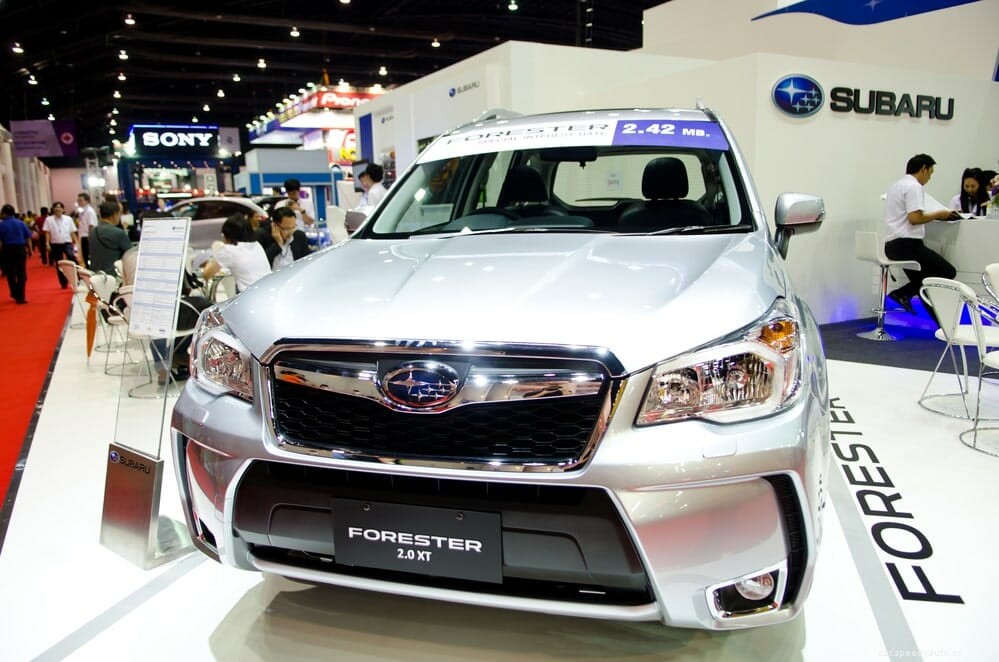
On average, Subaru cars and SUVs can cross more than 200,000 miles with some cars running for over 300,000 miles. Realistically, 150,000 miles is already high mileage due to the increasing costs of maintenance and repairs.
Stay on top of the maintenance, keep the body protected from rust and keep the mileage under 10k a year, and Subaru can last for 20 years with ease. The proof is all the Legacy and Impreza models that are still on the road today.
The idea that Subarus last longer than other vehicles doesn’t stem from an incredibly durable production, but the fact that Subaru owners like to keep their vehicles for a very long time. Like F-150 or Sierra trucks, owners will use their Subarus a lot and keep them until they completely break down, which takes at least 20 years.
The answer depends on how you perceive durability. From a purely mechanical standpoint, Toyotas last longer, but within the first 200,000 miles which is more than the effective lifespan of an average car or a crossover, the two brands are equal. Because of how drivers treat them, both Subaru and Toyota vehicles will last an incredibly long time.
Subaru is widely regarded as a reliable and trusted car manufacturer, and if you can get a new model or a well-maintained used car, it’s nearly guaranteed to be a good purchase.
Subaru may have a few issues and need a strict maintenance cycle, but if you take care of it, it will serve you for more than 200,000 miles or at least 15 years. Across the model lineup, Subarus have above-average reliability and are not too expensive to repair.
Read more of our Subaru related posts for more insights:
Why Does Your Subaru Outback Battery Keep Dying? Causes and Fixes
What is the Difference Between The Subaru WRX and STI?
How Many Gallons Does A Subaru Outback Hold?
