
An overheating engine is not something drivers should ignore. If your engine begins to overheat while you are driving this is an emergency situation. You may be wondering exactly how far can you drive an overheating car?
The short answer to this is not very far! Keep reading to find out how long you can continue to drive an overheating car and what you can do in the future to prevent your car engine from overheating.
A car engine doesn’t just overheat for no reason. If you are driving and you notice steam coming up from below the hood, there is likely a problem with a part of your car that has gone unnoticed.
Here is a list of the most common reasons why a car engine overheats:
The good news is that if there is a problem with any of the above then warning lights and symbols should appear on the dashboard to alert you. Ignoring warning signals and not resolving easy-to-fix problems can lead to your car engine overheating and a hefty repair bill.
Very rarely does a car engine overheat without any warning signs. Knowing exactly what signs to look out for can stop you from potentially allowing your car engine to overheat.
Here are the warning signs that a car engine is overheating:
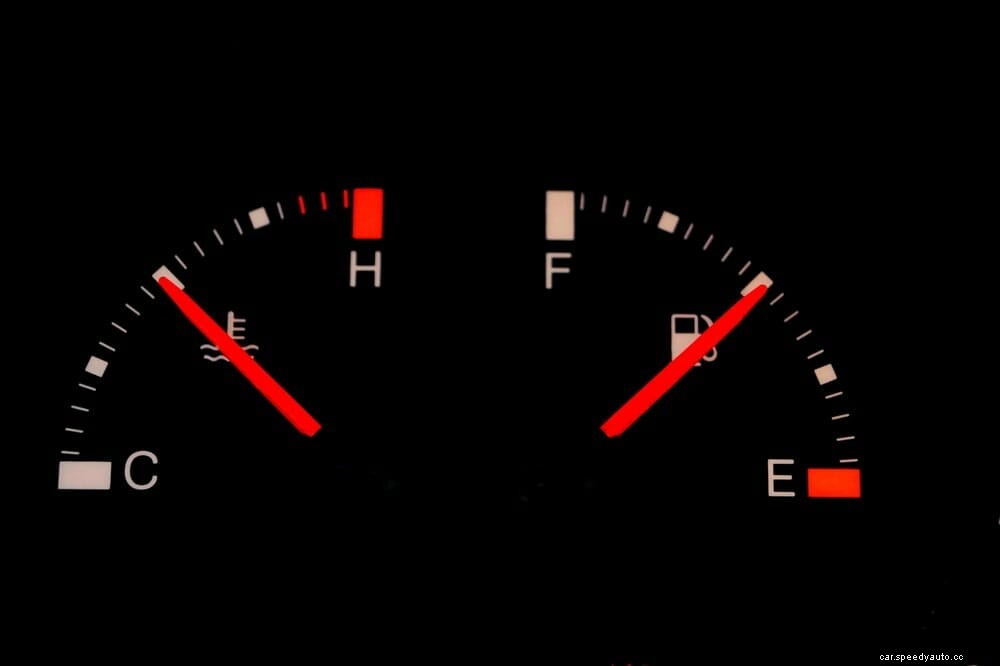
The ideal operational temperature for a car engine is between 195 and 200F. If your temperature gauge reads over 210F your engine is overheating.
If your engine is overheating the hood of your car will feel hot to the touch. It is normal for your car hood to become hot when you are driving but if you are unable to place your hand on the hood of your car for 10 seconds without burning it, this is a warning sign that the engine could be overheating.
An overheating engine will often follow the display of a warning light on the car dashboard. Some models will have a warning light that flashes when the engine is close to overheating, others will indicate when there is an issue that can lead to an overheated engine.
The check engine light should never be ignored and the same goes for any of the warning lights that appear on the dash.
When there is not enough engine oil lubricating the moving parts inside your car engine, it can cause an audible ticking sound. When engine parts are not moving smoothly due to a lack of lubrication, this can cause the engine to overheat.
When an engine doesn’t have enough coolant inside the cooling system it can quickly overheat. If you notice coolant leaking from below your car, you will need to rectify this issue as soon as possible.
If you notice your car is taking longer to accelerate or you are struggling to speed up at all, the car engine may be overheating.
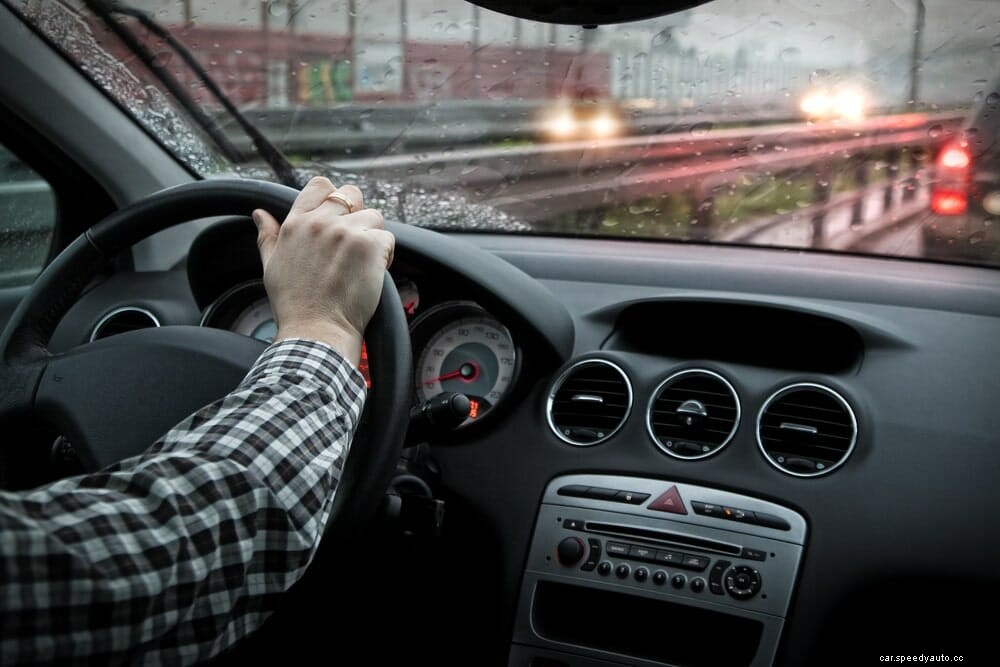
When a car engine is overheating a very distinct odor is emitted. When a car begins to overheat and is burning oil, there will be a strong burning smell. Plastic parts and resin inside the engine can begin to melt and you will notice a strange smell. Any unusual odors coming from the car engine should not be ignored.
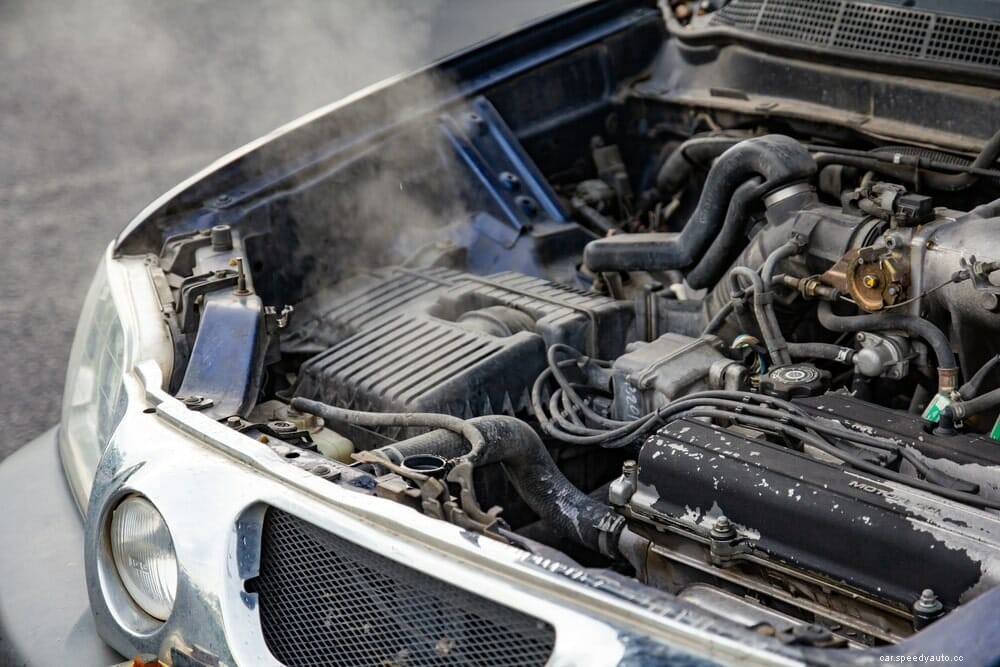
When the coolant reaches its boiling point it turns into steam which is then released up out of the engine. Steam coming from the front and sides of the car hood is a sure sign your engine is overheating and you will need to pull over as soon as possible.
When your car displays any of the above warning signs, you need to stop as soon as it is safe to do so. If you are wondering how far can you drive an overheating car, there is no one set answer.
As soon as your engine starts overheating, it will be running at dangerously high temperatures immediately. The more you drive with the engine operating in these conditions, the more you risk seriously damaging your vehicle.
When a car engine overheats. the pistons powering it can expand and then seize inside the cylinder.
Continuing to drive the car after this has happened can result in the engine block and cylinder heads cracking. This kind of damage is very expensive to repair and in serious cases overheating may cause issues with the engine that can never be fixed.
Driving an overheating car too far and for a long period of time can cause the engine to completely meltdown and there will be no chance of repairing it if this happens.
If the car overheats to 80F (or more) over its regular functioning temperature, the engine will be ruined. However, damage can begin from the moment your car begins to overheat.
There are too many variables that can influence how long you can drive an overheating car to be able to give a one set amount of time or miles. However, it is always best practice to pull over or get to a mechanic as soon as possible, if you drive with an overheating engine for too long the damage caused may be irreversible.
As we have mentioned throughout this article, an overheating engine can cause serious damage to your car. Here is a list of some of the most common problems caused by an overheating engine:
Driving a seriously overheating car will never end well, you could have all the money in the world but you won’t be able to fix an engine that has been through a total meltdown.
There are ways to prevent your car engine from overheating in the future. As well as preventative measures, there are a few tips you can try to stop the engine from dangerously overheating while you are behind the wheel.
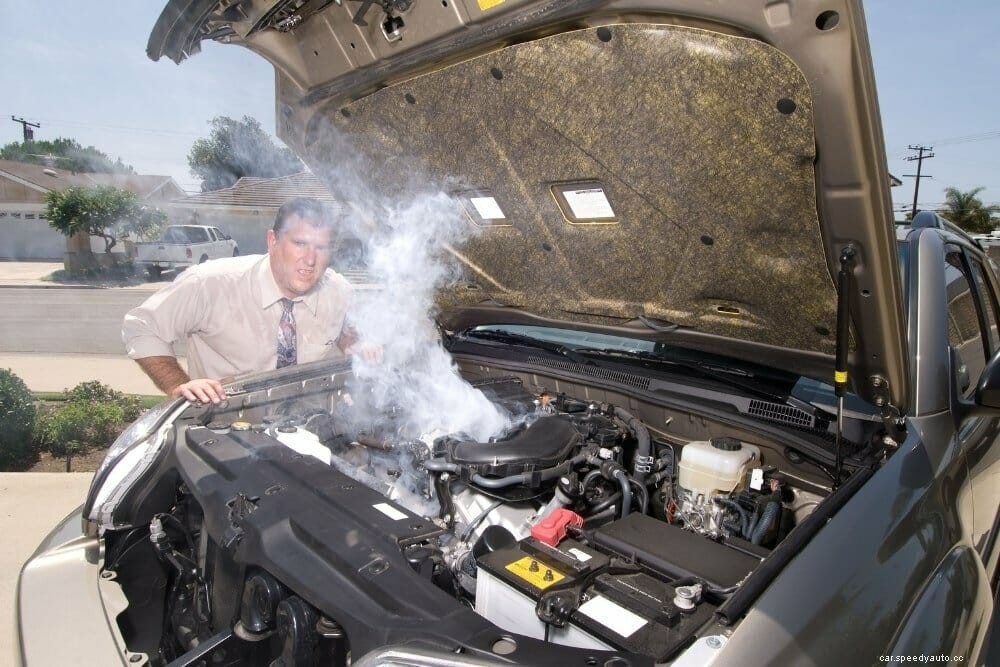
If you keep driving when your car overheats you can cause serious damage to the engine. The engine may completely melt when temperatures soar too high, or there may be repairable damage caused to the radiator, caskets, and cooling system.
However, engine repairs are costly and causing any damage to the engine should be avoided at all costs. Overheating can cause the car engine to be permanently defective and it will need to be replaced.
There are many reasons why car engines overheat, leaking coolant is just one of them. There may be issues with the radiator, broken water pumps, not enough oil or the thermostat may be broken.
If you do not have a working temperature gauge, there are many telltale signs that your engine is overheating. Steam coming from below the hood, ticking and banging sounds, a burning smell, and a hot hood are all indicative of an overheating car engine.
A car engine can survive overheating, as long as the car wasn’t driven until the engine had a complete meltdown.
The longer you drive an overheating car, the more risk you have of causing serious damage. However, if your car engine is only overheating by around 10 – 20F, you are unlikely to cause any irreparable damage to the parts inside the engine.
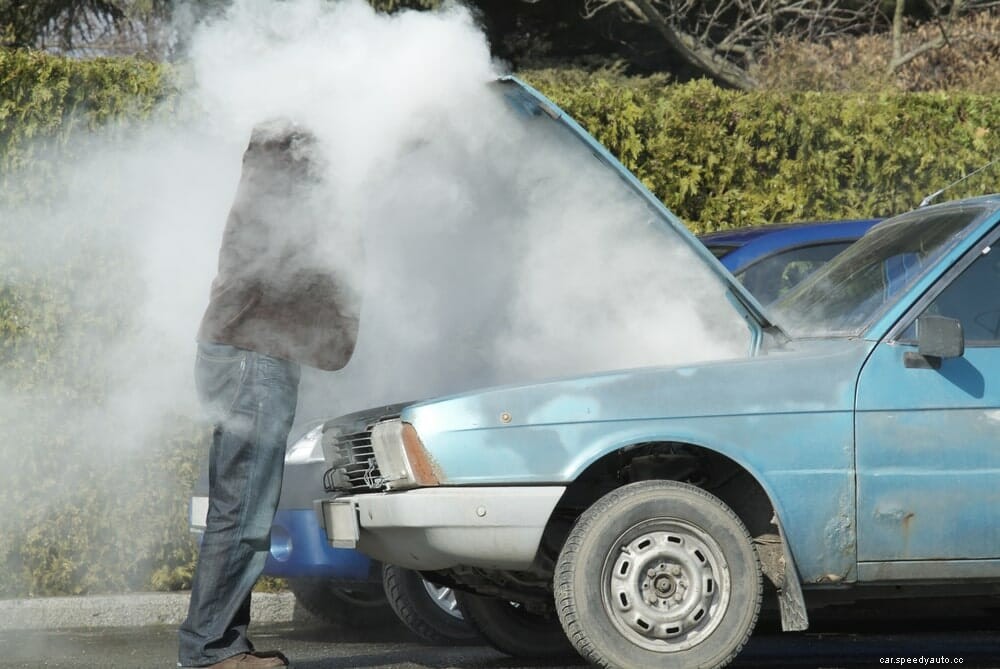
Different car models will begin to overheat at different temperatures and factors such as coolant levels can influence how hot the engine needs to be to overheat. Typically, modern cars run at an engine temperature between 195-200F, anything over 210F and the engine is becoming too hot and may overheat.
If your car engine is overheating the best thing you can do is pull over as soon as possible to prevent the situation from getting any worse. It is not always easy to pull over immediately and you may want to know how far can you drive an overheating car?
There is not a specific amount of miles you can drive when a car engine is overheating but the wisest thing to do is pull over as soon as you are able to do so safely. We hope you have found this article useful.
