
If your car’s coolant levels are low, you might be wondering how far you can drive before the engine overheats. The answer to that question depends on a number of factors, including the make and model of your car, the ambient temperature, and how much driving you do.
You can’t drive more than a few miles before your engine overheats. The best way to avoid this is to keep the cooling system in your car properly maintained. Check the level of coolant regularly and top it off if necessary.
If you run out of coolant, add the correct type of liquid to the radiator so that you do not damage the engine.
In this blog post, we will explore what happens when a car’s coolant level gets too low and how to avoid it. Stay safe out there on the roads!
The cooling system in a car is responsible for maintaining the engine temperature within certain parameters. The engine generates a great deal of heat, and if it were not for the cooling system, the engine would quickly overheat and be damaged.
The cooling system circulates coolant (a mixture of water and antifreeze) through the engine to absorb the heat. The coolant then flows out of the engine and into the radiator, where it is cooled by air passing through the radiator fins. From there, it cycles back into the engine to absorb more heat.
One of the most important aspects of the cooling system is its ability to maintain a consistent temperature. If the coolant is too cold, the engine will not be able to generate enough heat to run properly.
If the coolant is too hot, it can cause the engine to overheat. The thermostat helps to maintain the correct temperature by regulating the flow of coolant into and out of the radiator.
The cooling system also includes a water pump, which circulates the coolant through the engine. The water pump is driven by the engine, and it spins continuously as long as the engine is running.
One common problem with the cooling system is a leaky radiator. When this happens, coolant leaks out and the engine runs hotter than normal. This can cause serious damage to the engine if it is not corrected promptly.
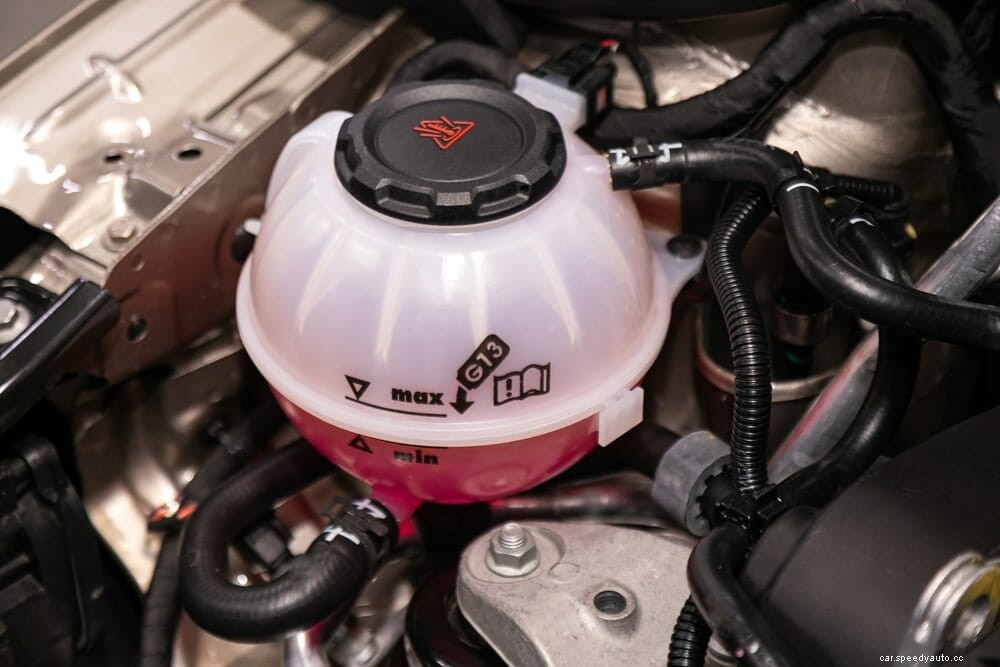
There are a number of symptoms that can indicate a problem with the cooling system. One of the most common is an engine that runs hot or overheats. Other symptoms include a loss of power, poor fuel economy, and white smoke from the exhaust.
If you experience any of these symptoms, it is important to have your car checked out by a qualified mechanic as soon as possible. Cooling system problems can cause extensive damage to the engine if they are not corrected in a timely manner.
There are a few different ways that you can know if you don’t have any coolant in your car. One way is if you see a dashboard warning light come on.
If you see this light, it means that there is a problem with the cooling system and you should take your car to a mechanic to get it looked at.
Another way to tell if there’s no coolant in your car is if you smell a sharp, sweet smell. This smell is often indicative of leaking coolant, so if you smell it, it’s best to take your car in for a check-up.
A sharp smell combined with poor fuel economy are also signs that there may be an issue with the coolant in your car, so it’s best to get it checked out if you’re experiencing any of these symptoms.
Another sign that there may not be any coolant in your car is if you start seeing a rise in your temperature gauge. If you’re noticing that your car is heating up more than usual, it could be a sign that there’s something wrong with the cooling system.
Lastly, if your engine cuts off automatically, it’s likely because there isn’t enough coolant in the system and so it’s shutting down to prevent damage. If this happens, you’ll need to take your car in for a check-up right away.
If you’re experiencing any of these problems, it’s best to take your car in for a check-up to see if there really is an issue with the coolant.
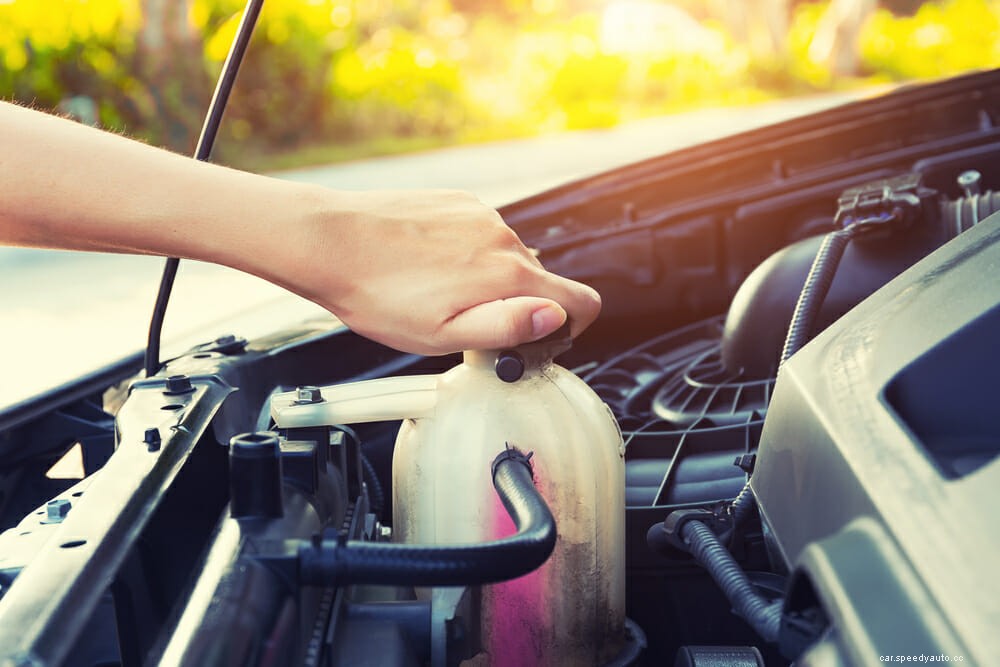
It’s a good idea to replace your coolant every two years or so, regardless of whether you think there’s a problem with it or not. This is because the coolant can become contaminated over time and may not be able to do its job properly.
If you’re not sure if your coolant needs to be replaced, you can take your car in for a check-up and have the mechanic test the coolant to see if it’s still up to par. If it’s not, he’ll likely recommend that you replace it.
Replacing the coolant is an easy process and doesn’t require any special tools or knowledge. All you need is a container to catch the old coolant, a wrench to remove the radiator cap, and a new bottle of coolant.
Once you’ve got all of the supplies you need, follow these steps to replace the coolant in your car:
If you follow these steps, you should be able to replace the coolant in your car without any problems. Just make sure that you have all of the supplies you need before you start.
If you’re experiencing any of the symptoms mentioned earlier, it’s best to take your car in for a check-up to see if there’s an issue with the cooling system. Cooling system problems can cause extensive damage to the engine if they are not corrected in a timely manner.
If your car is overheating, one of the first things you should do is check the radiator for leaks. There are a few ways to do this:
If you detect a radiator leak, you will need to repair it as soon as possible to prevent the engine from overheating.
If you have a radiator leak, you will need to repair it as soon as possible to prevent the engine from overheating. There are a few ways to do this:
It is important to fix any leaks in the cooling system as soon as possible because they can cause the engine to overheat and damage the engine.
If your car runs out of coolant, you will not be able to drive very far. In most cases, you will drive a few miles before the engine overheats and gets damaged. It is important to check the level of coolant in the radiator on a regular basis and top it off if necessary.
If you do run out of coolant, you can add water to the radiator, but it is best to add the correct type of coolant so that you do not damage the engine.
It is important to keep the cooling system in your car functioning properly so that the engine does not overheat. Check the level of coolant regularly and top it off if necessary. If you run out of coolant, add the correct type of liquid to the radiator so that you do not damage the engine.
If you keep driving without coolant, the engine will overheat and be damaged. In most cases, the engine will be irreparable and you will need to replace it.
You will also damage your water pump, radiator, and sealants. It is important to keep the cooling system in your car functioning properly so that you do not damage these parts.
If your car runs out of coolant, you won’t be able to refill the coolant reservoir. You’ll have to check the level of the coolant in the radiator.
Wait until your radiator has cooled down. Don’t open it if it’s hot! Turn the radiator cap counterclockwise. Do not release any pressure by pressing or releasing the cap. Push down on the cap and turn it counterclockwise.
Take the cap off and check the level of the coolant in the radiator. It should not be lower than the bottom of the neck of the radiator. If it is, add more coolant to your car. Make sure to follow the correct proportions when adding coolant to your car.
Remember: never open the radiator if it’s still hot! It could cause serious injury.
There are many different types of coolant, but the most common type is a mixture of water and antifreeze. It is important to use the correct type of coolant in your car so that you do not damage the engine.
If you are not sure which type of coolant to use, consult your owner’s manual or go to an automotive store and ask for advice.
It is important to use the correct type of coolant in your car to prevent the engine from overheating. If you are not sure which type of coolant to use, consult your owner’s manual or mechanic.
Antifreeze comes in different colors so you can tell which type of antifreeze your car needs. You can also buy premixed coolants, which already have the correct mixture of water and antifreeze.
No, you should not put pure antifreeze in your car. Antifreeze is a mixture of water and chemicals that help to protect the engine from freezing or overheating. If you put pure antifreeze in your car, it will not have the same protection and could damage the engine.
You should not put pure antifreeze in your car because it will not have the same protection against freezing or overheating. Instead, use a mixture of water and antifreeze to protect the engine.
If you have only water in your radiator, the car will overheat and stop running. The water will boil and turn to steam, which will escape from the engine and make it difficult to start again.
You can prevent this from happening by adding a coolant/antifreeze mixture to your radiator. This will help keep the engine from overheating, even if the water starts to boil.
Antifreeze also helps your cooling mixture not to freeze during winter, as the water expands when frozen. It can damage vital parts of the car like the water pump or radiator.
When your engine overheats, you can’t drive much farther. The best way to prevent this is to keep the cooling system in your vehicle properly maintained. Check the coolant level on a regular basis and refill it as required.
If you run out of coolant, add the proper type of solution to the radiator so that no damage is done to the engine.
