
Whenever you see a puddle of leaked fluid when you move your car, it causes panic. Fluids are the blood that helps the car to function. Whenever you see your car bleeding, you know something is wrong. One of those crucial fluids is the transmission fluid.
What causes transmission fluid to leak when parked? And how do you fix this problem?
Transmission fluid is the lubricant that runs inside both automatic as well as manual transmissions. Besides lubrication, transmission fluid serves a lot more purposes, but lubrication is the primary objective of the fluid.
This fluid is used in cars, SUVs, motorcycles, boats, ATVs, etc… It is used in every automobile with a transmission. The properties of the fluid used will change depending on the type of vehicle model and make.
Transmission fluid is made up of a mixture of components. It consists of detergents, rust-preventatives, and lubricants to name a few. The color of this is pink. Though this is not the natural color of the fluid it is dyed pink to make it easier to identify transmission fluid.
Automatic and manual transmission are completely different from each other. Thus the transmission fluid used will also vary. Manual transmissions use either motor oil or specified transmission fluid, which is similar to motor oil in many ways.
On the contrary, automatic transmissions require ATF also known as automatic transmission fluid.
Leaks are never a good sign. Whenever something leaks you often end up with a hefty bill. Transmission fluid is one of the worst things you can see dripping down at the bottom of your car.
Transmission is one of the crucial parts that enable the car to be functional. For the transmission to function, it requires transmission fluid. Without transmission fluid, the transmission will suffer unrepairable damage.
If the transmission fluid leak goes unnoticed, you won’t know the repercussions until your transmissions busted. So you need to know how to identify transmission leaks. Here are some ways with which you can identify transmission fluid leaks.
If you see a fluid puddle under your car when you pull it out of the driveway it will indicate that fluid is leaking from your car. There are more than half a dozen fluids running through your car. Some examples are engine oil, coolant, brake oil, power steering fluid, and of course transmission fluid.
With this many fluids, you wouldn’t know which fluid created the puddle under your car unless you know how to identify it. Different fluids have different colors. Using the color you should be able to identify what the fluid is and if it is indeed transmission fluid.
When the transmission fluid is poured in it is usually pink or red in color. But as it circulates inside the transmission for a while the color will change. This is due to the dirt, dust, and debris that is mixed with it. This might turn into brown or black with time.
Even if it is pink, the same shade is seen in antifreeze and power steering fluid. So, with the color alone you will not be able to conclude that the fluid that leaked is transmission fluid. But it will help you narrow down the list.
Transmission fluid is a lubricant. Similar to brake oil or engine oil, it will feel slippery when you touch it. It should have an oily texture.
If you notice this texture, you can cross anti-freeze from your list. But there is still a chance that it could be a power steering fluid. You can smell the fluid to try to differentiate the fluids. Transmission fluid has a petroleum smell to it. If the fluid is dirty or has been in the transmission for a while it will smell burnt.
The location of the leak can provide a clue on the cause of the leak. According to the location of the fluids, they leave stains in different places when they leak.
The transmission runs from the center of the car to the front end. All the while it remains in the middle. So if the transmission fluid leaks, you will see a puddle closer to the middle of the car.
Using these visual cues, texture, and smell you should be able to identify transmission fluid if you see a puddle under your car. If you see a red, pink, or brown color puddle along the middle of the car, there is a good chance it is transmission fluid.
For confirmation, check the texture. Transmission fluid has an oily texture. If all these conditions are satisfied it is probably transmission fluid.
A puddle of oil is not the only indicator for transmission fluid leak. Even if you do not notice a leak visually, you can notice the difference if you are running low on transmission oil when you drive.
Be vigilant about the changes in your car. If you own a car with a manual transmission, you will be able to notice a problem with a transmission every time you shift. Shifting will become harder and might get stuck often.
The same can be seen in automatic cars. Since shifting happens automatically you won’t notice this as clearly. But every time you move to a different gear, you will notice that the transmission is working hard. You will feel a vibration that didn’t exist before.
Your car might not start as quickly as it did. This is because when starting the car should shift from neutral to first gear. This process will take a while if you are low on transmission fluid.
If you are totally dry on transmission fluid, you won’t be able to shift at all.
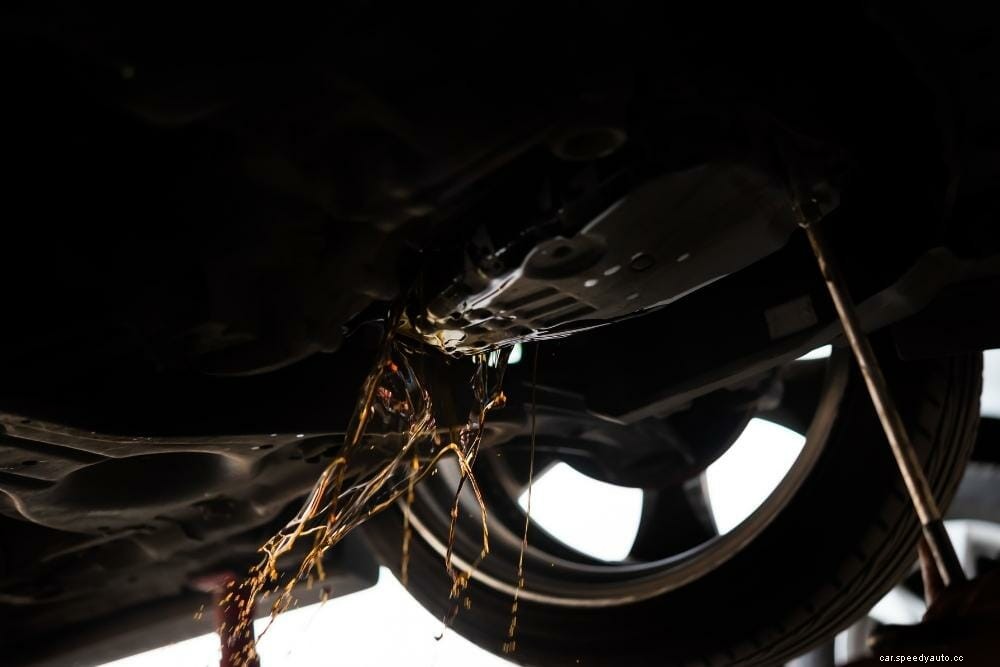
These symptoms are shown when you are low on transmission fluid or when your transmission fluid is dirty. In this case, you need to get it checked up immediately. A leak should be fixed immediately. If your transmission oil is dirty, you need to replace it right away.
Now that you know how to identify a transmission oil leak, you need to focus on how to solve the issue. But you cannot fix a problem without knowing the cause. Let us look at a few reasons why your transmission fluid is leaking when parked and how to solve the problem.
The fuel pan gasket is the number one suspect if your transmission fluid is leaking. Vehicles with automatic transmission have a pan gasket. This is where the transmission fluid is kept.
The seal between the pan and the transmission will deteriorate over time. It can corrode, wear off, crack and fall apart or even dissolve after a while. Through this transmission oil can leak when parked.
Some car transmissions use a seal instead of a gasket. This too can wear with time and cause leaks. The only solution is to get the component replaced. You can clean it up and use the same component in some cases, but it is just a matter of time before it leaks again.
The entire process could cost anywhere from $150 to $400.
Just like the gaskets beside them, the transmission pan can also show signs of wear with time. The transmission pan is in charge of holding the transmission fluids. It acts as a reservoir for the fluid.
As they wear they can develop tiny holes or crack. This will allow the fluid to seep through and cause a leak. In extreme cases, it can rust and fall apart. In this case, the fluid won’t leak for a long time, instead, you will run out of fluid much faster.
An impact could also damage the pan. If a sharp object hits the pan it will puncture through. Again the only solution is to replace the pan. You cannot expect to salvage anything. If your car is close to 100,000 miles or more, you might as well replace the gaskets as well to be extra cautious.
The entire process will cost $250 to $500.
This is not something that is induced by time or any other natural causes. This is a man-made issue. This usually happens when working on or around the transmission pan.
If someone tried to replace the transmission fluid but had a hard time removing the sealant, the extra force he uses to remove the sealant could bend the pan. Steel transmission pans are pretty weak and they bend easily. So if someone used an excessively large tool to remove or fit the pan, it could have bent the pan.
A bent pan will not create a seal around it. Through the gaps transmission, fluids can escape and cause a leak. You have to replace the transmission pan if this happens. You would have to expect the same costs as replacing a worn-out pan.
This is not common in automatic transmissions but in some models, they do exist. They are pretty common in manual transmissions. This is another weak point that could cause a leak.
As the name suggests, the plug is used to drain the transmission fluid. It is sealed with an O-ring. Every time the transmission fluid is changed this seal needs to be replaced. This is because they last almost the same amount of time that transmission fluid lasts.
If the same seal is reused, it will wear off. This would create an opening for the transmission fluid to leak. The good news is this is a cheap fix. You only need to replace the O-ring. You can get the job done for $20 or slightly more.
Fluid lines are common in modern vehicles with automatic transmissions. Some manual transmissions do have fuel lines, but they are not common. These are lines that are used for cooling. These lines run to the transmission cooler which is situated in the front end of the car.
These pipes are made of steel so they are prone to rust. If they do rust they can crack, form holes or even snap. This will also cause a transmission fluid leak. Since this runs right above the pan, whenever these pipes cause havoc, it is mistaken as the pan below.
Make sure what is causing the leak before committing to a repair. Replacing these fluid lines can cost anywhere from $50 to $200.
If your car was in an accident, there is a chance that the transmission is damaged. There is no way to guess which part of the transmission is damaged if it was damaged due to an accident.
Since transmission fluid circulates the entire transmission any kind of damage to the transmission, could result in a transmission fluid leak.
So how do you solve this issue? You do not have a lot of options. You need to completely take the transmission apart and inspect it. Even after this, there is a chance that you will not be able to find the source of the leak.
In the best-case scenario, you will find where the leak is originating and replace or repair the component. Worst case scenario, you will have to completely rebuild or replace the transmission.
Depending on the severity of the issue you will end up spending $500 to $5000 or more.
The transmission fluid goes through a series of pipes as it circulates through the transmission.
If your transmission fluid hasn’t been replaced for a while, it will be full of dirt and debris. This could cause the pipelines to clog. When there is a clog, the circulation will be disrupted, and there will be points where the pressure is high.
This increase in pressure could induce a leak of transmission fluid.
If you went through the causes that result in transmission fluid leaks, you might have noticed that each repair cost hundreds upon hundreds of dollars. Ever heard the saying, “prevention is better than cure”. So how do you prevent transmission fluid leaks?
This will not prevent your transmission from leaking. But you have to understand, leaking is not the cause of the issue. The problem arises when leaks cause the fluid levels to drop.
So the best way to stay safe is to be vigilant above the fluid levels off. Keep the fluid levels at an optimal level by checking regularly. If you notice a sudden drop in fluid levels it will suggest that there is a leak and you can deal with the leak accordingly.
Different manufacturers will have different periods for oil changes. Accordingly, you should change the fluids as deemed by the manufacturer.
This will significantly reduce the damage done to your transmission. For example, transmission fluid prevents corrosion. If you replace your transmission fluid when needed, you will not suffer damage caused by corrosion.
This is just one aspect. As long as you replace the fluid as necessary, you will not run into any major problem with the transmission for at least 150,000 or 200,000 miles.
This is especially important for manual cars. You should know exactly when to shift. Early shifts and late shifts put a lot of pressure on both the engine and the transmission. Both are major components, so they both need to be cared for.
A lot of regular gear changes will also put stress on the transmission. This will affect both automatic and manual transmissions. If you drive with frequent drops in speed and sudden surges of speed, the transmission will have to shift frequently. The stress created by this can damage the transmission.
Here are some of the most common questions related to transmission fluid leaks when parked.
Before concluding the leak is indeed transmission fluid, you need to assess it first. Using color, smell, texture, and the location of the leaks you should be able to identify whether the leak is indeed transmission fluid.
Once you have confirmed the source of the leak, you can either fix it yourself or take your car to a professional.
Transmission fluid has a lot of functions but the main job of transmission fluid is to lubricate the transmission. By reducing the friction between parts, the fluid reduces wear and increases the lifespan of the transmission.
Apart from lubrication, transmission fluid cleans the transmission by absorbing impurities, acts as a coolant, and prevents corrosion.
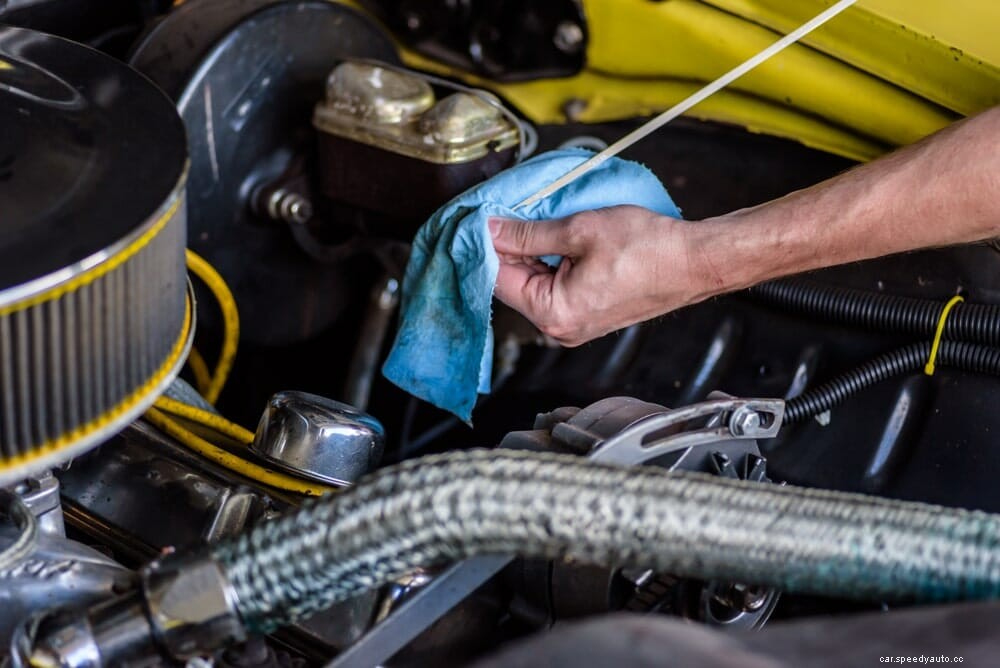
Transmission fluid flush is the process of removing all the existing transmission fluid and replacing it with new fluid. If done correctly this will replace all the transmission fluid in your car. This includes the fluid in the torque converter and oil cooler lines.
On average transmission fluid flushes cost $239.95. The price could go up or down depending on the type of transmission fluid used and the model of the car.
Unlike automatic transmissions where you can only use ATF or automatic transmission fluid, manual transmission uses a range of fluids.
Usually, it is compatible with engine oil, heavyweight Hypoid gear oil, or even ATF. Most manufacturers suggest a specific type of oil.
Driving an automatic car is much easier. But that doesn’t mean manual transmission does not have any advantages.
One of the primary advantages of driving a manual car is the maintenance cost. The maintenance cost for a manual transmission is much less than the maintenance cost for an automatic transmission.
If you need a transmission fluid, chances are you drained it. So if you already found the drain plug, the fill plug is in the upper part of the transmission.
Finding the transmission fill plug is not hard. If you open the plug and notice a bit of fluid leaking it indicates that the fluid is full.
Most manufacturers suggest that the transmission fluid should be flushed and replaced between 30,000 to 60,000 miles. For manual transmissions, you should stick to the lower end of that spectrum at around 30,000 miles.
For transmissions under high stress, the oil should be changed every 15,000 miles.

Replacing transmission fluid is a straightforward job. The process is easy and you can do it on your own, with the right set of equipment and skills.
Usually, it will take around an hour to replace transmissions fluid. A professional will be able to do it faster.
Transmission fluid is the lifeblood of your car. Whenever you see fluids leaking you should be concerned. This is especially true with transmission fluid.
First, you need to know how to identify a transmission leak. For this, you can use the color of the fluid, smell, texture, and the location of the leak. By analyzing these you should be able to find out the fluid that is leaking.
There are a few common causes that induce transmission fluid leaks. Usually, transmission fluid leaks are caused by damaged transmission fluid pan, worn-out gaskets, or bad pipes.
Most of these issues can be traced back to old transmission fluid. By replacing the transmission fluid when necessary you can protect your transmission from wear. These coupled with proper driving habits and routine maintenance will provide your transmission a long lifespan.
Ignoring transmission fluid leaks is never a good option. If you ignore transmission fluid requirements eventually you will run out of transmission fluid. If your transmission runs dry, it will cause irreversible damage. Rebuilding or replacing a transmission will cost around $3000 or upwards.
