
Ever since power steering technology was introduced to automobiles, driving has become easier and safer. It provides greater maneuverability and better control over the vehicle.
The power steering system contains both a hydraulic power steering and power steering assist system which acts as an augmentation. When it fails it will indicate a power steering assist fault warning. When this happens you got to figure out, how to fix the power steering assist fault?
Back in the day, there was only one way to steer your car. You put both your hands on the steering wheel and give it everything you’ve got.
1951 was the first year in which power steering was introduced. It was a hydraulic power steering system. It was the 1951 Chrysler Imperial. This technology was relevant for the next 50 years.
These days we have something EPAS. This stands for electric power-assisted steering. This still has a hydraulic pump and works with the help of hydraulic fluid. But instead of absorbing the energy produced by the engine, this uses an electric pump to pressurize the fluid to assist in steering.
The system works just like any other hydraulic system. But how does it generate pressure and how is it accurate?
The accuracy is maintained by a series of small and large components. The fluid that is stored in the reservoir is pumped when the steering is moved in a direction. The hydraulic fluid transfers and multiplies the force given to the steering wheel and reaches the road wheels.
The pump used to be powered by the engine. It was connected by a belt to the engine, and it would harness the power from the engine to run the pump. These days, we see an electric pump that produces the energy required for the pump.
The extra belt that was connected to the engine was known to draw a lot of energy. Even when you are not steering the belt will be connected. This makes the entire system inefficient. The introduction of an electric pump solves this issue.
The electric pump draws energy from the battery when needed thus making the entire system more efficient.
A power-assisted steering system basically means your power steering. In the past, we had a system fully operated by hydraulic fluid and the power drawn by the engine. Today, it is more common to see a hybrid system that uses an electric pump.
Another aspect of power steering is the EPAS. This does not depend on a hydraulic system. This is now becoming a rising technological feature. A lot of new features that are in the car such as lane assist, parallel parking assist, cornering features are all developed from this new EPAS steering system.
Depending on the type of power-assisted steering system you have in your car the components will differ. So the problems that we discuss here will not apply to all power-assisted steering systems.
The only way you can control the motion of your car is by using the steering. The engine and brakes help to propel the car forward and stop it when necessary. But the steering is what keeps the car under control. Thus it requires special attention and proper maintenance.
Here are some of the most common problems related to the assisted power steering system.
This is not related to the hydraulics of the system. Whenever you encounter a situation where turning the wheel is much harder than usual, the electrical system might be the fault. The same is seen when you are low on hydraulic fluid, but if your fluid levels are fine and you run into such a problem the electrical system might be the issue.
When the electrical assist system fails, usually it is the electrical pump, pressurized fluid is not used for turns. This makes the steering stiffer since you aren’t getting any assistance for your turns.
The easiest way to pinpoint the issue is by using an OBD 2 scanner. This way you should be able to identify exactly which component is malfunctioning.
If you do not have such a device, you have to look around to find the potential problem. Inspect the fuse box and the wires leading up to the steering system. If you can find anything unusual that could be the cause. If not move on to the battery and check its voltage of it.
If nothing is wrong thus far, the code might be caused by an irregular malfunction. It could either be due to a malfunction in the warning light or electronics associated with the power steering system.
Try restarting your car 2 or 3 times. This will reset the warning light or might solve the problem. But you have to remember that this is a temporary fix. You need to get your car checked at your earliest convenience.
A hydraulic power steering system or a fluid-electrical hybrid power steering system requires hydraulic fluid to operate. If you do not top-up your steering fluid at least occasionally, you might be running dry.
If you have to work 5 times as hard to turn your steering, chances are you are low on fluids, and the hydraulic system cannot transfer the energy to the wheels as needed.
If you suspect that your fuel level is low, you need to check it immediately. It is not encouraged to check fuel levels when your car is cold. So you need to fire it up to let it heat up before checking the fluid levels. Unless you do this you won’t be able to identify the actual fluid levels of your car.
Driving with low fluids is not only hard, but it could damage the components in the power steering system. You might think that you can muscle your way through this drive and figure out the fluid levels later. You might manage, but you might need to replace the entire steering system if you are ignorant.
You might sometimes hear grinding noises when you turn your steering wheel. This is not a major issue and it is often a small repair. But the sounds could be unpleasant and scary at times.
The problem often arises due to the belt drive. Check your power steering pump pulley. So that is the first thing you need to inspect if you hear grinding noises. Though grinding noises might not pose any immediate threat, it indicates that you might run into a problem soon.
The repair procedure is pretty easy. Jack up your car and enlist the help of a friend to turn the wheel when you command. Then you can get under and inspect the belt as he is turning the steering. If it seems to slip tighten it and adjust it accordingly.
Power steering fluid leaks will also to power steering assist failure. Leaking power steering fluid is not just a pool of oil in your driveway. There are things that you need to worry about more than the mess the leak created.
Power steering fluid leaks could change the efficiency of the power steering system in a matter of minutes. This could happen when you drive. You might end up with low fluid levels mid-drive.
Since you are used to power-assisted steering when you lose it while you are driving it will take a while to adjust to it. When you cannot steer your car with full control, your drive becomes a safety hazard for you and everyone else with you on the road.
Usually steering fluid is usually red or pink. This is the same color as transmission fluid. To distinguish a steering fluid leak you can look at the location of the leak. Steering fluid leak will create a puddle under your engine.
On the other hand, a transmission fluid leak will be more towards the middle of the car.
When you notice a leak, you need to try to figure out the problem. There could be plenty of reasons why your steering fluid is leaking, but there are some common suspects.
Look at the hoses that carry steering fluid. They could be worn out, cracked, or damaged. Another weak point is the seals. Check for loose clamps and screws.
If you can find any leaks, move onto the fluid pump. Check the main rack, sometimes the issue is the pump itself.
If your assisted power steering system is not powered electrically, then it will be powered by a belt connected to the crankshaft. Though it is rare, with time they lose their integrity. This might cause the belt to snap. Or they might slip.
When the belt is no longer connected to the crankshaft, it cannot provide enough power for the pump to work. Without the pump, you will need to provide more energy for every turn.
This is one of the worst ways your power steering assist could fail. This is so sudden which causes the driver to panic. Since you will no longer be able to handle the car with ease, it becomes hard to control the car in such a situation.
If the belt slipped you can try to set it up again. But the best solution is to replace the belt regardless of whether it snapped or slipped. If the belt slipped due to an issue with the belt, it might slip again if you reuse it.
These are the most common causes of power steering assist fault. Once you have a general idea about these problems and solutions, the question “how to fix a power steering assist fault?” should no longer bother you.
Though this is not an issue that a lot of car owners come across, there are some car models in which this is a common issue. You never want to see anything wrong with your steering.
Knowing the models which commonly go through this issue should allow you to stay away from them, or know how to deal with the problem associated with that particular model.
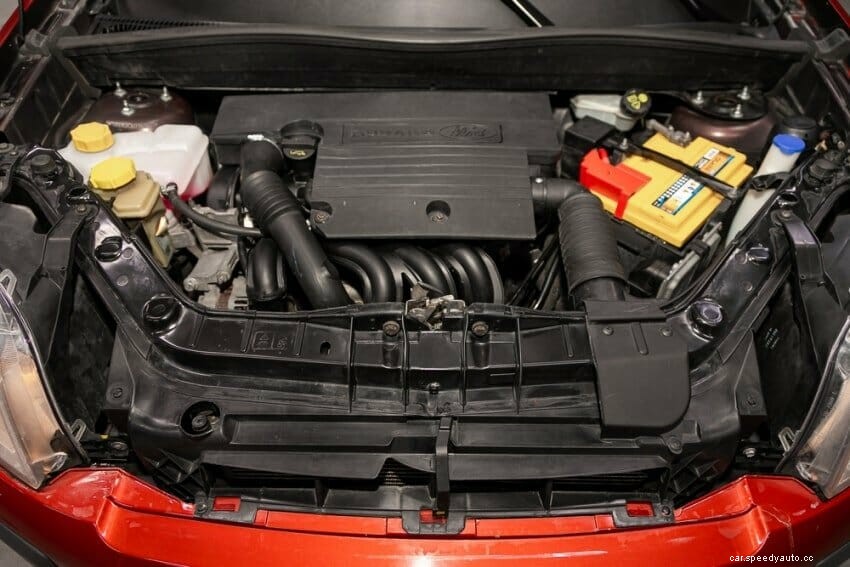
The Ford Fusion had a recall due to this issue. The problem was the bolts did not have a proper protective coating. This made them prone to rusting. This caused the motor to detach from the housing.
When this happens the steering system will lose its power assisting feature. This causes the steering wheel to become harder to turn at low speeds. 2013 to 2016 Ford Fusions were recalled due to this problem. The recalled Fords were made in Hermosillo, Oakville, or Salt Lake Assembly plants.
During the recall, a wax coating was provided and if the bolts were already rusted they were replaced.
The 3rd generation Ford Focus is equipped with a modern EPAS (Electronic Power Assisted Steering). This system is known to malfunction in the Ford Focus. The exact component that malfunctions are not clear. Since it is all-electric, when one of the components malfunctions, you lose your power steering.
This issue is notorious with the 3rd generation Ford Focus and is known to leave drivers without power steering. The only good news, this is a problem that commonly occurs at low speeds around 10 mph to 20 mph. So catastrophic accidents caused by EPAS failure are low.
Ford is yet to address this problem or issue a recall.
In a few Ford Explorer models, the electrical power steering system is known to malfunction. This is particularly abundant in the 2013 Ford Flex.
The problem usually happens at slow speeds. Again there is no word on the exact reason for the failure. But a lot of mechanics around the country have mentioned that replacing the relay system often solves the problem.
These are just a few models that are well known for power steering assist fault. Ford is well known for this issue. Even the Ford Escape has had issues related to power steering failure.
When you get your power steering fault message in your dash, you should never ignore it. But if you do not want to drive with it you can reset it by following the method below.
The easiest way to reset that alert is to restart your car. Switch your entire car on and off. This will reset all the electrical components in your car. Repeat the process 2 or 3 times this will get rid of the power steering assist fault warning.
The power steering system is a crucial component in the safety of a drive. When this fails it proves to be a significant safety issue. So when you get an alert regarding the steering system, you should not ignore it. You should get it checked up when you can.
Resetting the codes will not solve the issue. The power steering assist fault alert is an early warning system. It indicates that the power steering might fail. In order to maintain the safety of a drive, you should not reset the code and ignore it.
The alert will pop up again anyway if you do not do anything about it. If you reset the warning every time it surfaces you will end losing your power steering system without warning.
Let us look at the most common questions regarding “how to fix a power steering assist fault?”.
Though there are multiple reasons why you might encounter power steering failure, often you can narrow it down to these things below.
These are the most common causes for steering wheel failures. The steering fluid becomes dirty when pumps fail, hoses deteriorate or when air finds its way inside the system.
If you come across a puddle of liquid when you pull your car out of the garage and want to know whether it is steering fluid you need to go through this.
First, look at the color. Steering fluid is either pink or red. So are transmission fluid and antifreeze. Next look at the texture. If it is slimy, that removes antifreeze from the equation. If the fluid is brownish, try smelling it. Dirty transmission fluid will smell burnt.
If you still cannot conclude what the liquid puddle is, take a look at the location of the leak. If the leak is close to the engine it is probably steering fluid. Transmission fluid leaks around the middle of the car.
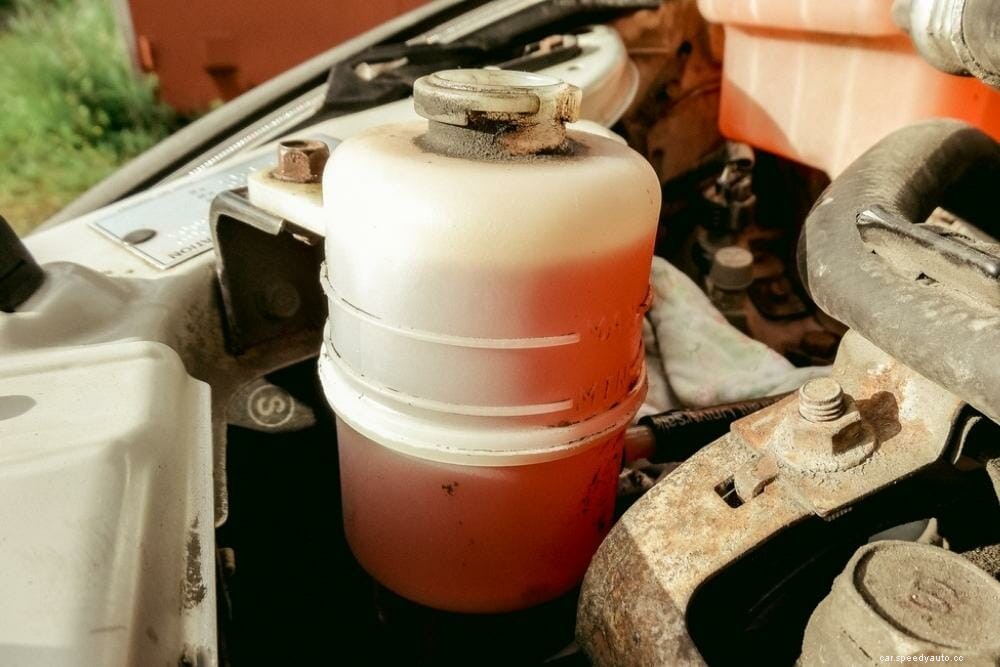
You should replace your power steering fluid every 4 years or 50,000 miles. Whichever comes first. If you notice that the power seeing fluid is either contaminated or brown upon inspection, replace it immediately rather than waiting for 4 years.
There is a reason why they say you shouldn’t drive with low power steering fluid. Low power steering fluid will not effectively lubricate the steering system, and it will not be able to cool it as necessary.
This will eventually cause costly damage to your steering system. This could even cause your steering to seize up while driving. This will potentially lead to a major catastrophe.
The recommended timespan is mentioned by the manufacturer. Unless you use your vehicle to haul heavy loads, towing, or leave it idle for long periods, the recommended period is more than enough.
The average cost for replacing the power steering fluid is only $120. Different manufacturers suggest different types of steering fluids. Depending on this the price might change. But usually, the cost is around $120.
This solely depends on the component that is damaged. If the problem is caused due to dirty or low fluid levels, then the repair is relatively cheap as it will only cost around $120.
If the problem is caused by an electrical malfunction, the cost is going to be a bit higher. In this case, depending on what electrical component is damaged you should expect to pay $300 or more.
The worst-case scenario is if your pump fails. For some models, steering fluid pumps cost upwards of $1000.
Power steering is a crucial component in the safety of a drive. The steering wheel is the only component that allows you to control the car. Even though the engine and the brakes allow you to speed up and slow down respectively, they do not allow you to keep your car on the road.
There are three types that you have to look at when it comes to power steering. First, we have the hydraulic steering from 1951. This draws power from the engine and uses hydraulic fluid to transfer the force.
Next, we have the EPAS. This is a fully electric system powered by a battery. This is common with new vehicles that are manufactured. Finally, we have a hybrid system. Which is powered by a battery and uses hydraulic fluid to transfer the force.
Different steering systems run into different problems that cause a power steering assist fault. Usually, the problem is caused by either the hydraulic fluid or an electrical malfunction. Depending on the cause of the problem, you have to deal with the power steering failure accordingly.
You can clear the fault codes by restarting your car. But you shouldn’t ignore the warning. The alert indicates that a problem is imminent. Therefore you need to get your car looked at when possible. Resetting the code will not solve the problem.
Chances are it will pop up again soon. If you keep ignoring it, you could lose your power steering.
