
Bleeding brakes is the only way to release air bubbles from the brakes. Only by doing so will you be able to get it back into proper working conditions. But the process is a lot more complicated than most of us think.
You should know the exact process of bleeding the brakes and how long does it take to bleed brakes.
Bleeding breaks is a simple process that allows you to clear the air bubbles that form in the brake system over time. This only needs to be done in cars with a hydraulic braking system. Since most cars use a hydraulic braking system, you should know everything related to bleeding brakes.
If you own an automobile you know how important maintenance is. Bleeding the brakes is a part of maintenance. It is actually a crucial part of maintenance since it contributes a lot to the safety of a drive.
The process of bleeding brakes is not that hard. As long as you are familiar with automobiles and you have even the slightest experience working with them, you will be able to manage this on your own.
Bleeding brakes is not something that you need to do regularly. It takes a long time for air bubbles to build up in your hydraulic fluid. When air bubbles are present it reduces the effectiveness of the brake system.
By bleeding the brakes you should be able to release the pocket of air in the hydraulic fluid and get your brakes back to working order.
Bleeding brakes is a necessary process to keep your brakes in working order. Usually, you need to bleed your brakes every 30,000 miles. Or if you think it is necessary. It is a good practice to set up a routine for brake bleeding as a part of maintenance.
It doesn’t always take 30,000 miles for air bubbles to form. Sometimes it might take 50,000 miles or more. But there are instances that you will be needed to bleed your brakes much earlier. The best way to know exactly when your blades require to be bled is by looking for symptoms.
Since bleeding brakes are a part of maintenance that contributes to the safety of the drive, it is necessary to stay vigilant and identify when your brakes are acting weird.
Usually, when their air bubbles in the hydraulic fluid, the brakes would feel spongy when you press them. This is because you are no longer compressing a fluid. When there are air bubbles they get compressed instead of the fluid.
You might be able to notice that the car takes longer to stop than usual. The deceleration of the car won’t be uniform. This also indicates that there are air bubbles inside your hydraulic fluid.
Another crucial thing to look out for is leaks. Obviously, leaks will cause the hydraulic fluid to drain. That same leak will act as a doorway for air to enter.
So even the little amount of hydraulic fluid that still exists in the system will be contaminated. It is just a matter of time until you completely lose your brakes.
Once you do brake repairs such as replacing brake pads or rotors, you will be exposing the hydraulic fluid to atmospheric air. This almost guaranteed air bubbles trapped in the fluid. So after every repair that you do to your brakes, you should make sure to bleed your brakes.
The force that you apply at the pedals is transferred to the breaks through the hydraulic fluid. This is generally how hydraulic fluids work. A fluid is used because it cannot be compressed.
But air can be compressed easily. Therefore when air is present in your braking system, once you press the brakes the air pockets will compress and the force transfer will be reduced.
What could be worse is that the air inside is not uniform. Instead, you have pockets at different places. So, every time you press the brakes you will get a different result. You won’t be able to stop your car at will.
You will be able to slam the brakes until it touches the floorboard. This is because when you are pressing the brake there is not a lot of resistance on the other end. Pressing the brakes would turn effortless which is not a good thing.
This effect is referred to as spongy brakes.
Before you invest your time and effort in bleeding the brakes, it is best if you know the basic principle of how brakes actually work. If you have ridden a bicycle you know the basic principle. A pedal pulls the brake calipers close to the wheel. This creates friction and brings the bicycle to a stop.
Even though the braking system of an automobile is slightly more complicated the basics are the same. In this case, the force is transmitted through a non-compressible fluid. The force is multiplied along the way as well.
Bleeding brakes is not a complicated process, as long as you have the patience. You can easily do it by yourself, but a few extra hands will certainly make the job faster.
Park your car in a place where you can freely move around it. Try to avoid congested places. Your driveway should be perfect. Gather your things before starting the job. You do not want to be running around for a screw halfway into the job.
You need a tool to remove the bleeder screw. The best option for this is a Brake Free Bleed Screw Remover. You should be able to find this at a hardware store. A bleed kit should suit all your needs.
Apart from that, you are going to need a vessel to catch the fluid that drains out. You do not want hydraulic fluid flowing around in your driveway. You need to hoist your car before you start. You can either use a hoist or four jack for each end. Either way, the car should be elevated.
You need to buy new brake fluid for the refill. Buy the exact same type that is suggested by the car manufacturer. If you have something vacuum pump brake bleeding tool, it’ll make the job much easier. But you can manage without it.
Now you need to find the bleeder screw. Usually, it is located at the bottom of the brake caliper assembly. In most cars, you would find the screw to be made out of brass. But other metals are also used.
Before you start the job, now is the time to get your protective gear on. Brake fluid is highly corrosive, so protection is necessary.
You need to remove every bit of hydraulic fluids in the brake line. This is the bleeding process.
Before loosening the screw, place your vessel right below it. This way you should be able to catch most of the fluid that is drained. Even if you place the vessel exactly below the screw, some of the fluid will drip outside the vessel.
Place the vessel appropriately and remove the bleeder screw. The hydraulic fluid will start to drip out if you are trying to flush your brake fluid. Wait until the entire fluid is drained. It will take a while.
If you used a bleeder kit, you would have a syringe with it. Use this syringe to suck out all the air that is left. If you are not using a bleeder kit, you can do this process with a plastic bottle and a hose. The same principle applies.
This is a step where you might need some assistance. This is not always considered necessary but for the job to be perfect you need to do this. The helper should get in the car and press the brakes. When the person is pressing the brake firmly, you need to open the bleeder screw.
When the person inside steps on the brake, brake fluid will squirt out with air. Repeat this process until you see only brake fluid coming out and no more air. At this point, you can close the bleeder screw as there is no more air inside.
Now all you need to do is put the screw back on, and refill the brake fluid. If you did drain the entire fluid you will have to replace it entirely. If you had a helping hand and got rid of the air bubbles, you may top it off as necessary.
Usually, the process is done by starting at the passenger rear, moving onto the driver’s rear followed by the passenger’s form and driver’s front.
Unless you have a vacuum pump you need to follow this important rule.
If you are enlisting the help of a friend, you need to only open the bleeder screw when he is inside and is firmly pressing down on the brakes. If you open the screw when the brakes aren’t firmly pressed down, air will get inside the system and you will have to repeat the process all over again.
You might be wondering how do you do it by yourself. Obviously, you cannot do it by yourself since you’d be outside the car. For this, you can use a more assuring hack.
Use a block of wood to jam the brakes when they are pressed. Place the wooden block between the brakes and the seat. You can move the seat forward as necessary to jam the block. This is more assuring than having human help.
Draining the brakes completely is not always necessary. Unless you want to replace the brake fluid, keep the valve open when air is squirting out from the system. As soon as you see a steady stream you can close it. Repeat the process for all four wheels and replace the fluid that you lost.
As mentioned earlier, brake fluid is highly corrosive. You need to protect yourself from it. If you are doing this inside your garage or driveway you need to take appropriate measures.
Since brake fluid with air will squirt out you cannot catch it easily. So cover the floor with newspapers so it doesn’t do any damage.
As we looked at above, bleeding brakes is not a complicated process. Even if you are new automobiles and repairs you should be able to manage this process.
Time is also an important factor to consider. If an inexperienced automobile user would need to spend half a day to bleed the brakes it might not be worth it. Instead paying the mechanic might be a better option.
So how long will it take to bleed the brakes?
This is where you try to do the job without any special equipment.
If you are someone who has done the process before or is at least handy with car repairs, this is a relatively quick job. It would usually take around 30 minutes to clear the air bubbles out of all 4 brakes.
If you are not used to doing auto repairs you should expect to spend a little bit more time. It should take you around 10 to 15 minutes per wheel on average. If you take more time for the first couple of wheels don’t worry, you will be able to speed up for the last two.
So no matter how inexperienced you are, you should be able to finish the task within an hour. If you are doing the job inside your garage, try to spend at least 30 minutes on protection. You do not want to get this fluid on any other equipment or yourself.
A vacuum pump is great if you do not have any assistance. It is an amazing one-man bleeder kit. You do not need to step on the brake pedal when you are using a vacuum pump.
But is this any faster? No, it will still take around 30 minutes to an hour anyway. This will make your job less messy. Vacuum pump kits are generally expensive. Since you won’t be using it frequently, it might not be a great idea to invest in a vacuum pump.
If you do not have any assistance, it might be cheaper for you to use the hack we mentioned earlier. Use a block of wood to wedge the brake pedal at the pressed position to the seat.
A professional mechanic will have a lot of experience dealing with brakes and bleeding brakes. So he should be able to get the job done much faster.
A huge advantage he has is the preparation time. He doesn’t need to spend time on safety precautions or hoisting the car. A mechanic will use a power hoist to lift your car and a power bleeder to bleed the brakes.
It would take around 30 minutes. A good mechanic who has done the job several times in the past should be able to get the job done in around 20 minutes. If you are planning to wait out the time, expect to spend around 30 minutes.
Here are some of the most common questions regarding how long it takes to bleed brakes.
The maximum distance you can drive without bleeding your brakes is 30,000 miles. It is either 30,000 miles or 2 years, whatever requires you to bleed your brakes first.
The ideal time to bleed your brake is 1 year or 15,000 miles. Try to make it a habit to bleed your brakes every year.
You will have to bleed your brakes every time you open up the hydraulic system for maintenance. When you open up the hydraulic system it will expose it. This would allow air to flow inside thus causing air bubbles in the hydraulic fluid.
Whether you are adding a solenoid to your actuator or replacing the brake calipers, you gotta finish up by bleeding your brakes.
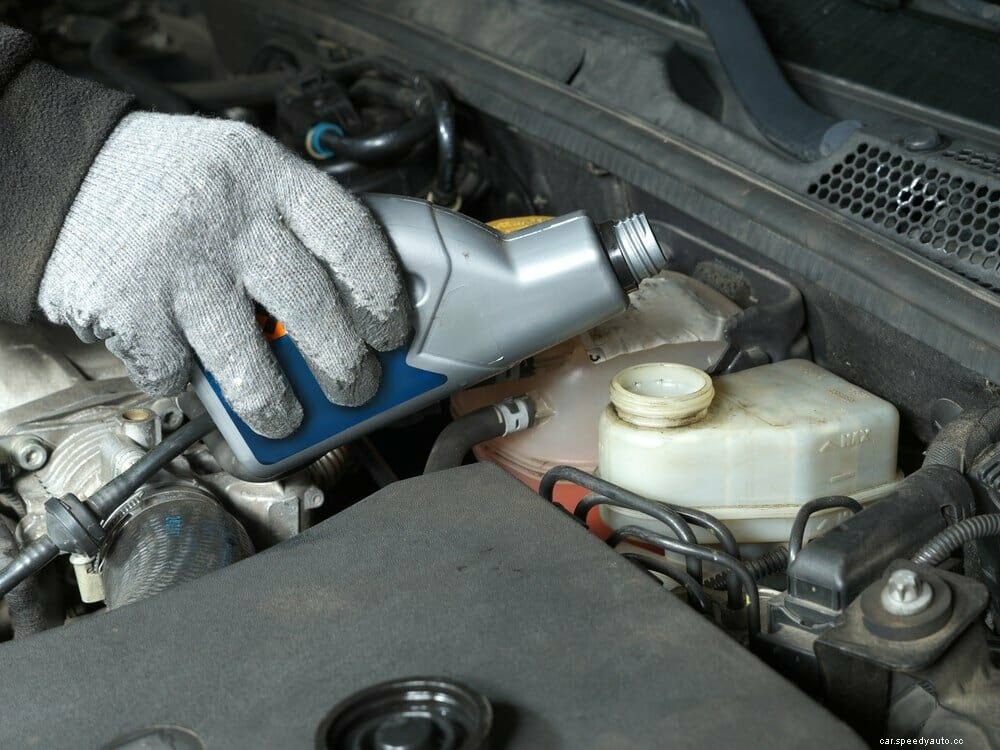
If you notice that the brake fluid is either dirty or off-colored, you should completely drain the fluid and replace it. This is often referred to as a flush. If this was the case, you would need to allocate about 500ml.
If you are only planning to bleed your brakes, usually you would need about 100ml to 200ml to top it off.
Even if you do not want to do the work yourself and hire a mechanic to do it for you, you will not be required to spend a lot to bleed the brakes. One of the reasons for this is labor. A mechanic can bleed your brakes within 30 minutes.
Therefore you should be expecting to pay $100 to $150 to bleed your brakes through the hands of a professional. It will cost even less if you do it yourself.
In order to get all the air out, the brakes must be bled according to a sequence. It actually depends on how the hydraulics are split. Usually, the order is to start from the wheel that is furthest from the master cylinder and move closer.
According to this, you should start with the right rear, then the left rear followed up by the right front and the left front respectively.
No, brake fluid and power steering fluid aren’t the same. And they cannot be interchanged. You can use automatic transmission fluid instead of transmission fluid, but this is for your power steering.
You cannot replace brake fluid with either power steering fluid or automatic transmission fluid.
Usually, modern brake fluids are made of an automotive DOT fluid. It is made of a glycol-ether. This is not an oil or a petroleum product. It is more alcohol than oil. Its closest relative would be thinner.
Bleeding the brakes is an important aspect of maintenance. It cannot be ignored because it is important to keep the vehicle safe to drive.
Usually, you need to bleed the brakes every 30,000 miles. Or at least every 2 years. There are a few symptoms that you need to keep an eye out for. If you see any of these symptoms you need to consider bleeding the brakes.
The reason why brakes need to be bled is that air bubbles form in the hydraulic fluid. So whenever you work on your brakes, there is a chance that air could have entered the brake fluid. Therefore whenever you work on the brakes, make sure to spend some time bleeding the brakes at the end.
The time taken to bleed the brakes depends on how experienced you are. An inexperienced person should expect to spend around an hour properly bleeding all four wheels.
If you are someone who is familiar with the process, you should be able to get the job done fairly quickly. It will take you around 30 minutes to 40 minutes to completely bleed all four vehicles.
While bleeding the brakes if you see that the brake fluid is off-colored or looks old and ineffective, consider bleeding the complete system and replacing the brake oil.
Rushing the process will only set you back. If you make a mistake while you are bleeding the brakes you will have to restart the complete process. So take your time bleeding the brakes. Also, make sure to spend some time on safety procedures.
