
Nissan Altima is a very popular 4-door sedan that has been around since 1992. A lot of its success is based on the affordable price, frugal engines, and low maintenance costs. Nissan’s reputation for making very reliable vehicles has certainly helped, but just how long can an Altima last?
From a mechanical standpoint, Altimas can last for at least 250,000 miles, or just over two decades. Insurance and maintenance costs could affect the viability of driving an Altima long-term.
We’ll explore the maintenance schedules, insurance costs, and value depreciation among other factors, and see how Altima compares to other vehicles in the segment. Keep reading if you’d like to learn the true costs of owning a Nissan Altima.
Altima has been in production for exactly 30 years, spanning six generations. It represents a continuation of the legendary Bluebird, a compact sedan Nissan produced since 1955. From 1992 to 2013 Altima has been produced exclusively in the US, with the fifth generation making a global appearance.
The first generation was produced from 1992 to 1997. Powered by the 2.4L KA24DE engine, it delivered 112 horsepower through the 5-speed manual or 4-speed automatic transmission to the front wheels. The first Altima wasn’t the fastest sedan, taking 9.4 seconds to reach 60mph, but the sporty suspension made it fun to drive.
The second generation was short-lived with only four model years from 1998 to 2001. With the same powertrain as the first generation, it acted more as a stop-gap model than a proper revision. Still, the interior was redesigned and provided a roomier cabin.
The third generation was produced on a new Nissan platform from 2001 to 2006 and had no equivalent in Japan. The 2.5L Inline-4 or the 3.5L V6 offered more power than the original model, which was necessary for the heavier and more spacious Altima. Towards the end of its production, 3rd generation received a facelift with a redesigned interior, lights, and front grille.
Altima was extremely well received and became a popular sedan because of its power, size, and handling. Not only did it help Nissan establish a better footing in the US market, but it also helped the company get out of significant financial trouble.
This generation didn’t come without its problems, with the most significant being the excessive oil consumption and catalytic converter failure.
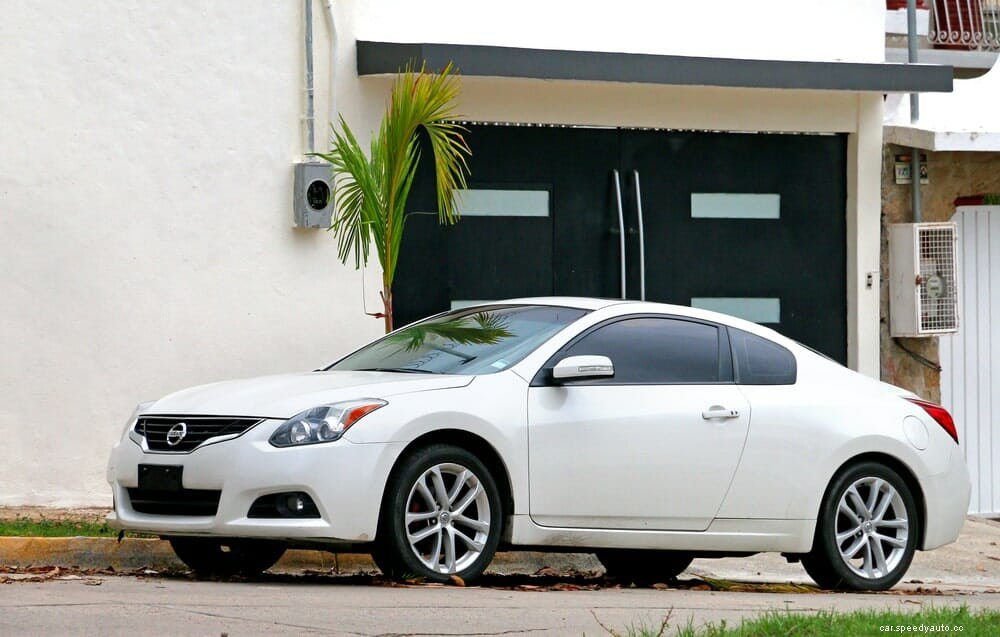
The fourth-generation sedan was built from 2006 to 2012, with the introduction of a coupe model that entered production a year after the 4-door. It used revised 3rd generation engines with the transmission options limited to a 6-speed manual gearbox or a CVT.
The 2009 facelift for the 2010 model year covered both the sedan and coupe and included a new exterior design and interior materials.
Built on the Toyota technology, Altima was Nissan’s first hybrid vehicle. It was made available in only 10 states but saw decent annual production numbers of up to 40,000 units. Ultimately it was discontinued in 2011 due to dissatisfying sales.
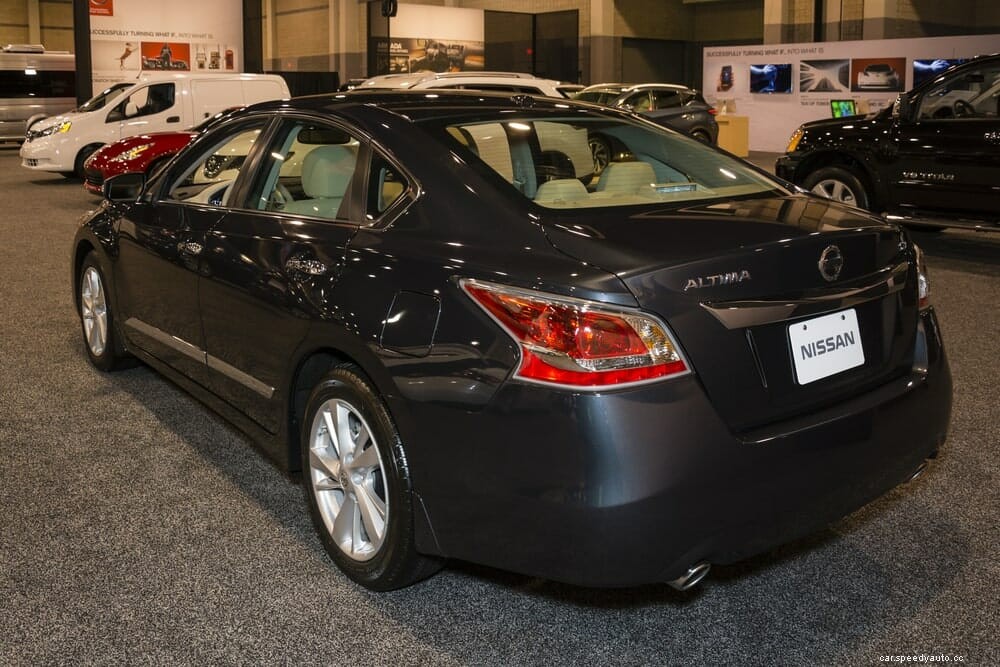
The fifth-generation one was produced in the 2012 – 2018 period and is significant because it’s still a viable option as a used car. Four engine options from 1.6L to 3.5L V6 were available with the Jatco CVT transmission.
Facelift arrived in 2016 with significant changes to the front and rear bumpers and lights on the outside, and revised seats, console, and steering wheel inside the cabin. Sound reducing windshield and silencing materials were introduced to reduce cabin noise. A new performance-oriented SR trim was also introduced with the facelift.
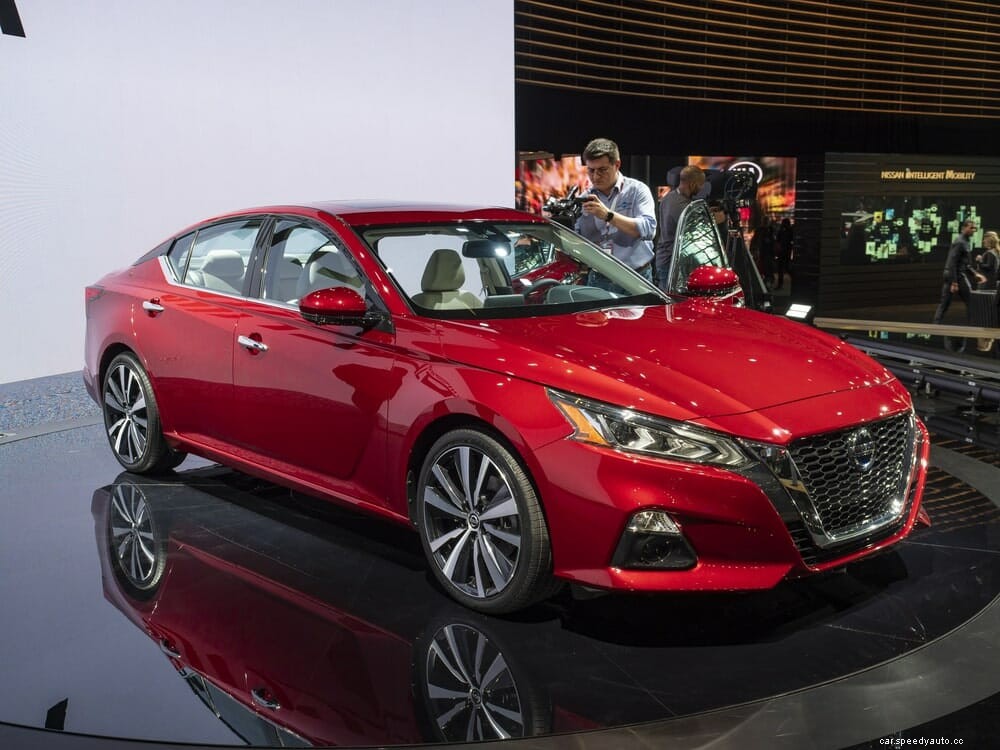
The sixth-generation model has been around since 2018 and features only two powertrain options – 2.5L and 2.0L four-cylinder engines with Jatco CTV transmission. It’s one of the first Nissan cars to feature Nissan ProPilot Assist, a semi-autonomous driving system.
| Calendar Year | US Sales | Calendar Year | US Sales |
| 2002 | 201,822 | 2012 | 302,934 |
| 2003 | 201,240 | 2013 | 320,723 |
| 2004 | 235,889 | 2014 | 335,644 |
| 2005 | 255,371 | 2015 | 333,398 |
| 2006 | 232,457 | 2016 | 307,380 |
| 2007 | 284,762 | 2017 | 254,996 |
| 2008 | 269,668 | 2018 | 209,146 |
| 2009 | 203,568 | 2019 | 209,183 |
| 2010 | 229,263 | 2020 | 137,988 |
| 2011 | 268,981 | 2021 | 103,776 |
From 2002 to 2021, Nissan has sold almost 5 million Altimas – 4,898,189 to be exact. The sales figures were on a steady increase and peaked in 2014 at 335 thousand units, but more recent sales of Altima have been on the decline, with the past two years being the worst in Altima’s history.
Nissan Altima has an interesting value depreciation curve. The value drops down significantly after just one year, then takes another big drop after the second and fourth years. The depreciation trend is described in more detail in the following table.
| Model Year | Original Price | Current Price | Current Value | Value Lost |
| 2021 | $26,669 | $26,669 | 100% | 0% |
| 2020 | $26,453 | $19,106 | 72.2% | 27.8% |
| 2019 | $26,022 | $18,568 | 71.35% | 28.65% |
| 2018 | $25,647 | $15,302 | 59.66% | 40.34% |
| 2017 | $25,748 | $14,786 | 57.42% | 42.58% |
| 2016 | $25,555 | $11,234 | 43.96% | 56.04% |
| 2015 | $25,281 | $9,764 | 38.62% | 61.38% |
| 2014 | $25,074 | $9,295 | 37.07% | 62.93% |
| 2013 | $24,293 | $8,274 | 34.05% | 65.95% |
| 2012 | $24,350 | $6,997 | 25.73% | 74.27% |
Based on the data provided by CarEdge, the 1-year-old Altima model is the best purchase in terms of value. However, I’m not completely certain that the data provided is accurate – a 27.8% value loss in 1 year is almost unheard of for a gasoline-powered car. The suspicion is further reinforced by the fact that it loses no value during the second year.
iSeeCars provides a rougher estimate based on a five-year window and the average starting price of $28,135.
As always, you’ll get the most accurate prices by checking the local offers. The sixth-generation entered production in the August of 2018, while the fifth generation received a facelift in 2016. When you’re shopping for an Altima, take these years into consideration to either get a fresher model or get a better deal on those just before the generation or facelift transition.
Altima has received positive ratings from reputable websites and consumer reports. The ratings are not always representative of how a car might perform in your case, but they’re a good way to find out what the general reliability is like and if there are any significant problems with the vehicle.
Repair Pal has given it a 4.0/5.0 above-average rating, which ranks it 11th out of 24 midsize cars they have reviewed.
J.D. Power’s consumer verified rating is 82/100 points, ranking second on their list of midsize cars behind the Honda Accord.
CarEdge doesn’t provide the conventional reliability rating but states that a Nissan Altima has a 16.43% chance of requiring a major repair during the first 10 years, which is 5.07% better than other cars in the segment.
iSeeCars has placed Nissan Altima at the 4th place of the longest-lasting midsize cars list, behind Honda Accord, Toyota Camry, and Mazda 6.
The maintenance costs for a Nissan Altima are better than average for the midsize sedan class, estimated at $5,561 over the course of 10 years. The exact figure will depend on the cost of labor at your dealership as well as which services are performed.
| Service Type | Interval | Cost |
| Oil change | 5,000 miles | $50 – $100 |
| Tire rotation | 7,500 miles | $100 |
| Oil filter & oil change | 10,000 miles | $50-150 |
| Cabin air filter change | 10,000 miles | $50 |
| Parts Inspection | 10,000 miles | $50 – $250 |
| Fluids Inspection | 10,000 miles | $50 – $100 |
| Brake fluid flush | 20,000 miles | $150 – $250 |
| Timing chain replacement | 80,000 – 120,000 miles | $700 – $1100 |
| Serpentine belt replacement | 40,000 – 80,000 miles | $100 – $250 |
| Water pump replacement | 40,000 – 80,000 miles | $450 – $750 |
Replacing engine oil and filters is a requirement for keeping the engine healthy, but the rest of the components should be changed as they wear out. Keeping up with the mandatory service schedule is important if the vehicle is still in warranty, but once the burden of financing falls on you, Altima won’t be an expensive vehicle to maintain.
I’ve separated maintenance from repairs costs to make things easier to read. I also consider repairs to be something that’s only done when needed, and not in regularly scheduled intervals. Your driving habits, annual mileage, and type of commute dictate how quickly the components will wear out so setting a fixed repair interval could be a waste.
| Repair Type | Parts Cost | Labor Cost | Total Cost |
| Brake Pads (Pair) | $50 – $100 | $50 – $200 | $100 – $300 |
| Brake Rotors (Pair) | $100 – $300 | $100 – $200 | $200- $500 |
| Thermostat | $30 – $100 | $50 – $200 | $80- $300 |
| Alternator | $450 – $650 | $50 – $100 | $500- $750 |
| Starter | $200 – $450 | $50 – $100 | $250- $550 |
| Battery | $150- $250 | $0 – $50 | $150- $300 |
| CV Joints (Pair) | $150 – $400 | $200 – $600 | $350- $1,000 |
Insurance is an often-overlooked factor but considering how impactful it is on the annual expenses, it should be one of the first things to check. Nisan Altima has an average insurance cost of $1,600 a year for full coverage. Compared to the national average, Altima is $88 more expensive to insure annually, and $35 more than other midsize sedans.
The following table estimates the insurance cost based on the driver’s age and the Altima model year.
| Model Year | Age 20 | Age 30 | Age 40 | Age 50 |
| 2022 | $3,150 | $1,680 | $1,600 | $1,450 |
| 2021 | $2,970 | $1,570 | $1,500 | $1,360 |
| 2020 | $2,920 | $1,540 | $1,470 | $1,340 |
| 2019 | $2,920 | $1,540 | $1,470 | $1,340 |
| 2018 | $2,900 | $1,530 | $1,460 | $1,340 |
| 2017 | $2,820 | $1,470 | $1,420 | $1,290 |
| 2016 | $2,560 | $1,350 | $1,290 | $1,180 |
| 2015 | $2,380 | $1,250 | $1,200 | $1,100 |
| 2014 | $2,340 | $1,220 | $1,170 | $1,070 |
| 2013 | $2,290 | $1,190 | $1,150 | $1,050 |
| 2012 | $2,240 | $1,170 | $1,130 | $1,030 |
The equipment package of the Nissan Altima has an impact on the final insurance price. The 2022 model year in the base S trim costs $1,502, while the highest Platinum AWD trim costs $1,690 annually.
Honda Insight takes the first place as expected of a hybrid, but Altima is the best among gas-powered cars, reaching 29.9 mpg. Honda Accord, Toyota Camry, Hyundai Sonata, and Subaru Legacy are not far behind, with Ford Fusion being last with 24.5 mpg.
Honda Insight is once again the best with a combined EPA score of 17.0, with Honda Accord at second place with a score of 13.9. Honda Altima is tied for third place with Volkswagen Passat at 13.5. Ford Fusion is once again last with an EPA score of 11.1.
First-time owners keep the Toyota Camry for the longest, an average of 9.5 years. Honda Accord takes second place at 9.4 years, followed by Mazda 6 with an average length of 8.7 years. Nissan Altima is owned for a respectable period of 8.5 years, longer than Passat, Subaru Legacy, and Ford Fusion among others.
The longest-lasting list is based on the percentage of vehicles that crossed 200,000 miles and are still on the road today. Honda Accord and Toyota Camry lead with 1.8% and 1.5%. Altima is ranked 4th with a 0.5% survival rate.
With 106 cubic feet of interior volume, Hyundai Sonata is the most spacious. Nissan Altima doesn’t perform as well in this segment and ranks 8th with 100.6 cubic feet, behind Toyota Camry, VW Passat, Kia Optima, and other models.
Vehicle recalls can provide some insight into the production quality of a vehicle. Nissan Altima has had 35 unique recalls since 2007, which is not a lot when compared to other vehicles. Keep in mind that problems are usually discovered after a vehicle leaves the factory, so a lot of recalls overlap over several model years or even an entire generation.
If we take all the factors into consideration, it’s safe to assume that Nissan Altima is a reliable car. The relatively low number of serious recalls, the high consumer ratings, and the reasonable cost of maintenance are some of Altima’s main strengths.
The main complaints about Nissan Altima are related to the continuously variable transmission. It’s not very responsive and limits the performance of newer models. When it was introduced during the fifth generation the CVT transmission was prone to failure. Definitely keep an eye out for the service history when browsing used models with this gearbox.
Altima is a more luxurious and larger model than Sentra, so it’s safe to say that it’s a better model. From a financial standpoint, Sentra will be cheaper to maintain and run because it has better gas mileage.
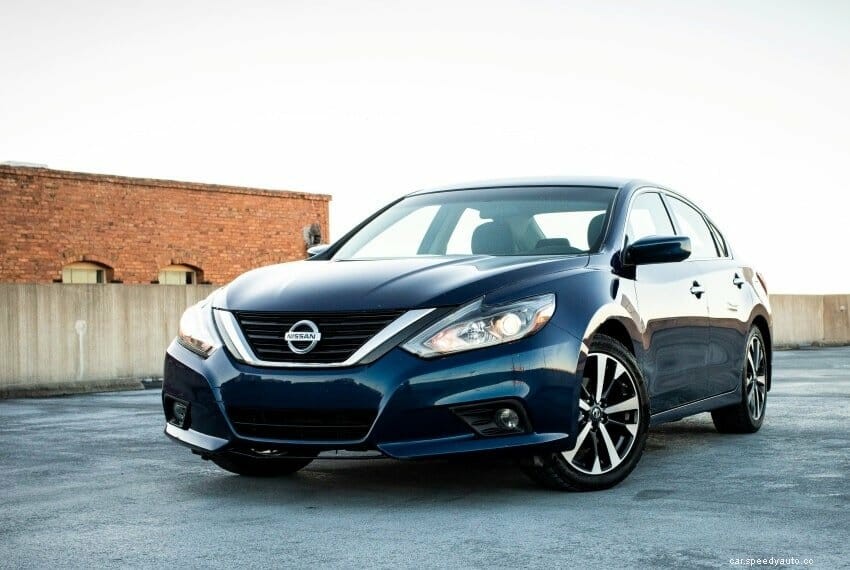
Nissan Altima from 2020-2016 is a great choice as a used car, followed by Nissan Sentras in the same model year. Older Nissan Frontiers are also a great pick because of how durable they are. If you want a Nissan Leaf, the newer the better. First-generation Leaf has poor mileage and aged batteries, and the cost of a replacement pack can easily surpass $5,000.
The fastest Altima is the 2021 SR VC-Turbo model with a 2.0-liter turbocharged engine. It can go from 0 to 60mph in 5.8 seconds and reach a top speed of 140 miles per hour.
Nissan Altima may not be the most exciting family sedan, but it’s reliable and relatively cheap to run. If you’re looking for a dependable vehicle, Altima is a step in the right direction, and as long as you make sure that the CVT transmission is in good condition, you won’t face any major issues.
