
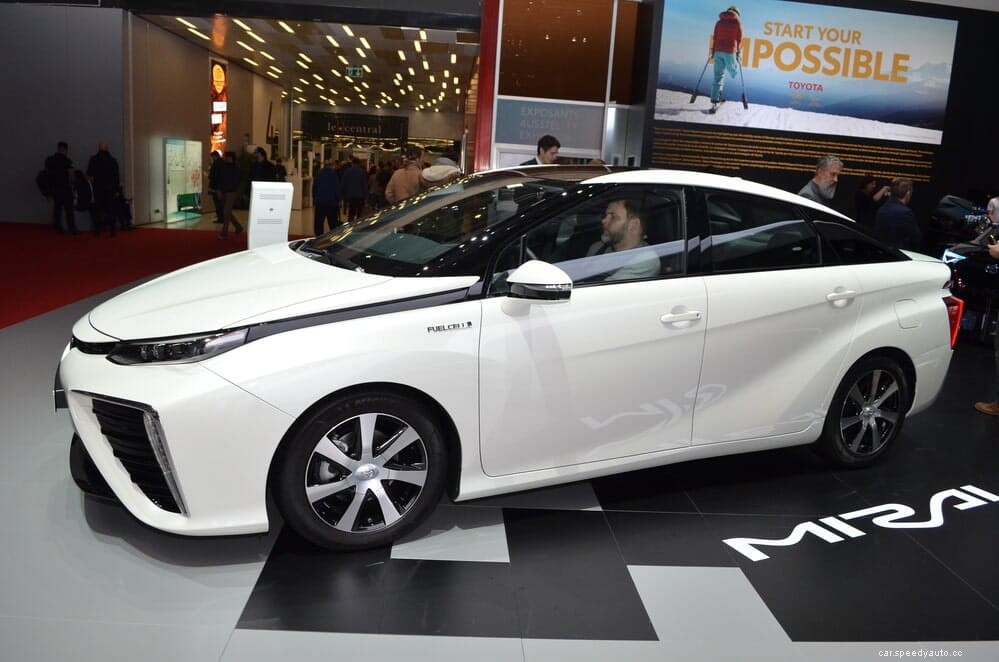
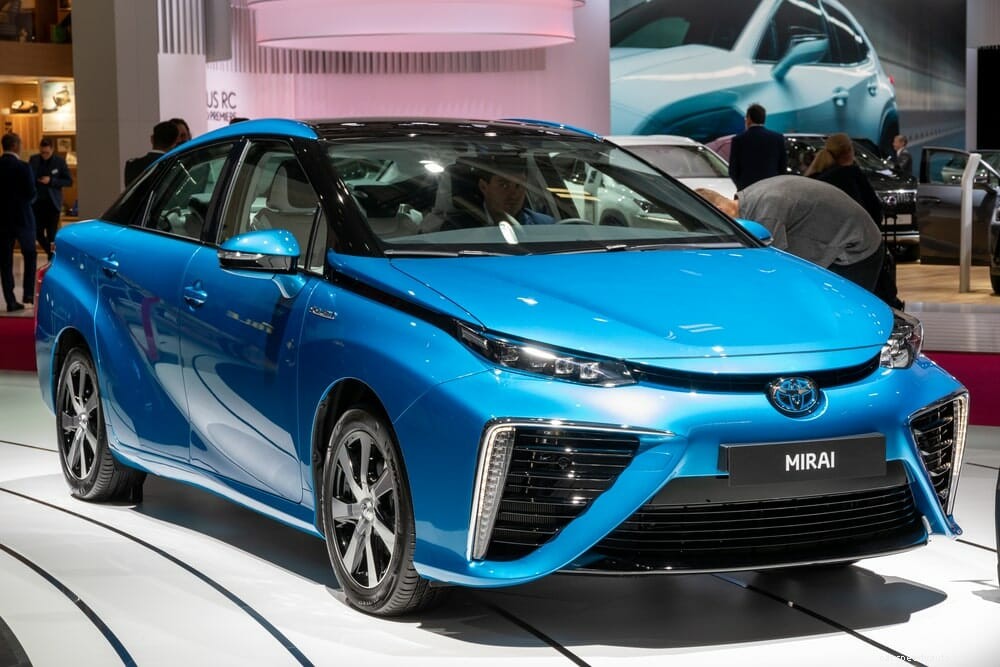
Toyota Mirai is somewhat of a unique vehicle, being only one of two hydrogen-fueled cars currently in production. Hydrogen technology is far from a novelty, but it has never been used beyond concept cars, which is why Mirai is a special vehicle.
To understand why the Mirai is so cheap, we have to explore all the aspects of driving and maintaining a hydrogen fuel cell vehicle (FCV). Even if you’re not interested in buying a Mirai, I would strongly suggest reading this article as the idea behind this car is really interesting and revolutionary.
The short answer is: The Mirai is cheap because of the massive incentives offered when purchasing a new model, the most popular three-year lease with free fuel, a small number of charging stations, and a dose of uncertainty in the technology from the general consumer base.
Mirai translates to future in English, a name fitting for a car running on hydrogen, considered by many as the fuel of the future.
Toyota started researching and developing hydrogen fuel cell technology in 1992 with the first concept car, the EVS13 making an appearance in 1996. Since then, they have continuously worked on improving the concept and getting the FCHV type certification in Japan.
By 2008, hydrogen-powered concept cars could cross up to 515 miles. The fact that the U.S. government pulled funding for hydrogen fuel-cell cars did not discourage the Japanese manufacturers, and in 2011 the technology has been perfected, with mass production optimization being the only hurdle towards commercial sales.
The first generation makes an official debut in the December of 2014, reaching the U.S. coast in August of 2015 with a retail price of $57,500.
Production of the first generation JPD10 Mirai lasted for exactly 6 years, replaced by the JPD20 second generation that is still in production today.
The best way to explain how the hydrogen-powered Mirai works is to compare it to the conventional electric vehicle. Conceptually, hydrogen batteries and lithium-ion batteries perform the same task of driving an electric motor responsible for delivering power to the wheels.
The difference between the two is in the way the power is generated and the recharging process. Electric vehicles operate like a smartphone or a laptop – the batteries store electricity and spend it when needed. Recharge times are a problem, as it can take hours to get to a full charge.
On the other hand, hydrogen vehicles function almost like conventional internal-combustion cars, more accurately those running on LPG (liquefied petroleum gas). Hydrogen is pressurized and channeled into the batteries in a process that only takes a few minutes, solving one of the main drawbacks of EVs.
Hydrogen-powered cars produce 0 emissions, as the only byproduct of the chemical reaction is warm air and water. The problem is that, like with most electric-powered vehicles, the source of power is not made through eco-friendly means, significantly diminishing the positive environmental effect.
For a technical explanation of how the batteries work, you can take a look at the following video.
The first generation Toyota Mirai is a front-motor, front-wheel drive vehicle with a single speed and a 1.6kWh Nickel-metal hydride battery. The power output is adequate for this mid-size executive salon at 152 horsepower and 247 foot-pounds of torque, with 0-60mph acceleration of 9 seconds.
The main strength of Mirai is its range – 312 miles on 122 liters of hydrogen stored in two tanks. For its time, this was significantly better than any electric vehicle and it’s still impressive today. As Mirai refuels rather than recharges, the fueling process takes only 3-5 minutes.
Mirai has been extensively crash-tested to ensure maximum safety for both passengers, hydrogen tanks, and fuel cells.
The second generation has been available for just over one year and offers significant improvements over the first model. The motor has been moved to the back and now powers the rear wheels.
Power output has been increased to 182 horsepower and 220 foot-pounds of torque, while the Nickel-metal battery has been replaced with a more modern lithium-ion battery.
The range has been extended to 402 miles on 141 liters of hydrogen now stored in three tanks. Euro NCAP crash testing showed that Mirai is an extremely safe vehicle, scoring 5 stars overall with high safety ratings in the individual categories.
There are a number of factors that contribute to the low resale value of Toyota Mirai, some of which are common for all vehicles, but others unique to this particular model.
Despite being labeled as a commercial hydrogen-powered vehicle, Mirai barely meets the standards. The total sales in the US since 2015 are just 9,274 units, averaging 1,324 vehicles annually. In 2021, more cars have been sold than ever, but the number is still trivially small.
A limited production run usually drives the price up due to high demand but low availability. This is true for internal-combustion cars and has started to influence the EV market, but it’s a detriment to hydrogen vehicles.
There are roughly 2 million electric cars in the US and close to 300 million internal-combustion cars, which means there’s already a well-established infrastructure of mechanics, refueling stations, and fuel supply. Mirai is the pioneer in its field and without substantial sales, the infrastructure has no incentive to grow.
| Year | Sales In The US |
| 2015 | 72 |
| 2016 | 1,034 |
| 2017 | 1,838 |
| 2018 | 1,700 |
| 2019 | 1,502 |
| 2020 | 499 |
| 2021 | 2629 |
The previous point leads us exactly to the core of the problem. There are only 39 publicly accessible hydrogen stations in the entirety of the US. Aside from one in Connecticut, one in Massachusetts, and two in South Carolina, all the stations are located in California.
Unless you’re living in San Francisco or Los Angeles, Mirai would effectively be a useless vehicle considering the unavailability of fuel. However, if fueling stations are available, driving a Mirai is extremely cheap. The average price of hydrogen is $15 per kilogram, but second-generation Mirai only needs 5.6kg which means you can cross 400 miles for less than $100!
Toyota Mirai has received numerous purchase incentives, tax exemption for 0 emission vehicles, and a massive purchase rebate in California. Toyota also provided excellent leasing deals, most likely in an attempt to increase presence on the road.
Because the second owner will not receive any of the benefits, the used price cannot reflect the pre-incentivized price.
The refueling situation means that Mirai can only be bought and sold within certain areas of California. Combine the severely limited market with the reservation of the general public and the used price goes down severely.
There is also the question of how long a Mirai can last and how expensive will it be to repair. Novelty, 0 emissions, and limited availability attract the type of owner that wants to lease and be the first one driving a rare car on the road. I would speculate that this is one of the reasons why there are so many cheap Mirai models on the used market.
Usually, I would have to consult websites that specialize in collecting data on used cars, but given the limited availability of the Toyota Mirai, I can directly look at the offers and tell you the average costs.
The cheapest and only 2016 model goes for $10,888 and has 89,500 miles on the clock. The first owner kept it for 3 years, but it has had two additional owners since. The 2017 models go for $13,500 – $18,000, with mileage between 30,000 and 50,000 miles and mostly two prior owners.
For $16,000, you can get a 2018 model with only 28,500 miles on the clock and one owner. Most models had just one owner and have not crossed more than 30,000 miles with the most expensive offers around $20,000.
The 2019 model offers range from $20,000 to $23,500 and mileage under 30,000 miles. There were less than 10 cars available at the time of writing this article making the offer quite limited.
The second generation, 2021 Mirai can be found for as little as $35,000 and just 5,000 miles on the clock. The prices of these pre-owned cars go up to $41,000 with a couple of exceptions.
The data we have is limited, but we can still use it to create an accurate value depreciation curve and see how much value Mirai loses every year.
| Model Year | Starting Price | Current Value | Value Lost |
| 2016 | $57,500 | 18.8% or $10,800 | 81.2% or $46,700 |
| 2017 | $57,500 | 27.8% or $16,000 | 72.2% or $41,500 |
| 2018 | $57,500 | 31.3% or $18,000 | 68.7% or $39,500 |
| 2019 | $57,500 | 38.2% or $22,000 | 61.8% or $35,500 |
| 2021 | $49,500 | 76.75% or $38,500 | 23.24% or $11,500 |
When compared to a conventional fossil-fuel vehicle, the figures are alarming. While an average car loses 45-50% of its value in five years and 65-75% in ten years, 2016 Mirai are only worth 18.8% of their original value. The significant value depreciation curve is partially caused by the huge incentives for the purchase of a new model, making a used model unappealing without a discount.
In terms of regular maintenance, Mirai performs just like an electric car. The lack of an internal-combustion engine with all of its systems makes the maintenance much cheaper. Tires, brakes, suspension, and the driveshaft are the only parts that require changing.
Although the annual inspection is recommended, none of these components wear out quickly. Hydrogen fuel cells have no moving parts so they should last a very long time, but I haven’t been able to find any reliable information on their maintenance.
Considering the cost of replacing batteries in a used electric car, Toyota Mirai seems to be a better option.
I’ll do a quick comparison between the leading hydrogen, hybrid, and electric cars to show how much each of them costs and how expensive they’re to fill up.
The 2022 Mirai is priced at $49,500 but can be reduced to $34,500 with the Toyota and California incentives. Prius has no incentives but costs just $25,735 in the LE trim. The Model 3 costs $61,000 but has a $4,500 California rebate that brings the price down to $56,500, making it $22,000 more expensive than Mirai and $31,000 more expensive than Prius.
To cross 100 miles in Mirai, you’ll need 1,25 kg of hydrogen, which costs just under $20, while a full tank costs $80 and gives you a 400-mile range. For the first three years of leasing or owning a Mirai, Toyota provides free refuels.
Prius needs just two gallons of gasoline to cross 100 miles, which will cost you just $10. Model 3 requires 23 kWh of power for 100 miles, a cost of just $4,14 on average. For the maximum range of 272 miles, you’ll only need $11. The downside is that Model 3 requires 13 hours to recharge fully.
While these figures show just how expensive it is to drive a hydrogen-powered car, the 3-year incentive and significantly lower purchase cost could make Mirai worth it in the long run. If the hydrogen cost ever goes down in the future, Mirai will be significantly cheaper to drive.
Don’t get misguided by the claims that Toyota Mirai is very expensive to fill up because hydrogen costs $15 per kilogram. One kilogram of hydrogen converts to 14 liters or 3.7 gallons of hydrogen at 0ºF and saturated pressure.
However, Mirai’s tanks can only take about 5 kg of high-pressure hydrogen, meaning that fully refueling a Mirai costs less than $100 and gives you a range of 250-350 miles.
There’s a total of 39 hydrogen stations in the US, with the majority located in the Los Angeles and San Francisco area. Some estimates claim that the number of hydrogen stations would rise to 4,300 by the end of 2030, but given the limited availability of hydrogen fuel cell vehicles, it’s not a certainty.
In March of 2021, Toyota offered a $20,000 APR subvention cash (incentive) on Mirai when applying for a financing deal with a 0% APR loan over 6 years. As if the offer wasn’t already great, the California Clean Vehicle Rebate offers another $4,500 in savings.
When you put everything together, a $49,500 Mirai can cost just $25,995, spread over a 72-month financing plan.
Currently, their January 2022 offer involves the same 0% APR loan over 72 months but only a $10,000 incentive. It also involves a no-cost maintenance plan for 2 years or 25,000 miles, as well as roadside assistance for 2 years.
Mirai isn’t the fastest sedan on the road as it takes 9 seconds to reach 60 mph, but it excels on the busy city streets. The fast response of the electric motor means that Mirai will handle low-speed situations better than gas or diesel-powered car.
The second-generation Mirai has received a 5-star rating on Euro NCAP crash tests with 88% adult occupant, 95% child occupant, 80% vulnerable road users, and 82% safety assist rating.
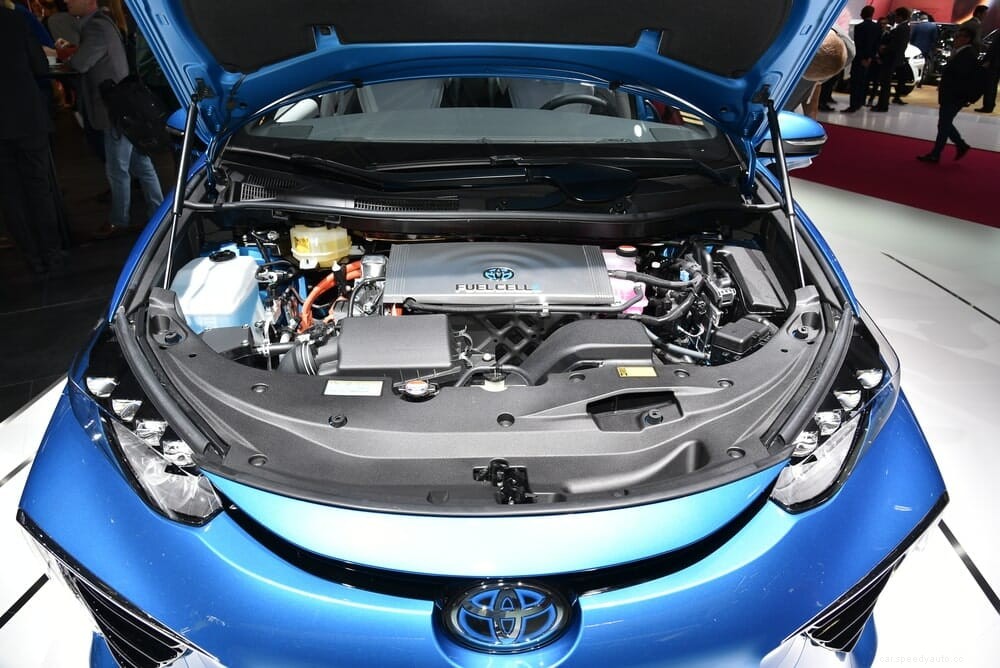
Toyota Mirai runs on hydrogen (H), not water (H2O). The side-product of the hydrogen fuel cells are hot air and water which comes out of the tailpipe. The more accurate statement would be that Toyota Mirai creates water.
When we’re talking about alternative fuel solutions, creating a car isn’t a problem – mass production, infrastructure, and eco-impact are the limiting factors. Given the strong push towards electric vehicles, the number of charging stations has increased significantly, making them a better option.
The main advantage of a hydrogen car is the fast refueling process. It only takes a few minutes and works almost exactly as a gas or diesel refuel – you’d open the fuel tank cover, take the hydrogen nozzle and push it on the valve. The two will create a secure connection so the high-pressure hydrogen can flow into the tanks.
The low cost of used Toyota Mirai may seem concerning at first, but it’s primarily caused by the huge incentives received by the first-time owners. Considering the fact that you can get a 2021-2022 model with a $15,000 – $25,000 discount and a 0% APR loan, it might be better to go with a brand new model.
The main risk of owning a Mirai is the availability of charging stations. It’s unlikely for the existing stations to shut down, but it’s important that new stations are made to improve infrastructure and bring the cost of hydrogen down.
For the post-subsidized price, Mirai offers a more comfortable and luxurious interior than any vehicle in the price range, making the risk worth it.
