
Some people will say otherwise, but next to the radio, the AC has become a true necessity on the road. The summers are hotter than ever, and sitting in a traffic jam as dozens of cars and the asphalt itself heat the air can be unbearable.
But what if you flip the AC switch, and nothing happens? A quick look under the hood will tell you that the AC compressor isn’t running, and in this guide, we’ll explore what could cause the problem, and how to fix it!
The most likely cause of malfunctioning AC compressor is an electrical problem, bad compressor clutch, or a broken compressor.
There’s a lot that could go wrong with the air conditioning system, but by correctly identifying the source of the problem, we can narrow down the possible causes.
The AC compressor is powered by the serpentine belt, which means it has a pulley to transfer that power into the unit. As there’s no need for the AC to run all the time, the compressor has a clutch that allows the pulley to turn freely, without actually powering the unit.
When you engage the air conditioning, the electro-magnetic compressor clutch receives a signal to engage. The part mounted on the compressor creates a magnetic current that pulls the outer clutch disc towards it.
The disc then merges with the compressor shaft, and the pulley begins to transfer power to the compressor.
You can identify this by looking at the compressor pulley and the clutch disc – if both are spinning, that means the clutch is working fine and the compressor is receiving power. However, if the pulley is spinning while the clutch disc remains still, then the clutch isn’t working properly.
As odd as it may sound, an electrical problem is a best-case scenario. The AC compressor problems are generally expensive to repair, while electrical issues are trivial in comparison – a blown fuse or relay, or a loose power plug.
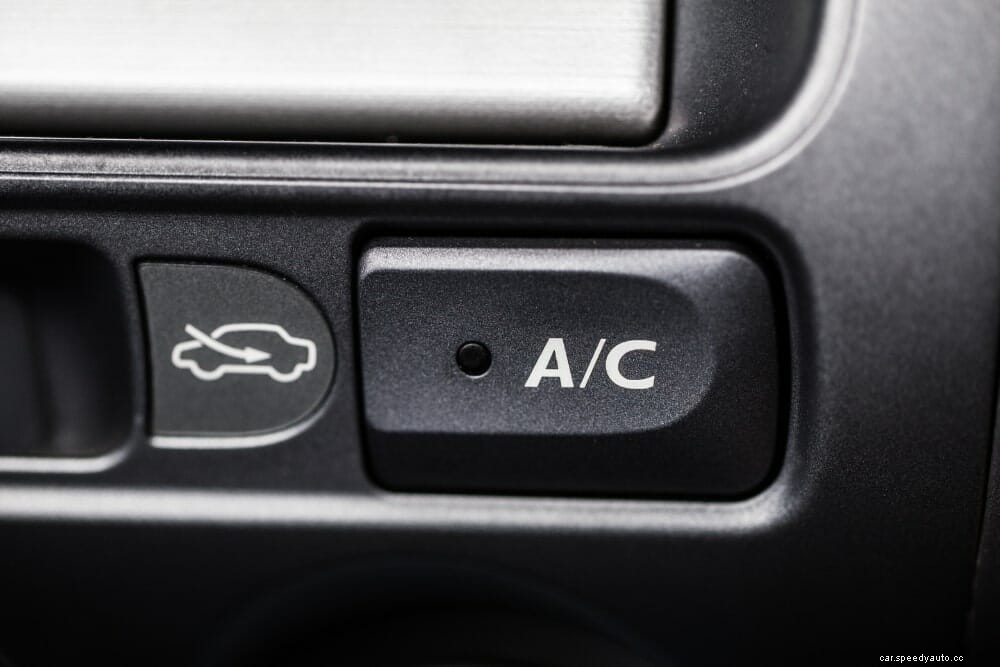
Fuses are a clever safety system that prevents serious electric damage by separating the electrical connection. Every electric module has its own fuse, and its exact location depends on the fuse box layout of your vehicle.
Sometimes it’s difficult to navigate the fuse box and it’s easier to check every fuse. You could pull each and visually inspect them, or use a test lamp or a multimeter to check them more easily.
If the fuse box is beneath the steering wheel, ground the test lamp on the nut holding the driver’s door in place. Underneath the hood, there’s plenty of good spots, just find a solid piece of metal.
Each fuse has two exposed metal dots on its back. Tap them with the test lamp to create a connection – if the test lamp lights up, the fuse is still good. Swap the bad fuses with replacements from a fuse kit, and test drive the vehicle to see if the compressor is working again.
Car relays are electromechanical switches that close the circuit once you activate a button or switch inside the vehicle. Power going through the relay towards an electrical system still has to pass through a fuse, so to keep things simple, relays are also placed in the fuse box.
Identify the AC compressor relay by looking at the diagram located on the back of the fuse box cover, or in the owner’s manual. The easiest way to test it is to set the ignition to the On position, place your finger on the relay and activate the AC control switch.
You’ll feel the relay moving as the electromagnetic force closes the circuit, accompanied by a distinct clicking sound. If the fuse box is located under the hood, have someone help you toggle the AC controls.
Replacing the faulty relay is easy – all you need to do is buy the appropriate replacement, pull the old one out and push the new relay in its place. Once again, test drive your vehicle and see if the problem has been resolved.
Before we proceed to more serious causes of compressor failure, you should check the power plug and the wires leading to the compressor to see if anything is loose or damaged.
The compressor pulley is spinning at all times, but once the clutch engages, the pulley will begin transferring power to the compressor. Start the engine and turn on the AC to see if the pulley is spinning together with the clutch disc.
While replacing the compressor or the clutch is not a particularly difficult job, the refrigerant will cause a lot of problems. Even though modern cars run on R134A refrigerant which is less toxic than the old R12, you still have to recycle it properly.
Let’s leave the refrigerant discharge and recharge to a professional or another guide, and focus on the mechanical work. The following steps can be used to either replace the entire compressor unit or just the compressor clutch.
| Title | Price | Buy | |
|---|---|---|---|
 Top
Top | DEWALT Mechanics Tools Kit and Socket Set, 142-Piece, 1/4 & 3/8" Drive, MM/SAE (DWMT73802) | ||
 Top
Top | AC Compressor Clutch Assembly Repair Kit CO 29002C 19130450 Fit for Cadillac Escalade Chevy Express Silverado 1500 2500 3500 Tahoe GMC Savana Sierra 1500 2500 3500 Yukon | ||
 Top
Top | Denso 471-7005 New Compressor with Clutch , Grey |
The AC compressor can be jump-started by shorting its control relay. However, you also have to jump-start the AC fan and the condenser to make the whole system work. If the problem is in the relay, it’s much easier and safer to just replace it, than to manually start the AC.
It can’t, as the compressor is as important to the AC as the engine block is to the powertrain.
Yes, the AC compressor has its own fuse which can often be the cause of your problems. That’s why the first step in identifying AC issues should be checking the fuse and the AC relay.
The cost of the replacement AC clutch dictates the price, as the average cost of labor is between $150 and $250.
The durability of the AC compressor depends on how much it’s used, but even if it’s used regularly, it can last around 10 years. However, I’ve seen original compressors running after 15 or even 20 years, so they can really last a long time.
Repairing the compressor is possible, but the question is whether the labor exceeds the cost of buying a replacement compressor. This is usually the case, which is why the only recommended compressor repair is swapping the clutch.

Not quite, as you still have to safely dispose of the refrigerant before removing the compressor, and then properly recharge it after. Disposing of the refrigerant is a job for a professional, but recharging can be done at home with extra care and the right AC refrigerant recharge kit.
The AC is the compressor is quite literally an integral cog in the auxiliary power system. The serpentine belt bends into an exact shape and tension, and if you remove the AC compressor, you can’t simply install a serpentine belt of another length.
Besides, there’s no real reason to disconnect the AC compressor in the first place – when the AC is turned off, the compressor pulley spins freely and puts no extra load on the engine.
You should not use any lubricant or cleaner on the AC compressor under any circumstances. Apart from recharging the refrigerant, the compressor is maintenance-free, and there’s no need to lubricate it.
The problems with the AC compressor not engaging can be traced to the clutch compressor and an electrical problem that is preventing it from engaging.
Start with the most trivial causes, the fuses, and relays, and work your way towards the clutch itself. Keep in mind that to work on the compressor or the clutch, you will have to safely drain the refrigerant from the system – a task fit for a mechanic with professional tools.
