
You’ve found a guide that explained how to change the transmission fluid, but they haven’t explained the risks and now there’s too much fluid in the transmission.
This is a problem I’ve seen all too often, which is why you won’t find almost any transmission-related guides on VehicleFreak. The risks involved far exceed the added cost of taking the vehicle to a mechanic.
However, I can understand that not everyone can afford to go to a mechanic but still wants to be a responsible owner. That’s why I’ll do my best to explain how to drain or siphon the excess fluid.
Most of the problems with overfilling the transmission come from inaccurate measuring. When compared to the engine oil change, transmission is far less forgiving and it’s more sensitive.
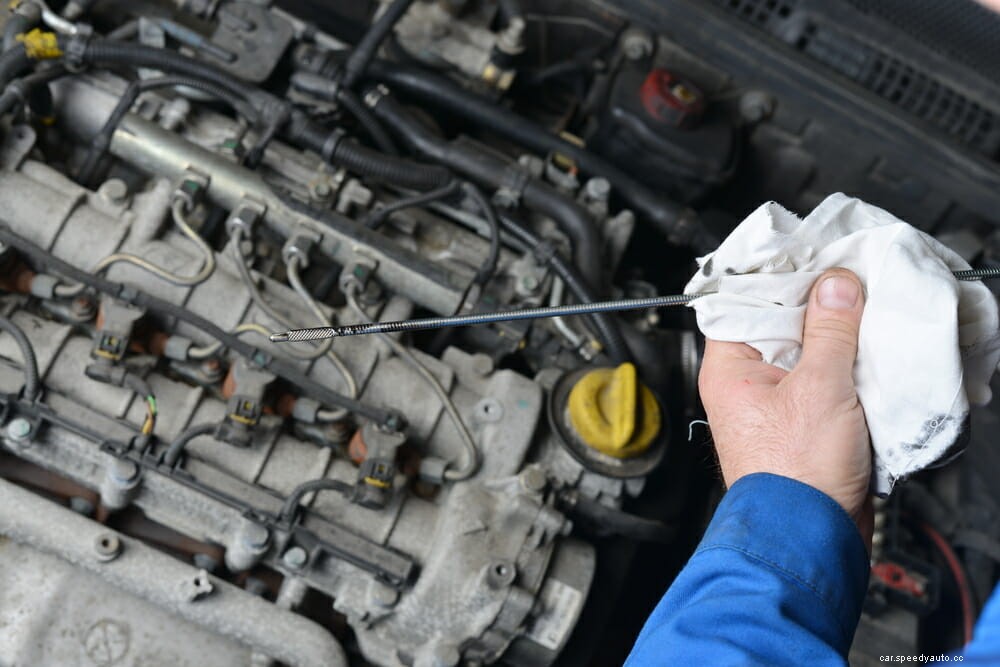
To accurately measure the fluid level, you need to heat up the transmission by driving for 15-20 minutes and keep the engine running while you take the dipstick out. This way, you’ll get an accurate reading and know whether the transmission has enough fluid.
There are two ways to extract the excess transmission fluid: the first is to drain it from underneath, and the second is to siphon it from the top.
The benefit of draining the fluid by unscrewing the drain plug is that it doesn’t cost you any extra money, but it takes time to prep and you’re almost guaranteed to drain too much fluid.
By approaching the problem from the top, you’ll have more control over how much fluid you’re draining, but you’ll have to invest in a siphon pump or your own.
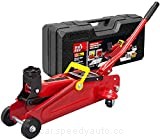
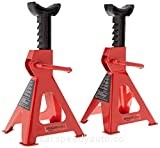
Extracting the excess fluid by releasing the drain plug isn’t ideal, but if you’re quick you can get the job done relatively quickly. You’ll need access to the undercarriage, so unless you have access to a mechanics trench or a lift, you’ll have to use a car jack and car stands to elevate it.
Tools you’ll need
| Title | Price | Buy | |
|---|---|---|---|
 Top
Top | BIG RED T820014S Torin Hydraulic Trolley Service/Floor Jack with Blow Mold Carrying Storage Case, 1.5 Ton (3,000 lb) Capacity, Red | ||
 Top
Top | Amazon Basics Steel Jack Auto Stands, 3 Ton Capacity, 1 Pair | ||
 Top
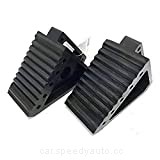
Top | MAXXHAUL 70472 Solid Rubber Heavy Duty Black Wheel Chock 2-Pack, 8" x 4" x 6" | ||
 Top
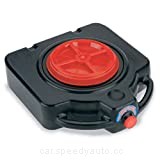
Top | Lumax Black LX-1632 15 Quart Drainmaster Pan and Waste Storage. Ideal for Oil Recycling, Drain Direct-No Oily Tub, Funnel, Mess to Clean-Up on Top or Side | ||
 Top
Top | Performance Tool W1173 SAE/Metric 40-Piece SAE and Metric Socket Set, 1/4" & 3/8" Drive |
Step-by-step instructions
The problem with this method is that you don’t know just how much fluid you have to let out. The best advice I can give you is to check the forums to see if anyone has figured out a correlation between the dipstick level and the amount of fluid.
If you don’t let enough oil out, you’ll have to repeat the tedious and time-consuming process of raising the vehicle back up. Let out too much, and you’ll have to pour some back in, which can again lead to overfilling.
I’ve explained this method just because it exists, but I strongly suggest siphoning the fluid from the top. The next section will show you how.
Using a cheap fluid transfer pump makes removing the excess fluid a lot easier. You can also use a makeshift pump made out of a large syringe and a rubber hose.
Step-by-step instructions
Even though this method has the same problem of not knowing how much fluid you need to pull out, it’s more convenient and can be completed in fewer steps.
A good way to speed up the process is to create measurements on the pump which tell you how much fluid is in the hose and the canister. Measure the length between the maximum fluid level and the point at which the fluid is currently resting.
Once you draw out the fluid for the first time, you can make a correlation between the level and the amount of fluid removed, and adjust accordingly.
Some of the symptoms have led you to the conclusion that your transmission is overfilled, but it’s always a good idea to familiarize yourself with all the symptoms so you can spot them more quickly in the future. Of course, the fact that you’ve recently changed the fluid is a telltale sign.
Too much oil will create a form of resistance in the transmission that will make it difficult to change gears. You’ll experience gear shift delays, getting stuck in the same gear, or the transmission going into safe mode.
Problems with gear shifts are usually accompanied by whining and humming noise from the transmission. The noise will also increase in volume and pitch as the RPM increases.
A transmission is a sealed unit, meaning that nothing goes in or out of it. If you add too much fluid, you’re increasing the pressure on the gaskets, which can break and leak transmission fluid.
Transmission overheating is usually accompanied by the A/T temp flashing light on the dashboard. It may seem counter-intuitive, but as the pressure builds up and leaks form, the level of fluid will drop below what’s necessary to sufficiently lubricate the gears.
There’s no shame in cutting your losses and taking your vehicle to a professional to sort the problem out. Ask around first and explain your situation to see which mechanic is the cheapest.
The labor cost for a full fluid change is up to $100, but it should be significantly cheaper if they’re only supposed to correct the fluid level.
In extreme cases of overfilling the transmission, the gears will start to slip among other problems such as noise, trouble shifting, and overheating.
Too much of anything isn’t good, and that includes the transmission fluid. By adding too much, you’re inviting a number of problems that can wear out and damage the transmission.
The exact amount varies among different types, but in general, transmission accepts between 9 and 13 quarts of fluid.
Transmission fluid should always be checked when hot to get an accurate reading. On top of that, you should keep the engine running.
Transmission doesn’t burn oil, and as it’s a sealed unit, there’s no way for the oil to escape except through a leak in a gasket or the drain plug.
The most obvious sign that your transmission is running low on fluid is an increase in operating temperature and the flashing A/T temp dashboard light.
If you realize your transmission fluid levels are low, stop as soon as possible and get it inspected by a professional, because there’s no reason for transmission to lose oil other than a leak in the system.
Overfilling the transmission can lead to serious damage, but if addressed early, there shouldn’t be any problems. With the heating up between checks, it might take you an hour or two to get the fluid level right, but doing it yourself will save you some cash and most importantly, keep your transmission in optimal condition.
Find more relevant topics here:
Bubbles In Transmission Fluid: What You Should Know
Can You Use Brake Fluid For Power Steering Fluid?
How Long Does A Transmission Flush Take?
