
Checking the headlights and tail lights regularly only takes a minute but makes a lot of difference when you’re on the road. If you notice that your tail lights aren’t working but brake lights are, there are a few reasons why it can happen.
The most likely cause for malfunctioning tail lights is a blown fuse, followed by a problem with the wiring or the control switch. Other causes include bad light bulbs, faulty bulb socket, or a bad light sensor.
The taillights have separate controls, wiring, and sockets for each of the functionalities. They house more than just tail lights – separate bulbs are used for turn signals, brake lights, and reverse lights.
Rather than lumping them together, these modules are split so you can retain some of the functionality in case of a blown fuse or a bad bulb.
Brake lights are activated by the brake sensor located underneath the brake pedal. Turn signals are governed by the switch on the left side of the steering wheel. Setting the gear in reverse will activate the reversing white light, and by flipping the headlight switch, the taillights will turn on.
The car fuses work the same way as your house fuses – if the load is too high, the temperature increase will cause it to snap and break the circuit. Not only does it prevent a fire hazard, but it’s also far cheaper to replace a fuse than the component it’s protecting.
To check whether you’ve got a bad fuse, you must first locate the fuse box. In some vehicles, it’s located under the hood, while some house it beneath the steering wheel, underneath a plastic cover.
You can check the manual for the exact location of the tail lights fuse, but it’s better if you start from the top and check each fuse, as you might find a blown fuse that you weren’t aware of.
You can pull out each of the fuses by hand or pliers, but a much faster way of checking fuses is by using a test light. There are two metal points on the back of each fuse. Ground the test lamp, and touch those points – if it lights up, it means there’s a current going through the fuse, so it’s okay.
Once you find a bad fuse, pull it out and read the resistance marking on its side and replace it with a new one. You don’t necessarily have to know what the fuse is connected to, but it’s a good idea to check the owner’s manual and see exactly where the problem originated.
The light switch controls both the front and rear lights, but it’s possible for it to only affect the tail lights. The process of changing the light switch depends on its location.
A switch located on the dashboard is fairly easy to replace. The process involves either pulling a part of the dashboard off and disconnecting the cables, or pulling the switch straight out.
The steering-mounted switch is a bit more difficult to replace. Usually, it’s integrated into the turn signal switch, but even if it’s independent, the process remains largely the same.
Start by removing the steering column shroud. It’s attached through a series of screws and clips, so make sure you’ve got them all out and work carefully so you don’t break the plastic. Remove the bottom portion of the shroud first, then the top.
With the steering column exposed, you can use a screwdriver or a hex wrench to disconnect the light switch. Install the new switch and test it before putting the shroud back in place. Once you’re sure it’s working correctly, you can complete the job by placing the shroud back on the steering column.
It’s unlikely for both light bulbs to go out at the same time, but if it happens, there’s usually an underlying problem with the wiring. In this section, we’ll focus on changing the light bulbs, while the following section will be devoted to the wiring issues.
To change the light bulb, open the trunk and examine your tail light housing. Depending on the design, you might have to remove some of the upholstery to reveal the screws holding the tail light in place.
Once you’ve gained access to the light bulb socket, remove the old light bulb. The new bulb can be installed by hand, but I prefer to hold it with the protective wrap still in place to avoid leaving finger stains. Once you’re done, test the lights and mount the tail light back in place.
The issues with wiring can be difficult to detect, but generally, the damage is contained close to the tail light where rain and moisture can penetrate more easily.
Lights wiring is fairly simple, so if you notice corroded wiring or a damaged connector, you could swap them out yourself. Disconnect the battery and the connector from the tail light.
Use the wire clippers to cut out the corroded part of the wire, then strip 1/4″ of rubber off the ends to extend it with a replacement wire. Put the two wires parallel to each other, then spin the exposed wiring together. Wrap it in insulation tape, and you’re done!
It’s possible that a bad light bulb socket is causing your problems. If moisture penetrates the tail light, you’ll also see some fogging and mist inside it.
The process of replacing the socket is nearly identical to replacing the light bulb itself. You have to access the back of the tail light, and then it’s just a matter of disconnecting the power cable and pulling the socket out.
The ambient light sensor is a module that detects the amount of light and turns on the headlights automatically when it gets dark. However, when it fails, it can cause a number of issues, like turning on the lights during daylight or failing to turn the tail lights.
To reach the old sensor, you have to pull apart the dashboard, which is an extremely challenging task, even if it looks easy. If you’ve checked all the other causes and you’re suspecting the ambient light sensor, take your vehicle to an electrician to get a professional’s opinion.
The taillights have their own fuse which is located in the fuse box. The fuse box itself is located beneath the steering wheel or under the hood.
Taillights and brake lights are not the same – they use separate light bulbs and have different activation systems. Brake lights are activated by pressing the brake pedal, while tail lights are turned on either automatically, or with the headlight switch.
The varying voltage is the most common reason for tail lights to burn out. However, if both stop working at the same time, a blown fuse is the most likely cause.
Driving with a broken tail light housing is a traffic violation even if it’s bright outside. You cannot drive without taillights during the night, as that poses a serious safety risk for all traffic participants.
Most car parts are replaced in pairs, but you don’t have to do it with light bulbs. The durability of light bulbs is very random, and as they’re fairly easy to replace, you should only swap them when they fail.
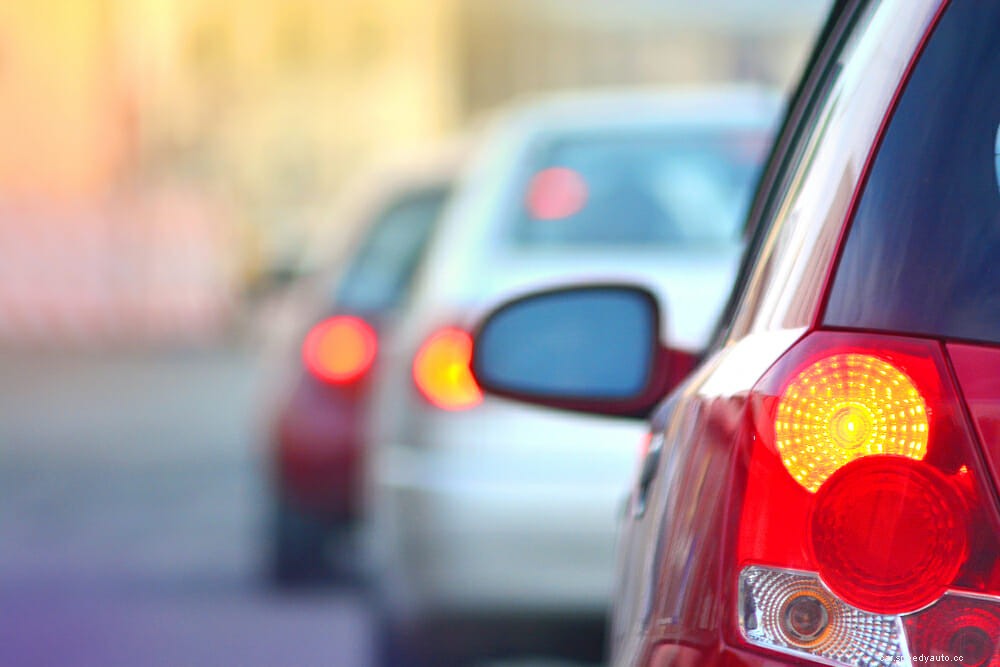
Driving without a functioning brake light puts you at risk of being rear-ended by the driver behind you, as they might not notice that you’re braking. Regularly check that your tail lights, brake lights, and turn signals are functioning properly to keep yourself and other drivers safe on the road.
Most tail-light-related issues can be repaired for under $100. The parts are cheap and the repairs shouldn’t take long, so if you’re not confident in your wiring skills, it’s a good idea to take your vehicle to a professional.
If there’s a problem with the light control switch, the taillights might not turn off even if you change the position back to off. Cycle it a few times until it finally breaks contact and shuts off the lights, then follow the steps explained above to replace the switch.
Brake lights are controlled by a switch located underneath the brake pedal. A failing switch can cause a number of problems, like turning off the brake lights randomly even when the engine isn’t running, or periodically not engaging the lights.
Your vehicle has to have two running tail lights which will make the vehicle clearly visible in the dark, and outline its width.
Since 1986 the law dictates that all vehicles need to have a third brake light mounted higher than the two side lights. All of the lights have to work, otherwise, you’re in violation of a traffic law.
When tail lights fail simultaneously, a blown fuse is almost always the cause. Check your fuse box and replace any faulty fuses to see whether the issue is solved.
Avoid investing in replacement parts like the lights control switch or an ambient light sensor until you’re sure they’re the cause. Sometimes, it’s better to take the vehicle to an auto electrician and get the problem sorted out professionally.
Get more helpful tips with these posts:
10 Reasons Your Car’s Lights Won’t Turn Off
How To Reset Parking Brake Light
3057 vs 3157 Bulbs – Differences and Specs
