
You’ve been trying to identify the cause of poor engine performance and your search lead you to the mass airflow sensor. After unplugging it, the car seemingly runs better than it did with the MAF sensor. Why is this the case?
If the car is running better with the MAF sensor unplugged, it means that the sensor is sending inaccurate readings and needs to be either cleaned or replaced.
I strongly suggest that you read the following article as I’ll explain how the MAF sensor works, why it’s important and why you shouldn’t drive without it, even if the car is running better.
The mass airflow sensor measures the volume of air going into the throttle body. It has a “hot wire” which is heated to a constant temperature. The air flowing over it is trying to cool it down, and the exact volume of air can be measured by taking into account the electrical current necessary to heat the wire, with more airflow requiring a stronger current.
For modern fuel injection systems, precision is everything, and knowing how much air is available in every millisecond allows the ECU to adjust the fuel injection frequently.
The optimal air-fuel mixture leads to higher power output and ensures all the fuel gets used up. With no fuel wasted, the fuel economy is at its best, and it also reduces the negative effect on the environment.
The MAF sensor is a very accurate, but also a very delicate component. As it is located after the air filter, the air flowing over it should be clean. However, the air filter does not filtrate 100% of the particles, especially if it’s old.
Over time, the particles accumulate on the MAF sensor, causing it to produce inaccurate readings. If the symptoms are minor, the sensor can be cleaned with a dedicated MAF cleaner, but if unplugging the sensor makes the car run better, it should be replaced.

Your car’s ECU is a computer responsible for processing and handling a variety of tasks, including translating the MAF sensor signal into usable data. When the MAF sensor fails, the ECU will incorrectly adjust the air-fuel mixture, causing the engine to run rich.
On the other hand, unplugging the MAF sensor will be recognized by ECU, which will put the car into a safe/limp mode. As the name implies, the performance will be reduced and the turbocharger won’t work, but you’ll be able to drive the car.
For the safe/limp mode to offer more power than the regular mode, it means that the MAF sensor is suffering from severe failure, you could still try cleaning it first, but it’s unlikely to help.
While unplugging the MAF sensor to test whether it’s the cause of your problems is fine, you should not continue driving without it. The safe/limp mode is not optimal for long-term driving, and your engine needs the MAF sensor to run properly.
Technically, the limp mode should be safe to drive in, but the problem is that it more than likely makes the engine run rich, just in case. Driving for hundreds of miles in limp mode could foul the valves, cause the oil and fuel to mix, and a number of other issues easily avoidable by swapping the MAF sensor.
Changing the MAF sensor is one of the easiest tasks and it requires only the basic tools and 10 minutes of your time. Be careful how you handle the new MAF sensor, as even touching the hot wire is enough to disrupt future readings.
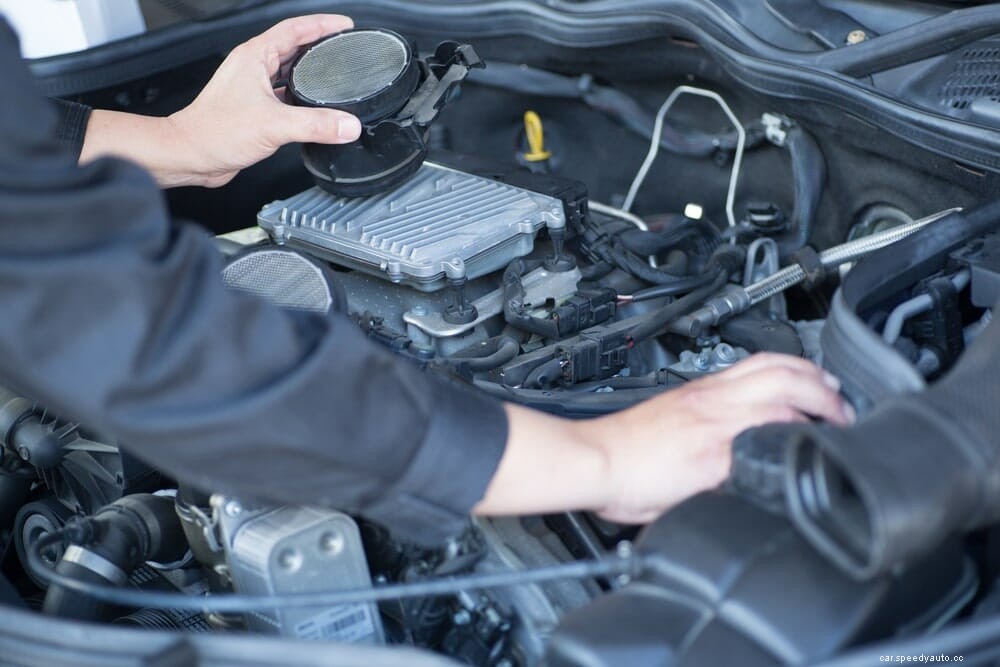
It is possible that under the effects of a MAF sensor failure the engine starts running lean or rich, both of which could cause rough running. To test whether this is the case, unplug the MAF sensor and start the engine again. If it runs smoothly, you’ve confirmed that the MAF sensor is the problem.
When the mass airflow sensor goes bad it will cause a number of performance issues including stalling and failure to start, lack of power, rough running, poor acceleration, and unresponsive throttle. If the engine is running rich, you’ll smell gasoline even in the cabin.
You shouldn’t reset the MAF sensor without cleaning or changing it first – and if you do one of these things correctly, the ECU will clear the error code on its own. Resetting the MAF sensor without fixing the issue can lead to serious engine damage, which is why the vehicle has gone into limp mode in the first place.
It’s not necessary to disconnect the battery when you’re working on the mass airflow sensor, but it’s a good idea to disconnect it anyway. You should make it a habit to disconnect the battery whenever you’re working on an engine component, just as you’d unplug an appliance from the power socket.
If the MAF sensor isn’t working properly, the power loss will cause the engine to struggle and it could lead to some unexpected gear changes and rough shifts, although it’s not that likely of a problem.
It’s possible for the MAF sensor to throw a P0100, P0101, P0102, or P0103 error which is specifically related to it, but it could also cause a more general air-fuel error code.
When the MAF sensor gets fouled, the performance decrease and a sub-optimal air-fuel mixture will make the car use more fuel than necessary. By cleaning the sensor, it’s possible to restore the original MPG, but not improve it beyond that point.
Replacing, or at the very least cleaning the MAF sensor will solve the performance-related problems. If the car is running better without the MAF sensor than with it, it doesn’t mean that you’ve resolved the issue – driving in this state long-term is not advised as it could lead to other engine-related problems.
Check out some of these related posts:
Mass Air Flow Sensor Cleaner Alternatives For Your Car
P0102 Chevy Silverado [MAF Sensor Circuit Low] Causes And Fixes
7 Reasons Why Your Car May Sputter When Starting And How To Fix Them
